Marketing Mix Modeling Step-by-Step

marketing mix modeling

Credit: Morten Hegewald

Image result for marketing mix graphics

Rough on how to build your own Marketing Mix Model we’ll touch on:

  • What is a Marketing Mix Model?
  • Data requirements
  • Marketing carry over effects
  • Diminishing return functions

In part 2 we’ll get into use cases from the output and wrap up the walkthrough by touching on:

  • Channel contributions
  • Predictive budget optimizations

What is a Marketing Mix Model?

With the number of marketing channels through which we can reach new potential clients increasing every year, it’s more important than ever to understand which channels are driving the business forward and which are not.

“Half the money I spend on advertising is wasted; the trouble is I don’t know which half.” — John Wanamaker

In the world of online click-based marketing it’s fairly straightforward to identify channel performance, since, with the right back-end implementations in place, we can track click-throughs and assign attribution accordingly.

There are however other challenges with click-based marketing such as distribution of credit (attribution) when consumers have multiple touchpoints prior to a conversion.

I have a previous article outlining this challenge with both heuristics as well as a data-driven solution to solve it: Marketing Channel Attribution with Markov Chains in Python.

For offline marketing (TV, radio, billboards, print, etc.) however, it’s a completely different ball game as we have no way of tracking individual impressions, and thus Coca-Cola wouldn’t know that client X went and bought a soft drink because they were exposed to the billboard ad in the photo above.

So, if we can’t know which clients came to us because of our offline marketing, but still need to identify the performance of our offline marketing spend, how do we approach this challenge?

While we can’t identify individual attribution in this case, we can use historical data and math/statistics to identify the total attributions over time for each offline channel.

This is where the Marketing Mix Model comes into play.


A Marketing Mix Model (MMM) can from a high level be characterized as a statistical modeling technique that seeks to identify the relationship between your marketing spend in each individual channel and desired outcome (website visits, sales, client acquisitions, etc.).

The MMM uses historical data and regression techniques to tease out each channel’s contribution to your KPI. This is essentially done by identifying the variations in channel spend and the corresponding variations in the KPI. Therefore, it’s crucial that we actually have variation in our marketing spend, so the model can figure out how every little fluctuation impacted the output.

From a very simplistic perspective, the MMM can essentially be boiled down to the following formula:

kMHCeCL08GnYYaOWCc5Zd1eJ RStecyrNxzsPlMK6BLFBRs1 wWlAX d n27NoJfYLdE9 J6f ia7SvRRzJtjmhSN4g5 yFSxQh oSfUiUQeRVlsw9qZL965JKXPLU398nDBG88p

where S_t is your total KPI (sales, website visits, client acquisitions, etc.) at time t, beta_0 to beta_n are the function coefficients that this exercise seeks to identify and x_ti is the input to factor I at time t (we say factor here and not marketing channel because your MMM is likely to also include external factors that we aren’t in control of — more on this in the next section).

What identifying the coefficients of this formula will give you, is an accurate overview of how much any incremental dollar spent on any marketing channel will impact your KPI.

Data Requirements For a Marketing Mix Model

Sounds good so far? Great! Now the first question you should be asking is: What kind of data do I need to have/start collecting in order to put together a successful MMM?

Firstly, because the MMM works by looking at the variations in multiple inputs and a single dependent variable, it’s critical that we have enough data with sufficient variation for the model to properly identify the impact of any variation in a variable.

Secondly, the amount of data is a balancing act between having enough data for your model to accurately determine the correct variable relationships and the data still being representative for your business.

Thirdly, in terms of granularity, a good thing to keep in mind is: granular data will lead to granular insights. If your desired insight from the MMM is at a store/segment/product level you’ll need to have input data at this level of granularity as well.

Finally, since your business and its sales, website visits, client acquisitions, etc. are likely to be impacted by external factors such as seasonality, economic up or downswings, etc. you’ll be able to reduce the noise in your model if you feed this information to it. Given your model information on these external factors that may have impacted your KPI, you’ll minimize the chance that the model tries to map marketing expenditures to variations where there’s no actual connection.

Marketing Carry-Over Effects

Not all marketing sees an immediate effect. Many if not most consumers today go through a decision-making or consideration phase that starts when the awareness is created until a decision is made to either purchase or not purchases.

Therefore, there is a time difference between when we put any marketing into the world and when we see a visit, purchase, signup, etc. This time difference is generally referred to as the carry-over effect.

Different products will have different consideration phases (you probably need less convincing to buy groceries for dinner than you do to buy a new laptop).

The consideration phase is represented through a decay rate, which is the rate at which the marketing expenditures decays from one period to another.

The carry-over effect can be represented as:

w57p

where A_t is the actual effect of our marketing at time t and lambda is the decay rate.

The decay rate is going to differ by marketing channel, so we’ll now have tested out which level of decay best fits our data.

Diminishing Returns

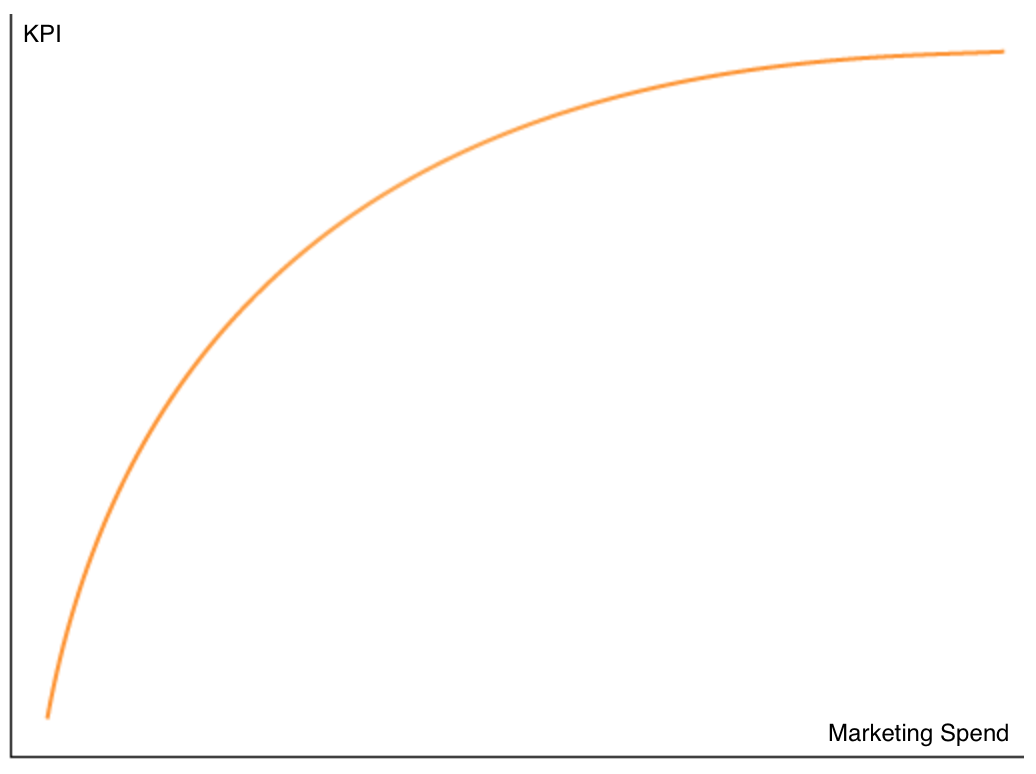
The concept of diminishing returns means that the first dollar spent is more effective than the second, and the second is more effective than the third, and so on…
OLkj1HVbvJOB4F8fyrZ238ZOlwC3o9K2YyWI vWjAiEVtfKBmH

For this context, the concept is applied through the underlying assumption that exposure to marketing only generates awareness in the minds of consumers to a certain point after which we start to see a saturation effect — meaning our additional dollars become less and less efficient at moving the needle, i.e. additional spend in the channel does not generate additional awareness.

There are multiple ways to model these relationships of diminishing returns (negative exponential function, power function, etc.), so it’s now up to us to test which approach gives the best fit to the data.

Given this notion of saturation and a definition of the monetary value we’d assign to getting an additional KPI unit, we can find an optimal level of marketing expenditures for each channel where another dollar towards the channel no longer yields sufficient output — this would be the optimal level of spend (more on this in part 2).

As we can see from the above chart this represents a non-linear relationship between marketing expenditures and expected KPI output. What this means for the MMM formula we saw earlier is that it now becomes a sum of both linear and non-linear parts.

Because of the non-linear nature of the MMM, the models are usually implemented in Python or R for efficiency since these languages have excellent statistical libraries available to carry a lot of the heavy load.

Next up is part 2 where we’ll dive into the general use cases of the MMM, and how the outputs of the MMM can help you make data-driven decisions, both in terms of descriptive and predictive outputs. For more information contact: Mach 1 Design at [email protected] or call us at (469) 536-8478.

How Long Does it Take SEO to Work?

how long does it take for seo to work

Asking how long it takes SEO to work is a reasonable question with a difficult and complicated answer.

The short answer is “it’s different for everyone”.

Search Engine Optimization is the tortoise, not the hare. Overnight results are non-existent but with diligent work on your website through best practices put forth by Google, you’ll see your website improve over the course of months and years and you’ll be the one smiling in the end.

Why is it SEO so different for everyone?

You may have already wondered, “why does SEO take so long?” There is a multitude of factors that influences how quickly you go from the dark ages to the first page of Google.

These factors vary and are often a factor in more than one issue of the list below:

  • Content (quantity and quality)
  • No. of errors on your site
  • How long your site has been around
  • Proper page titles + descriptions
  • Number of backlinks
  • Quality of backlinks
  • Poor strategy

This isn’t an exhaustive list and each one of these items could take hours of work to fix.

So how long does SEO take to work?

Before you even decide to look at buying SEO services or evaluating your website, you should identify a goal. Look at the Google Analytics on your website and compare traffic as far back as you can.

Once you know where the traffic is coming from (paid, organic, direct, social) you can set goals for where you want your website to be 6 months from now, a year from now, and three years from now in terms of traffic, time on site and bounce rate.

It’s highly likely your goals may change once you’ve had a professional audit completed of your website. They might also change as you get more information from professionals or research that provides further education for you.

With goals in hand, it’s now time to audit your website and see where you stand. The remainder of this article will be a step-by-step guide giving you the basics of how to start improving your website today.

Step 1: Get a website audit

How can you improve your website to rank in Google, Yahoo, and Bing if you don’t know how it’s currently doing? A website audit gives you a baseline on where the current version of the website is and what you need to fix to start seeing results.

Any digital marketing company worth its salt should offer a paid or free website audit for your company.

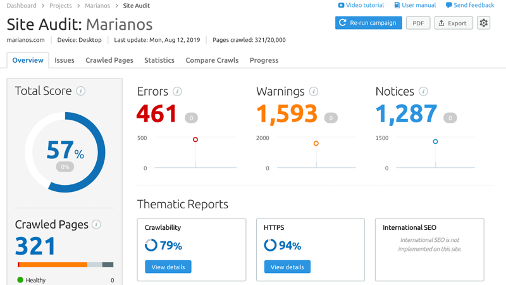
Within a few minutes, you’ll see where your website stands. SEMrush gives you an audit score and identifies the errors on your site that you’ll need to fix to start speaking to the search engine algorithms correctly.

Step 2: Fix the errors

Once you’ve completed the site audit in SEMrush, you can go into the audit itself and see how many errors your website has.

seo to work

Clicking into these errors and warnings will show you which website pages have broken links, which pages have duplicate content issues, how many pages couldn’t be crawled, and more.

To the layperson, this information can get overwhelming quite quickly and you may not know where to begin.

If the majority of the information you see here can’t be fixed by you, it’s time to talk to a professional about what it means and how to fix it.

Step 3: Use the right CMS + host provider

CMS stands for Content Management System. This is what your website is built on.

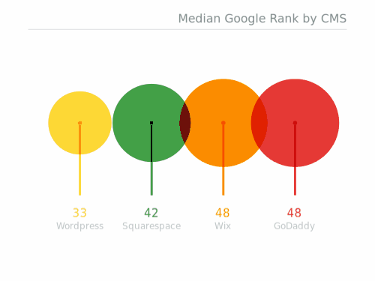
You may have heard of website builders like WordPress, Squarespace, or Wix. These are CMS and some are better than others when it comes to ranking in Google.

Wix currently holds the highest percentage of market share among individual website builders.

However, the website builder that gets the best results on average is WordPress. *Lower numbers are better here as they indicate Google Rank.

how long does it take for seo to work

Source: Search Engine Land

Therefore, when it comes to the best platform to build your website for Google ranking, it’s WordPress.

It’s also vital that your hosting provider can ensure quick page speeds. Websites that take too long to load will see potential customers leave before

they even begin. It is expected that a website loads in less than 2 seconds on a desktop and less than 5 seconds on mobile.

In fact, of those who primarily search on mobile 49% said they would leave the website if it takes longer than 10 seconds to load.

Step 4: Check on the competition

When it comes to high-quality search engine optimization work, you’re trying to impress Google. But you don’t have to start from scratch to see how to do that.

Using SEMrush, you can look in on your competition and see what keywords they are ranking for and how their traffic is being dispersed.

By simply inputting your competitors’ websites into the search bar, you’ll find some fantastic information.

 In the report above, SEMrush shows how a Minneapolis law firm gets 95 out of 1900 total searches each month for the keyword “qrc”. This is 12% of their traffic each month to their website. You can also see where they are currently ranked in Google (6 means the sixth result on page one of Google).

Not only can you do this for your competitors’ websites, but you can also input your own as well and see how far behind or ahead you are for the keywords you want to be found for online.

Step 5: Choose a focused list of keyword phrases

Now your goals start to blend with your plan. If you set a target to double the traffic to the website, what keywords will help you get there?

With all, you learned from SEMrush’s reports on your competition, identify 10-20 keywords you really want to rank for online.

BONUS: Once you have your list, set each keyword into Google and see who is ranking on the first page for that phrase. Click on the first few results

and start seeing what type of content is featured on these pages. Is it long-form? Is it a video? Are there a lot of calls to action?

Step 6: Create a content strategy

Now that you have the list of keywords you want to rank for, you need to incorporate those keywords into your site.

This means inserting these keywords into page titles, descriptions, headers, and body content on the pages of your site. CAUTION: Do not just insert these phrases on your site willy-nilly. Each phrase should make sense to the page it is placed on.

It’s also vital to not over-insert these phrases on your website. Doing so will cost you dearly as you run the risk of getting penalized by Google for blackhat tactics.

A properly formed content strategy will see you identify the assets your website currently possesses and dictate which pages and blog posts you may need to create from scratch. If you have to create new pages or blogs from scratch, use your competition and industry resources as inspiration as content for your own site. Just make sure it’s unique to you.

When building content that includes phrases you want to be found for you want to make sure there is enough meat on the bone for the algorithm to truly identify what the focus of each page on your site is. It also needs to be 100% unique to your website. Plagiarizing your competition or other sites online is also considered a blackhat tactic and can be disastrous for your website’s long-term potential.

Step 7: Linking

You’ve audited your site and fixed its errors and you’ve evaluated your competition, figured out what keywords you want to rank for, and have written some high-quality content on your site focused around these keywords. All that’s left to do is watch the web traffic roll in, right? Wrong.

Think of your fantastic website as a New Year’s Eve party. It could be the biggest party on the block with the best music, food + drink and atmosphere. But if you don’t send out invitations to the party, nobody is going to show up.

Website’s don’t just rank in Google because they have good content. You need to tell Google about this content off of the website and link back to it.

Whether it’s guest posting on blogs, using social media, commenting on industry forums, or other ways to link to your site, the more highly authoritative websites that link back to your company site, the more the search engines will start paying attention to it.

Websites with high domain and page authority are prime targets to build your online credibility.

You can check a website’s domain authority (including your own) by going to this link.

Here’s an example of two Chicago shoe stores compared side-by-side in the Moz Link Explorer tool.

Although they are only a mile apart from each other in Chicago, Fluevog is galaxies ahead of Born With Soul online. The biggest difference? The number of high-quality websites linking to fluevog.com.

Fluevog has worked hard to build their online presence and as a result, are ranking for over 2000 keywords in Google nationally, while Born With Soul can be considered irrelevant online.

The takeaway? If you’re a reseller of both of these company’s shoes, which one will be more beneficial to write a guest blog on? The answer is clear.

How to set realistic SEO goals

And so, “how long does it take for SEO to update?” If you’ve completed the step-by-step guide above then it’s time to reset your goals. When it comes to answering the question “How long does SEO take to work?” it completely depends on how authoritative your website is now, how authoritative your competitors are and how much time you’re willing to invest to improve.

Most often, the time investment is too much for companies and they hire digital marketing agencies to handle their SEO.

If you put your search engine optimization in the hands of an SEO company, how do you know if they are doing a good job for you?

Talk through your goals with them. And know the following going into that conversation:

  • SEO is a never-ending process
  • Ranking in Google organic results doesn’t happen overnight or even weeks most often
  • Companies can’t guarantee results (If they guarantee you page one results, STEER CLEAR)
  • They should offer a website audit and content strategy

These are baseline items. If a company balks when bringing up any of these, it’s best to look for another company.

So how long does it really take for SEO to work?

How long does it take for google to update SEO? Just like it was said at the beginning of this post, it’s a difficult answer.

There are so many different factors to consider like what industry you’re in, how competitive it is, the health of your website today and so much more.

What’s important is to have realistic goals. Many people want to double their traffic and rank on page one for every keyword they choose. It’s simply not the reality, especially if you’ve never put work into SEO before.

What’s most important is steady growth. If your keywords continue to rise and your traffic continues to rise it’s a clear indicator that the search engines like the work you’re doing. And over time you’ll see more inquiries to your business and a better bottom line.

Here’s an example of a trajectory to expect in the first year of search engine optimization.

So does it happen overnight? No.

Will you see results in weeks? Possibly.

Will you see drastic increases in your traffic in months? Potentially.

Will it take a focused strategy month over month? Certainly