Generational Marketing: What is it?

generational marketing

Image result for generational marketing

Generational marketing targets audiences based on attributes associated with their generation. Product development, marketing efforts, and sales strategies all center around generational paradigms, 

such as the values, attitudes, habits, technology usage, and product and media consumption trends of those age groups.

There’s a bit more to generational marketing, such as when it should be used in a marketing strategy, which demographics and age brackets are worth targeting, and how to employ it in practice.

Here’s how to avoid clichés and stereotypes

Creating generalizations about any group of people is dangerous, and more often than not, it backfires. It’s dangerous to assume that people of the same age are alike or even similar. Just consider the size of some of the largest generations in the U.S.:

That’s a lot of people per age group. Painting with too broad a brush or benchmarking the identity of an entire demographic with portrayals in pop culture will get you into hot water time and time again.

Use data, and know what matters to your audience

So where is the line between stereotyping and practicing generational marketing effectively?

Think of it this way: Each generation is likely to be more receptive to certain:

  1. Formats of content.
  2. Distribution channels for that content.
  3. Attributes used to sell products (cost, value, personalization, sustainability – and so on).

For example, surveys and social media usage trends suggest that Gen Z prefers Snap Chat and Instagram to Facebook, with only 9% of that age group citing the world’s largest social network as their preferred channel.

Meanwhile, a Nielsen poll of more than 30,000 millennials found that 73% of consumers in that age group are willing to spend more money on sustainable products.

If I’m a manufacturer with a largely millennial and Gen Z customer base, I know that I need to be present on Instagram and that I need to play up the sustainable aspects of my products.

FZY6SCtLHpAjO36IpjAdDZE2XyhGVMQGPaOGDCZUPVSF4kxkcPRXkqe 8UoViAmvuelwXOIGIV BLNnXGVIDaTO XaF7RdzfrX3rYnG7UnEe3b0LvKSAGJ9wq3rEQCy5s7 tRrFo

But beyond that, targeted marketing is about knowing your audience, not attributing generational stereotypes to it, and then building campaigns around those misguided assumptions.

In 2017, Pepsi had to apologize to its customers, to the media, and to Kendall Jenner after horribly misrepresenting millennial values and co-opting an important cause. The lesson? Instead of taking persona-development shortcuts by making age-based assumptions about your prospects, take the time to understand them.

Collect quantitative information pertaining to their buying and shopping preferences. Who influences them? What channels do they prefer? What brand values are the most successful brands in your industry espousing? Construct marketing campaigns based on that data.

Simply put, generational targeting is rarely the entire basis of your marketing tactics. It’s just one aspect of your target audience that may or may not influence how you engage with them. You may discover that age has nothing to do with shopper preferences within your industry. If that’s the case, focus on the persona attributes that do matter, whatever those may be.

 What does the data tell us about marketing to different generations?

Again, combine this information with your experience and your understanding of your industry or vertical’s nuances.

With that in mind, let’s look at what the research says about generational commerce habits:

Baby Boomers: 23.5% of the U.S. population

5ovEdGDjQE6nZqug9SS7YTHp C9n6vA7E5W bVs7 q4bK2LL6GRCtW2yh8a ea I1DQp72aZXX6Iju7l9i3ktX 1Oet4hgWzj9NZTPM4Q0FHHlOreYi2NwrKHoMTOQCweS4bn0LP

Although Baby Boomers have been dethroned in the U.S. as the largest generation, they still have a substantial amount of spending power. In fact, Deloitte estimates that Baby Boomers will remain the wealthiest generation until 2030.

rOy3Umb 6farvHBdnRNBzu6lCsdKxhQFou S0D nYfMe2HIYwq4bBTqHV7njC2UzPrY5bv1wWgtcykm5cTBnR6TDoJldOl8ikthfEBZsFnjzG 7ZEKH7FaeWoQTUT4Ori

Example of marketing that targets Baby Boomers from T-Mobile.

Some high-level attributes of this generation include:

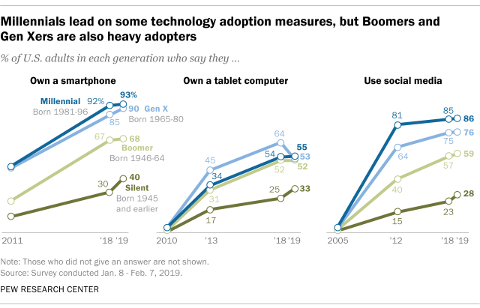
  • 67% own smartphones.
  • Most prefer to shop in-store, but they like having online options, and most use the internet daily.
  • Generally, prioritize discounts and pricing above all else.
  • More likely to watch traditional TV than other generations as opposed to using streaming services.
  • Facebook is their social media platform of choice, and is primarily used for maintaining relationships and reconnecting.

Gen X: 20.3% of the U.S. population

KVCOn9ab73RyCdF IsZX 6h5SuXkIsWyS3y0vSRVaUWt1dQErGvpSx89zNR68Y2cC7XI

Generation X – while often ignored – is the closest rival to Baby Boomers in terms of spending power. Some studies even argue that they have more spending power, and because of their age and the fact that many are raising children, are more likely to invest in a wider array of products than any other generation on this list.

zqykV7mIf4H5sI8uyr 1nfr rcVLspzNQiR 5Hdk2d5PuAbPJLrALAOAhCEfCiNN 8l07gcOgWBfRDWeH7gerVMlZ10M l7 AG9ep M Pi31wmtRTVzRN9jy1Kp9yJ3f2dLLPi6b

Perhaps more than most generations, Gen X cares about being rewarded for its loyalty.

They’re also loyal. Despite all the talk about millennials and Gen Z, this is quite possibly the treasure trove of generations.

  • 85% own smartphones.
  • Most prefer to shop online, but like to have in-store options as well.
  • Has the highest rate of brand loyalty of the generations on this list.
  • More likely to watch traditional TV than millennials.
  • Facebook is their social media platform of choice.

Gen Y (millennials): 24.7% of the U.S. population

UAEU5dKocDvjbFETgh1hcJjyiuhxQt1v3x5kiifsMR4sFRy74Tis5Ht3N6KlEhsy0LQoDaz58rG75XK4cEa5qILycegc2GHOYwanxZe

37% of millennials will pay extra money for products that support a cause they believe in.

Millennials were coming of age during 9/11, they’re digital natives, witnessed the shift to Y2K, entered the job force during the economic collapse, and are saddled with more student loan debt than any other generation ($1 trillion of $1.5 trillion in total student debt in the U.S.). Perhaps more than any other generation, they’ve had countless stereotypes hurled at them (lazy, entitled, uncommitted, shallow, limited attention span). I can promise you that buying into those tropes will not help you sell to them.

Millennials are catching up fast in terms of spending power, and have already surpassed Baby Boomers as the largest living generation.

  • 92% own smartphones.
  • On average, does about 60% of all shopping online.
  • Less loyal to brands than Gen X, and generally value a strong customer experience.
  • Consume more digital video and streaming services than either of the preceding generations.
  • Facebook is their social media platform of choice; are generally more receptive to social media influencers than other generations – they also tend to care more about what their peers say (on social media and through online reviews).
  • Are generally less receptive to interruptive advertising – with the glaring exception of radio (millennials listen to more of it than any other generation because of podcasts).

Gen Z: 21.5% of the U.S. population

gen z population

As the youngest generation on this list, Gen Z lags in spending power but possesses the significant potential to lead the way within the next decade or so. For now, they are generally considered influencers more than decision-makers (or buyers).

This generation was raised with smartphones and is by far the most tech-savvy. More so than any other generation, they see technology as an expectation and even associate it with brand credibility (a Gen Z-er will know a subpar website when they see one, even if they have zero web-design experience). They also are more accustomed to personalization.

  • 87% want omnichannel loyalty programs.
  • Consume digital video and streaming services on-par with millennials.
  • Snapchat and Instagram are their social media platform of choice, and they use social media more for content consumption and entertainment than communication.
  • Like millennials, they generally dislike disruptive advertising and are tech-savvy enough to work around it in many cases.

Generational trends

A few trends are fairly apparent here.

First, all of these generations are tech-savvy. Most baby boomers are on social media, use email, and own smartphones. However, digital technology plays a much more central role among millennials and Gen Z, because these generations learned to be reliant on tech at earlier ages than Gen X and Baby Boomers.

Equally important, the need for personalized experiences tends to be more prominent in younger generations, mainly because that’s the expectation that has been set in their lifetime thanks to brands like Netflix and Amazon.

On the whole, brand loyalty is exceptionally important across the board, arguably – and ironically – with the exception of Baby Boomers, who are more likely to chase discounts than wind up being “set in their ways.”

So what does this tell us?

If we read between the lines, mostly we see that the need for personalized, data-driven, and technology-oriented marketing is becoming more of a priority. It already is the priority for millennials and will be the expectation for Gen Z. We could argue Gen X has been principally overlooked. We should focus on Gen X.

We can also deduce that millennials and Gen Z are least likely to encounter interruptive advertising based on their TV and streaming habits, and most likely to ignore it (e.g., in the form of banner ads) when they do see it.

If you’re not taking a data-driven, personalized approach to non-interruptive marketing (content marketing), you’re already behind the curve.

Generational marketing in practice

Generational marketing in practice

Let’s start with email. The beauty of email is that it spans generations. Even Baby Boomers are more receptive to email marketing than direct mail. Of all digital marketing channels, email marketing has the highest return on investment, partly because everyone uses it. Email addresses are still the anchor for most online accounts and services.

Marketing automation has also made it easier than ever to segment audiences based on a wide variety of factors, including location, job title, industry, and age.

In other words, email grants access to key generations and let you target each of those generations individually. Generational marketing doesn’t get much more precise than that.

Content consumption habits

Again, it’s worth taking some of this with a grain of salt, as different people have different preferences. But here are a few things to keep in mind:

  • Baby Boomers: Will spend more than 20 hours every week binging content, which they often find through search of via Facebook.
  • Gen X: They’re busy raising kids and helping take care of older loved ones, so they crave content that is useful and to the point.

In Summary:

Generational preferences exist in terms of what brand values matter, content consumption, social media usage, technology, etc. In B2B marketing, age groups can also help differentiate influencers from decision-makers. Gen X and Baby Boomers generally account for the latter, while millennials and Gen Z still largely account for the former (although that’s changing fast).

At the end of the day, the best marketing informs, entertains, and/or inspires, and this is true for all generations.

While generational segmentation can help us figure out the best way to engage with certain age groups – and even clue you into what products and services might appeal to them – it’s only one dimension of your target-audience personas.

Really, age is one of the least meaningful indicators of who a person is – people prefer to be identified by what they do and what they care about.

Use generational cues as a form of high-level guidance, and nothing more.

For more valuable information about Generational Marketing and to help create a Generational Marketing Strategy, 

Contact: Mach 1 Design at [email protected] or call us at  (469) 536-8478

WHY DEVELOPING COMMUNITY IS THE MAKE-OR-BREAK OF NICHE MARKETING

niche marketing

It’s what customers look for the most. I stopped reading on news sites because I can’t stand to click through another ad.

I’m not alone in this feeling. Most millennials don’t like advertising. 84% of the generation that’s the largest adopter of mobile technology and social media say they don’t like ads. This is troubling if you’re a business that relies on digital advertising to get the majority of your customers.

In a world that is increasingly globalized and digitized, it’s quite a conundrum to advertise and market effectively. Because there’s more mobile adoption than ever before, it’s easier to literally have your brand in a potential customer’s pocket.

millennial mobile marketing

Pew Research Center, September 2019

But the aspect of community — or places where people come together and can talk about your brand — is missing.

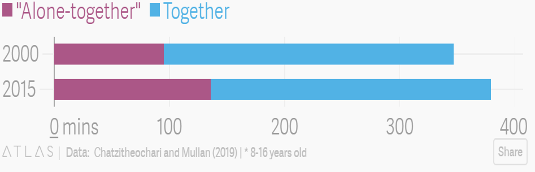
A 2019 study from Oxford University found that while UK families spend more time together overall, they spend more “alone-together time”. Alone-together time “jumped by 43%” in the study, between 2000 and 2015.

“But the biggest change was the rise in “alone-together” time — that is, in the same house but not in the presence of one another. So-called alone-together time jumped by 43% over the period of study, to 136 minutes per day in 2015.” — Quartz, March 2019

niche marketing

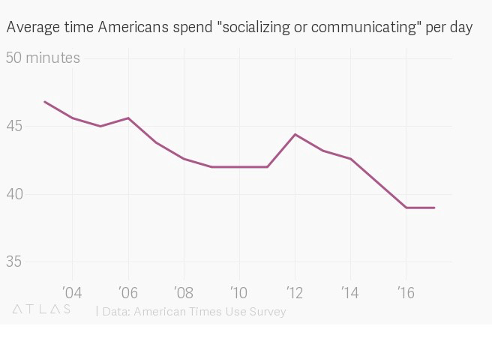
In addition to spending less “together-time” in households, people are socializing less in general.

A 2017 report from the U.S. Bureau of Labor Statistics examined how Americans spend their time. The result? Socializing was the activity that saw the greatest decline. It “includes time spent talking to family or friends that isn’t for work.

niche marketing

Quartz, July 2018

This poses a dilemma for businesses.

Word of mouth, something that can only happen when people are together, is one of the most effective formats of influencing a consumer’s purchasing decision. 66% of buyers “trust consumer opinions posted online”, whereas 83% of them “completely or somewhat trust the recommendations of friends and family.”

How can we create conversations about our brand and product if the people who’d buy them aren’t together? What’s the solution to this? Creating communities.


Niche vs. Community

Whereas a niche is the composition of a group of people who share a similar interest and engage with that interest, a community is where people within the niches engage with each other.

The difference between niche marketing and community marketing is that the former serves customers as individuals, the latter brings them together.

How can the customer engage with other customers? How can you create a conversation about your brand that brings them together? What benefits does bringing your customers together have for both you and them?

Bringing customers together to have a conversation about your product is probably the best thing you can do. This enables word-of-mouth marketing, which makes “five times more sales than paid media impression(s).”

And does word of mouth have to be someone recommending your product to their friends?

No — that’s not the only reason why customers talk about your product. Sometimes your product either creates or is part of the conversation.

Salesforce is an example of a business that regularly creates a conversation.

The largest tech company in San Francisco regularly appears in the media for its unconventional culture. Instead of having “swanky perks” like “chef-made meals”— something that helps attract recruits to go to places such as Google — Salesforce employees “get paid 56 hours a year to volunteer in their community.

Salesforce’s values aren’t only ingrained in its work culture.

Equally important it has created a community of people who adhere to the Salesforce mantra. In a January 2020 article on Harvard Business Review, the authors found that although there’s a “precipitous decline” in membership of civic organizations, firms like Salesforce have managed to be the exception of this rule. Take their word, not mine.

“Take Salesforce for example. While you might think it’s $140 billion valuations is due purely to its innovation of software delivered on-demand through the cloud, it has also created a community of nearly two million members who support each other, organize events, produce content, and are a critical part of its global operations. This community is an international network of minds, talent, and time, all supporting the success of Salesforce. The company’s annual ‘Dreamforce’ conference, which attracts nearly 200,000 acolytes to San Francisco each year, represents a mecca for its ecosystem to convene, build relationships, and advance its corporate agenda.” — HBR, January 2020

Marc Benioff, the founder, and CEO of the company has even managed to transcend the community in his books. Trailblazer — his most recent penned work — helps readers understand how they, too can take the lessons of community building from Salesforce and apply them to their businesses.

It’s not surprising to see that the company even let its 48,000 employees expense the book.


The enormity of Salesforce’s community is impressive considering the space that the firm is in.

Despite high margins, B2B is a more difficult space to create a community in. It’s difficult to arrange a large amount of C-suite executives and VPs in events that aren’t expensive conferences or dinners.

Yet Salesforce has managed to figure out a formula for creating community among its enterprise customers.

Because the community is already assembled and in constant contact, members can interact with your product more easily. You’re not viewed by them as another business. You’re viewed as part of their lives.

Salesforce built a brand so powerful that customers even engage with the firm after working hours. The Salesforce Philadelphia Meetup, for example, regularly gets 50+ people participating in after-work events.

The brand is so important to them that they meet out of work to talk about Salesforce. Who does that? For any company?

It’s much easier to have traction when you create communities and conversations via your brand. Word of mouth can’t happen if there isn’t a place to talk.

You might ponder that Salesforce’s success is due to a superior product. I am not saying that it is not.

But how many companies are capable of bringing together hundreds of thousands of customers solely due to their products? How many companies are able to get people to meet after work just to talk about a brand?

There are plenty of spectacular products on the market, but great products alone don’t bring customers together. That’s what community is for.

Customers don’t just talk about Salesforce by themselves. Nor do they need ads to engage in conversation about it. They do so via the community Salesforce created.

If you desire help with your CRM, or assistance with your marketing strategy, contact Mach 1 Design by emailing us at [email protected] or calling us at 319-349-4998.

6 Ways to Use Personalization to Increase Conversions

increase Personalization

Credit: Shane Barker

According to Salesforce, 76% of consumers expect that companies should have a better understanding of their needs and expectations. And 84% said that they enjoy being treated as real people, instead of as just numbers.

Personalization is not only expected by consumers, but also necessary to help you increase conversions. According to Convert, personalization is possible in anything and everything which is consumable by customers.

You should leave no page unturned while exercising personalization with your customers. Here are a few ways you can use personalization to increase conversion.

1. Segmentation

The first obvious step to personalization is to segment your customers. You will not be able to personalize if you don’t divide your customers into groups based on common characteristics.

Geographic, demographic, psychographic, and behavioral commonalities are the four basic criteria for segmentation. Based on these factors, you can personalize all your marketing efforts.

For example, based on segmentation you may know a customer’s language is not English. That customer will appreciate receiving communication from you in their language, (even if your actual store language is English).

Based on segmentation, you may know the gender of your customer. You can send personalized products in your emails based on that. You can send more specific products if you have done behavioral segmentation as well.

While sending discounts and offer emails, segmentation will help you understand what kind of discount will work for which segment. For example, offers for college goers and working professionals should be different.

2. Personalized Website

According to Invesp, 53% of shoppers value personalized experiences while shopping online. 45% of shoppers like a website better when it gives them personalized recommendations. Therefore, personalize your website for better conversions.

You can use platforms like Duda to build a super personalized website. You can have customized pop up offers and discounts. You can choose from several triggers like time, location device type, number of visitors and campaign URL. It also lets you change images according to special events and holidays.

You should also have a live chat or a chatbot on your website. The bot will show your customers around and offer products based on their behavior.

Amazon has been personalizing their website and product recommendations since 2013 (if not before).

3. Personalized CTAs

An effective call-to-action (CTA) is vital because it has the power to convert. While personalizing your emails and website, make it a point to personalize your CTAs too.

As the name suggests, a call-to-action should be action-oriented. Make it personal. iMPACT ran an A/B test of a personalized and a non-personalized CTA button. In a month’s time, they found a 78.5% increase in conversions with the personalized one.

Make your CTA button copy relevant to your product or offer. Make it a button which solves a problem that your customer might be facing. Do not use generic words like “submit” or “download.”

These words look directive and no one likes to be told what to do. Instead, use copy which focuses on the benefits. For example, “Send me my PDF,” as Kissmetrics uses on their CTA button.

When we talk about CTA buttons, landing pages are clearly going to come into the picture. Start tracking what consumers are doing on your website. For example, track the products they are viewing and adding to their carts, what they’re buying, and what they have purchased before.

Based on all of these, create a personalized offer or landing page for your website visitors. They might be surprised by your diligence to make them feel special. Above everything, they will be happy and that can help increase your conversions.

4. Personalized Emails

In today’s digital marketing world, there is no room for non-personalized junk emails. And legally, you can email somebody only if you know a few things about that person, and of course have their permission.

Try to find out who the person is, including their basic details like name and location. Go a step further and send emails based on their behavior on your website.

Automating your emails helps make sure that you never miss an opportunity, and it also saves you time.

If somebody has just signed up, send them a welcome email. Abandoned a cart? Remind them at regular intervals. Upsell and cross-sell based on their behavior and purchase history.

Remember, again the CTA button and the landing page are very important parts of an email. There should be a coordination in terms of color, subject, and copy.

Monica Vinader, the British jewellery shop, customizes emails like a pro. They take the first letter of the customer’s name and use it in the jewellery image in a way that it looks engraved on it. It passes on the message that it’s just made for that particular customer.

5. Explore Programmatic Ads

Programmatic ads open the door with crucial information about your customers, especially regarding their interests. Therefore, you can come up with more relevant ads at the right times, in the right places.

This no doubt improves your credibility as a brand, and it can also help increase conversions. The Economist does this well with their intellectually curious audience. They used programmatic advertising and their awareness in the US increased by 64%. Consideration also increased by 22%, and willingness to recommend by 10%.

6. IoT is the Future of Personalization

The internet of things could be the backbone of the next generation of personalization. Stay connected with your customers wherever they are and whatever they are doing.

It has a scope of being relevant like never before. For example, a consumer’s smartwatch may show ads of better running shoes in the morning. It already has the information that running in the morning is a part of their daily routine.

To Sum Up

A personalized website with personalized content is something that you must have to engage and convert your customers better. In fact, go the extra mile and explore big data, IoT, and programmatic advertisements to stay ahead of your competition.

Never purchase readymade emails or contact lists for your campaign because they are exactly the opposite of personalization. Track users’ behavior and gather as much information as possible. Make individual customer profiles and update them regularly to stay relevant.

Want more personalization tips to? Contact Mach 1 Design.

contact us [email protected]   or call us (469) 536-8478. You can also visit our website for more digital marketing or SEO tips!

.Originally published at Convert.com