Why Build a Digital Platform?

why build a Digital Platform

Today, communication is almost completely through digital channels. To have a visible and findable presence in the marketplace, a digital platform must be present that fits the various stages of the customer journey. McKinsey & Company reports that digital platforms and ecosystems define the new competition. The leading competitors in any industry are now “Tech first” and have vibrant and aggressive digital platforms or ecosystems.

Digital platforms and ecosystems have become an essential part of the business landscape and are no longer the domain of only digital natives. Today, digital platforms satisfy a continuum of needs, from automobile insurance and real estate services to advice from doctors. In large part, even individuals now communicate via a digital platform to digital platform on sites like Facebook and online dating sites. But merely building a website is not what a digital platform or ecosystem is about. It is much more. McKinsey in their 2018 survey of 1600 C-suite executives found 5-year EBIT growth of 2.2% and 10% beyond. Companies surveyed by McKinsey with digital platforms had annual EBIT earnings boosts of 1.4% which outpaced non-digital platform companies by 1.1 % or nearly 4.5 times greater growth. Across products, sectors, and developed economies, McKinsey found that a single digital platform prevails 75% of the time.
Build a Digital Platform

Not surprisingly, the top reasons these digital platforms thrive are connected to network and scale effects, in tandem with the desire to secure end-to-end digital services. Moreover, the customer journey of the largest purchasing power groups of consumers demands an online digital presence to do business. Further, the digital native consumers expect thought leader content, expert advice, and customer reviews before they will trust doing business. Most digital active and digitally responsible customers give the rationale that they use digital platforms to make it possible to combine individual services and integrate them into full-service offerings.

Further, digitally active companies cite their digital platform presence in terms of their desire to develop a bigger base of customers across categories at scale. In the competitive business environment, with spreading digital platforms and ecosystems, and expanding networking effects-speed of first-mover advantages and winner take all dynamics will continue to become even more important for incumbents to consider and ultimately demand competitive digital platforms and ecosystems.
digital platfrom

As technology continues to revolutionize the market strategy of modern business, companies including startups are leveraging the digital platform and ecosystem to encompass the new shifts in customer interaction. Most responsible companies and startups are recognizing the necessity to establish digital platforms so they can integrate them into their business models to reach out to new customers and new marketplaces.

image 114

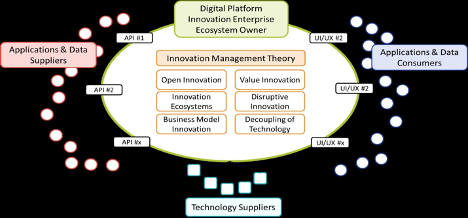
A digital platform consists of multiple services, representing a unique combination of software and hardware services a company utilizes to deliver its digital strategy. Digital platform strategies are one of the fastest-growing markets. Digital platforms help businesses enhance user experience in order to attract new customers. The evolution of advanced technologies such as IoT, AI, Cloud, and analytics are playing a crucial role in driving the growth of the digital platform market. McKinsey’s survey strongly indicates new evidence for the power of digital platforms and suggests it is a winning operation model for digital strategy. A digital platform is the unique collection of tools and services an organization uses to deliver its digital strategy. Another way to look at a digital platform is it is a business model that allows multiple participants (producers and consumers) to connect to it, interact with each other and create and exchange value.
image 115

Benefits of a digital platform are:  generate revenue, reduce costs, foster collaboration and innovation for new products and services, gain speed to put products on the targeted markets. For information and help on developing your digital platform or ecosystem, contact Mach1Design at [email protected] or give us a call at (469) 536-8478

4 Steps To Test Market Demand for a Product You Haven’t Created Yet

Test Market Demand

Credit: Ron Rule

It’s 2:00 a.m. — you’re tired, but you can’t sleep because you just had the most profound idea an inventor could ever have. Your product is going to change the world and millions of people will buy it. You’re sure of it!

Then reality sets in.

Coming up with an idea was the easy part. Now you have to figure out how to actually make the thing. And once the high of being the person who thought of the next big thing starts to wear off, you realize that if you’re being honest, you don’t really know if people will actually buy it yet. So how do you find out for sure?

Do Focus groups Work To Test Market Demands

Focus groups are a nice idea, in theory, but anyone whose been in the consumer products space for any length of time will tell you there’s one big problem with them: they don’t work. What people say they will buy and what people actually buy are usually miles apart. The problem with things like focus groups, surveys, pre-registrations, and similar endeavors that attempt to gauge pre-market demand is that they’re always based on a logical problem/solution setting. Asking someone “Would you buy this?” when they know it isn’t available yet results in them thinking about it logically instead of emotionally. They’re viewing the item as something they might consider down the road. That isn’t a real commitment — thinking about it for later doesn’t mean they would actually hand you a fist full of cash for it right now.

I stopped bothering with non-committal feedback for new products about a decade ago. We launched a lot of products that failed after survey data indicated they would be a hit. We passed on a certain “blanket with sleeves” after all of the focus group and survey results viewed it unfavorably — another company took it on and ended up selling more than 30 million units.

At the end of the day, the data never matched real-world behavior when respondents didn’t have any skin in the game.

So How to Test Market Demand?

The only way to truly do market demand testing is to know if someone is going to fork over their hard-earned cash to buy your product is to get it in front of them. Traditionally, that meant you would need to create a prototype, spend a good bit of time testing and refining it, and eventually manufacture a small quantity. Unfortunately, this was the most expensive way to learn that people weren’t going to buy it.

But that was the old way. Today, we use a whole new method of testing market demand — and it’s so simple, you’ll wonder why you didn’t think of it yourself before reading this. Here’s the process I currently use whenever I want to field test a new idea, without spending one cent on product development.

1. Create Your Brand Identity

The first step is to come up with a name and logo. It doesn’t actually have to be permanent or your final choice, it just has to be unique enough to not be confused with anything else that’s already on the market. Go ahead and register the .com version of your brand as a domain name — I strongly recommend getting the .com over other TLDs. If it’s not available, try prefixing it with words like “buy” or “get.”

2. Photoshop Your Product Concept

Have someone who knows what they’re doing in Photoshop create images of what your product would look like. You’ll need a few stand-alone product shots (product on white or transparent background) and some lifestyle shots showing your product being held by users or displayed in its intended settings. You can find plenty of people to do this for you on Fiverr.

3. Create an eCommerce Website

I usually recommend using Shopify, but if you’re more comfortable with WordPress you can use an eCommerce plugin like WooCommerce. If you aren’t particularly web-savvy, you can find plenty of people on Fiverr who can help you set things up. Simple, minimalist templates are best (and usually free). Leave your payment processing in Test Mode — Your goal with this website is to present your product as though it already exists and is available for sale right now. You want people to be able to add your product to the cart and check out as if they were really buying it. The difference is that since your processor is in test mode, you aren’t actually charging their credit card.

4. Drive Traffic With Email and Facebook Ads

If you’ve finished the above steps, you now have a website for a product, with great photos and a fully functional checkout, which people can buy (even though you secretly aren’t actually charging them). Now it’s time to get some traffic to it and see what happens. If you have an email list you can blast it out to, go ahead and start with that. Otherwise, the best way to test your product’s conversion rate is through Facebook ads. Create a Facebook page for your brand, create an ad for your product, and promote it. Personally, I would spend around $10,000 on a proper marketing test, but you can start with a lot less if you aren’t comfortable going that high right away. I do recommend spending at least $1,000 because you want to get enough clicks and conversions for the data to mean something — trust me, it’s a heck of a lot cheaper to lose $1,000 on testing market demand than it is to lose tens or hundreds of thousands of dollars producing a product nobody wants.

When your marketing test is completed, you’ll have a few important figures:

  1. How much traffic did your site receive?
  2. How many sales did you get?
  3. What was your site’s conversion rate?
  4. What was your cost per acquisition?
  5. What sort of comments did people make on your ad?

Now it’s just a matter of digesting those numbers. Usually, marketing tests aren’t “profitable,” so don’t worry so much about the CPAs — in a proper marketing campaign, you would be refining your audience to get those down anyway. It does give you an idea of what you would be working with out of the gate so it’s something to keep in mind.

At this point, you can shut down the website and Facebook page so no additional “orders” come through. It isn’t necessary (or recommended) to reach out to the people who ordered and let them know it was a test. Since you never actually charged anyone’s credit cards, they haven’t made a purchase.

Main Takeaway From How to Test Market Demand

The main takeaway here is to gauge whether or not there’s at least some demand for your product concept, and the Market it as if it were real test is the best way to get those answers. A person who typed in their card number, believing they would be charged, made a real commitment to buying your product. Knowing how many people will do that is way more valuable than any survey or focus group. Best of all, you’ll probably have quite a few comments on your Facebook ad too. If your first ad doesn’t do well, that might give you an idea of what they didn’t like — that means you can go back to the drawing board, make a few changes, and test again until you find a winner. Contact a marketing agency to see how we can help you with your testing your products market demand and marketing your brand new products or email us at [email protected]