Millennial Healthcare: Five Ways Millennials Do Healthcare Their Way

Millennial Healthcare

The generation gap is nothing new in social and political culture, nor is the lack of understanding from one generation to the next. The significance of the technological revolution and the speed with which it has transformed our environment is unique in today’s context. While previous generations have adapted and continue to adapt to this new frame of reference, millennials have been shaped and wired differently from the start. Technology is frequently viewed as a means to make existing processes faster, easier, and more efficient by digital adopters. As more millennials enter the labor force and consumer market, they will alter the what, where, how, and why.

As healthcare is undergoing its technology revolution, it must be with an eye to the newest generation of patients and caregivers. Understanding key drivers such as options and access to information will be critical success factors. Healthcare will be no different, meeting this generation’s technological needs more than ever, as much of our interactions have moved to the digital sphere.

Millennial Health Nowadays

The internet is often the first place many of us go to find information, and health guidance is no exception, especially among millennials. A survey of 2,040 millennials (ages 23 to 39)  was conducted and discovered that 69 percent of respondents searched online for health and medical advice rather than going to the doctor, and a quarter of respondents trust Google to diagnose their symptoms accurately. Furthermore, a large majority (83 percent) conduct their research even after receiving medical advice, and 42 percent trust their research more than that of their doctor. Nowadays, with the peak of technology, the power of the Internet is redefining how millennials and healthcare are perceived.

Five Ways They Sought Healthcare Solutions Online

Millennials, also known as a person born as Generation Y, were born at a time when the internet has enabled them to access information from all over the world. They led the way in using messaging, social media, and mobile devices to stay in touch with people 24/7. However, as many of them were looking for work, the Great Recession struck. These experiences, combined with their sheer size, make them formidable health industry consumers. Provided below are the factors why millennial healthcare solutions are popular for these people born as Generation Y:

Digital Access to Medical Services

Millennials are more tech-savvy than baby boomers, with 92 percent owning smartphones and more than half owning tablets. Almost all millennials use the internet, which may only have access to through smartphones. In terms of social media, 82% utilize Facebook. Instagram is used by roughly half of the population, as is Snapchat. Millennials and Generation X members want to be able to access their suggestions, services, and payment alternatives online. According to a survey, 6 out of 10 millennials favor telemedicine, such as video conversations, over in-person appointments. More people want their doctor to provide them with a smartphone app for scheduling appointments, monitoring health records, and managing preventive care. Most people would consider wearable gadgets that send health data to their doctors, as well as medications that track vital signs after they’ve been consumed.

Cost and Supplies Transparency

Concerns about job loss or being furloughed may have contributed to the increase in visits to primary care physicians. With the prospect of job loss looming, they want to ensure that they have received a checkup in case they lose employer-based health care. Even though more millennials have seen a primary care doctor, as many as 43 percent reported ignoring a health issue, with 33 percent ignoring it for more than a year. A similar proportion had not had a checkup since the pandemic began. The most common reason given was COVID-19 safety concerns; however, more than a third did not go for a physical exam because they thought it was too expensive.

Millennials are more likely to be unemployed than previous generations were at their age, and they are concerned about these costs. In 2017, a survey of over 3,560 adults with health insurance was conducted. Millennials were the most likely across generations to report researching costs online, determining whether their insurance covered their care, and discussing treatment costs with a doctor. According to the poll, millennials are more likely than older patients to request an upfront price estimate. One in every two people said they would postpone or avoid getting health care because of the cost.

Various Sources Other than a Physician

Millennials have witnessed the financial crisis, 9-11, skyrocketing academic debt, and one of the most divisive and contentious elections in history, so it’s no surprise that they distrust authority. According to a survey of 41% of millennials, physicians are the best source of health information. Only one-fourth agreed that doctors and pharmacists provide them with the information they require to make decisions. Millennials are more likely than baby boomers to conduct online health care research. These relatively well-educated 20- and 30-somethings compare treatment options and research doctor and hospital quality ratings. They seek advice from friends, family, blogs, message boards, and websites such as WebMD and Mayo Clinic. However, all of that information can make it difficult for them to make decisions.

Patient Telemedicine

According to a recent survey, only 67 percent of millennials have a primary care provider, compared to 78 percent of Gen Xers and 85 percent of boomers. Many people questioned their primary care provider’s ability to handle complex health issues. As a result, most millennials rely on themselves rather than their primary care doctor to make medical decisions. The patient’s locus of control is shifting away from the primary care provider. Millennials find it absurd to have to wait days or weeks for a medical appointment. Instead, the survey discovered that roughly one-third of them sought care at a retail clinic in the previous year.

Despite their frequent use of the internet for medical advice, the majority of millennials said they have a primary care doctor, a 3 percentage point increase from 2019. During the pandemic, more than a quarter (28%) of these people established a new relationship with a primary care doctor. However, the proportion of millennials who had a physical exam within the last year (65%) remained unchanged from 2019. A higher number of primary care visits today may be explained by the increased use of telemedicine since the outbreak began.

Health is Holistic

To millennials, exercise and nutrition are as important to health care as antibiotics are to infection treatment. Their definition of health extends beyond the absence of disease. It also includes physical fitness and mental health. According to the study, a millennial is more likely than a baby boomer to participate in wellness programs, such as those that help people quit smoking or manage stress.

Connect with Them

Millennials, as the largest generation in the United States, wield significant power and influence over the future of cross-blue shield healthcare. The non-traditional care models and services they prefer are rapidly gaining traction in the industry, resulting in more digital options for business care, an increasing number of retail walk-in clinics nationwide, and an increasing number of providers offering upfront cost comparisons. The health care changes being driven by millennials are long overdue. Even with COVID, today’s patients, particularly a millennial, has become more informed and demanding. Their efforts to improve healthcare are benefiting everyone.

Millennials expect easy access to health and medical information. They want easy-to-use patient portals, digital contact with providers, clear pricing, and quick, convenient care. Despite this knowledge, many health care providers find themselves unprepared when dealing with millennial patients. Businesses and providers should strengthen their digital presence through websites, patient portals, social media, and apps to meet the expectations of millennials. They should solicit testimonials and reviews and offer patient-friendly information in an easy-to-read format. Transparency and convenience are extremely important to millennials, so providers should do everything possible to meet these demands.

Remove unnecessary industry jargon and complicated information from your website, and millennials will be much more likely to consult with your organization for their health care needs. Posting prices online, as many retail clinics do, will help build trust among millennials, assuming the prices are accurate. Online payment options will also assist health care organizations in keeping up with other businesses. Many primary care practices are responding to the desire of millennials for quick, convenient care. They are hiring more physicians and nurse practitioners in order to avoid losing patients to walk-in clinics. They provide digital channels for patients to communicate with them and make appointments. Telemedicine is being considered by some. Finally, health care organizations, groups, and businesses must embrace the digital technology that their millennial patients crave on a daily basis. If you don’t build stronger relationships with them in the way that new startups are, you’ll likely fall behind.

Content Is King: Why You Need Great Content Marketing In 2022

Content is king

Nowadays, when it comes to marketing and businesses, using better and greater content is the key to success. It is widely known that content marketing is one of the best ways, if not, the best way to introduce your company and brand to the world.  Although many recognize this as the way in order to achieve your marketing goals, it is not clear to some people exactly which content is still relevant in the year 2022 advertising.

In any case, all you would need is to implement the correct strategy so that you can stand above the rest of your competitors. Keep in mind that there is practically no permanent strategy for content marketing. Content marking is basically a continuous problem that businesses have to deal with. This is mostly due to the constant emergence of new channels and new models, as well as the changes in them.

With that said, marketers may still be questioning what content is best to support a growing program? Where can you get the most return for the least effort? Do I really need an in-house video team? Even to this day, readers are still expecting to find some great value in the content advertising that you make. Make no mistake, the what, when, and how of great content continues to evolve at a lightning pace.

What Is Content Marketing?

Content marketing

Just so you would know, content marketing is essentially the creation and distribution of valuable content to attract and retain the desired audience. In any case, content can take on the form of many things, from simple blog posts or posters to full-on videos and podcasts. 

Basically, the whole purpose and goal of this content are to educate, engage, and inspire your audience, with the hope that they will take some desired action as a result. Most people think that content marketing is about you, your services/products, or your brand, however, that is not quite accurate, or at least, they are not about you directly.

In most aspects, content marketing focuses more on your target audience/customers advertising and what they care about and want. If you think about great content marketing, it is about how you can give your audience something that no one else can.

When great content is properly done, it lifts your brand up high above the competition and shows why no marketing strategy could be complete without a proper content marketing plan. Content marketing can come in the form of educational articles, videos, webinars, e-books, and just about any format you can think of.

Why Do We Say Content Is King?

As much as how content was important before, even to this year 2022, since January, content marketing is still vital for any company to have a successful business. It is the most effective way of generating leads and sales as well as engaging with customers and keeping them loyal.

In 2022, people want to read content that is related to brands and they enjoy reading custom content. Content marketing can make consumers feel much closer to a company. You have to remember that the advancements in technology will never regress, instead, it is constantly advancing, which is also upgrading content marketing from just paid ads and social media posts. 

Content marketing is more than just advertising, it is also able to determine what your target audience wants to see more of, allowing you to adjust and make more customers. Many people suggest that content marketing is a continuous process of communicating with your digital marketing kingdom customers through written text, images, or videos. By doing so, you can figure out how a product can solve issues that the customer may have

Apart from encouraging people to take your products or services, it is more about educating them, teaching them how exactly your products or services work, how they can benefit them, and what problems they can solve.

As content marketing is a never-ending problem, remember that consistency is key. Businesses will highly likely fail without consistency no matter how great their results content marketing strategy is. There are many different reasons why content marketing plays an important role, for a better idea, let’s get more detail about them.

Effects Of Great Content 

Boosting Conversions

One of the main things that affect your business’ conversion rates is the content marketing strategy that you display in front of your audiences. Just to be clear, these conversions are the rate of your audience that responds to your call-to-action. This practically includes anything from just responding to emails to buying an item or using your service and more.

If you’re able to provide your customers with consistent and quality content then they would feel an SEO content marketing connection between them and your business. In any case, when it comes to the content of marketing strategies, there needs to be some form of connection between brands and customers. This is your key to making them do what you want them to do. To make it work, you would need to frequently include a call-to-action and a good content strategy. 

Improving Share Social Media Presence

Social media is now a major part of many social apparatus, and marking is not exempted from this. If social media is used properly, it can be used as a powerful tool to improve the success of your social media content marketing efforts. On the other hand, if neglected, can be a great liability for the business. For this to properly work, you would need to create some superb content. In other words, you want to do more than create content that will help increase your following through social media marketing

You need to create social media content that will trend, this is how you grow your audience. When you’re able to create the right content, you can gain a lot of valuable traction on social media and can create a really positive experience for your potential social media customer traffic. Whatever type of content you create, you have to captivate your audience, which is why it’s very important to do research on who your read target market is.

Enhancing Read SEO 

Delivering consistent share quality content is also important when it comes to search engine optimization. You can tell that content marketing is not very effective when it is unable to increase your SEO. There are also chances that your marketing strategy should include some identified charge small amounts keywords and important phrases that you need to use to reach your audience, commonly known as content keywords.

Speaking of, your marketing content, you can achieve that by working with these read words and phrases in an organic and clever way. Better SEO means more visibility and a greater chance that your potential customers will become more aware of you.

Building Relationships And Trusts

Content marketing is another way to build trust and relationships with your customers and audiences. By going through content marketing, you’re able to get the chance to interact with your potential customers and news audiences, with this advertising revenue realized the opportunity, you can respond to their burning questions and satisfy them.

If you’re able to create some valuable content without asking for anything in return from your audiences, then you’re able to somehow gain some trust from your audience much faster and more deeply. If you’re able to create a trusting relationship with your customers, they are more likely to support you and seek your advice and recommendations.

The more you consistently bring out quality content, the more your SEO reputation grows. Additionally, your content will always be associated with your company and brand, so always make sure that what you put out into the world is high quality and reflects your brand’s interactive views and information printed scientific opinions.

For most people, learning about a certain brand through content instead of advertisement digital marketing is certainly preferable. When businesses take their time to create new content, consumers feel that they put customers’ needs first.

Content Authority

When your audience realizes that you are giving them valuable content consistently, they will see you as an authority in your industry. Also, remember that with more content out there, your SEO is improved, which means you’re ranking higher in search results. You should also ensure that the grade of your content platforms is faultless and that you aren’t spewing nonsense. If there are statistics, make sure that you back them up with some trustworthy agency digital marketing background. Don’t say something if you know you can’t prove it.

How To Make A Great Content Digital Marketing Strategy

Now that you’re so sure about the effects of content marketing and exactly how valuable it is, let us determine some of the best ways to get the most out of this marketing strategy. Keep in mind that in order for this to work, it requires a bunch of planning that goes into a content marketing strategy. You wouldn’t be able to take all the benefits of content marketing without a good plan.

Focusing On Target Audiences

It has been fully established that content marketing is less about you and your products or services, and more about your show audience and what they want to see. Your target audiences will likely be the main scientific information printed indicator of what your content marketing goals would be. In any case, what focusing on digital marketing target audiences means is that you must understand who you’re speaking to, and for what purpose, all the time. 

Naturally, each and every piece of content you produce should bring your customer or prospect further along their customer journey. You should be able to answer their questions and provide value at the right time. You may also find out where they consume their digital content. Anyways, one of the best ways to achieve this is to simply put yourself in the audience’s shoes. 

You can also be more specific such as whether your audience appreciates fast service or will they care more about 24-hour customer support. You can brainstorm questions that will help you get an idea of the audience you need to cater your digital content to. Another thing that can identify your audience is to take a look at your current customers. Consider the broad and narrow similarities between your blog customers. 

Personalization

Another thing is to build your brand persona and customize it with some personalization. When it comes to building a persona, you need to be specific and detailed with some in-depth descriptions of your audience. After some time of going into detail, you will start to understand your audience on a more intellectual and deeper level. With that said, you can communicate and speak with them through your content marketing. 

These personas are a look at the humans behind statistics and analytics. When you use personas your content marketing will be a lot more precise and accurate. Personalization has also been a marketing hot topic for the past few years. If you can provide the right thrive content provider’s data, you can personalize so much. It’s not just the greeting on your share email, it can be a personalized landing page, website experience, or content written.

Remember that each person is unique and it’s harder than ever to create content for a generalized group. Think about how to research or collect your own valuable first-party data, and then look for ways to personalize your message, your content companies struggle offers, and your outreach to meet your prospects where they’re at. If you are looking for ways to generate more SEO-related content contact Harold at [email protected] or give him a call at (469) 536-8478.

Related Articles:

8 Steps to Building Content Pillars to Improve Your Site’s SEO

2022 Content Marketing Strategy

How to Invest in the Metaverse Virtual Real Estate and Create a Metaverse Digital Strategy

How to Invest in Metaverse Virtual Real Estate

We are rapidly approaching the age of the metaverse – networked, persistent virtual realities in which we shall live digital lives alongside our physical ones. We will increasingly use these areas to work, play, socialize, and learn — anything we can do in the physical world will have a “digital twin” in the metaverse with which we can connect without leaving our homes. This includes investing and making money, and, as in the real world, one of the most popular methods to do so will be through property investment.

The metaverse is still in its early stages. Investing in it implies significant risks. However, investing might be with such a great possibility for significant rewards, the threats may be worth it. However, as with any other investment or company activity, you must conduct thorough research before deciding to accept challenges.

What is Metaverse Digital Real Estate?

Metaverse real estate refers to land parcels in virtual worlds. In the most basic sense, they are pixels. They are, however, more than just digital images. They are programmable areas in virtual and augmented reality platforms where individuals can mingle, play games, sell NFTs, attend meetings, attend virtual concerts, and engage in a variety of other online activities. Digital real estate is predicted to flourish and expand in tandem with the rise of the metaverse. Virtual real estate sales occurred in the fourth quarter of 2021 after Facebook changed its name to META and signaled a strong interest in the metaverse.

Why Buy Land in Metaverse?

Metaverse real estate allows consumers to get and connect with other people online. Individuals can play games and interact on their digitized property. Creators can monetize their property’s content by charging for access or trading their NFT. Brands can leverage their virtual properties to promote services, introduce virtual products, and deliver unique customer experiences. These digitized pieces of land present a profitable possibility for estate investors. Metaverse properties, like real-world properties, can be developed, flipped, or leased. Indeed, there are numerous applications for this metaverse investment.

Best Strategies To Choose What to Purchase

Purchasing virtual land, like purchasing cryptocurrencies and NFTs, is a high-risk investment. For starters, this real estate market is mainly unregulated, which means that if something goes wrong – say, a seller turns out to be a scam artist and disappears with your money – the avenues for pursuing restitution are underdeveloped, and you may find yourself on your own. Even if you are not defrauded, there are technical considerations that can add an extra layer of risk – because transactions are conducted in cryptocurrency and NFTs, you must be confident that you can securely store these and will not forget your password or whatever means you are using to authenticate your ownership.

How to Make Virtual Real Estate Investments

Purchasing a metaverse property operates similarly to purchasing an NFT. Your ownership deed is a one-of-a-kind bit of code on a blockchain. This code validates your ownership or rights to that piece of online real estate. So, to begin your virtual real estate portfolio, you’ll need your crypto wallet. Some services employ specific cryptocurrencies for their transactions, therefore you should look into them before registering for a new wallet. Then, go to the virtual metaverse platform and register for an account. You must link your digital wallet to the site to purchase property and other assets. Select and purchase a piece of land. Metaverse land, like real-world real estate, can be purchased through brokers and property managers. However, unlike in the real world, metaverse brokers do not require licenses and are not subject to any restrictions. So make sure you only do business with reputable companies.

Location is important in picking a virtual territory in the metaverse, just as it is in real life. Parcels in The Sandbox and Decentraland are becoming increasingly valuable as major corporations like as Atari, Samsung, Miller Lite, and Adidas stake their claims in these online worlds. Many early purchasers of neighboring or nearby lots have profited handsomely from their purchases. If you intend to invest in virtual real estate, search for places with development potential. Places, where people may congregate, will be more valued than those in unremarkable places. Consider land sites adjacent but not within developed areas. You can buy these properties for a modest price, develop on them, and then wait for prices to rise.

Marketing and Buying Platforms

Buying land in the metaverse

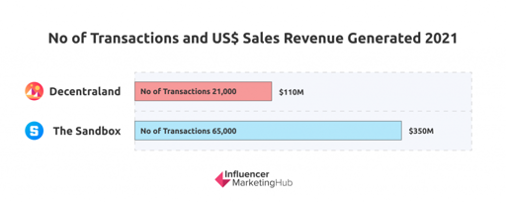
The Big Four possess the vast majority of virtual real estate. Decentraland, Sandbox, Somnium Space, and Cryptovoxels are among the prominent actors in the metaverse economy. These platforms own a total of 268,645 plots, many of which are among the most expensive on the market.

Sandbox

Sandbox presently controls around 62 percent of the virtual property market. LAND here currently costs an average of $11,000, with premium lots selling for between $20,000 and $30,000. You can buy or rent virtual areas for a variety of purposes. There are various sizes of family residences, commercial facilities, art galleries, and hangout locations. Everything on this UGC-voxel platform is created by the community for the community. Sandbox producers and players purchase, sell, and trade voxel creations. They purchase LAND and construct experiences on it. They can also monetize these experiences with NFTs and SAND, Sandbox’s utility coin.

US sales in the metaverse

Decentraland

Decentraland is a 3D virtual reality platform based on the Ethereum blockchain. LAND NFTs with particular grid coordinates and a reference to parcel data are used to convey ownership of land parcels. Users must have MANA tokens to acquire LAND, which may also be used to purchase in-world things. Decentraland’s virtual world is divided into districts, each with its own set of content. These areas allow users to interact, browse, and share content. These districts provide creators and brands with more focused traffic, allowing them to bring their content to specific consumers.

Somnium Space

Somnium Space is a blockchain augmented reality metaverse branding created solely by its users. The 3D virtual world provides users with rich VR experiences that can be accessed on both desktop computers and mobile devices. The virtual space is separated into three sizes: small, medium, and extra-large chunks. You can develop your area on the waterfront or roadside property. You may monetize your digital assets by importing objects like avatars. In Somnium, land parcels and in-game assets are tokenized. On the Ethereum and Solana blockchains, ownership is authenticated and documented. Somnium Space parcels have a median price of $11,500. In February 2022, the most expensive lot sold for $43,100. Those with low money who want to buy parcels can still do so with smaller parcels priced between $2,000 and $4,000.

Cryptovoxels

If you’ve played Minecraft, you’ll feel right at home at Cryptovoxels. In this virtual environment, you purchase land and construct structures out of monochrome blocks. Colors and other components can be added to your designs using native $COLR tokens. The site also includes editing, avatar creation, and messaging features. Creators and brands can buy digitized land to establish galleries and stores to promote their carefully chosen collections, products, or services. A lot of land at Cryptovoxels presently sells for $5,000 on standard, but prices can go up to $10,000 depending on the size and location of the property. Like other virtual worlds on the Ethereum blockchain, land ownership is forever recorded on the blockchain.

Aside from the Big Four, more than a dozen platforms currently offer metaverse land sales. Axie Infinity, Star Atlas, Bit Country, and Aavegotchi are some other options.

Risks or Rewards

There are two primary reasons why you might wish to dive into virtual real estate investing, much like in the real world. The first option is usually the safest, you want to utilize it for something specific, such as building a house to live in or a business location. When we say “dwelling” in the metaverse, we truly mean having a location to call home, where you can show off your belongings and maybe even invite friends over to hang out. It’s similar to having a personal website in the early days of the internet before everyone switched to social networking. Individuals will utilize metaverse “homes” to express their personalities online or to keep their collections of unique digital collectibles. This is the less hazardous rationale for wanting to buy metaverse land – because you’re more likely to acquire what you desire.

why invest in the metaverse

The second motivation is an investment, and this is where things may get a little dicey because, as with any investment, there is no assurance that its value will rise. However, we appear to be in the midst of a gold rush in terms of virtual real estate, with average values growing by a factor of ten in the last year. Many people are purchasing digital land now because they anticipate it will become much more valuable in the future as more people get interested. Some are even buying to let, with a thriving rental market on the horizon.

Although the metaverse is likely to grow rapidly in the coming years, it is still a young business that is far from solid. For example, if a metaverse platform goes offline permanently, all of your land and assets on that platform are rendered ineffective. Then there’s the matter of valuation. The challenge of how to allocate value to a territory whose scarcity is artificial and whose future value cannot be determined is constantly present. Metaverse land is vulnerable to fluctuating situations because its value is dependent on highly volatile cryptocurrency.

Summary

Investing in metaverse properties is highly speculative rather than prospective, and is fraught with dangers. To suggest the hazards are significant is an understatement. You can lose all of your investments in the virtual world in the blink of an eye. However, the rapid transition to full digitalization in nearly all industries has the potential to yield significant profits on metaverse real estate investments. Learn everything you can about the metaverse before making any investing decisions. Recognize all of the dangers and obstacles and measure them against the potential advantages. You should make your decision only after properly researching all of the benefits and disadvantages.

Your Company Can Profit From Mobile-First Web Design

mobile web design

Responsive website design is no longer sufficient!

As people’s use of mobile devices grows, mobile-first web design is becoming increasingly vital. This means that your website should be built from the ground up with mobile users in mind, rather than attempting to make it work on both desktop and mobile devices at the same time.

The Importance of a Mobile-First Web Design

image 266

The importance of mobile-first web design has grown as more people utilize mobile devices. Mobile devices account for roughly half of all web traffic, according to Statista

Millennials also use their smartphones for roughly five hours per day. If you want to stay competitive, you need to give your visitors a mobile-friendly experience. Some of the advantages of mobile-first web design are listed below.

A mobile web design reduces the amount of fat material on a website by presenting information in a way that mobile visitors can easily interact with. The Jackson County Public School website, for example, is built with mobile navigation in mind. 
Text sizes are also important for readability. Mobile-friendly websites should employ font sizes of at least 16 pixels. The overall user experience would be improved by creating a mobile-friendly website. It will also aid in the ranking of your website in search engines.

The design of a mobile-friendly website should be simple to explore and utilize. Users of mobile devices require information that can be accessed quickly and conveniently. Because the user experience is paramount, it is critical to create mobile-friendly devices. 

Use a responsive mobile design and A/B testing on landing pages for improved results. You’ll be able to tell which one converts better and has a higher conversion rate. You may also measure the effects by including the most recent Google Analytics data on your mobile-friendly website.

Concentrate on the content and messaging

image 267

Instead of navigating the site to discover information, mobile consumers want to instantly understand the material and messaging you have to provide. As a result, while developing your website for mobile, it’s critical to prioritize content and messaging. 

You can achieve this by incorporating photos into your design. Just keep in mind to choose them prudently. Combine bold, vivid colors and natural photographs with clear writing and geometric designs for a striking look. A simple design should direct users’ attention to the most important aspects of your website.

Keep in mind that mobile visitors aren’t as patient as their desktop counterparts while building mobile web design sites. On a laptop, individuals may read content three times longer than on a mobile device, but this is not the case on mobile. 

Meanwhile, desktop users can scroll through content, most mobile users will skip long paragraphs and jump to the next section. Focusing on content and messaging is the greatest method to build a compelling mobile experience.

This is exemplified by the Internet of Things. Mobile users are already familiar with wearable devices, but the internet of things will soon include in-car and home devices that must show web pages. 

As a result, mobile-first design begins with an information architecture that considers mobile consumers’ needs. Designers will have a limited area for critical functions and messaging due to the usual screen sizes of smartphones ranging from 4.7 inches to 6.5 inches.

Web Design using Images

image 268

The importance of images in the mobile experience cannot be overstated. They not only provide interest and information to the rest of the article, but they also support it. Ideas help capture a mobile user’s attention, and if they’re well-chosen, they’ll operate effectively on the device. 

In just a few seconds, a website visitor might decide whether or not to stay on a mobile page, thus carefully selecting photos that match the site’s design and content is critical.

The size of an image might change based on the size of the viewport. Images on tiny screens should fill the entire viewport, whereas images on larger screens should only take up a small fraction. 

The sizes element is used to specify images in media queries. A viewport width larger than 600px indicates a 25% width, whereas a browser width between 500px and 600px indicates a 50% viewport width.

Because images are the single largest source of page weight, optimizing them can help you save bandwidth and reduce page weight. Using the right picture formats and optimizing them might also help you save bandwidth. 

While images are vital, image optimization and file compression should also be considered when selecting images for your mobile web design. The appropriate images can improve your overall site experience while also reducing file size and page load time.

UX is aided by images

image 269

Because 85 percent of web users expect the same quality on their phones as on their desktops, using images to support your content and messaging is critical. Here are a few examples of how photos can be used in mobile-first web design.

Although imagery is an important aspect of the user experience, not all images contribute to the overall quality of the experience. Users may become confused and lose interest if an image is chosen incorrectly. Choose acceptable and meaningful images to support the major aims of your product. 

Moreover, avoid utilizing decorative photos in your design because they rarely add to the overall quality. Furthermore, users frequently overlook them, which can be aggravating.

Because photos can improve a site’s operation, image quality should be excellent. On a mobile device, the correct images will look great and make the user’s experience memorable. 

Photos must be compressed and chosen with care. You must, however, ensure that they are not excessively huge or little. Your site will be responsive if you use the right images.

Engage a Digital Marketing Web Designer

image 270

Responsive design mobile-first is a terrific method to keep your website’s appearance and feel consistent across numerous screen sizes in a world where most traffic originates from smaller devices. The majority of adults believe that a mobile version of a website should be as appealing as the desktop one.

Using a web designer whether it’s an app, a website, or a social media platform, a digital marketing web designer firm for mobile-first web design and development is critical for brand success. 

Almost half of all shoppers now purchase on their phones, and a bad experience might drive them away. Nike, for example, has recognized the advantages of a mobile-first web development strategy and has built an app to boost customer engagement and income.

Search engines reward businesses with search traffic, which a good website design and digital marketing agency understand. A website designer who is familiar with SEO concepts will be able to assist you with messaging and sales funnel decisions. 

Going Mobile-first And Responsive Web Design

Another thing that makes going mobile-first so important is that your website will become more compatible with all different types of platforms on the internet. When making these adjustments, don’t go too overboard. 

The site that you see on the mobile device should still be quite similar to the one that will appear on desktop computers as well. With that said, sometimes it can be hard to visualize how exactly a site will look on the desktop when you’re working on a mobile-first design, so give both platforms a test and make any necessary adjustments.
A responsive website design also means that a company’s website is more likely to increase conversions. The perfect mobile-first and responsive web design will assist your bottom line, whether you’re an eCommerce company, a restaurant, or a non-profit organization.

Becoming More Organized And Manageable

Mobile devices are much easier to read because of how they’re designed, and because most content creators like to arrange the text in easy-to-read paragraphs of two to three sentences. Expect most mobile-first sites to be designed in a similar manner.

Digital Marketing Web Designer

image 271

Professionals in this field should be transparent and easily accessed by their customers. They should also be capable and allocates enough time, effort, and attention to your digital marketing plans. We operate to satisfy the different and unique needs you and your customers need.

Contact [email protected] or call (469) 536-8478 if you need a new website or want to refresh an existing one.

What “Website Analytics” Means

website analytics

Many of the goals of website analytics are similar to those of business analytics. It collects detailed information about your website and assists you in making sure that it is working as hard as it can for you.

Learning which elements of your website operate well is essential to making your website visible to potential clients. It also necessitates determining which pages require more effort. Understanding how to use website analytics can help more people learn about your company and become consumers.

The measurement, analysis, and reporting of data about your website are known as web analytics. The most well-known is Google Analytics tools. They come with a variety of tools for analyzing the performance analytics of websites. 

However, like any type of site analytics, certain technologies will be more beneficial to your company than others. For example, an insurance agent wants visitors to be able to discover information that is relevant to their circumstances. In the end, they want visitors to request a call or a meeting to talk about their alternatives.

You strive for the best inventory, pricing, and location for your business. Similarly, website analytics may be used to improve your website and attract more visitors. Consider web analytics to be a crucial component of your total business analysis. These site tools help you fine-tune your website to rank higher in search engines and attract more visitors.

Knowing what you want your website to achieve will help you figure out which metrics are the most important. This information allows you to optimize your website so that the analytics findings match your business objectives. Web analytics can help you improve the experience of your website visitors as well as your company’s performance.

How Do Web Analytics Work?

Each page of your website’s code has a little snippet of code that analytics tools inject. Every time someone views or clicks on a link, it “tags” the page to collect information. Website analytics systems collect a variety of data from these tags, including:

•  The number of unique visits to your website

•  The devices that visitors use to access your website

•  The browsers that visitors use

•  The geographic locations of your visitors, as indicated by their IP addresses

Find out more about what your website’s visitors do.

Web analytics systems can also collect useful visitor behavior trends, such as:

•  Certain pages are often visited by visitors (landing pages)

•  The most popular pages on your website

•  How much time do visitors spend on your site?

•  The number of times people visit your site and click on each page.

•  The number of times people “bounce” from a page on your website (your bounce rate)

•  What keyword searches bring people to your website?

Furthermore, analytics tools can assist you in testing how your audience responds to different material as you add to or update your website. This will assist you in determining which material is most popular among website visitors.

What Are Web Analytics Generally Used For?

When it comes to web analytics, it is helpful for understanding which channels users come through to your website. Additionally, you can determine whether they are popular site content by calculating the average length of stay on your web pages and how users interact with them, this include which pages prompt users to leave.

The web analytics process includes the following:

  • Setting business goals: Defining the key metrics that will determine the success of your business and website
  • Collecting data: Gathering information, statistics, and data on website visitors using analytics tools
  • Processing data: Converting the raw data you’ve gathered into meaningful ratios, KPIs, and other information that tell a story
  • Reporting data: Displaying the processed data in an easy-to-read format
  • Developing an online strategy: Creating a plan to optimize the website experience to meet business goals
  • Experimenting: Doing A/B tests to determine the best way to optimize website performance

You can use this information to optimize underperforming pages and further promote higher-performing ones across your website. 

How Can Website Analytics Help Your Business?

Assume your company is a bakery. You decide to add French crullers to your menu, and they soon sell out. These sales numbers assist you in fine-tuning your offers in order to maximize your return on investment.

Website analytics tools may also prompt you to make changes to your website in order to include a feature that appeals to site users. Assume you run a business that relies on appointments. 

It’s possible that adding an online appointment scheduling feature can help you attract more customers. By offering a tool to estimate savings by combining coverage types, insurance brokers may be able to attract more clients.

Website analytics can also assist you in developing targeted marketing efforts. Your analytics tools collect data that helps you better understand your consumer base. This allows you to market to them in ways that reinforce their brand loyalty.

Website Analytics Pitfalls to Avoid

Web analytics tools, as strong as they are, can’t accomplish everything. A cookie, for example, is a standard analytic tool that analyzes visitors’ sessions on your site and archives repeat visits. 

However, some users remove cookies, and some web browsers prevent analytics software from using particular code snippets. As a result, no tool can claim to be 100% accurate.

It’s also vital to consider how you employ analytics tools. If you don’t filter away online traffic from your own firm, for example, you’ll get an erroneous picture of how well your site is performing.

Additionally, the code snippets that analytics systems employ change. You may not be obtaining the most accurate data if you employ outdated tracking snippets.

Maintain Best Practices

image 263

There is no one-size-fits-all set of best practices that will work for every company. A plant nursery will employ internet analytics tools in a different way than a cosmetic surgery center. Your general business goals and processes will aid in determining your specific best practices. In general, though, you should keep the following in mind:

•  Metrics for web analytics should be in line with overall corporate goals. You must track enough metrics to generate insights without tracking too many that your efforts get overwhelmed. You can adapt your analytics to assist you in reaching your website goals if you know what they are.

•  Make decisions based on hard data. You don’t have to rely on gut instincts to determine which page design is the best. You may use analytics tools to test them and see which one your visitors prefer. If your pricing pages, for example, aren’t getting enough traffic, analytics tools might assist you to add links in more effective places.

•  Don’t let general traffic statistics cloud your judgment. A smaller total number of visitors who go to your order page is preferable to a large number of visitors who leave without going to your order page.

•  Stay up to date on any changes made by your analytics supplier. Updates to their code snippets and reporting choices are discussed. That way, you can make sure that all of your pages are using the most recent tool versions and that you’re getting the most out of your analytics.

Start Using Website Analytics Immediately

web analytics

Many firms are intimidated by website analytics. There are many options, and getting the most out of web analytics takes both technical and business knowledge. Don’t let fear prevent your website from performing at its best.

At Mach 1 Design, we study everything we can about your company and your customers, and we know how to apply what we’ve learned to choose analytics solutions that will help you succeed. Speak with one of our staff members today if you’re ready to put website analytics to work on your site. Contact us today: at [email protected] or call us at (469) 536-8478.

To Boost Your Small Business Quickly, Invest in Local SEO

local seo

You’ve probably heard the term SEO thrown around like mystery meat in a school food fight if you’ve spent any time in the digital marketing field. This is because it’s an important part of many marketing tactics, and it’s especially useful if you’re a small, local firm. However, context is crucial, as it always is. 

We’ve got you covered if you want to learn more about the role of local SEO for small businesses and how it can benefit yours. Let’s go over some high-level concepts regarding search engine optimization before we get into why local SEO is so vital for small businesses (SEO).

What is Search Engine Optimization (SEO)? 

Search Engine Optimization (SEO) is a term that refers to the process of optimizing This refers to the steps your digital marketing team can take to increase organic search traffic. It’s all about getting your website on the top page of popular search engines (like Google) for search terms that your key personas are looking for, and this doesn’t happen by accident. It’s the result of content optimization.

We live in a world where there is an endless supply of knowledge at our fingertips. As a result, it’s critical to do all possible to optimize your search result rankings. 

When it comes to SEO, it might be difficult to adopt for the first time, which is why digital marketing services are available to assist. Check out this site for some tips and tricks on how to placate the all-powerful Google ranking system!

What is “Local” SEO, exactly?

image 259

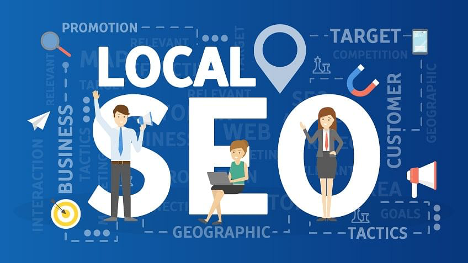
The likelihood of your firm appearing in front of local users is referred to as local SEO. Do you own a small business that primarily serves your neighborhood? Do

you have a physical place where you sell products or meet with clients? If that’s the case, their website traffic is crucial to your bottom line.

Who benefits from local SEO?

Industries that benefit from local SEO include:

  • Law firms
  • Yoga studios
  • Accounting
  • AgriculturalServices
  • Apartments
  • Architects
  • Assisted Living
  • Attorneys
  • AutoRepairShops
  • BailBonds
  • Bakeries
  • Banks
  • Bars
  • And much more!

What are some things you can do to boost your local search ranking? Most importantly, how can you make it easier for members of the community and visitors to find your business? Read on to learn more about local SEO for small businesses in our guide!

Local SEO Ranking Factors on Google

The Google search engine assesses whether or not your website is worthy of being on the first page. This is accomplished by a sophisticated search algorithm and ranking mechanism. However, the algorithm is always changing. This makes it difficult for small firms to remain on top of local SEO best practices.

All ranking elements, as we currently understand them, can be divided into three categories:

Relevance, prominence, and distance from your customers are all Google Local Ranking Factors.

Relevance

How relevant are your company’s products or services to the search query of a potential customer? It’s not easy to figure out what a query is trying to accomplish. The algorithm, on the other hand, works hard behind the scenes to find the most relevant results.

Prominence

 The term “prominence” refers to how well-known your company is. This is demonstrated to Google by the number and quality of customer or client reviews. A two-star restaurant with few reviews, for example, is unlikely to appear at the top of a local search results list.

Distance

 Unless the user is standing five feet away from the business! If a user doesn’t provide a location in their search query, Google will present the closest companies based on what it knows about their location. Keep in mind that we’re talking about local SEO traffic, so proximity is crucial.

Google’s search algorithm carefully analyzes these three elements to provide consumers with the most useful search results.

Factors that Influence Local SEO Rankings and How to Improve Them

 So now you know the key three local SEO ranking variables, but how can you boost local SEO for your small business? Don’t be concerned if it appears intimidating. We’ll go over some of the most critical factors to consider while optimizing for local traffic.

Google My Business is a service provided by Google

image 260

Google My Business is a fantastic method to make your local company stand out!

 Google My Business, sometimes known as GMB, was launched in 2014. Your Google My Business page is a Google business listing. It looks like something you’d find on Yelp. The most crucial thing to remember is that your Google My Business page will appear separately from search results.

In fact, if a user types a mobile search into the browser, it displays at the top of the page before any search engine results! Let’s imagine you’re the owner of a cafe. Someone is seeking a spot to get a coffee while on the run. They take out their phone and do a search for “top cafes near me.”

Google considers the three major ranking elements we covered before in order to display the user the business listings that are most relevant to their search. The “local pack” is the term for this. It’s a collection of three featured businesses that are relevant, prominent, and close to the query.

Furthermore, your Google My Business profile effectively places you on the map! A user can find your address on Google maps by searching for your business name if you specified the location for your business listing. It’s quite evident that GMB is a local business’ ideal search engine optimization tool.

Are you prepared to compete for a spot in the local pack using local listings? Don’t get ahead of yourself just yet; first, claim your GMB listing! Fill in as much information as you can, such as your business address, phone number, and hours of operation. The more information you provide, the better Google will be able to determine your relevance.

One last GMB tip: make sure you monitor and edit your listing on a frequent basis. The service is interactive by design, and other users can provide suggestions for changes to your website. Although Google uses the word “suggest,” these changes might sometimes go live without the business owner’s knowledge.

NAPs (name address, phone #) and on-page SEO

 If your company is focused on serving the local community, make sure your content marketing and SEO local tactics reflect that. Create blog posts using keywords that are specific to your area. 

Make sure to optimize all URLs, title tags, headers, internal links, and meta descriptions. GMB may be a local SEO gold mine, but that doesn’t mean you should neglect the fundamentals.

Another smart practice is to keep your NAPs (name, address, and phone numbers) consistent throughout all of your internet pages. Put your NAP in the footer of your website if it isn’t already there!

Name, Address, and Phone Number: How Important Are They? Local SEO requires consistency.

Brand consistency, such as having the same logo, colors, and tagline whether on TV or online, can help your audience know and trust your brand. 

Businesses should focus on NAP consistency when promoting online because it is vital for local SEO and E-A-T. These abbreviations are explained below, along with how NAP consistency can affect your company’s web marketing activities.

What Is The Difference Between SEO, NAP, And E-A-T?

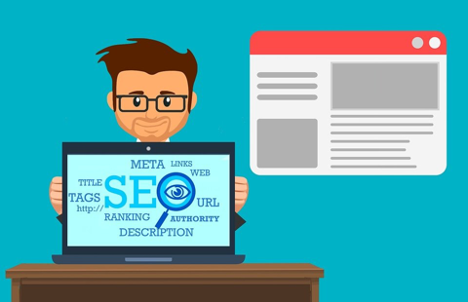
I realize how confusing all of the acronyms may be. SEO, or search engine optimization, is the process of improving the visibility of your website in search engine results pages (e.g., Google search results) for relevant search phrases. 

If you’re a personal injury attorney in San Diego, for example, you’ll want to appear in a Google search for “personal injury attorney San Diego.” That is the essence of SEO.

Name, address, and phone number are all abbreviated as NAP. The NAP of your company should be consistent across the internet. In the following part, I’ll explain why this is significant.

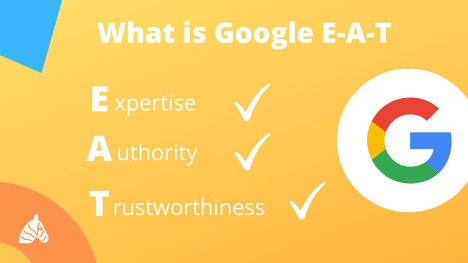
Expertise, authority, and trustworthiness are all represented by the letters E-A-T. Not only for potential customers but also for Google and other search engines, you want to be the industry’s expert and trusted authority.

Why Is NAP Consistency Important For Local SEO For My Business?

image 261

Online business listings should be an important aspect of any digital marketing strategy for your company. These listings are backlinks that search engines can use to increase the authority of your website. 

A backlink is a link that points to your website from another website. You might think of it as another website supporting yours, and search engines notice this. All of these endorsements, however, should contain the same information about your company.

We begin with the “big three” business listings for my company: Google My Business, Bing Places for Business, and Yelp for Business. These listings should mirror any other listings and social media profiles you develop. These listings should also be consistent with your website’s NAP information.

Why? Consumers are looking for this kind of detail when they’re ready to contact a local business, and search engines want to give them the most relevant information possible. 

If your NAP information is inconsistent across the internet, search engines may be unable to trust it, making it more difficult for your business to appear in search results for locally targeted inquiries. This point corresponds to your company’s E-A-T.

Why is NAP critical to my company’s E-A-T?

As I mentioned earlier, NAP discrepancies can hurt your local SEO since search engines won’t trust the information you’re giving them. In other words, search engines will not trust you. Many of my clients are lawyers and law firms with websites that advertise “your money or your life.” 

This indicates that a person’s financial, health, or professional decisions may be influenced by their web pages. These websites are held to the highest standards by Google and other search engines. This standard includes displaying accurate NAP data.

There’s another, even more, crucial aspect to this: E-A-T must be promoted to your target customer or client. Inconsistent NAP information can hurt your chances of attracting new customers or clients. Consider how aggravating it is to call a business and discover that the phone number is incorrect or even out of service. 

Another example is driving to a shop that is closed yet appears to be operating online. That person would have a bad experience with that company, and it would not be surprising if they called or drove to the rival.

Maintaining Consistency in Your Company’s NAP

Consistency is the most crucial takeaway from this article. You do not need to use the same business name as on your business license, but any name you choose must be consistent throughout.

Here are some questions to ask to confirm that your name is consistent:

•  Is your company a limited-liability corporation (LLC)? Do you want to use the term “LLC” in your company name?

•  Does your company name include the word “and” or an ampersand? Which one will you employ in the future? Do not use them interchangeably.

•  Is there a comma in your company name? Whether you keep them in or leave them out, be consistent.

Consider how you want to list your company’s address as well. Is there a suite number included? I propose that you spell out acronyms (for example, “Suite” rather than “STE”) and provide your unique suite number wherever possible.

The goal of search engines is to offer users the most useful and relevant information possible. They will be more inclined to reward you if you provide them with consistent NAP information across the web. Even more importantly, you will provide potential customers with a positive first impression of your company

Make an effort to get your NAPs published in as many local directories as possible, in addition to keeping them up to date on your website. Correct any

citations that may contain inaccurate information. The ranking system loses faith in your listing because your NAPs are inconsistent across the web.

Make a request for feedback.

We recommend that you ask for reviews in order to improve local SEO for your small business. Reviews are used by Google’s search algorithm to determine your importance. The number of reviews, as well as the rating, are taken into account.

If a consumer has had a particularly good or bad experience with your organization, they are more inclined to provide a review without being asked. If you don’t have many reviews on your books, one nasty review might absolutely ruin your rating.

Negative reviews may turn off potential customers. Encourage satisfied consumers to leave a review on Google to make your company stand out. According to studies, 70% of customers will provide a review if they are asked.  Don’t be afraid to ask your customers to leave a review because it’s one of the most effective ways to boost your company’s reputation and local SEO.

Local SEO’s Importance for Small Businesses

Regularly reviewing and optimizing local SEO best practices for your small business are essential tasks. Customers who are actively looking for your products and/or services will find your website as a result of these efforts. Creating a local SEO plan may seem intimidating if you’re already in charge of your company’s day-to-day operations.

We can help you fine-tune your local SEO strategy if you need it. Call (469) 536-8478 or email [email protected].

6 Steps to Creating a Successful Social Media Marketing Strategy

Creating a Successful Social Media Marketing Strategy

Developing a marketing plan, especially in today’s world, is a difficult endeavour. You can feel apprehensive and stressed out at first since you don’t know where to begin. Let’s have a look at how to make an effective social media marketing plan step by step:

Step 1: Carefully choose the best social media platforms to reach your ideal audiences

image 251

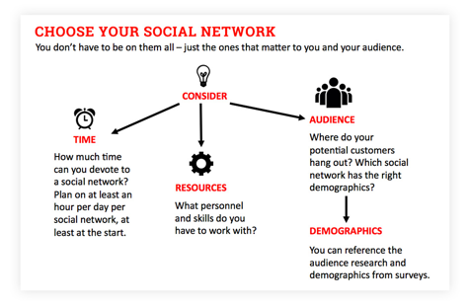
First and foremost, you should utilize the social media platforms that are most appropriate for your approach. It’s not necessary to be on all of them. It depends on what you want to accomplish for your company through social media.

The following are some sections that will assist you in selecting the appropriate social networks:

• Time – How much time do you require and intend to dedicate to each social media platform?

• Resources – Do you have the necessary talents and resources to get the job done? Instagram and Pinterest, for example, need high-resolution photographs.

 • Audience – Which plan for social media strategy platforms do your customers prefer to use for your business?

Step 2: Fill out your social profiles completely

Check all of your social media profiles regularly to ensure that your profile picture, bio, cover photo, and content are all current. This demonstrates professionalism, and strong branding, and demonstrates to your clientele that you are serious about engaging them.

Make sure that all of your profiles are linked together in some way. However, do not reuse content across all of your social media strategy marketing profiles. Additionally, Canva is a powerful free web tool that any company may utilize to produce the proper graphics.

You should concentrate on the bio/information portion in terms of text. Let us demonstrate six rules for writing a professional social media bio:

1. Focus on “what I’ve done” rather than “who I am.”

 2. Select keywords that are appropriate for your target audience.

3. Keep language fresh by avoiding common grammatical errors.

 4. Respond to your new client’s question, “What’s in it for me?”

 5. Make it personal

 6. Return to the site frequently.

Some examples of networks you can course through are: 
  • Facebook business page
  • Instagram business account
  • TikTok account
  • Twitter business account
  • Snapchat account
  • LinkedIn Company Page
  • Pinterest business account
  • YouTube channel

Step 3: Establish your tone and voice

It’s crucial to find your own voice and tone on social media. You can make things a little simpler for yourself. Begin by posing questions like these:

 • What kind of personality would your brand have if it were a person?

 • What is your brand’s relationship to the consumer if it were a person? (a coach, a buddy, a teacher, a father, and so on.)

 • Describe what your company’s personality isn’t in adjectives.

 • Are there any businesses that have a personality comparable to yours? What’s the connection between them?

 • How do you want your customers to perceive your business?

The mission statement is the voice, and the tone is how that mission is carried out.

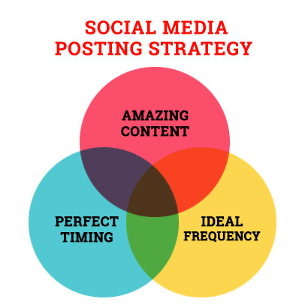
Step 4: Decide on a plan for posting

image 252

How many posts do you make per day?

How often do you do it?

 What time should you post?

What should you put up?

The answer to these questions is debatable. Always keep in mind that what works for one may not necessarily work for you. Having said that, there is some useful information and advice on where to begin.

To begin with, picture posts receive more views, clicks, and reshares than other types of postings. Pictures on Facebook receive 53 percent more likes, 104 percent more comments, and 84 percent more link click-throughs than any other type of social media strategy post. Photos have also been discovered to have a stronger impact on retweets on Twitter.

Step 4. Strategy

image 253

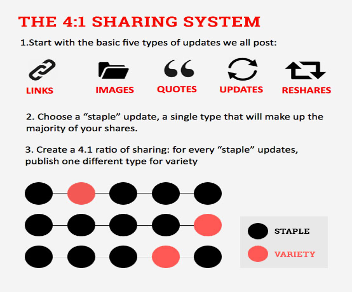
Now that you know what works, you may combine the various types into an effective approach. 

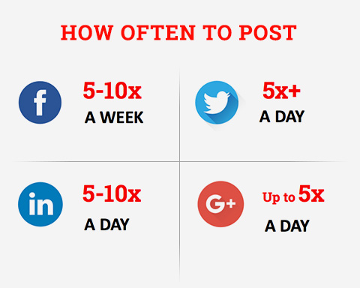
How frequently should you post?

There’s been a lot of debate regarding how frequently you should post. Of course, you’ll need to develop a strategy based on what you wish to provide your clientele. Post more if your clients love and respond to what you’re doing.

image 254

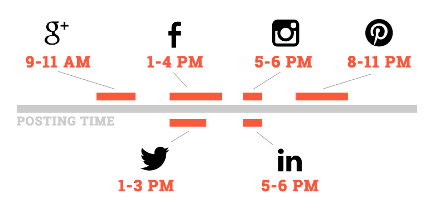
We’ve put together a handy guide on how often you should post to social media, as you can see below.

When are you supposed to post?

There are numerous tools available to show you exactly when you should publish on Facebook, Twitter, LinkedIn, and other social media platforms. These tools assist you in gaining a better understanding of your target audience as well as your previous posts.

What if you’ve only recently started using social media and have no prior audience or history?

The tool SumAll is the most useful infographic you’ll encounter regarding timing. Here’s a rundown of what they’ve discovered in terms of timing.

image 255

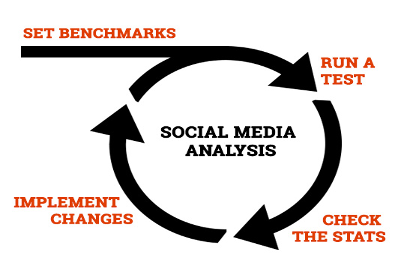
Step 5: Analyze, test, and put into practice

image 256

It’s a reality that the more you post, the more opportunities you’ll have to figure out what kind of social media strategy marketing material, when to post, and how often to post.

In this scenario, the crucial question is: how will you know?

You can use a variety of tools available on the internet. Buffer statistics, for example, can show you how many views, clicks, shares, likes, and comments each article has received.

Step 6: Automate, interact, and listen to your customers.

Last but not least, having a system in place to assist you to remain on top of updates and engage with your customers is the final stage. Day after day, automation is the key to excellent sharing. You can utilize tools like Buffer in this instance.

A plan for social media also necessitates interaction with potential customers. Try to keep up with client conversations on social media. Ignore them at your peril, as they may have a detrimental influence on your business. To stay on top of everything, you can utilize programs like Mention, which will email you an alert whenever you’re referenced online.

Search Engine Optimization for Product Description Pages

Search Engine Optimization for Product Description Pages

Many product description optimizations may be automated and maximized with the help of a Product Information Management system. Growing regional/national to major brands have a lot of questions about product description page (PDP) optimization.

How much can be automated?

Does it matter if some of them have duplication? What do we do with variable products that exist on a single URL? Can I use manufacturer-provided product descriptions?

The problems with SEO product descriptions are then exacerbated with larger product catalogues and more complex technology stacks. However, with enterprise eCommerce stacks, you can also find opportunities to automate and make quick work of many product description issues.

This is where the PIM (Product Information Management system) can be both an SEO and user experience dream. In addition to product descriptions, the PIM can help stakeholders influence the user experience and bridge the gap between a user searching for and researching products to complete their purchases.

For many, the PIM is just another part of the tech stack. But it can improve user experiences and enrich the PDP (Product Details Page) with information important from a product descriptions SEO perspective, as well. For this article, I’ll be leaning on a combination of both, as businesses in the eCommerce industry such as Bain & Company have claimed that companies who improve customer experience with tools can increase revenue by up to 25%.

Given that Google is working harder to improve user experiences on the web via Core Web Vitals, Speed, Mobile Friendliness, EAT, and more, using the PIM to improve user experience can be more than just adding keywords to the page.

Often, the PIM is also responsible for product imagery, as well. Sometimes this can be the Digital Asset Management system’s job, but for this article, I’m assuming the PIM handles them.

In this column, you’ll learn about:

1) Automating Product Title Tags & Meta Descriptions

2) Automating Product PDP Descriptions

3) Defining Taxonomies & Relationships

4) Key Takeaways

Automating Product Title Tags & Meta Descriptions

Typically, the PIM will contain several fields relating to the product, including but not limited to:

•   Product name.

•   Product technical specifications (colors, size, material).

•   Product description.

•   Product identifiers (SKU, ISBN).

This information can be used to improve title tags and meta descriptions.

While Google is actively overwriting both elements, they are still processed and cached by Google.

Although only the title tag is factored into “ranking,” the meta description is still important from a CTR perspective. Utilizing the PIM SEO for product pages can also help alleviate duplication issues with title tags and provide better document information architecture for Google.

You can do this by having the front-end platform (the storefront) dynamically use the same information from the PIM as it does to populate the product description page template. This information can also help Google serve content for hyper-specific queries, and return URLs from your site that are otherwise not in the immediate serving index.

Including more information in the title tag and meta description also helps steer Google to more accurate rewrites of your title tag and meta description.

This helps you avoid accidentally giving the user misleading information and a negative search experience.

Automating Product PDP Descriptions

Many product pages consist of generic product descriptions the manufacturer has likely provided. Duplicated product descriptions aren’t usually an issue because the content of a PDP is more than just written words. It’s the page’s value proposition in its entirety.

The objective is to make the duplicated description a supporting element of the page and not the focal point. Google’s John Mueller has confirmed that this doesn’t cause a penalty scenario, and is only an issue when they don’t want to show multiple results by just listing the same content.

The way around this is to use the PIM to add value. For most queries relating to “generic” products, Google augments the search results to include a mixture of local and online results. This means that Google has to decide to rank either local or “best” sources with duplicate value propositions.

Most PIMs contain stock data, and most businesses who operate online and offline will have integrations that allow you to include the following information and elements on PDPs:

·   Availability in local stores (which you can further personalize if you are logged in to show availability in stores close to their defined location preferences).

·   Delivery lead times for home delivery.

·   Lead times for in-store pickup.

This gives the page another beneficial purpose and a reason for Google to choose to rank your PDP over others.

Defining Taxonomies & Relationships

 In most PIMs, you can define taxonomies and relationships with other products within the database. This information can then be used, along with personalization elements, to create additional content blocks (and additional value propositions) on the PDP page, giving it additional user value.

You can also use these elements to encourage both cross-sells and up-sells, improve user average order value (AOV), and help select the correct complementary products.

For example, buying a lamp from the page presenting the correct bulb as a related product saves the user time and effort in determining (and searching for) the correct bulbs.

Taxonomies and tags can also be integrated with most internal site searches, so making sure key products and variations are tagged correctly and have accurate taxonomies can help users with product discovery on your website.

Writing Product Descriptions For SEO

Turning persuasive words into sales. These words can help draw readers into action. The most persuasive words include: remarkable, now, announcing, introducing, amazing, sensational, easy, miracle, magic, quick, and hurry.

You may also go with storytelling, which is an effective way to engage readers and lead them to purchase your product. When we think about readers sitting there on the other side of the screen, they cannot hold or feel the tangible product at this point, they’re relying on images and product descriptions.

Keep in mind that product descriptions are normally made to be easy and quick to read. With that said, in order to write SEO even the bullet points at the bottom of the description should all be written clearly with all the essential information about the product. This becomes an effective way to create scannability.

It is also important to avoid creating any complete duplicate descriptions to the best that you can. It is really important due to the fact that search engines see these duplicated descriptions as some sort of duplicate content issue. With that said, the Googlebot will likely be confused as to which one is the original page to serve.

Key Takeaways

 The PIM is an underutilized asset in the eCommerce SEO arsenal and can be overlooked or seen as “not part” of the marketing toolkit. Including PIM stakeholders in marketing meetings with those responsible for extracting PIM information into the eCommerce storefront can help you find opportunities to enhance your product description page’s SEO value further.

It can provide additional opportunities to improve user experience, conversion rates, and AOV, as well. The more specific and descriptive your product pages, the better Google and other search engines can determine their relevance to queries by highly motivated searchers on the hunt for products like yours. 

Use the tips above to maximize the value of your organization’s PIM by putting it to work for your SEO goals, as well. And if you’re just getting started in eCommerce SEO or looking for a best practices checklist to make sure you’re making the most of all opportunities, you’ll want to contact [email protected] or call (469) 536-8478 for a complimentary consultation.

What is local SEO, and how to boost your business’s local ranking?

what is local SEO

Word-of-mouth and local advertisements may be effective ways to recruit local clients. Local web searches can be just as effective, if not more so. According to Social Media Today, 97 percent of search engine users have looked for a local business online. And local information accounted for 46% of all Google queries.

As a result, if your business does not appear in local search results, you may be missing out on critical traffic and clients. To put it another way, local SEO could be the key to keeping your business relevant, visible and expanding.

You’ll have a lot of questions if you’re new to local SEO, and you won’t know where to begin optimizing. If you want, Mach 1 Design can accomplish it for you. This tutorial will provide you with some crucial local SEO solutions as well as assist you in better comprehending the landscape.

What is local SEO, what does it entail, and why should you consider it?

image 238

To get the meaning of SEO for local businesses, it is necessary to first comprehend what local search entails. When someone looks for businesses, products, services, or any other information relevant to a given location, they are using a local search engine. 

They could be looking for “concerts around me” to find an upcoming concert in their city or “best painting service in [location]” to find a nearby painting service. In other words, compared to broad Google searches, local search is more focused on a given location. 

image 239

SEO local, on the other hand, refers to the practice of attempting to improve your online presence in order to appear in those local search results.

SEO for local businesses is important since it allows us to:

•  Increase your internet presence 

•  Increase foot traffic to your brick-and-mortar store.

 •  Increase your conversion rates by attracting more focused traffic.

 •  Increase your credibility and establish confidence with potential consumers.

Small business local SEO

A large range of Google queries nowadays are made with local searches. From the current SEO strategies, even when someone performs a typical daily search, the chances that Google shows local businesses nearby remain high.

In fact, these results for geographically-related searches are typically based on the following:

  • Proximity
  • Relevance
  • Prominence

That means, if your business is close to where someone is conducting their search, offers services or products they may be searching for, and has optimized local business listings, then you’re more likely to be found by potential customers online.

Local snack pack vs. organic search results

image 240

Local snack pack results are one of the ways that local SEO improves your online visibility. Local search results are divided into three categories by Google: sponsored, snack pack, and organic. 

While sponsored results are prominently shown at the top of search results pages and are labelled “Ad” or “Sponsored,” they are not free. Following that, the snack pack results, also known as “featured snippets,” show in a box that emphasizes the top three business listings relevant to that specific search. 

image 241

This is more prominent than organic local search results, so you’ll have a larger chance of being seen if you’re featured in the snack pack. The nicest thing is that sponsored results aren’t displayed on every local search page. 

As a result, your company could appear prominently at the top of the search results page, as shown below. The organic results are farther below, below the results from the local snack pack. So, even if your business is on the first page of local search results, it may not appear as prominently as businesses that appear in snack pack results.

image 242

Your small business local SEO plan should aim to rank on the first page of organic local searches and in your local snack pack. This increases your chances of getting targeted traffic by ensuring maximum visibility.

How can you boost your local rankings? 

There are six techniques to improve your local SEO strategy. Now let’s get to the most crucial part: how to improve your local search ranking and boost your local SEO plan. There are several facets to this, so let’s concentrate on the most important:

1. Take control of your Google My Business listing by claiming it and optimizing it.

image 243

GMB, or Google My Business, is the most important component of your local SEO plan. We can build free company listings using this Google tool. When it comes to organic SEO for local businesses’ search and snack pack results, this is one of the most important criteria that Google will take into account.

We’ll need to double-check that the following details in your Google My Business listing are valid and optimized:

 •  your complete and correct company name

 •  the physical location of your store or office

 •  a map of your specific location

 •  the nature of your business

 •  your contact information (phone number and website) (if applicable)

We should generally confirm it with a phone call or a postcard. Here’s how to make Google My Business even better when it’s been verified:

•  Include images of your company. This could be images from within your store/office or from the surrounding area.

 •  Provide your company’s information.

 •  Include any other categories that are relevant to your company.

 •  If possible, include extra phone numbers.

We can improve your Google my business profile even more by periodically sharing business updates and new material. Mach 1 Design publishes straight to its clients’ GMB profiles. 

WE make the most of the opportunity to keep clients’ customers up to date on what’s new and give information about future events. This improves your presence in local searches while also helping you engage with your customers on a deeper level.

image 244

2. Keep your mobile device in mind

Because mobile phones have taken over so much of your daily life, it’s only natural that most people will use them to find local information and companies. According to a study commissioned by Uberall, 82 percent of respondents used their mobile devices to conduct “near me” searches. 

This demonstrates how common it is for consumers to use their phones for local searches. As a result, you must cater to these searches by mobile-optimizing your website. Create a mobile-friendly website so that visitors can navigate it easily and locate the information they require.

We should include call-to-action buttons on your website and on your Google My Business listing. Because 60% of mobile users have contacted a business directly from search results, this might make a big difference.

3. Gather a large number of customer testimonials.

Review signals also influence your local search and snack pack ranking. Having many genuine reviews, especially good ones, can help you rank higher in local searches while also improving your reputation and building confidence in the marketplace. 

This implies we’ll have to work harder to gather more genuine client feedback for the company. We should continue concentrating our efforts on sites where Google expects businesses to have reviews. It will collect reviews from consumer directories and social media in addition to your website and GMB listing. 

Depending on which ones we believe are most relevant to us, we may need to focus on collecting reviews for Facebook, Yelp, and the other sites I mentioned in the keywords, backlinks, and local SEO for Your Lounge & Grill paper.

4. Concentrate on establishing local links.

Among the principal elements that influence your ranking in local searches and snack pack, results are linked signals connecting domain authority and quantity. Local SEO, like standard SEO, necessitates link building to improve your link profile. 

On the other hand, the linked domains should be more relevant to your target location. We should focus on authority websites in your target region, such as directories. This could include licensing bureaus and trade associations and the Chamber of Commerce and.edu websites.

Partnerships, scholarships, guest posting, and other methods of gaining valuable backlinks from local sites could be beneficial. For example, the Connecticut College website’s “Attractions” page contains links to several local businesses.

image 245

5. Increasing local citations

image 246

What is a Local Citation, and how does it work?

A local citation is any internet mention of a local business’s name, address, and phone number. Citations can be found in local business directories, websites, apps, and social media platforms. 

Citations assist Internet users in finding local companies and have the potential to influence local search engine rankings. Having the necessary fundamental citations, in particular, can help us rank correctly on Google Maps. Many citations can be actively managed by local businesses to maintain data accuracy.

Checking Your Local Citations

1. Do it by hand

You have access to literally hundreds of local citation sources. In theory, you could examine all of the main citation sites by hand when performing a complete manual audit of your citations.

Actually, there are only a handful of large data aggregators that you should look into. Big names like Facebook and Apple Maps are among them. Here’s a quick rundown of where you can acquire citations.

2. Local Listing Checks That Are Automated

Mach 1 Design provides a local listings service to its clients to make things easier. We can review your local company listings for inclusions and correctness across the web. These are the key data aggregators that have the largest impact on web results.

What types of local citations are there?

Mach 1 Design provides local business citations on a range of significant local business data sites where this type of data can be published. Google My Business, Acxiom, Localeze/Neustar, and Infogroup are also important platforms. 

Popular social and review-oriented sites like Facebook and Yelp can also be used to create key local company listings. Platforms that are specific to your client’s industry and territory – In addition to creating listings on the major local business data platforms that serve all industries. 

We strive to create listings on websites that are specialized in your client’s industry and geography. Websites of chambers of commerce, as well as professional organizations and guilds, are examples of these platforms.

Supplementary citations can be produced or earned on a wide range of outlets, such as blogs, news sites, apps, maps, government databases, and more. You can either seek these citations for your company or simply get them based on merit and public interest/information sharing.

All of the citations listed above can be obtained through the use of automated tools, manually filling out forms on local business platforms, or through other means of PR/marketing to various platforms.

Finally, citations and local business listings often arise without the business taking any action. Automated aggregation and the flow of data from local business data systems can result in citations. Data from one site, such as Infogroup, can flow down to another, such as Superpages. 

Because of the way the internet works, it’s critical for local businesses to take control of their data’s accuracy, so that false data may be identified and fixed, preventing customer loss, income loss, and any bad influence on local search rankings.

What elements make up a local citation?

image 247

A citation’s essential components are the company’s name, address, and phone number (NAP), as well as a reference or link to a specific page on the company’s website. Additionally, a reference may include any or all of the following elements:

•  Business-related categories

•  Hours of business

•  Directions to your destination

•  Description of the company

•  Images

•  Videos

•  Accepted payment methods

•  Geo-coordinates

•  Reviews

•  Reactions from the owners

•  Taglines

•  Social media and other forms of media links

•  Electronic mail addresses

•  Telephone and fax numbers

•  Additional phone numbers

•  Attributes

Please read the following to thoroughly prepare for filling out the common fields of the citations you’ll be creating: Local Business Listings’ Essential Elements

Why are local citations so important?

Two scenarios involving local firms are greatly influenced by local citations:

1. Local citations influence local search engine rankings in either a favorable or negative way. The number of citations a company receives, the veracity of the data it publishes, and the quality of the platforms it uses all have an impact on rankings. Google and other search engines collect information on each company.

If what they find is correct, the search engine believes the data’s accuracy, which is thought to improve the company’s chances of ranking well. If the data that search engines encounter is inconsistent, confidence is weakened, and ranking opportunities are reduced.

2. Consumers are affected either positively or negatively by local citations. Accurate citations assist customers in finding a local business, which can lead to the increased web, phone, and foot traffic, as well as sales. Inaccurate citations, on the other hand, might lead to customer confusion, resulting in a loss of reputation and money.

Rankings, reputation, and revenue are all key concerns for businesses at all levels of local commerce, from one-person startups to huge brands. Because they play a role in all three of these areas, local citations are crucial.

What is the relationship between active location data management and citations?

Any local business planning its marketing strategy should weigh the risks and benefits of a passive vs. active citation management strategy.

Risks of a passive strategy include:

 If you ignore citation development and maintenance, you risk losing rankings, reputation, and revenue:

•  A limited number of local citations

•  Citations that aren’t correct

•  Local business listings that are duplicates

•  There’s no way of knowing if a user or a competitor has made changes to a local business listing.

•  There is no plan in place to find out if data is incorrect.

•  There is no plan in place to manage citations in the event of mergers/acquisitions, rebranding, business transfers, phone number changes, hours of operation changes, or other data changes.

•  There is no plan in place for finding and handling reviews.

•  Limited control over how the company is represented on the internet

Benefits of a proactive approach include:

By actively managing citations, you may improve your rankings, reputation, and money.

•  A comprehensive, up-to-date citation collection for major platforms

•  Recognizing, discovering, and correcting erroneous data

•  Duplicate local business listings will be permanently removed.

•  A good approach for updating citation data in the event of mergers/acquisitions, rebranding, business transfers, phone number changes, hours of operation changes, or other data changes.

•  A well-thought-out strategy for locating and handling reviews

•  Complete control over how the company is represented on the internet

When you weigh the dangers and advantages, you’ll quickly realize that active citation management can be overlooked. It’s just not a wise business decision.

Summary of citations 

Citations are online publishing of your fundamental business data. Consumer discovery and local search engine rankings are influenced by them. Incorrect citations have a negative influence on rankings, reputation, and revenue, whereas accurate citations have a favourable impact on these assets. 

Active location data management is a must for all local businesses due to the high stakes of these assets, and you can select from manual, semi-automated, or automated solutions for your organization. 

To determine whether your investment of resources will result in meaningful value, you must thoroughly examine each potential choice or service.

6. Check for consistency in NAP/citations.

image 248

In local search results, Google uses citation signals such as citation volume and NAP (name, address, phone number) consistency. This means that your information should be available on important citation websites such as Bing Maps, Yelp, and Facebook, in addition to Google My Business. 

Smaller listing directories should be avoided in favour of larger ones with better domain authority. More significantly, we must ensure that your company’s name, address, and phone number (NAP) are consistent across all platforms and websites. 

To boost your local SEO, we should look for misspellings, address and phone number discrepancies, and duplicate listings and fix them.

7. Use social listening to your advantage.

image 249

Social listening may have started out as a way to gather marketing data, but it has a lot more to offer. If we know which insights to search for and how to make the most of them, it could even assist drive your local SEO approach.

We may use social listening to learn what people in your target location are saying about your company or in general. We can also utilize it to gather data on audience preferences, priorities, and so on. Then we use what we’ve learned to figure out how we can improve your approach or even your products and services.

For example, we may have overheard customers lamenting the absence of outdoor seating at your establishment. Perhaps now is the time to introduce it to a wider audience. We may then improve your GMB SEO by, for example, posting updates on your new seating arrangement.

Perhaps we’ve noticed individuals wishing your meal selection included a wider variety of options. We could add to your menu and service offerings while also updating your Google My Business profile.

Furthermore, your social listening efforts might assist you in determining what types of local content your target audience is seeking. You may then devise a comprehensive local content strategy to meet those requirements. Furthermore, you may be able to find long-tail keywords to incorporate into your content optimization plan.

Are you ready to make your business a local success?

These are the fundamentals for taking your local SEO to the next level. Keep in mind that your local SEO efforts in the future may span multiple places. And, if we eventually target more than one region, we can even use similar principles in your SEO for various locations. Utilize them to improve your online exposure in local searches and expand your business. To design your Local SEO strategy, contact [email protected] or call (469) 536-8478.

What Are The Best Places To Invest In SEO and Get the Most Out of Your SEO Investment

Where-To-Invest-In-SEO-For-Maximum-Impact

Your brand can benefit from a strong SEO campaign in a variety of ways.  Learn how to put SEO optimization for search to work for you and incorporate it into your marketing strategy.

You’re an accomplished marketer and understand the value of keeping up with the times, embracing new technology, and seizing new opportunities. As a result, you recognize SEO is on the rise, and it is empowering businesses of all sizes to attract new clients via inbound marketing. SEO should be an important component of your digital marketing plan if you’re expanding and targeting new markets, or even if you’re just thinking about it. However, you may be unsure about how to enter this form. Are the time, effort, and money worth it? Yes, categorically. Mach 1 Design has all you need to know about why you need SEO, how to invest in it, and everything else you’ll need to persuade skeptics within your company to embrace the new way of gaining leads and increasing sales.

Is Search Engine Optimization Value for Money?

A website is required for every company in the twenty-first century. You also need SEO to help clients find you because you require a website. SEO is the most efficient and cost-effective method of understanding and communicating with customers. SEO helps you create trust and offers you a clear picture of what your clients’ looking for. It is the primary source of the traffic to most websites. Better traffic from more qualified leads, higher engagement, and more conversions are all signs of good SEO.

Your Marketing Plan Is Boosted

Your brand cannot exist in a vacuum. Because the internet, in general, and mobile devices, in particular, remain the major instruments for customer research, your online presence is essential. SEO complements your other marketing efforts, boosting the effectiveness of your efforts. Assume you’re a roofing company sending out a postcard mailer to new homeowners in your neighborhood. One of your customers wants and installation quote, but he misplaced your collateral. He also has trouble recalling your company’s name. He looks up “window installation in my region” on the internet. Your roofing company appears at the top of the search engine page results (SERPs) as a result of your SEO investment, and he calls you rather than one of your competitors. Both your flyer and your SEO expenditure have performed better than they would have on their own in this example.

Expanding Field

The global search engine services market rose at a compound annual growth rate of 16.7% from 2015 to 2020, according to a study by The Business Research Company, reaching roughly $46.7 billion in value. The market for SEO services is estimated to reach $217.8 billion by 2030, indicating a continued high growth trend. It’s also no surprise that Google is still the most well-known name in this industry.

Google receives around 89 billion monthly visits, according to Similarweb. With 92 percent of all queries, it has by far the most market share. You’re missing out on a lot of business if your website doesn’t rank well in Google SERPs. Effective SEO allows you to grow exponentially while also allowing you to stand out from the crowd.

Positive Experiences

Consumers will always view your campaigns with some degree of mistrust, no matter how great you are at marketing, and we’re sure you’re amazing. This is because they understand that your goal is to portray your company in the best light possible. If McDonald’s’ tagline was “Eh, it’s okay,” not “I’m enjoying it,” they wouldn’t sell nearly as many burgers. Customers can sense when you’re pouring sunlight, regardless of which slogan is more truthful — which is why reviews are so crucial. According to studies, up to 82 percent of people check internet reviews for local businesses, with 91 percent stating positive ratings make them more likely to utilize the company.

Role Reviews

Positive reviews are a significant indication to search engines about your site’s credibility and authority, therefore the correlation between Google Reviews and SEO rankings has been well-established. Let’s take a closer look at the basic components of an SEO strategy now that we’ve gone through the benefits of SEO.

Return On Investment

Every successful company has one thing in common: it maintains a positive balance sheet. Making wise financial decisions is a crucial part of it.

Not a Free Service

Even if you’re willing to do everything yourself, you’ll still devote a significant amount of time to completing the necessary SEO tasks. You may have used that time to work on other projects. However, it is common knowledge that SEO is well worth the investment.

You can measure the return on investment (ROI) of your SEO campaign using a variety of measures. You can use items like: to assess the success of your campaign.

• Organic search — the position of your page on Google and other search engines.

• Organic traffic — the non-paid search engine traffic that you receive.

• Business metrics, such as backlinks, impressions, and clickthrough rate, to name a few.

• Profitability of the business – sales conversions (but opportunities and/or quality leads may be valuable as well).

When compared to paid search, SEO has been shown by some agencies to generate 25% more leads.

Return on Investment

SEO ROI

What kind of ROI should you expect from an SEO campaign? Using 12 years of proprietary data from SEO campaigns, we’ve broken down the answer to this question by industry, further segmenting it by return on advertising spend (ROAS), ROI, and time to break even.

The following ROI statistics represent the ROAS and ROI of SEO averaged over a three-year period. The SEO campaigns that generated this data were thought leadership-based, meaning they involved ongoing publishing of keyword-targeted, high-quality website pages, split ~70/30 between blog entries and landing pages. We calculate SEO ROAS using the following formula: Gross Return on SEO Campaign ÷ SEO Campaign Costs. Typically, the costs of an SEO campaign are what a company pays our agency (~$120,000 / year) plus a share of the salary of all the people interacting with our firm on the client-side. The final ROAS number is a ratio of how much gross revenue should be generated from every dollar spent on SEO. Likewise, we calculate SEO ROI using the following formula: Net Profit from SEO Campaign ÷ SEO Campaign Costs. We then multiply by 100 to get the percentage return you can expect to see from SEO.

IndustryReturn on Advertising Spend (ROAS)ROITime to
Break-Even
    
Addiction Treatment8.90736%8 months
B2B SaaS8.75702%7 months
Biotech9.20788%8 months
Construction7.40681%5 months
eCommerce3.65317%16 months
Financial Services11.101,031%9 months
Higher Education & College10.40994%13 months
HVAC Services8.15678%6 months
Industrial IoT9.85866%7 months
Commercial Insurance9.05758%9 months
IT Staffing7.00612%10 months
Legal Services6.15526%14 months
Manufacturing9.50813%9 months
Medical Device12.851,183%13 months
Oil & Gas10.55906%10 months
PCB Design & Manufacturing12.401,101%11 months
Pharmaceutical9.85826%9 months
Real Estate15.101,389%10 months
Solar Energy9.20770%9 months

We’ve also included a time to break-even statistic, which is the number of months it takes for your net revenue from an SEO campaign to exceed your spend on that campaign. When a marketing leader is setting expectations for the ROI their company will receive on an SEO campaign, they must consider the comprehensiveness and quality of the SEO campaign itself. Below are the three most common SEO services along with their ROAS, ROI, and time to break even.

A technical SEO campaign is one in which an SEO consultancy enacts technical fixes to your website, typically relating to speed, security, and mobile optimization; performs keyword research, and rewrites the title tags on your website using the results of their keyword research. A standard content marketing SEO campaign is one in which an SEO agency performs cursory keyword research, typically consisting of looking up keywords using an online tool, and produces ~4 blog articles per month of average quality relative to your competition.

 A thought leadership SEO campaign is one in which an SEO agency performs thorough keyword research with an emphasis on target audience persona needs and pain points, transactional behavior, and search intent; and produces at least eight high-quality content pages per month with an aim toward getting categorized as a news website by Google. 

SEO ServiceReturn on Advertising Spend (ROAS)ROITime to
Break-Even
Technical SEO
(Technical fixes, keyword research, title tag rewrites)
1.35117%6 months
Standard Content Marketing
(Average quality keyword research & blog articles ~4x / month)
1.0516%15 months
Thought Leadership Marketing
(Transactional quality keyword research & blog articles ~8x / month)
8.90748%9 months

Timeframe to Invest

Positive ROI in an SEO campaign is achieved over a 6-12 month period, with peak results in the second or third year of the campaign. Here is what a typical B2B SEO campaign looks like in terms of gross revenue generated on an annual basis: When it comes to SEO, how much should you spend? Your company’s need for SEO should be obvious at this point. This necessitates allocating a portion of your marketing budget to it. But, specifically, how much is it? You’re not alone if you have no idea where to start answering this. There isn’t a simple solution. There is a significant degree of variation depending on where you start and where you want to go. You get what you pay for in SEO. You’ll probably get budget results if you try to follow the budget approach. Don’t panic if you don’t have a large SEO budget. Even if you only focus on a couple of the most critical aspects, you can still achieve good results:

Site architecture: Make sure your site is crawlable, meet webmaster requirements, and prioritizes user experience. Fresh, keyword-rich material that matches search queries and satisfies user intent should be added regularly. High-trust, high-authority backlinks: Natural backlinks (not link farms) from high-trust, high-authority sites can assist you to climb the rankings. In terms of dollars and cents, what does that imply? “It depends,” is the quick (and admittedly vexing) response. SEO takes time, and you’ll be disappointed if you expect results right away. To see benefits, set aside enough money for at least six months. And it will differ according to your requirements.

 A local campaign conducted by a top-notch SEO provider could cost $500 or more per month. A worldwide campaign will demand a budget of five to ten times that if you’re aiming for loftier aims. When it comes to SEO, how do you invest? Identifying your goals is the first step in investing in SEO. Do you want to increase the number of customers who come through your sales funnel? How can you make customers more aware? Do you want to appear in a certain number of searches each day? Decide on your plan after figuring out what you want to accomplish.

 After you’ve decided on a strategy, you’ll need to figure out the techniques you’ll need to carry it out. Do you have trouble distinguishing between strategy and tactics? The most straightforward way to remember it is that tactics are on a small scale, and strategy is on a broad scale. The difference between strategy and tactics is that strategy determines why something is done in the first place. Do you need assistance putting together a complete SEO strategy? Don’t worry, we’ve got you covered.

SEO Or Pay-Per-Click Ads, Which Services?

Because SEO has a higher average return on investment (ROI) than pay-per-click (PPC) advertising, you should use it, right? No. Both are beneficial, and you should ideally have a combination of paid and organic search efforts that are appropriate for your business and current assets. Each has advantages and disadvantages.

Organic SEO Has Its Benefits

  • Website traffic: SEO can help you boost the total number of visitors to your site as well as the number of clicks you receive.
  • Return on Investment: As previously said, SEO is more cost-effective than PPC, but neither is cheap or simple.
  • Branding and awareness: Organic search places your business in front of potential clients based on search queries, enhancing exposure around search phrases and increasing brand recognition.
  • Credibility: Getting a high ranking in the SERPs might help you gain credibility. Many users ignore the paid adverts and instead go straight to the organic results.
  • Longer-lasting results: While SEO takes a while to show results, it also takes a long time to lose its effectiveness. Long after a PPC campaign has ended, a well-optimized website can continue to rank well.
  • Stability: Similarly, whereas PPC ad placement can alter based on competitive bids, a site with solid SEO will maintain a relative rank even if you ignore it for a time.

PPC Has Its Benefits 

  • More visitors, clicks, and conversions: As soon as you initiate a paid campaign, you should see an increase in traffic, clicks, and conversions.
  • Algorithm changes have no impact on positioning: Because PPC is vying for the top spots on a SERP, you won’t have to rethink your content or methods every time Google adjusts its algorithm.
  • More control: Because you have control over your expenditures, you’ll always know how much money you’re making, making budgeting easier.
  • More precise targeting: Paid search advertisements allow you to target a specific audience based on a variety of characteristics such as demographics, geography, and time of day.
  • Visual adverts can be used: People are more inclined to click on photographs of the goods they’re looking for. PPC allows you to accomplish this, but the organic search does not.

Business  Investing in SEO

 With an SEO strategy, what precisely are you investing your funds in? Architectonics and content, in a nutshell. If you know HTML and CSS, you should check your site to see if it’s built properly. This entails addressing crawlability and structural issues, as well as ensuring that the site provides positive user experiences, loads quickly, and is free of 404 links. If you don’t know much about coding, you should be able to hire someone to do it for you for a reasonable price. The content is a little less complicated this time. You want to be certain that your website contains the information that your target audience is looking for. Content that is both effective and relevant will increase traffic and boost your total return on investment. We’ve included a guide on creating an SEO content strategy as well as tips on how to build evergreen content that will drive traffic for months, if not years.

What Should Your SEO Budget Look Like?

 It should be obvious that you require SEO at this point. It’s now only a matter of determining where your money should go. There is no one-size-fits-all approach in SEO, as there is in practically everything else. What works for your company is determined by a variety of factors, including your target market, goals, and marketing budget. If we could make one recommendation, it would be to hire a solid SEO team. There are a plethora of SEO experts available who specialize in technical SEO, keyword research, and content production, among other things. Are you short on cash and can’t afford to hire someone? Don’t worry; with a little research and effort, you can master all of these skills. Simply bear in mind the characteristics that all SEO pros have in common and work on honing those abilities.

Conclusion

Don’t kid yourself: Search engine optimization is a huge undertaking. But it isn’t too much. Simply by reading this post, you have taken a significant first step. There are many elements to consider, but with the correct attitude and a well-thought-out strategy, you may achieve your goals regardless of your budget. Now is the time to get out there and concentrate on improving your position.