Concentrate on SERP Topic Tool Rather Than SERPs Keyword Research

SERP Topic

Learn how to dominate SERPs results after BERT and MUM by using a topic-focused strategy for content and site structure. Google has made significant adjustments to the way its crawlers comprehend how content responds to requests in the last few years.

More algorithm modifications, including advanced enhancements to natural language processing and machine learning models like BERT and MUM, have been made recently.

These enhancements help Google better understand how users search for topics, what kind of information they’re looking for to suit their query’s demands, and how different types of content on a site might best meet those needs.

The ultimate goal is to provide the greatest material for the user to improve their SERP search experience.

With this in mind, focusing on establishing a subject structure that satisfies the demands of a SERP user at various stages of the buyer’s journey, rather than just what keywords are utilized on a page, has never been more crucial.

What Is the Difference Between SERP Topics and Keyword Research Tools?

You might be wondering what the difference is between a topic and a keyword research tool at this point, especially because I just emphasized that keywords are still an important part of the SEO jigsaw.

A topic, in my opinion, is a more comprehensive approach to “keyword research.”

A subject is made up of a number of relevant terms and questions that can be found in various stages of the buyer’s journey.

The types of content you can develop around a given topic are somewhat determined by the vertical in which your site is located. However, to become successful with utilizing topics, you may also want to consider what’s known as a “topic cluster”. 
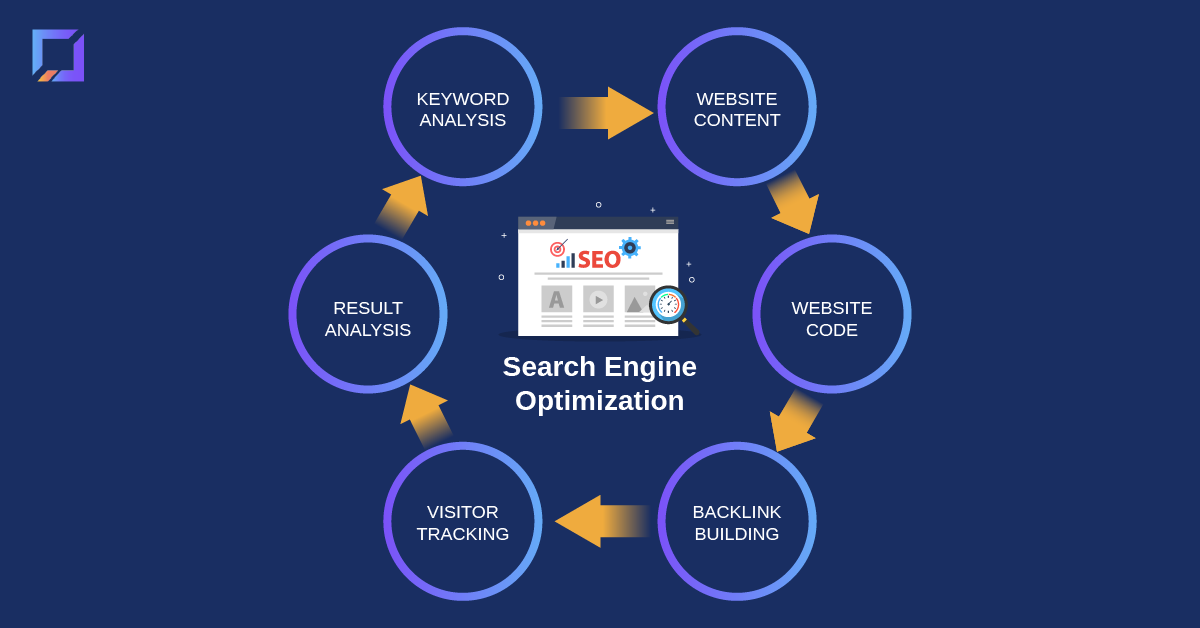
How-to-Conduct-SERPs-Analysis

Defining What Is An Organic Search Results Topic Cluster

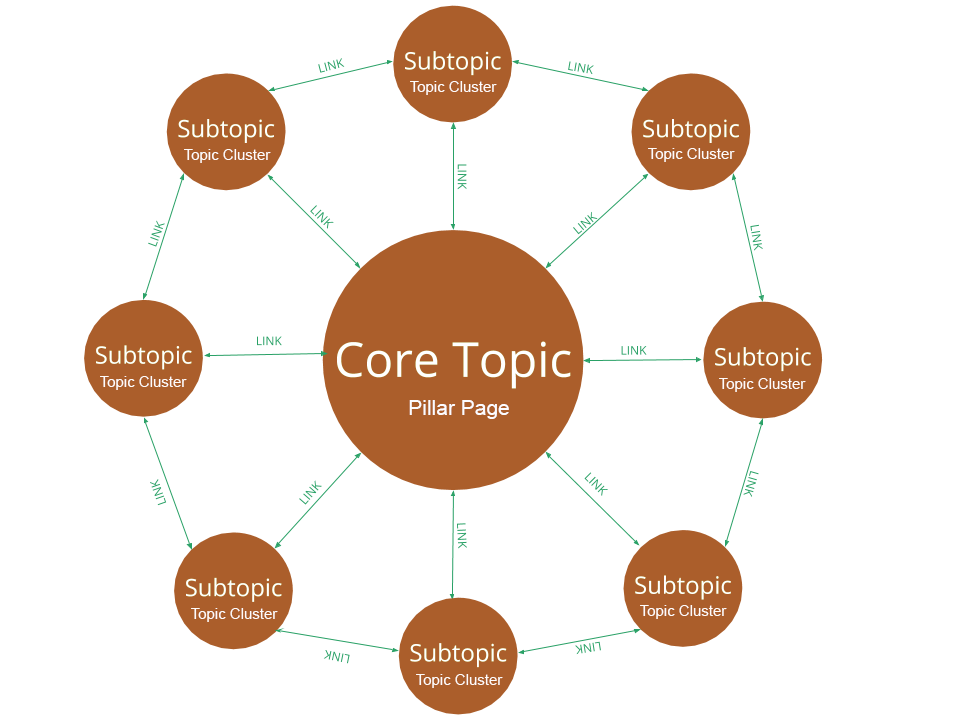
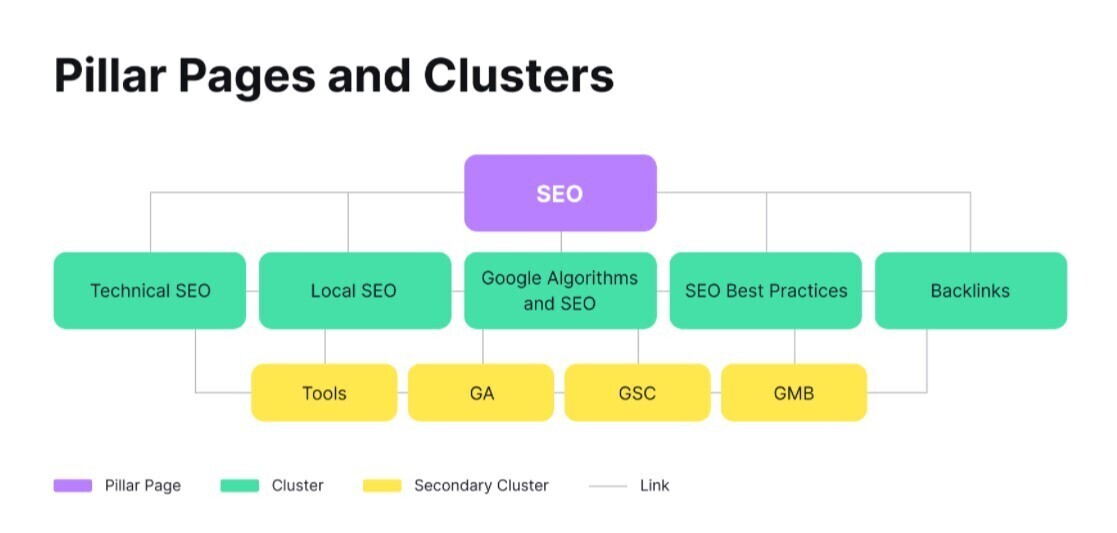
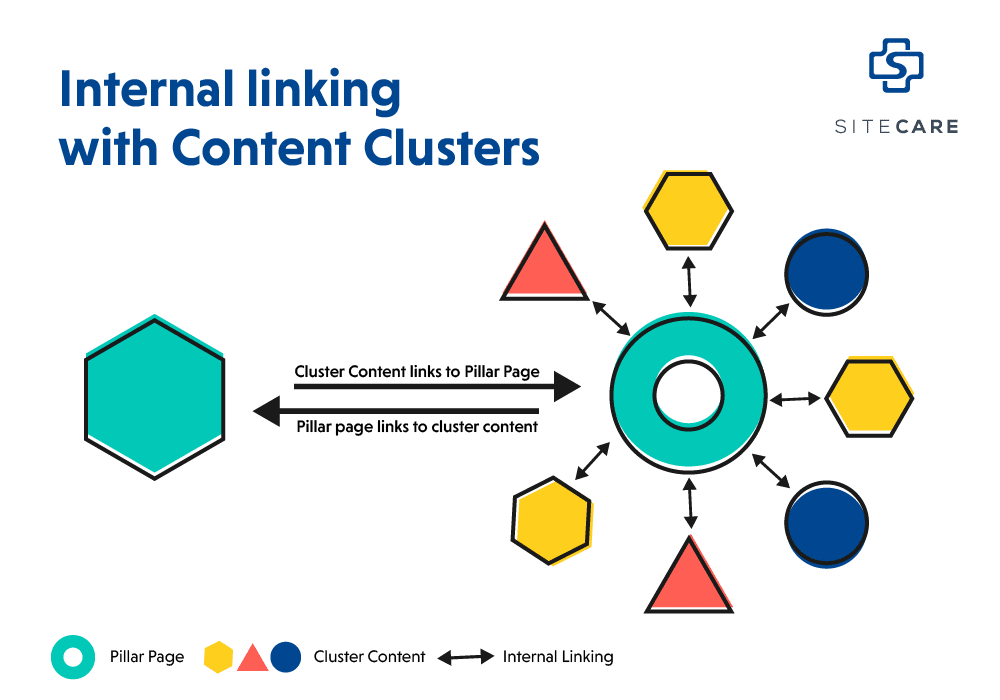
When it comes to the very definition of what exactly a topic cluster is, it is essentially the act of organizing the blog content in order to answer all of the relevant and important queries about the topic.

Additionally, these topic clusters are also able to cluster pages with a more specific target term after it has targeted a broader term using the pillar page it has.

Most experts in this field also use the pillar page as an umbrella SERP page for all the cluster pages, this way, they can make sure that all and every cluster page has an internal link and that all cluster pages are linking back to the pillar page.

Fundamentally, when it comes to pillar pages, they should be able to cover the broader types of topics even when just using some small paragraphs to introduce each cluster page. 

After this, it is then up to the users or searchers to follow a provided link that can be seen on the pillar page to one of the cluster pages if they want the subject or topic explained in much more detail.

The sheer amount of pro cluster pages and the scope of the pillar page depends on the topic and the different search intentions behind the SERP topic.

Why These Topic Clusters Tools Are Important For SERP

It is common knowledge for online businesses to optimize their keywords, and because of this, there has been a building competition when it comes to the leading keywords within the industry. 

With all that said, it may make using topic clusters to become a unique and better strategy to get ahead of all your other business competitors.

When it comes to the major keywords that companies would regularly use, they would likely need more content and higher website entry authority. These, are also what topic cluster pages exactly have to offer.

Still do keep in mind that the cluster pages will cover mid and long-tail SERP keywords laying the foundation for getting the best possible guide keyword research rankings while, on the other hand contributing to the authority of the broader keyword on our pillar page.

Another thing is that to note is that a major part of topic clusters is to include your converting pages and details in the clusters. 

To simply explain, these pages are the ones responsible for “answering” the commercial intent of the SERP searches, adding to the topic as a whole while also increasing the business value of the organic backlinks traffic.

How To Create Search Topic Clusters

Just like when it comes to keyword optimization, topic clusters overview also utilizes Keyword Research that is able to show whatever terms that your audience and other users and searchers are looking for.

When going by topic cluster, it is best to start by grouping the keyword research by identical intention. After looking at the groups, you identify the broader groups as they will be your pillar pages. And at last, you would want to map the pillar pages to their assisting cluster pages.

The way that it works may entirely depend on your existing content SERP situation. With this, you can either optimize existing content to fit into the united states topic clustering strategy or create missing content pieces to complete the topic.

Becoming A Topic Authority SEO Website

Another way to gain local authority for business websites is to have most of your keyword research guide topic area with high-quality content. Doing so will show your complete knowledge of the topic.

As it works is that the more authority you have on the research tool, the more likely you will gain good organic rankings for all keyword research that is put and related to the topic.

Take note that topic clustering may not show the desired SERP link effect if you’re operating in a low competitive market. Because of this, it may be better for you to simply deal with optimizing for single search intents.

Whether your website already has a lot of SERP content difficulty or you have just started diving into developing SEO content, SEO keyword research topic clustering should be the cornerstone of your ad’s competitive market strategy.

Some sites might also need the following:

• Content that focuses on subjects that are important in the early stages of learning.

• Content that expresses the company’s point of view on the SEO subject.

• It’s possible that they have a product that solves this issue.

Smaller sites, particularly those run by local businesses, may only require a single piece of SERP analysis educational/early-funnel content that also top links to material that details the keyword research tools services or products available to answer the SEO problem or need the customer/user is experiencing. 

How the Universal SERPs Are Changing How to Stay on Top

1. Develop a Research strategy.

Taking a step back and strategizing the themes you need to focus on is the most crucial thing you can do for your site when developing it or revising its layout.

You will have a better idea of your demands if you look at the larger components of your offers and establish a top-level score topic for that SERP offering.

You can employ the typical keyword research analysis technique once you’ve determined what your main SEO topic focuses should be.

The primary catch is that you want to broaden your search beyond the main SEO keyword to include more semantically relevant terms connected to the issue.

Examine the regions surrounding the topic that must be covered in order to meet the needs of the SEO analysis searcher. Consider what questions you may be asked about the subject and conduct research on those phrases.

If at all feasible, get out into the actual world and ask individuals and SERP internet research explorers in your target SERPs demographics what SERP features they could be looking for or what SERP questions they might have about it.

2. Find out who your Google competitors are and what they are doing.
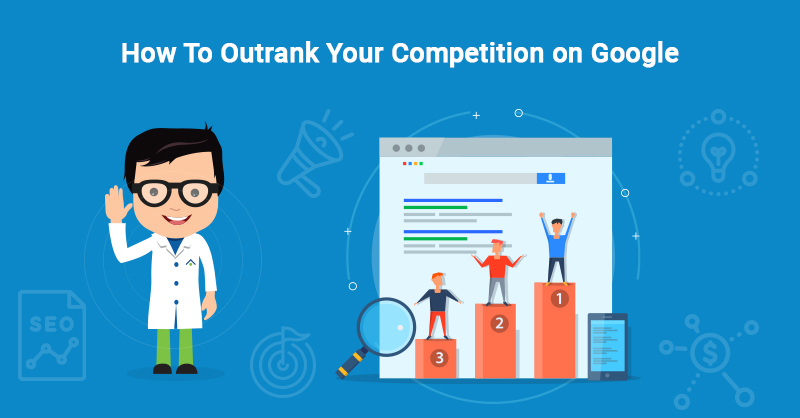
How To Outrank Your Competition on Google

Start looking into who ranks well in these SERP spaces after you understand what content you need to do well for an organic search results topic.

If they’re already doing well in this area, it’s safe to assume they’re doing something well. There are exceptions to this SERP rule, so keep an eye on the competitors in the market you’re pursuing.

Once I’ve discovered a competitor, I prefer to put their website through a SERP tool to see how they’ve done for relevant search terms over time.

This will provide me with some baseline SERPs information to establish whether these research results are long-term or whether they are a recent jump, as well as whether it is even worthwhile to pursue them further at this time.

Examine how your competitors organize their material once you’ve figured out what they’re doing in the space you’re targeting.

Examine how they provide their material and how the site keyword search structure around that issue is set up. When working on your site, this information will serve as a starting point.

That being stated, do not plagiarize your competitor’s material. Use it as a starting API point, but plagiarizing keyword research strategies information can only cost you in the long run.

As corny as it may sound, you want to figure out what your SERP competitors are doing well and then improve on it.

3. Keep Intent in Mind

With the evolution of search engines throughout time, especially with Google’s latest deployment of BERT research results, it’s more vital than ever to understand the keyword intent behind the queries you’re providing SERP content for.

While there are numerous tools available in the SEO field to uncover themes and keywords, I’ve always found that searching for a query in an incognito window is one of the greatest methods to determine the intent behind it.

You might conduct a basic search for a single phrase and notice that the on-page results include extra educational research content related to the topic – similar to a “what is…” result.

This can help you figure out what content has to be developed (or changed) in Google shopping results to meet the SEO search’s SERP requirements.

4. Don’t Forget About Your Google Shopping Results Site’s Structure
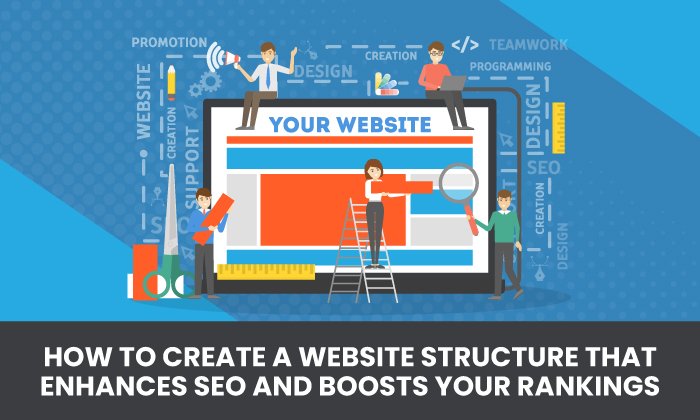
How to Create a Site Structure That Will Enhance SEO

Creating material for a certain topic is simply one part of the jigsaw research. It’s critical to organize your resource’s SEO tools material in a way that makes sense to crawlers and demonstrates that you’re an expert on a particular topic.

You should see more enhanced results around these terms if search engines recognize that you are providing more relevant material around a certain subject.

Using breadcrumbs to highlight the flow of your site is one of the best methods to establish this authority. This not only serves as a second layer of results featured snippets navigation for people, but it also aids crawlers in figuring out how to navigate from point A to point B on your site.

Breadcrumbs can also allow you to update the structure of your site results without changing the URLs, which can be extremely harmful to SEO. Don’t forget to look at your top-performing competitors’ websites to see if you can learn anything from their site structure. There’s no need to recreate the wheel, and you might learn something new about how to broaden your coverage of a subject as a result.

5. It’s Time to Take Control

Because Google has incorporated more intelligent techniques to analyze and deliver information to match user queries, it’s critical to create a logical subject structure on your site to make this content easier to process. This provides a compass for your content results, and authors, to use when writing.

Make sure your material fulfills the promise you made to the reader entirely and clearly. Avoid filler, jargon, and unnecessary SEO words. Keep in mind that quality trumps quantity!

It’s almost entirely about quality, but it’s also about discoverability. Make sure you’re using the research keywords and phrases that people will type into Google to find solutions to their SEO problems.

Then, make sure you’re keeping track of your own and your competitors’ SEO performance. Set resources and advanced SEO goals for yourself and continually seek to improve research.

If you accomplish this, you’ll start to dominate your competitors. If you want to dominate your competitors contact [email protected] for a free consultation or call (469) 536-8478.

How to Offer and Provide Visuals to Your Clients and Win Them Over Customers

provide visuals to your clients

As the world gears toward digitalization, creating visual content became the depths and future of digital marketing. The most popular way to engage users online is through visual content. With more content being created every minute, marketers must first be inventive to attract customers. Visuals are essential for creating content that will help any business stand out and attract customers. Most data shows that only does imagery make text-centric content more appealing, digestible, and memorable, but it can also communicate compelling messages that speak volumes without the use of text.

Nowadays, developing engaging and informative content to excite and educate a target audience is the foundation of establishing an online presence. However, there has been a shift in the type of content people consume in recent years. Clients and customers now prefer interactive and visual media over strictly textual content such as blog posts and articles, which have been the standard for the past years. 

Visual Communication

Visual communication is the use of visual elements to convey information or ideas. Animated GIFs, screenshots, videos, pie charts, infographics, and slide deck presentations are all examples of visual communication. It can be difficult to convey your message in a clear, concise manner using only words. In comparison to verbal communication, visual communication helps people retain information and creates a stronger connection. The part of our brain responsible for long-term memory remembers images.

Visual Content Marketing

Content marketing refers to any information, whether online or offline, that informs and educates prospects and leads to fostering trust and engagement. To be more specific, visual content marketing entails using visual content such as images, videos, and GIFs to communicate information to your audience, build emotional connections, and grow your business. Contrary to popular belief, it is more than just sharing pretty pictures and infographics.

Importance of Visuals and Images in Marketing

Getting clients’ and users’ attention is becoming increasingly difficult, especially in this day and age. When consumers encounter large blocks of text, they immediately perceive it as a time-consuming process. Adding visuals, on the other hand, gives the eyes a break and adds context to the information. Thus, marketing visuals and image contents deliver a great conversion rate while decreasing bounce rates in the long run. 

image 234

Visual Content Creation Tips

Visuals are an investment, just like content on a website. Quality should always come first. Aside from quality, good taste is an important factor in determining whether or not your business will succeed. If a business reflects good aesthetics, customer engagement is guaranteed.  Here’s how visual content creation should go:

image 235

Initial Impressions

Take extra time when selecting visuals for a website to find images or videos for the homepage, as this serves as the face of the business and will resonate with clients. Allow them to learn something from the landing pages based solely on images, and consider what the company represents, what it stands for, and the main message to communicate. Stunning visuals will cause them to pause and reflect. A great visual evokes emotion, whether it’s awe, admiration, or excitement. Professional photography will assist in making this special connection between the buyer and the brand. Lighting, composition, and quality distinguish professional photography from amateur photography. If a company makes it a point to make a good initial impression, it will undoubtedly be rewarded with visitors to stay on their page longer and see lower bounce rates.

Trust

Regardless of the nature of the enterprise, one of the top priorities is to build trust with consumers, and this is where visuals come in. Through the use of visuals, visitors should be able to see a sense of unity in the brand. This entails selecting a style and remaining consistent with the brand’s quality and message. One of the secrets is the color palette that a company selects. The psychology of color on consumers is a subject that should be thoroughly researched. The color scheme alone can communicate to consumers that the company is a reliable brand.

Style Consistency

Photographs set the mood if a brand chooses the right visuals. If they choose to include people in their images, ensure that their emotions are genuine and that the images are relatable. With time, a company will be able to select images that complement one another because they will begin to notice patterns and will be closer to establishing a personal style in their visual selection. Understanding the fundamentals of photography that determine good style is a critical component in this.

Communicate with Images

People frequently pick and find images that are literal representations of keywords or concepts in the content. This is one simple approach, but it is not always the best. Giving people an obvious visual while they read content will not improve their understanding of the content. This is why brands should use visuals to emphasize certain key points. It is advised to select clever photos that will speak to consumers in more than one way.

Bench-marking with Competitors

Observing how competitors approach marketing with visual content is a common practice. This is a great way to learn how to improve your own visual content. Investigate competitors, learn from their successes and failures, and devise a strategy to make your own visuals stand out based on your own research.

Content and Visuals Attract a Customer

image 236

Whether a company has a physical store or an online store, one of the keys to success is attracting shoppers to its location. If a company believes that having the best products or services will guarantee success, they are mistaken. In such a busy, cluttered world, it will be difficult to stay in the game if consumers are unaware of the brand and do not land in their tore. What could make a difference in their lives? Getting visual is an excellent way to attract attention. The goal of online marketing is to assist potential consumers in finding the company and then build a strong relationship with them that leads to sales. One of the most cost-effective strategies and ways for bringing in those leads and traffic is to offer and create compelling content that is optimized to help an enterprise rank high in search engine results, with the help of visual content.

Offer Clients with Visual Content Service

Nowadays, almost anyone can create a blog post. However, offering visual content service options and ways is a surefire way to ensure clients’ success while providing a service that not every online digital agency offers.  Mach1Design provides the best social media presentations, graphic design, website development, and marketing services on a wide range of projects.

Let Mach1Design help you build the best and strong brand and create a high-quality program to support it. We are here to provide you first with a new vision that will take your business to the next level! If you struggle to develop your visuals and publish quality content, we can help. Contact [email protected] or call (318)-349-4998 to discuss your project.

Law Firm Profitability Metrics Law Firms Should Know

Key Law Firm Profitability Metrics Every Lawyer Should Know

Whether you plan to start a new law firm or restructure an already existing one, profitability analysis can be a huge challenge. For example, it may be difficult to decide between billing per hour and charging a flat fee. Also, there’s always the question of whether you’re charging too much or too little for your services.

The good news is that you don’t have to be a financial wizard to figure out your firm’s profitability metrics. These tips will help you make the right decision for your law firm’s profitability by calculating and converting your time and productivity into the money you deserve.

Difference Of Profitability And Revenue Law Firms Make    

Before going too deep into the topic, it is important to have a clear idea of the topic you’re working on. For most business, they’re already quite familiar with revenue. For law firms to become successful, it is vital for them to gain quite a number of revenue. Even so, some people do not know that revenue and profitability are two different things.

Revenue helps a lot when it comes to having the law firm boosted, however, if we are to focus on future, long-term profits, then success would depend on the increase of your firm’s net profits. If you’re increasing revenue without increasing profitability, you’re leaving money on the table.

If you’re looking forward to maximizing the law firm profitability, then firms would need to first balance maximizing revenues with minimizing costs.

How To Improve Law Firm And Stay Profitable 

Such as with any other business, you need to make sure that you look carefully at whether the law firm has a healthy return on investment (ROI) in order to turn or remain profitable. If there are any issues, then be sure to adjust depending what is profitable for you. 

With all that said, you can make sure that you’re following best practices, methods and techniques when it comes to the law firm’s processes as well as tracking those efforts. Additionally, these firm processes include your firm’s operational, billing, and collection rate efficiency. In addition, take a look at your law firm’s goals and stay focused on them.

5 Steps to Pricing Your Legal Services

Pricing your legal services is crucial to your law firm’s profitability. Typically, it communicates a lot about the quality of your services to your clients and determines whether they’ll hire you. Unfortunately, many law firms still struggle to find the most appropriate price tag for services they offer and are never sure whether their prices attract or repel potential client partners.

Here’s what to consider when coming up with prices for your legal services:

Thinking About the Product You Are Offering

You need to start thinking of your services as a product. For example, consultation for legal advice and client representation are two different products. Additionally, you’ll need to identify your niche for clients to understand the kind of services to expect from you. Eventually, you can decide to group the services differently and attach the fees for each package.

Determining Your Law Firm Success Revenue Model

The revenue model is determined by the firm’s operational requirements and market demands. These two factors play an important role in choosing the firm’s business model and cash flow structure.

For instance, if the firm is often busy and incurs huge operational costs daily, it’ll require a steady cash flow to sustain its operations. With that in mind, it’s easier to determine whether to bill per hour, have a flat fee, or charge contingency fees.

Additionally, it’s important to note that client cases vary, and a single revenue model may not suit all cases. Clients may also have their own preferences that may determine if they should hire a firm’s services. However you choose to bill, it’s important to use a proper legal case management solution (such as Rocket Matter) that can support these different billing options.

Considering Your Customer Acquisition Costs

The growth of a business depends on the conversion fee of its marketing strategies. Similarly, a law firm makes profits from the number of customers served. This means that the firm has to adopt a marketing strategy and assess how well the strategy sends valuable traffic back to the firm. Therefore, the Customer Acquisition Costs shouldn’t exceed the profits generated by the client partner acquired.

Identifying Your Case Value and Customer Lifetime Value

The Customer Lifetime Value (LTV) is the business value a customer brings to the firm over their lifetime as a client. This metric is important because it helps identify cost-effective strategies for maintaining existing customers and acquiring new ones.

Calculating a client’s LTV also helps assess whether the revenue model used to bill the client is profitable over the lifetime. For example, a flat fee per case may not fetch the same revenue as hourly billing over a client’s lifetime. However, the two revenue models may not be interchangeable between different products a firm offers, but their LTV will help the firm decide on which product and market to focus on.

Having An Understanding Of The Fixed Costs

The firm’s expenses also impact the general profitability metrics. These expenses are often described as operational costs and may include office rent, technology costs, and support staff salaries. After all, the net law firm profits of a business is the difference between its revenues and expenses.

A business that masters how to reduce operational costs without straining or compromising the quality of its services will always record higher profits. The same case applies to a law firm.

For more information on reducing operational costs, see: How to Reduce Your Law Firm’s Overhead Costs and Still Be Productive

Cracking The Numbers

The real number cracking begins after outlining all the factors mentioned in the guide above. The first metric to calculate to help learn with your law firm profitability is the Customer Acquisition Costs (CAC) which determines the total cost of serving client partners, including advertising and marketing costs. Most importantly, customer acquisition costs should convert to clients who ultimately bring in money into the firm.

The Customer Acquisition Cost then converts into the Lifetime Value of each customer acquired. Basically, you can find out if the CAC converts into the intended profitability of the firm in both long-term and short-term projections.

Client LVT is determined by the difference between the revenue and labor cost to determine the profit law firm success margin. Depending on the number of transactions between the customer and the firm, the profit margin projects how much profit the firm will make from one client.

Finally, the firm keeps the net profits it attains after deducting all its operating expenses.

Interpreting The Number Metrics

Each of the metrics calculated has an impact on the profitability of the firm. The based figures help strategize work the business activities and point out the key performance indicators to increase law firm watch profits.

Here’s how to interpret these numbers.

CAC Recouping Rate

The CAC recouping rate determines how fast the attorney company regains the customer acquisition costs while serving the accounting client. This rate derives from the CAC and profits per transaction (per case or service).

The most desirable recouping rate is characterized by a shorter recovery period. If the firm takes too long to recover its costs, it may need to restrategize work its target market.

Return on Investment

Every business would like to have a strong ROI (return on investment), especially over the long-term period. For example, the ROI in a law firm derives from dividing the Client Lifetime Value and the Customer Acquisition Cost.

A strong ROI means that the business excels in acquiring more clients. It’s also possible to rank the type of clients that convert into the strongest ROIs. As a result, future CAC investments would target such clients to improve on the firm’s ROI.

Scalable Business Model

In general, these law firm profitability metrics provide a clearer picture of the firm’s variables such as profit margins, income before tax, annual revenue, direct costs, number of clients or cases per year, and so forth. Thus, such figures are essential for proper company planning, reporting, and even abiding with tax compliance and certification requirements.

Things To Keep In Mind

Stay Focused To Your Time Goals

When it comes to any businesses, not just law firms, it is always a great idea to have a  set of general intention, or some sort of goal of “increasing law firm profits,” however, do remember that making vague goals are more likely to bring vague results and may not be all that effective. If you’re thinking of being completely serious when it comes to your law firm profitability, then you can proceed to creating a SMART strategic goal.

SMART is an acronym based on specific, measurable, achievable, relevant, and time-bound. Be sure to research more and choose a fitting effective goal for your law firm. Defined, SMART goals do more than just give you and your team focus and accountability. With all things considered, a good goal provides a target to successful measure your law firm billing progress.

Utilizing Legal Technology

When it comes to boosting and increasing profitability, it would be a nice and more efficient idea to deal with tools and legal technology in order to assist your law firm. In fact, many businesses uses multiple tech and tools in order to maintain a low cost as well as save some of your time.

Apart from increasing profitability, you can also improve your revenue by using legal technology. They can help law firms by allowing them to run more efficiently, streamlining processes, and making it easier to bill and collect on invoices. Legal technologies are already convenient by itself, however, it works more effectively and more valuable when there are times of crisis.

With that said, you should remember that the amount of efficiency and profits the legal tech work offers will depend on your due diligence. You should also remember that there are many technology alternatives where you can choose from. Be mindful as you may be enticed to choose all that home page english you come across from.

Even so, you want to be strategic and choose tech that is as secure as possible and addresses the specific issues your law firm deals with if you want to use the technology to it’s full potential. Choose one that fits entirely to your company’s needs.

Maintain A Healthy Cash Flow

As for your firm’s financial survival and profitability, it is vital that a healthy cash flow is obtained. If your firm’s billing cash flow needs a boost, there are numerous options to consider. For example, you can look for ways to reduce expenses, follow up on unpaid invoices, or make it easier for clients to pay you with online and alternative billing payment options.

System Automation

If you’re spending a good portion of your day on non-billable tasks, then you’re missing out on potential revenue and undercutting your law firm’s profit potential. There was even a report that pretty much says lawyers dedicate an average of just 2.5 hours per day on billable work. Apart from that, it also ensures that most lawyers’ work are indeed missing out on potential profits each day.

Using technology to automate essential. But non-bill-able administrative tasks like client intake, practice management, time and billing expense tracking, legal billing, and more saves you time and effort.

Law Firm Profitability- The Bottom Line

For the bottom line, a law firm’s profitability depends on Customer Acquisition Costs and Customer Lifetime Value. These two metrics determine how well the law firm survives the industry’s different challenges to obtain a longer-lasting market presence. Without them, the business may not be able to sustain itself long enough over a few years.

Looking to run a more profitable law firm? Take the first step with our best-of-breed legal practice management system. Schedule a personalized demo today to see it in action!

8 Steps to Building Content Pillars to Improve Your Site’s SEO

content pillar seo

In the world of search engine optimization, content pillars are sometimes overlooked. They do, however, provide an excellent content technique to boost traffic and ensure that your site is seen as authoritative content.

You’re probably aware that having a strong content marketing plan is critical for your website’s content success and you’re digital marketing platform. Do you know what to do if your content isn’t getting the attention it deserves? Or if your content revenue isn’t increasing despite your best efforts to create new marketing content?

I’ve been in similar situation before and have to come up with fresh approaches to boost my content strategy. Content pillars are one of the most powerful ways I’ve encountered. Instead of focusing on a content keyword, pillar content focuses on a certain content marketing topic. A single pillar can be used to generate a lot of useful content.

Pillars are major subjects or themes that aid in the identification of content clusters. Pillar marketing pages focus on a single topic or keyword, allowing for further in-depth reporting via cluster blog articles that connect back to the pillar marketing page. You may have heard these referred to as flagship or cornerstone marketing content.

Pillar Cluster Content Strategy

Content pillars have a plethora of potential advantages. These are some of them:

  • Make your material more navigable for search engines and users.
  • Improve the ranks of content marketing pages that are linked to.
  • Create content that caters to your clients’ needs.
3 Types of Pillar Page and How They Help With Ranking

There are three primary sorts of pillar pages, and the one you employ is determined on your content marketing objectives. These are some of them:

How-To’s

How-to articles provide value to your brand by allowing you to establish yourself as an expert on a certain subject. If you want to target many people who are looking for information, how-to pages are a wonderful content solution results.

Articles that explain content things

“What is” or “What are” pillar pages are a good fit for long-form blogs. These will delve into a specific content topic pillars in greater depth. You can break down the subtopics into more content segments and chapters, which is helpful when dealing with a difficult content results subject.

Creating Content Pillars

When it comes to important strategies such as the online pillar strategy, planning is always essential. Here are some steps that will help apart from putting considerable effort into SEO content writing.

Defining The Content Pillar

When it comes to “defining” the online content pillar, it practically simply means choosing a theme. Although it may sound simple, it can be fairly difficult as the chosen topic should be broad enough to be broken down into several detailed parts. Even with that said, it should also be brief enough to be developed on a media content pillars page.

When dealing with these, the main focus should not be on the specific keywords. For starters, you should first think about your business as well as what the current niche is in the market. It would depend on your overall content innovativeness when it comes to marketing such as how you can satisfy your audience or how to become different from your pillars competitors.

Naturally, it doesn’t all depend on you. You can also join hands with your company’s social media marketing collaborators, audience, and clients to plan out and carry out some of your ideas. It would be better and easier to talk with your products sales or support team so that you can deal with the top audience or customer’s questions brands better.

You can come and ask your top customers why they have chosen your company or why they continue to work with your schedule. You may notice that most of the content pillar pages are all about guides and how-to pages, this is because such formats coincide with user searches and can easily be elaborated on in complementary articles.

When it comes to these topics it could be a great idea to validate the potential of the topic pillars by listing the possible groups of business pages that could be derived from it. Additionally, keep in mind that creating this map will also help you structure your content pillar strategy in advance.

Choosing Related Content Keywords

This is where keyword research comes in. Keywords are always important when it comes to any content, even if it does not completely focus on keywords, they are still equally important. You can also use some online tools, both free and paid can prove useful for your tasks. Here are some of them:

  • Google Keyword Planner
  • Keywordtool.io
  • UberSuggest
  • SEMrush
  • Ahrefs

Even Google itself has search auto-completion suggestions that can be useful for identifying keywords. Finding out what users are searching for can help you discover new content ideas. And then, you will need to analyze the SERP competition for each of the selected keywords. Discard terms that have a very low search volume or that do not align with your business objectives.

Pillar Content Topical Groups And Keyword Maps

After creating a list, you can then proceed to look back at this content list, and have them all grouped up. This will create what’s also known as a mind map which you can create using the first level of content. Moreover, you can even set up the pieces as well as publications in a way that delves deeper into the topic around these and would then expand further.

Just as properly grouping them up, you can proceed to identify the connections between the many different groups. Most people may find this step relatively difficult as it can be pretty complex as tips. This is because just as it is with the topics, you will again have to avoid making the group pages too vague or, on the other hand, too specific for its social media calendar readers.

When working on these group pages for a pillar content strategy, you should ensure that these pages are not so similar to all your other pages so that they do not end up competing with each other. Remember that any of these scenarios may work against your media SERP ranking.

Do note that in most cases, the pillar page also content links to several supporting publications, after all, there is no brand consensus when it comes to the ideal number of supplementary pages.

Main Pillar Content Strategy

At this point, you have already chosen your main core topic, keywords, as well as additional content pieces, with all these in place, you would need to provide time and dedication, with that said, you might consider outsourcing content writing social media campaigns services.

When it comes to writing the content for the main pillar, professionals say to include previous content on blog social media group pages. It is recommended that you regularly content update it and link it correctly whether you yourself or someone else works on it.

In any case, you will still need to perform a content audit and reclassify it into the different content groups. Identify gaps in those pieces that can be addressed in the main pillar. Map out where you can link them and start writing a new content cluster.

Working On Social Media Calendar Content Pages

It is advised by professionals that if you are still reusing content on group pages, then it is important to update it accordingly. These should be applied and implemented to the objectives of your pillar page and check the SEO. As a tips, you can also change the title and metadata accordingly if necessary. 

Promoting The Content (such as social media posts or social media marketing)

Having a content pillar strategy can be really useful, however, keep in mind not to leave all the work to Google later. Promote your pillar page using some of these techniques that professionals recommend:

  • Establish strategic media content strategy partnerships with other websites and link the content
  • Guest post on third-party authority sites and share social media collaboration links
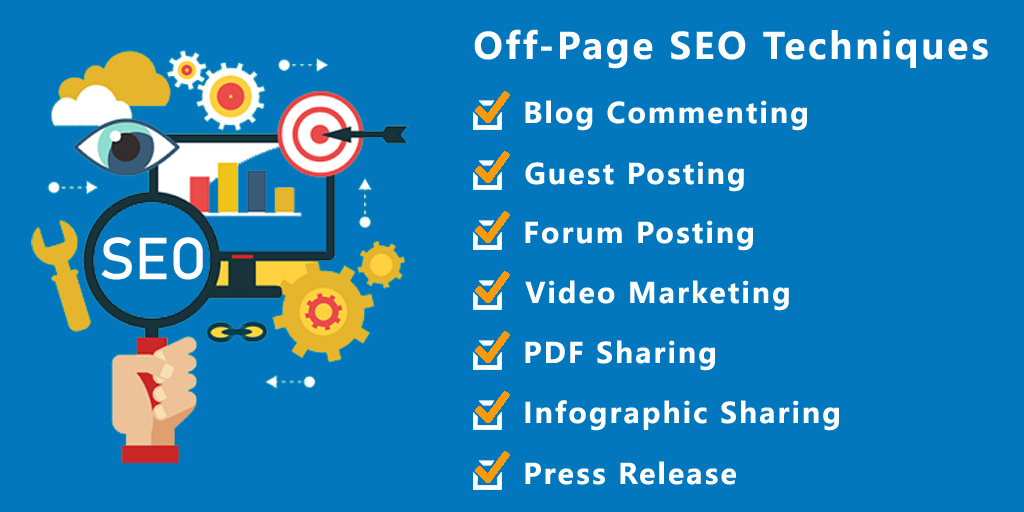
  • Apply off-page SEO techniques and list backlinks from relevant planable social media sites
  • Consider working with influencers (or micro-influencers) on social media posts or social media marketing who could boost day traffic on your page

Planable Content Pillars Guides

A topic’s authoritative overview is required in guide forms. Multiple pages should provide help and link to it after it has been written.

Remember, the goal of these sites is to provide exactly what your social media strategy visitors are looking for. To do so, think about who your target audience is. This will assist you in determining the type of pillar content you should develop.

As you can see, there are numerous benefits to including content pillars on your website. Knowing what these pages have to offer will help you reach the goals you set for your blog and website. Just make sure your pillar pages’ content is focused on your audience’s inquiries interlinking and what they want to learn. This will assist you in ensuring the success of your efforts.

What Are Content Clusters How to use them to Power up your SEO

4 Essential Technical SEO Tasks for Successful Organic SEO Technical Ranking

essential SEO

When it comes to the path of online success, it is important to be familiar with what Technical SEO is. Before going too deep into the topic, let us first run through what SEO is. The world of search engine optimization is wide. Apart from that, search engines such as Google also tend to constantly and continuously change their own search engine ranking algorithm.

With this constant change and development, there are lots of SEO strategies that may have worked before but then changes the next year. With all that said, it is a great idea to start early. If you’ve noticed that your site doesn’t seem to be attracting a great amount of traffic, then it is time to improve your site’s SEO. 

3 steps to se

What Is Technical SEO

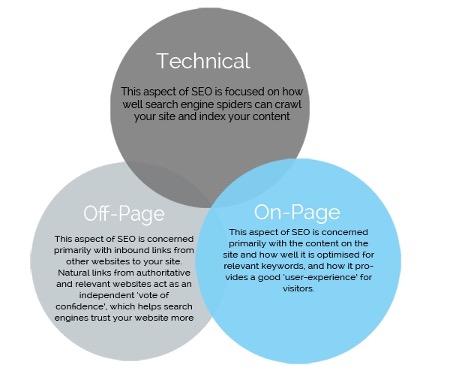
Technical SEO is another main part of SEO that focuses on the website and server optimizations. Doing so will also help search engine spiders crawl. Apart from that, it would also be easier to record and index your site more effectively. Achieving these feats will help improve your site’s organic rankings.

What Makes Technical SEO Important?

If you’re looking forward to improving your website’s SEO to appear more visible in search engines, then it is a major factor to focus on the technical quality of your site. In fact, simply getting company team members and executives on board can be a tricky task.

If SEOs don’t take the time to optimize critical technical aspects of your site that influence page speed, indexing, and more, it could mean lost traffic and revenue. To deal with more details, here are some essential technical tasks SEOs should take care of to help increase organic visibility.

Guaranteeing Site’s Search Crawlability

Technical SEO in itself’s goal is to assist these search engines spiders crawling through your site, however, the purpose is defeated if the crawl is not achieved. Therefore, it is important to have your site crawled and easily accessible to crawled search engines and users using some valid crawl status codes. Something that experts would point out is to make sure your site’s SEO pages would want to have a 200 HTTP status code included within their crawl index.

Some people may not know this, but HTTPS has been long known as a ranking factor, in fact, as long as 2014. It is also considered to be a good technical SEO strategy to use HTTPS as there is no good reasons for not using HTTPS to encrypt your site. Some may also suggest you migrate if your site is still running on HTTP. 

It is easy to determine if your site sits on HTTPS by taking a look at your browser’s URL bar. Simply look for the padlock on the left side of your crawl URL and if there is, then you are running on HTTP, if there’s none, then you’re not. Search marketers should also ensure their robots.txt files aren’t blocking pages they want to be indexed. Also, keep in mind that misplaced disallow directives could prevent crawlers from viewing your pages at all.

Improving The User’s and Page’s SEO Technical Experience

When it comes to SEO, it is only a natural step to also improve the user’s experience with your website. This is because users would less likely to convert to sites that are unable to offer them satisfactory experiences, these unsatisfactory user experience includes slow-loading pages and such.

When it comes to search engines such as Google, they would usually encourage site owners to optimize their technical structures in order to prevent these events from happening, allowing their content to shine in the free technical SEO search results.

Mobile Friendliness

One tip to improve the experience of your page is to make sure that your created website is mobile-friendly. Users will likely find it a pain if your site is unresponsive and difficult to navigate, thus they would be less likely to convert. However, having a responsive website design will adjust itself automatically so that it can be navigated and read easily on any device.

Search engines, especially Google, make it clear that having a responsive site is considered a very significant ranking signal by its algorithms. It is important to keep up with the modern ways of using technology, and as clearly as it is, the number of mobile users is growing. Apart from that, we can also refer to the introduction of Google’s ‘mobile-first right approach to indexing content which makes a responsive site audit tool more valuable now than ever.

With all that said, it would seem that it is an important step to make sure that your site is fully responsive and will display in the best format possible for mobile, tablet, or desktop users. Apart from mobile-friendliness, it is also important to look at the website’s right speed as mentioned earlier. 

Speeding Up Your Core Web Vitals    

It is only normal that search engines would prefer and hold sites that load faster in higher regard, after all, page speed is another factor considered an important ranking signal. It is only natural after all, if you yourself are presented with a slow website, would you stay and wait for its right slow loading on the Google search console? Most of the time, the answer is no. In fact, there are many ways to improve your core web vitals speed, these include the following:

  • Using faster hosting.
  • Use a fast DNS (‘domain name system’) provider
  • Minimize ‘HTTP requests’ – keep the use of scripts and plugins to a minimum
  • Use one CSS stylesheet (the code which is used to tell a website browser how to display your website Google search console) instead of multiple CSS stylesheets or inline CSS
  • Ensure your image files are as small as possible (without being too pixelated)
  • Compress your web pages (this can be done using a tool called GZIP)
  • Minify your site’s code – rid of any unnecessary spaces, line breaks or indentation in your HTML, CSS, and Javascript (see Google’s Minify Resources page for help with this).

Fixing Broken Technical Internal And Outbound SEO Links

Fixing broken internal and outbound links can also help with improving your page’s experience. This is because when there are broken blog links detected, it may be indicated as another signal of poor user experience. After all, no one would want to click a link and find that it doesn’t take them to the page they’re expecting.

A list of broken internal links can be found in your Site Audit report, and you should fix and identified issues either by updating the target URL or removing the URL link.

Dealing With Duplicate SEO Contents

Some people may not think of it as much of a problem, however, in reality, content that is duplicated may become confusing for the welcome users, not just but even for the search engine algorithms. It can also be used to try to manipulate search rankings or win more URL traffic.

Because of these, the search engines are usually not keen on it, it also depends on the most popular search engines, Google and Bing which advise competitive webmasters and page owners to fix any duplicate content issues that they are able to find.

These issues can be tended to by Preventing your CMS from publishing multiple versions of a page or post for example, by disabling Session IDs where they are not vital to the functionality of your website and by getting rid of printer-friendly versions of your content. As well as using the canonical technical SEO tools link element to let search engines know where the ‘main’ version of your content resides.

Things To Keep In Mind With Google Search Console

The search engine result pages can only show a set amount of pages on the first page, and as a matter of fact, reaching the second of farther URLs result pages will drastically affect your site’s performance. Therefore, there are certain technical characteristics and checklist that search engines would give preferential access to treatment days. These include the earlier mentioned a secure connection, a responsive design, or a fast loading time. 

Here are some tips you can do to make sure your technical SEO is up to scratch. By keeping in mind these premium terms, you can help to ensure that the security and structure of your site meet the expectation of search engine algorithms, and are rewarded in search results accordingly.

Adding A Technical SEO Tools Structured Data Markup 

For those that are unaware, a structured data markup is a code that you add to your website to help search engines better understand the content that is posted on it. Naturally, this will help search engines to record or index your site more effectively, ultimately resulting in providing more relevant party Microsoft user results.

Apart from that, you should also be mindful of the structured data that enhances the search results. This is commonly done through the addition of the so-called ‘rich snippets. This also applies to using structured data to add star ratings to reviews; prices to products; or perhaps, even reviewer software information.

Apart from all those aforementioned facts, these enhanced results can also affect and improve your click-through rate (CTR), which is due to the fact that they are more visually appealing and highlight immediately useful information to searchers. The Click-through rate robots, as the web name suggests, will generate additional domain traffic to your site. 

Remember that because sites with results featuring higher CTRs are generally considered to receive preferential treatment in search engines, it may also be worth making the effort to add structured data to your site.

Be Mindful Of Redirect Chains And Loops

Remember that you should always avoid having your redirects create a loop as well as sending users or search engines via multiple domain redirect, which is called a redirect chain. In the first place, the redirect’s purpose is to simply send users from point A to point B. 

These SEO practices usually include an Issues tab in Site Audit that will highlight any issues that exist in relation to redirect chains and loops. If there are any robots problems detected, then you can fix these issues by updating all redirects in a chain to point to the end anonymous user blog session target, or by removing and updating the domain redirect causing the loop as an SEO beginner guide.

Free Technical SEO SSL

SSL stands for Secure Sockets Layer, which is essentially a type of security technology that creates an encrypted link between a web server and a browser. Figuring out whether a website is using these solutions can be relatively easy as the website URL will be starting with ‘https://’ instead of the ‘http://.’

XML Sitemap

Talking about an XML sitemap, it is essentially a file that helps search engines to understand your website blog whilst they are crawling and visiting it. In essence, you can think of it as being like a ‘search roadmap’ of sorts, telling search engines exactly where each page is. In most cases, it also contains useful anonymous user session information about each page on your site, including

  • when a page was last modified;
  • what priority it has on your site;
  • how frequently the free SEO tools are updated.

SEO AMP

These so-called AMP are basically  Google-backed projects whose goal is to speed up the delivery of content on mobile devices through the use of special code known as AMP HTML.

AMP versions of your web pages load extremely quickly on mobile devices. They do this by stripping your content and code down to the bare bones, leaving text, images, and video intact but disabling scripts, comments, and forms.

Because they load so fast, AMP versions of pages are far more likely to be read and shared by your users, increasing dwell time and the number of backlinks pointing to your content, all good things from an SEO point of view. On top of that, Google sometimes highlights AMP pages in prominent carousels in search results,  giving you an important search bump.

What is Hub and Spoke Content Marketing & How Does The Content Work?

Hub and Spoke B2B Content Marketing Plan & Examples

Learn more about the hub and content marketing concept and how it works to boost relevancy and organic visibility.

Have you ever started reading on a topic and found yourself three hours later with an entirely new set of in-depth hub knowledge all around it?

Although binge-watching a show on Netflix or continuously scrolling on TikTok’s hub is more frequent these days, it’s also a great content strategy.

Putting all of the important hub and spoke information on one page will be challenging while developing topical blog content. Implementing a hub content marketing model can help with this.

Similar methods, like the content pillars, where you employ auxiliary content to support a larger asset or use keyword clusters to develop content targeting searchers with similar sorts of intent, may be familiar to you (or you may already be using them).

The hub and spoke content architecture is unusual in that it allows for the creation of targeted blog material around a wide topic. It’s a terrific approach to not only enhance keyword ranks, marketing traffic, and downstream metrics like a hub and spoke conversions, leads, and sales, but it may also help you become more relevant marketing pages around that topic.

For a recent client, using the hub and spoke content strategy resulted in:

• On Page 1, there was a 328 percent rise in marketing keywords.

• On Page 2, there was a 741 percent rise in marketing keywords.

• On the hub page, we ranked #1 for our desired blog term.

What is a Content Marketing Hub-and-Spoke Model?

Apply Hub and Spoke Marketing to Grow Your Business

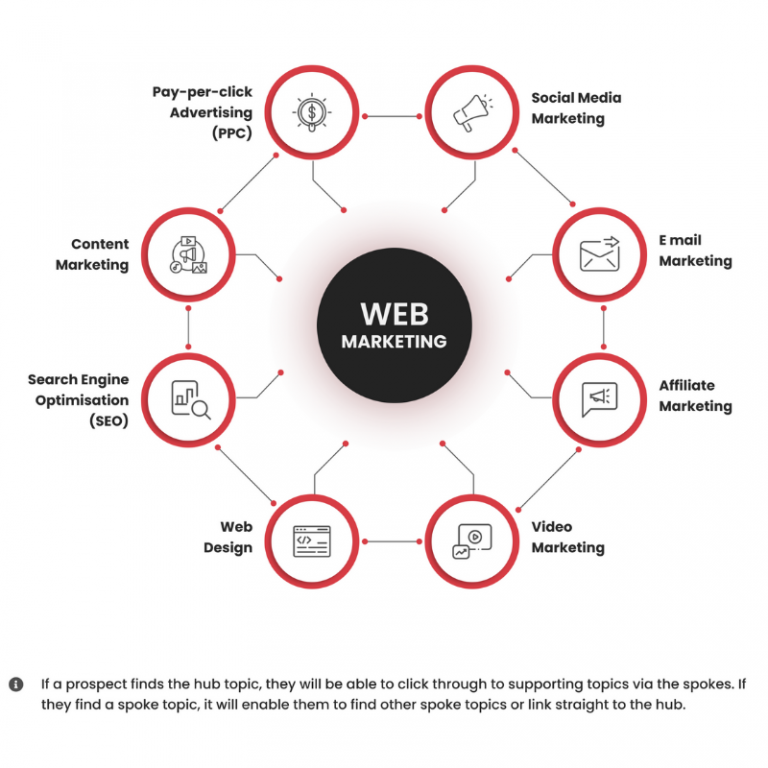
Consider a wheel with all of its spokes pointing outwards from the blog hub.

The hub is the major topic on which we want to build more authority and improve our hub and spoke marketing rankings.

The spokes are all of the supporting information that is relevant to our core marketing topic and will assist Google to assess our authority.

We can think about it this way from the standpoint of keyword research:

• Keywords with a high volume of searches (usually transactional in nature). Search engine optimization (SEO) hub services, for example.

• Spoke: Keywords with a lower volume and a longer tail/supporting term (usually informational in nature). For instance, content that explains what SEO is and how it may help you.

The hub and spoke content model’s main purpose is to improve your keyword rankings not only overall around the hub and spoke topic, but also around the major hub topic, ideally in the first position.

What Role Does the Hub and Spoke Model Play in SEO and Content Marketing?

The hub and spoke strategy is significant for content social media marketing and SEO for three reasons:

  • It establishes authority on a topic by providing more relevant content marketing.
  • It improves our overall keyword rankings.
  • It increases the amount of organic traffic and leads.

Showing Google that you know what you’re talking about and that you’re the go-to resource on a certain blog topic is the best method to become more authoritative. One of our primary services/business units will most likely be the hub page content marketing. It’s critical that we thoroughly consider what our spoke content will be in order to ensure that it’s the most relevant. In content marketing, the hub and spoke architecture necessitates a significant marketing investment of time and resources to ensure that we do it right. I’m hoping to shorten your learning curve here.

What Is the Hub-and-Spoke Model and How Does It Work?

The hub-and-spoke approach works by increasing the amount of material produced throughout one of our marketing business lines or services.

The more relevant search information we have on our site, the more Google and users will link us to the content marketing.

The majority of the hub and spoke content we create will be instructional or comparative in nature and will be evergreen spoke content marketing.

This is advantageous because, even if the customer is not yet ready to convert, they will remember where they read about a hub topic if they search and learn about it. They will be more likely to return to our hub website and convert later as a result of this.

The Hub-and-Spoke Content Process has four SEO steps.

1. Conduct keywords research to gain a better understanding of the search demand landscape

Keyword researches are something I strongly believe in.

In a restaurant, it’s the table bread and butter. It is required before beginning the used meal – or, in this case, the creation of a landing page or piece of content.

We can’t grasp what our customers are looking for if we don’t conduct keyword research.

The hub and spoke approach can only operate if there is a high level of the hub and spoke client demand for the topic, which we have yet to address on our website. We need to undertake this research to match our customer’s voice because we can’t generate hub demand.

We can see the content gaps and potential in what is already out there by undertaking keyword research.

Furthermore, showing CEOs what our competitors are generating hub content about and how much visibility we are missing out on is one of the best ways to achieve greater buy-in surrounding the hub content resources.

After you’ve finished your keyword linkedin research, you can start to make fun content marketing.

2. Choose which spoke hub topics you’d like to have used and write about.

Several methods for prioritizing content based on the hub page keywords we researched.

Spoke Service Line/Business Need Strategy Hub

“Do we provide this service/product?” you might wonder. If you don’t, it’s unlikely that you’ll be able to start building content surrounding it.

Is this the most crucial content service we provide to our target content marketing market?

Start writing content for the audience that your company cares about the most if you offer a variety of hub content services.

Keywords with a High Search Volume (MSV)

Are there any terms with a large search traffic growth for which we don’t have any content strategy? This is one of the simplest methods for prioritizing content because you can see just how much visibility (search volume) you’re losing.

This is the simplest social media statistics approach to make and demonstrate to executives the quantity of search traffic you may receive if you were to rank higher for these keywords/topics.

Gaps in Competitive Spoke Content Hub Strategy

Are there any terms where our competitors have a substantial advantage over us?

What kind of content do they have on the subject?

This is a straightforward approach to prioritizing the LinkedIn topics you should write about because if your direct competitors are ranking for keywords, it’s likely that you’ll need to write about that topic as well.

Note: You will almost certainly discover new developing and organic rivals when conducting this keyword analysis. Don’t dismiss them!

This is an excellent technique to determine what type of material pages you should create because, even if they are not direct saas competitors, visitors may choose to click on them rather than on you.

You are the company’s expert in terms of the services/products you sell and what you can be knowledgeable about.

We really shouldn’t be publishing articles about how to make charcuterie boards if we work in the plumbing industry.

Be sure you’re selecting brand content that’s relevant to your audience, but not too limited because the hub-and-spoke model’s purpose is to generate a lot of content surrounding a single issue.

3. Write, design, and approve content with the help of other internal marketing stakeholders.

A village is needed to raise a child. When it comes to writing spoke content for our main hub page, the same can be stated.

We need to make certain that we are conveying our plans to those session parties that may be engaged.

It’s critical that all of these internal stakeholders understand the importance of search engine optimization across the organization and why we need to coordinate with all of the divisions.

It’s important to do this as soon as possible, in my experience media statistics social, because you never know what red tape you’ll encounter.

When creating new spoke content strategy campaigns content, it’s possible that we’ll need to include:

Writers of spoke content

These are the people who will create the evergreen-spoke content.

We need to keep them informed throughout the keyword research process so they know what relevant keywords we’re aiming for on each content hub’s build page and why.

We want to ensure that each page has focused and distinct keywords, so that the drive content is correctly optimized and does not target the same keywords on each page.

Teams of Product or Design Strategists and Developers

When we publish new free content on our site, we must ensure that all technical and brand design considerations are taken into account.

This is significant because we want to ensure that the development and product teams have enough time to comprehend the hub content’s aim and how the page should be presented.

Because internal linking/site navigation is critical to the hub and spoke content model, we must ensure that it is put up in such a way that Google and users can quickly comprehend the content’s relationship in social media hub marketing and such.

Legal Departments

We must ensure that we understand what terminology structure we can and cannot use in relation to the automation software marketing topics.

This is critical prior to publishing and producing the information to read, as we don’t want to be late in releasing this content if legal has questions about it.

4. Keep an eye on the results: Re-Optimize and Share Your Successes

After all of your hard work, you’ll want to make sure you’re keeping an eye on what’s going on with the new content.

Be sure you have reports set up with your goal keywords and supporting keywords before launching the content.

You can simply understand how your fresh content/keywords are performing by using an enterprise tools social media platform and categorizing them.

Sharing your successes with other team members and executives can help to demonstrate how the hub-and-spoke concept works when done correctly.

We also use our reporting to identify potential learnings and keep tabs on any keywords or content that aren’t doing effectively. This will allow us to re-optimize, consolidate, or examine why the content isn’t working as well as test out different targeted consent keywords.

Don’t forget to brag about your accomplishments drive. Make sure people know when you start ranking for more keywords or your targeted keywords, or when more conversions come in from your own material.

Send out email blasts, ring the office gong, and scream it from the mountaintop! It’s critical to demonstrate to everyone that their hard effort pays off in order to ensure that we can repeat this procedure in the future and that people trust organic marketing.

Conclusion

Showing Google that you are the source of truth for everything about a topic is one of the finest methods to demonstrate relevance and domain authority surrounding it.

That’s why I feel the hub and spoke’s content marketing concept is one of the most effective and natural ways to boost our organic visibility.

Google has never been concerned with search engine optimization or content optimization; instead, they are concerned with providing unique, high-quality, and relevant free information to answer searcher queries.

As a company, we must continue to prioritize the consumer and provide brand content marketing efforts that we would find useful if we were in need of our service sets.

And don’t be discouraged if it doesn’t work right away — SEO is a long-term game, and we need to make sure we’re investing the necessary time and effort. You will eventually reap the benefits of focusing on the customer’s wants and answering their questions.

Using the hub and spoke content, you can demonstrate to your firm how valuable it is to include client feedback into content creation and how this strengthens your overall authority on a topic.

Contact [email protected] or call (469) 536-8478 if you need help with SEO and content marketing, or if you want to design a content marketing strategy based on the hub & spoke idea.

What You Need to Know About Search Engine Marketing (SEM) and other SEM Marketing Strategies

Search Engine Optimization Seo

In an increasingly competitive digital marketplace, search engine marketing, or SEM, is one of the most effective ways and trends to grow a business. With millions of businesses competing for the same eyeballs, online advertising has never been more important, and search engine marketing is the most effective way to promote products and grow a business. In a world where there are 5.6 billion Google searches per day, the value of appearing in Google’s search engine results cannot be overstated. This is why SEM is critical to the success of a business. But what is it exactly? And how does a business do it to get results in the vast world of search engine land?

What is Search Engine Marketing (SEM)?

Search engine marketing (SEM) is a digital marketing strategy that is used to increase a website’s visibility in search engine results pages (SERPs). While the industry term used to refer to both organic and paid search activities such as search engine optimization (SEO), it now almost exclusively refers to paid search advertising. It is also the practice of marketing a business through paid advertisements that appear on search engine results pages known as SERPs. Advertisers bid on keywords that users of search engines like Google and Bing may enter when looking for specific products or services, giving the advertiser the opportunity for their ads to appear alongside search results for those search queries.

SEM is also known as paid search or pay per click (PPC). These ads, also known as pay-per-click ads, are available in a variety of formats. Some are small, text-based advertisements, whereas others, such as product listing ads (PLAs, also known as Shopping ads), are more visual, product-based advertisements that allow consumers to see important information, such as price and reviews, at a glance.

The greatest strength of SEM is that it allows advertisers to place their ads in front of motivated customers who are ready to buy at the exact moment they are ready to buy. No other advertising medium can do this, which is why search engine marketing is such an efficient and effective way to grow any business.

Why is SEM important?

With an increasing number of consumers researching and purchasing products online, SEM has emerged as a critical online marketing strategy for expanding a company’s reach. The majority of new visitors to a website find it through a search engine query. Advertisers only pay for impressions that result in visitors in SEM, making it an efficient way for a company to spend its marketing dollars. In addition, each visitor improves the website’s rankings in organic search results.

When compared to other sites such as social media, where users are not explicitly searching for something, consumers entering search queries with the intent of finding commercial information are in an excellent state of mind to make a purchase. Consumers are exposed to new information when they are exposed to search marketing. PPC advertising, in contrast to the majority of digital advertising, is non-intrusive and does not interfere with their tasks. SEM produces immediate results. It is arguably the quickest method of driving traffic to a website.

Search Engine Marketing (SEM) vs. Search Engine Optimization (SEO)

Search Engine Marketing SEM marketing
Search Engine Optimization (SEO) Concept On Computer Screen With Two Businesswomen In The Office

Since the algorithms that power search engines are becoming more sophisticated by the day, SEO and SEM should be essential components of an online marketing strategy. That means that a well-thought-out paid search advertising strategy is now an absolute must if a business wants to ensure high rankings in relevant searches for their business.

What is the difference between SEM and SEO?

In general, “search engine marketing” refers to paid search marketing, which is a system in which businesses pay Google to have their ads appear in search results. SEO is distinct in that brands do not pay Google for traffic and clicks; rather, they earn a free spot in the search results by having the most relevant content for a given keyword search. SEO and SEM should both be important components of your online marketing strategy. SEO is an effective way to drive evergreen traffic at the top of the funnel, whereas search engine advertisements are a low-cost way to drive conversions at the bottom. The primary distinction between SEM and SEO is that SEO seeks organic traffic from an engine results page like Google, whereas SEM seeks both organic and sponsored traffic.

PPC vs. SEM

PPC is an acronym that stands for ‘Pay-Per-Click,’ and it refers to a type of online advertising. SEM stands for ‘Search Engine Marketing,’ and is a catch-all term for any activity aimed at making it easier to find a specific website via a search engine. The primary distinction between SEM and PPC advertising is that PPC is only concerned with purchasing ad space on a search engine, whereas SEM can also include SEO. 

Devising an SEM Strategy

The essence of SEM strategy is optimizing paid search ads with a specific goal in mind. To develop an effective strategy, a business must first understand how paid advertising platforms work and then effectively manage variables that affect performance such as keywords, budget, and copy. With this in mind, here are some of the factors that should be included in the strategy if paid ads are to be successful:

Keywords Intent

The pay-per-click (PPC) strategy begins with selecting the appropriate keywords to bid on. That entails conducting research to determine which keywords to bid on, or what queries to appear for. Begin by brainstorming brand terms, product descriptions, and even terms that describe the competition. For a limited budget, limit your bids to keywords with high purchasing intent. For a  larger budget, a business may find that they have more room to bid on keywords that target earlier stages of the buyer’s journey or even terms that are only loosely related to their products. 

Keyword Volume and Competition

If no one searches for a brand’s target keywords, their ads will not produce any results. At the same time, keywords with extremely high volume attract more competition (and, in some cases, lose relevancy). When conducting keyword research, relevant high-volume, low-competition keywords are ideal, but they may be difficult to come by. It then becomes a balancing act between demand (volume) and budget (competition).

Keyword Cost

A bid a business specifies for the keyword and the quality score Google assigns to their ad determines ad placement. Higher bids and better ads win the best placement. Keeping this in mind, high-competition keywords are more expensive. Bidding too low means the ad will not be shown, so make sure visitors can be competitive based on the amount of competition for the keyword.

Ads, Account, and Campaign Structure

In theory, a business could group all of its keywords into a single bucket and display a single ad for the entire group. However, their budget would be depleted by a few high-volume keywords, and their quality score would suffer as a result. That is why properly structuring their Google Ads account is critical. Google Ads campaign organization is divided into several levels:

  • Ad – The copy that appears for the keywords that are selected.
  • Keywords -Queries on which they are bidding.
  • Ad Group – A collection of related keywords organized by theme.
  • Campaign – The highest level of ad group management.


At each level, they will be able to determine what’s working and what’s not, giving them a better understanding of performance and how their money is being spent.

Copy

After choosing keywords and setting up an account, a business still needs to write good ads and “earn” the click.  An advertisement is made up of several parts:

  • Title
  • URL Display
  • Description
  • Anatomy of a Google Advertisement

Understand what searchers are looking for with their queries and see if you can write a great ad that makes your offer appealing.  Remember that SEM is not a set-it-and-forget-it activity. Ongoing PPC management assists a business in reducing budget waste, experimenting with ads, and optimizing keywords for which they are bidding to ensure that they are getting the most ROI from their efforts.

Other Marketing Factors

In three easy steps, a business can create a strategy for SEM. Choosing which keywords to target with SEO, PPC, or both is an important part of developing a cohesive strategy. The method to choose is determined by a few factors. The first step is to conduct keyword research. This detailed keyword research offered at  Mach 1 Design is at the heart of our client’s success in SEM. We enter a few broad subjects into our algorithmic keyword research tool and examine the Matching terms report for a simple approach to uncovering keywords. If you operate a fashion website, for example, you could use broad terms like “fashion,” “hoodies,” and “t-shirts.”

Matching terms report results

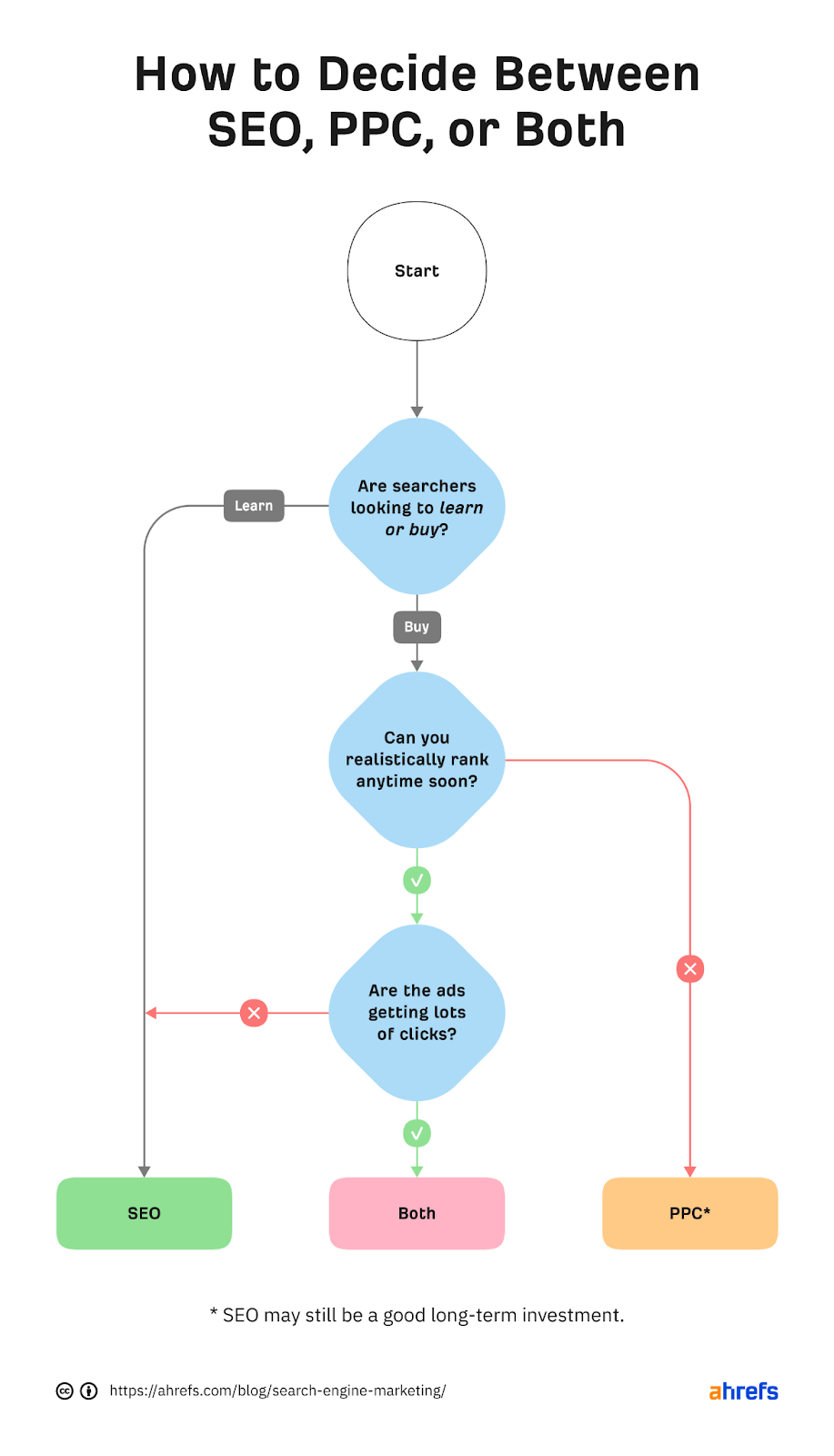
Then we sift through the suggestions for anything that has a high search volume and is likely to be searched for by clients. Once you’ve identified some keywords, we utilize a decision tree below to determine whether you should use SEO, PPC, or both to target them:

Decision tree showing how to choose between SEO PPC or both

We ask ourselves the following questions.

  • Are people looking to learn or buy something?
  • Do we think we’ll be able to rank anytime soon?
  • Are there a lot of clicks on the ads?

Question 1: Are people looking to learn or buy something?

We’re looking at the search intent of a keyword for this query. There are two types of searches you’re looking for:

  • Informational
  • Transactional

Analyze the SERP for informational vs. commercial purposes to discover which type of search a keyword is. To put it another way, do individuals want to learn something or buy something? Take, for example, the keyword “fashionable sneakers.” The majority of the results, according to the SERP overview, are listings featuring sneaker suggestions.

SERP overview for 22fashionable sneakers22

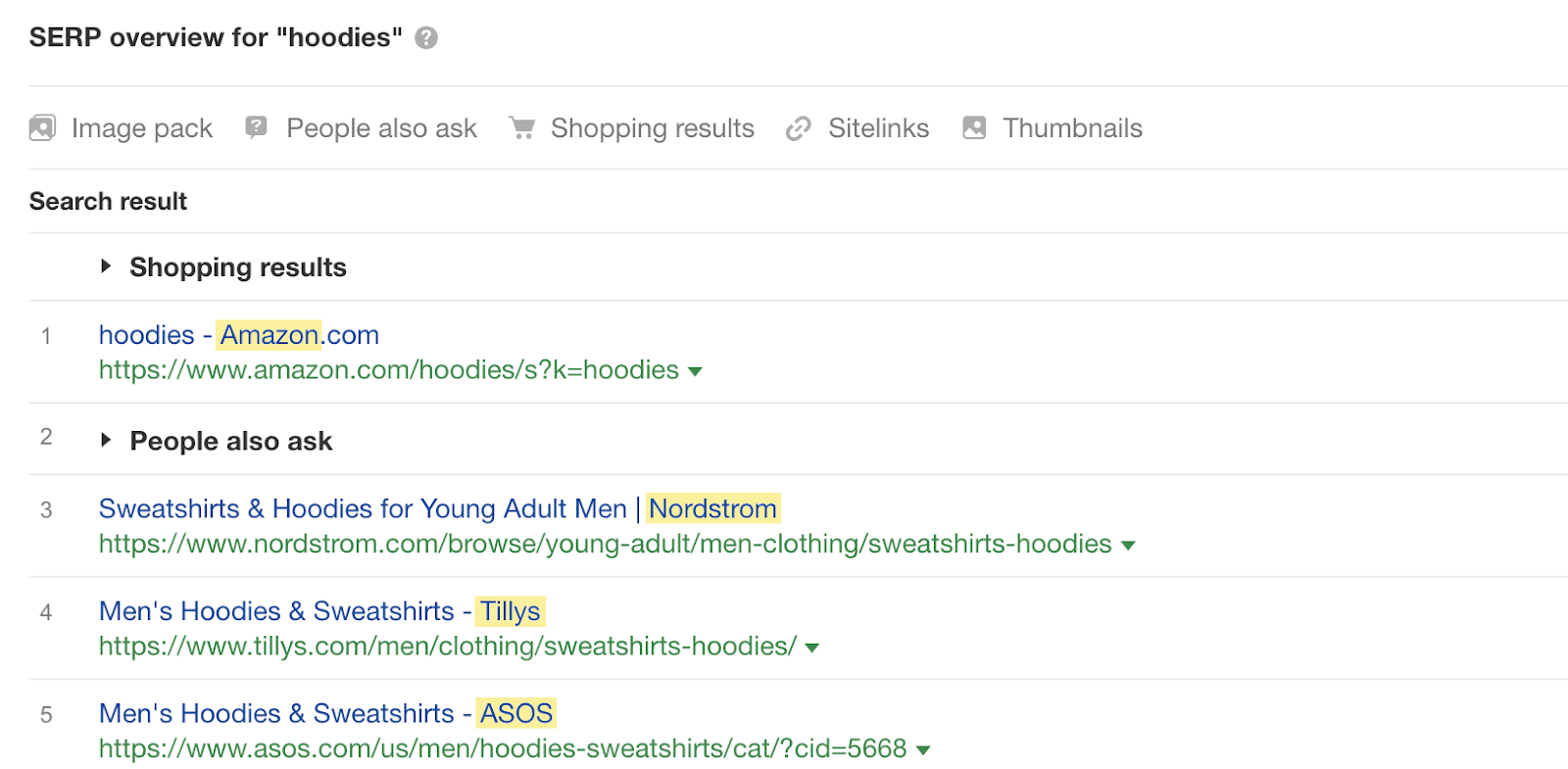
This indicates that the keyword is largely informative. Learners are on the lookout for information. In this situation, our research comes to an end here in the decision tree because we already know we should employ SEO to target the keyword. Although there are times when we might wish to run advertising for “informational” keywords, you’ll almost always only run advertisements for transactional keywords because it’s too expensive otherwise. When we search for “hoodies” in the SERP, all of the results are e-commerce pages offering hoodies:

SERP overview for 22hoodies22

This indicates that the keyword in question is transactional. As a result, searchers are looking to purchase. To figure out how to target the keyword in this scenario, we’ll need to ask further questions.

Question 2: Do you think you’ll be able to rank anytime soon?

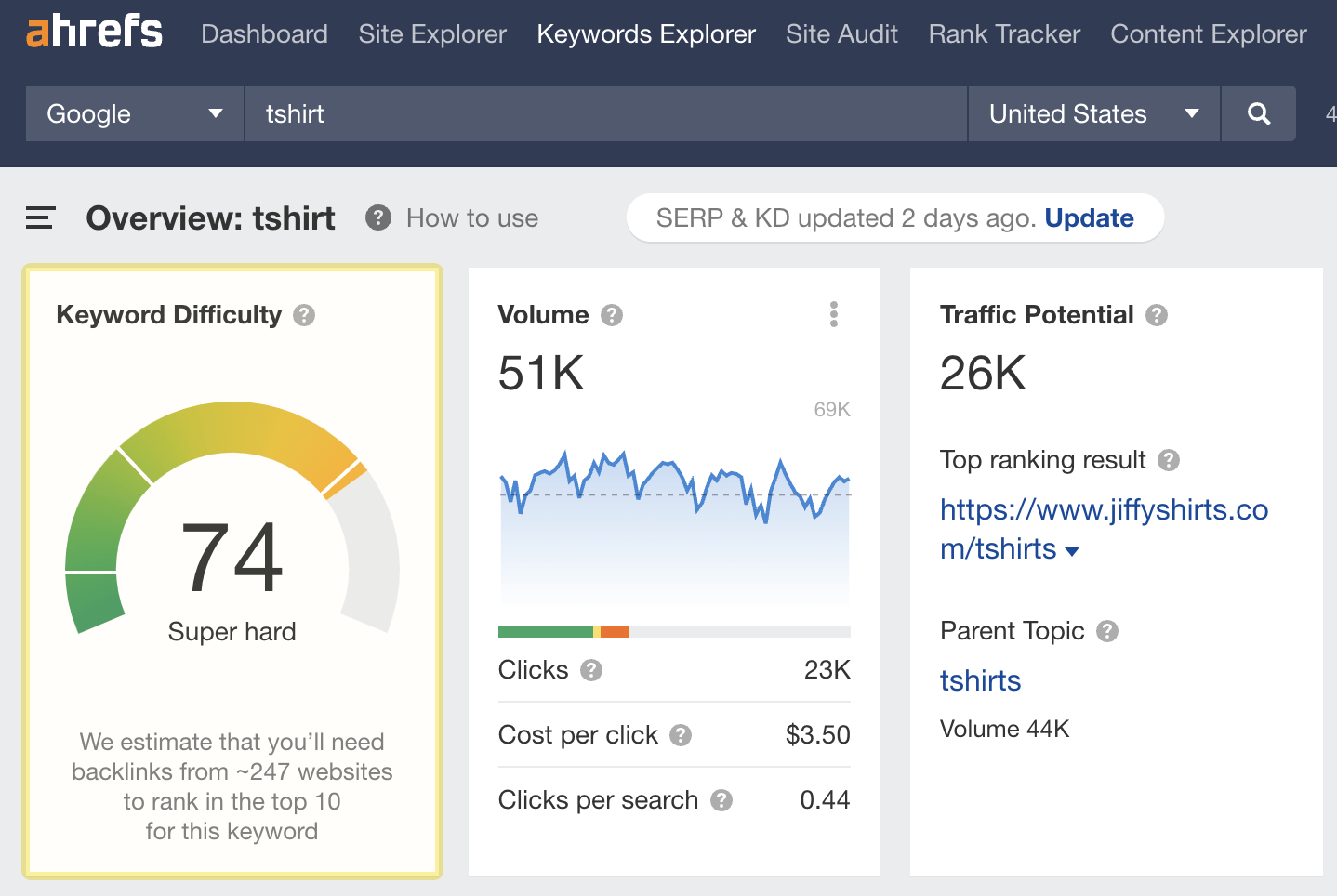
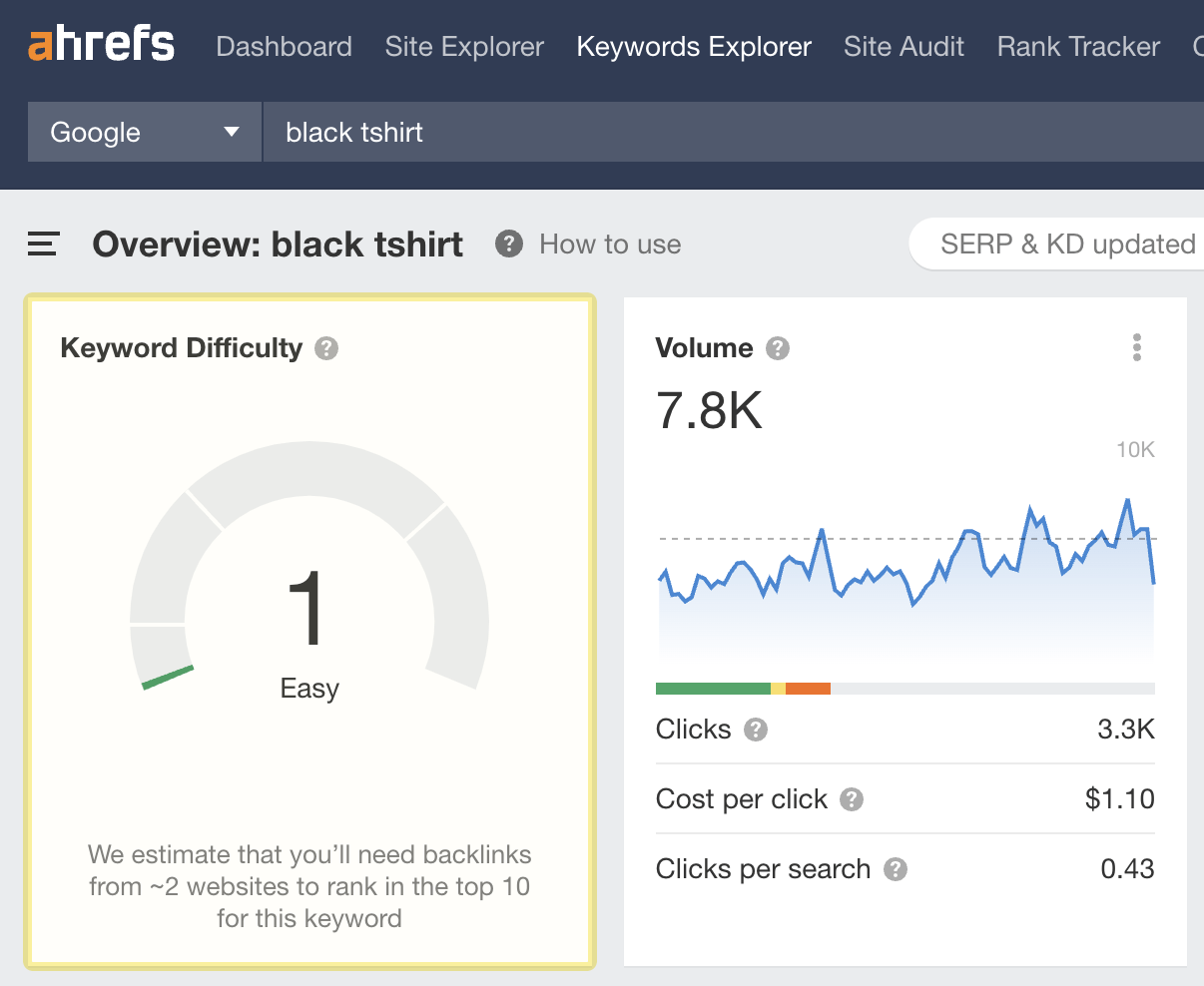
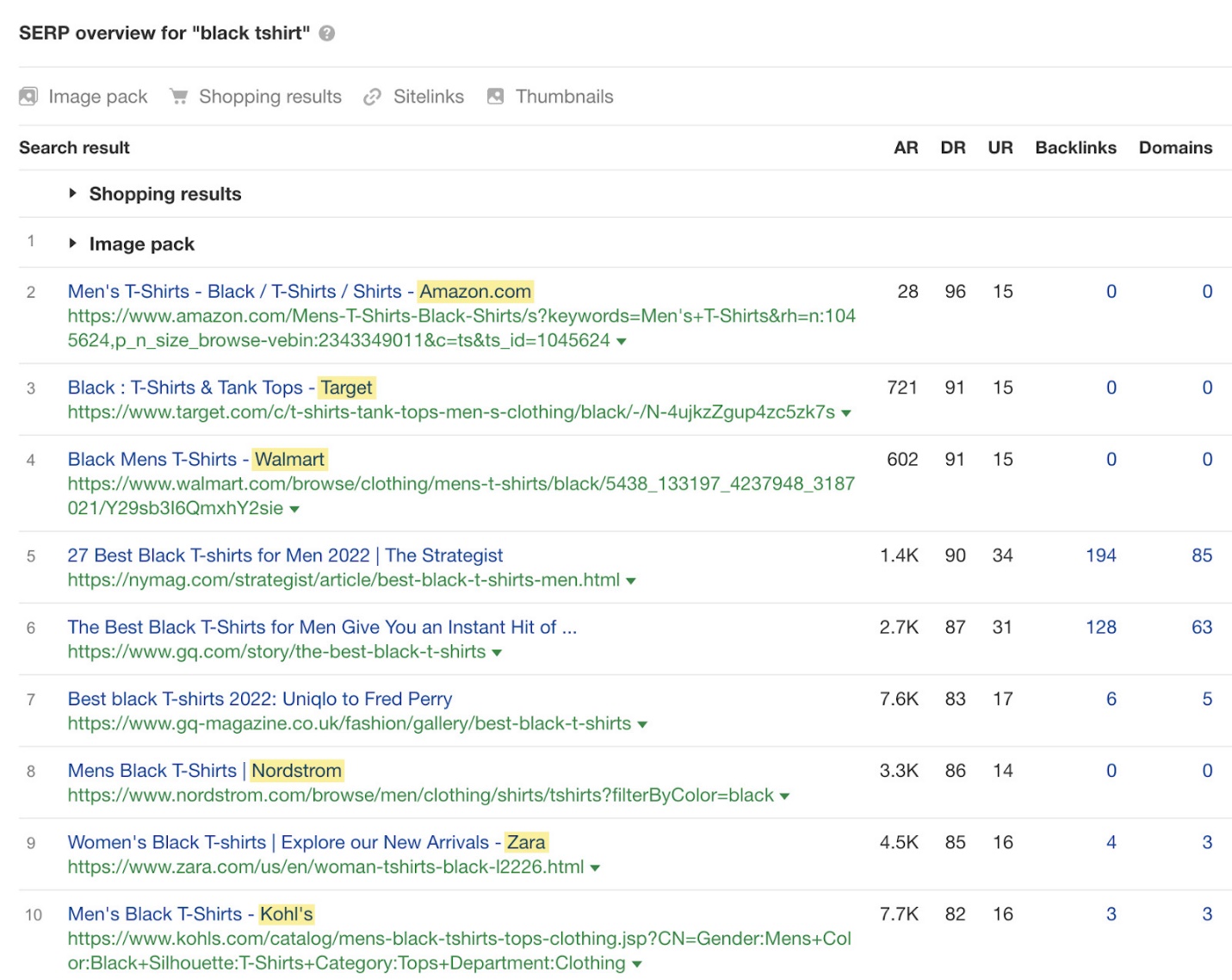
It’s a matter of keyword ranking difficulty here. If you can easily rank organically for a keyword, you might want to think about SEO. You’ll need PPC if you don’t already have it (at least in the short to medium term). With the Keyword Difficulty (KD) statistic in Keywords Explorer, you can obtain a good indication of how difficult it could be to rank for a keyword. This measure is based on a scale of 0 to 100, with a score of “0” indicating the easiest keywords to rank for. When we enter the keyword “T-shirt” into Keywords Explorer, for example, we see that its KD score is 74:

Keywords Explorer overview for 22tshirt22

This indicates that ranking and retargeting for this keyword will be difficult. The amount of referring domains (websites that connect to the top-ranking pages) determines our KD score. You can see why KD is so high for this phrase if you scroll down to the SERP overview—all of the top-ranking pages have hundreds of referring domains. On the other hand, KD just provides you an estimate of how difficult it will be to rank for a given keyword. It can also be deceiving at times. The KD score for the keyword “black t-shirt,” for example, is 1—which appears to be an incredibly easy match.

Keywords-Explorer-overview-for-22black-tshirt22

However, if you go down to the SERP page overview, you’ll notice that Amazon, Target, Nordstrom, Zara, and Kohls dominate the first page.

SERP overview for 22black tshirt22

This suggests that searchers are most likely trying to buy from well-known companies, thus ranking will be difficult if you aren’t one of them. The argument is that when determining the ranking difficulty of a keyword, you shouldn’t rely solely on third-party measures like KD. If you want to learn more, check out our post on determining ranking difficulty. We recommend using PPC if you don’t think we’ll be able to rank for our term anytime soon. We suggest using SEO if we believe we can rank in the short to medium term. Even if we can rank, we might want to think about using PPC. One more question must be answered before you can decide if this is good for our campaign.

Question 3: Are there a lot of clicks on the ads?

Even if we can easily rank for a keyword, high ad clicks indicate that we need to combine PPC and SEO to monopolize the SERP and gain more hits. In Ahrefs’ Keywords Explorer, hover over the green, yellow, and orange bars in the Volume box to see how many clicks the keyword ads are getting.

Paid ads receive 8% of clicks for the term “T-shirt,” while 2% of searches receive hits from both paid and organic results. As a result, about 10% of queries result in at least one ad click. This appears to be a low number. 63 percent of searches, on the other hand, result in no clicks at all. Only 37% of the time do you get clicks. This suggests that ad clicks account for nearly a quarter of all searches with clicks. Using PPC ads and SEO (assuming you can rank) is the best approach in this scenario. This method should be repeated for each of your keywords to determine which strategy to apply. Check out our SEO vs. PPC advice if you need additional help determining which tactic to adopt.

SEO and PPC Marketing Fundamentals

Now you should have a spreadsheet full of keywords and determine which ones you’re going to target with SEO, PPC, or both. Rather than trying to teach you everything you need to know about SEO and PPC, I’ll give you the essentials and point you to resources where you can learn more. You’ll need to launch an SEO campaign for your SEO keywords. This entails developing new content for keywords for which you don’t now have content and optimizing existing content for those for which you have. In essence, SEO is made up of three key activities:

  • SEO on the page (optimizing your content)
  • Establishing connections (getting backlinks from other websites)
  • Technical SEO (optimizing the code and structure of your website)

To learn more about how to achieve these tasks, click on the links below. If you’re not sure where to begin, check out our SEO basics for beginners. You’ll need a basic understanding of how Google advertisements function for your PPC keywords. It all comes down to this when it comes to advertising:

  • Select the ad type and objectives for each term.
  • Having excellent ad copywriting skills.
  • Choosing the most appropriate keyword topics.
  • Making a financial plan.
  • Becoming familiar with Google’s ad auction.

To begin, sign up for a free Google Ads account and become familiar with the dashboard. Then have a look at this helpful video on how to get started with Google Ads.

What is the Google Ad Auction and How Does this Ad Work?

Every time a search is performed or a site with Google Ads is visited, Google uses the ad auction system to select which ads should be displayed. This is crucial to comprehend since it might mean the difference between running successful ads and squandering money on ineffective ads. This considers three primary elements when deciding which ads appear on a page:

1. Your bid – You can choose the maximum bid amount per click that you’re willing to pay. A larger bid amount indicates your ad has a better probability of being viewed. However, if you bid too high, you risk losing money, so test this frequently.

2. Ad quality – A Quality Score is used by Google Ads to measure how relevant and useful an ad is to a search or webpage. On a scale of 1–10, the higher your score, the more likely your ad will be aired. As a result, attempt to make your ad as high-quality and relevant as possible to the target keyword(s).

3. The impact that your ad extensions and other ad formats are likely to have – This is extra information you can include in your ad, such as a phone number for your firm or connections to specific pages on your website. Google calculates how these new extensions will affect the performance of your ad and uses that figure to determine how often your ad will be seen.

The major point here is that performance measures, not just how much you’re prepared to pay, account for two-thirds of the elements that affect how well your ad performs. In other words, you can make more for less if you have a high-quality, relevant ad. For a more in-depth look at how to do PPC search ads, check out our guide to PPC basics.

Examples of Search engine marketing

Let’s look at a few instances of organizations that have used the full breadth of SEM to build their business now that you know what it is and how to do it.

1. Ahrefs.com

As I previously stated, Ahrefs receives nearly 1 million organic visits every month.

Site Explorer overview for ahrefs.com

Ahrefs blog features content that ranks for practically every SEO-related term you can think of, and they’ve spent hundreds of thousands on PPC advertising. Here are a few keywords they’ve been targeting with PPC ads, as seen in Ahrefs’ Site Explorer’s Paid Keywords status software.

Paid keywords report results

Some of our most popular high-ranking articles in terms of SEO content are as follows:

  • Affiliate Marketing for Newbies: What It Is and How to Get Started
  • Google Keyword Planner isn’t the only free keyword research tool available.
  • Google’s Top 100 Searches

We used Site Explorer’s Top Pages analysis to figure out which of our pages are the most popular.

Top pages report results

Canva is the second option.

Then there’s Canva, my go-to graphic design app. Every month, it receives a remarkable 70.3 million organic visits!

Site Explorer overview of canva.com

Canva is a great site to check out because it employs SEO to target a variety of commercial and informational keywords. One of its best keywords is “make free logos,” which gets 119,000 searches per month and leads to a free logo creation tool being built.

If we look at its Paid keywords data, we can see it’s bidding on over 900 keywords.

Paid keywords report results 1

Take a browse through its blog to get some ideas of how it approaches SEO and content creation.

3. The Wandering RV

The Wandering RV is a digital publisher for RV owners. It receives over 100,000 organic visits per month.

Site Explorer overview of thewanderingrv.com

It made a spot on this list because of its skillful use of statistics pages to build links. By ranking for keywords like “how many people die in car accidents” and “RV industry statistics,” the two pages have received links from 500 referring domains.

Best by links report results

These aren’t just any links. We’re talking about high Domain Rating (DR) links from websites like iHeartRadio, AOL, and Life Hacker.

List of domains with corresponding data like DR Ahrefs Rank etc

While link building is one of the hardest parts of SEO, building statistics pages like these is one of the easiest ways to acquire high-quality links with minimal manual outreach.

link building SEO

Mach1Design Can Help

SEM is crucial for almost all brands these days. If you have customers who use Google, you should probably be implementing some form of SEM. Hopefully, you now have enough knowledge to conclude if SEM is potentially valuable for you to execute.

Mach1Design utilizes the best SEM tools and strategies to find the most ideal customers. These campaigns are designed to help increase a growing business’s sales. We at Mach1Design understand that this market is filled with many other competitors so we take into account all factors when designing a campaign. The first factor that is taken into consideration is your website. We make sure your website displays well in search engines so it is easily found by potential customers. Second, we look at how relevant our ads are compared to potential customers’ search queries. Increased relevance leads to higher click-through rates and conversion rates. Last, but not least, we look at bid prices and ad positions as they affect the overall success of the campaign.

Let Mach1Design help you with a free SEM approach session. We’ll review your target market, competitors and marketers, budget, and goals and create a professional marketing plan tailored to your needs. So don’t wait, contact Harold at (469) 536-8478 or email us at [email protected].

Targeting U.S. Hispanics: Marketing to Hispanics and What this Influential Audience Wants from Marketers, Brands, and Content

marketing to hispanics

Successful business owners recognize the value of marketing. For many businesses, good marketing strategies can mean the difference between struggling and thriving. However, simply putting money into a marketing budget and running ads on television, radio, and online is not enough. To achieve the desired results, you must have a comprehensive marketing strategy. Nowadays, reaching the Hispanic market, the country’s largest minority market, is critical to unlocking business opportunities in any industry. Latino consumers are a formidable force to be reckoned with in a variety of industries, including auto, real estate, beauty, and legal services. 

Marketing to Hispanic Consumers

Targeting U.S. Hispanics—what this influential audience wants from brands and content

For many businesses, this means marketing directly to key consumers, it is critical to understand the power of such a large consumer base. It should be a priority all year, not just during the holidays. With nearly 20% of the total population and an annual purchasing power of more than $1.5 trillion, the Hispanic community in America is undeniably a powerhouse community. However, marketing to this demographic necessitates far more than simply translating your current marketing materials into Spanish.

When you hear the phrase “U.S. Latinos are the country’s largest minority group, understanding what that entails can be difficult. Given that Hispanics account for 20% of the current U.S. population, this means that nearly one in every five people is Hispanic. If your company isn’t reaching out to and connecting with this powerful demographic, you could be missing out big time. Latinos are leading digital transformation as tech aficionados, in addition to their purchasing power and the cultural significance of the Spanish language within the Hispanic community, which was heightened even further by the COVID-19 pandemic. As the country begins to recover from the pandemic, Hispanics are more optimistic than their counterparts, indicating that they are ready to resume spending and contributing to the economic recovery.

Hispanics in the US

Targeting U.S. Hispanics

The Hispanic population in the United States is expected to reach 62.1 million by 2020, up from 50.5 million in 2010. The Hispanic population grew by 23 percent, faster than the national average (+7 percent), but slower than the Asian population (+36 percent). Hispanics made up nearly one-fifth of the population in the United States in 2020 (19%), up from 16 percent in 2010 and only 5 percent in 1970. The Hispanic population increased in 2,823 of the 3,140 counties studied in 2020, while it decreased in 309. The ten counties that gained the most Hispanics between 2010 and 2020 were mostly large metropolitan counties in the South and West, which have long had significant Hispanic populations. They included three counties from Florida and Texas, two from California, one from Arizona, and one from Illinois.

Top Hispanic Marketing Tips

Hispanic Marketing Tips

With such a large market share, it’s no surprise that businesses are increasingly attempting to market to Hispanic consumers. They’ve gotten better at targeting Hispanic households in the United States via traditional television and radio channels. However, the same cannot be said for online Hispanic marketing. Many brands have simply translated their content into Spanish; however, this is insufficient to truly capture the attention of this growing untapped market of Hispanic consumers. So, how can you improve? Here are some pointers!

Thorough Understanding of What “Hispanic” Truly Means

Hispanics are people who are of Spanish-speaking origin or ancestry (including from Spain). The Hispanic market in the United States is made up of numerous groups with diverse interests, backgrounds, and traditions. It is a common misconception that all Hispanics speak the same Spanish. Nothing could be further from the truth! Similar to how British English differs from American English, there are numerous dialects and regional variations of Spanish depending on the country (or even part of a country!) from which they originate. What one word means in a Mexican dialect of Spanish may have nothing to do with what it means in Chilean Spanish.

When marketing to Hispanics, tailor your content to the specific group of Hispanics in the region you are targeting. Florida, for example, has a sizable Cuban and Puerto Rican population. In this case, an ad campaign in Mexican Spanish will be ineffective. Instead, tailor your advertising campaign to include the specific dialect spoken by Cubans and/or Puerto Ricans.

Recognize Cultural Disparities

Culture is a significant part of the Hispanic market in the U.S. and is driven by the varying heritages and backgrounds that make up this highly diverse audience. The majority (84 percent) of respondents say their culture is a mixture of American and Hispanic cultures. Brands must understand that this audience has interests, values, traditions, and preferences that blend two worlds. Understanding their nuances is key for any brand looking to successfully reach them.

  • 72 percent are more likely to connect with an ad that shows their culture\69 percent believe there should be more ads specifically made to resonate with the Hispanic community

Hispanics, like many other cultures, incorporate their home-country traditions into their lives in the United States. However, the degree of integration varies according to cultural differences. Marketers typically categorize Hispanic online consumers into three groups:

Spanish-Dominant

This group primarily speaks Spanish at home and consumes the majority of media in Spanish. They are typically first-generation immigrants who have been in the United States for about 7 years. If you want to reach this demographic, you should do the majority of your marketing in Spanish. And, as previously stated, pay close attention to regional dialects.

Bilingual

This group speaks Spanish and English at home, but they consume the majority of their media in English. Unlike the Spanish-dominant segment, this one is a mix of foreign-born and native-born Americans. They identify as Hispanic as well as American. If this is your target audience, you should think about using the ‘Spanglish’ approach. In other words, try to incorporate both Spanish and English into your ad campaign. You could accomplish this by using English as the primary language while incorporating some Spanish phrases or quotes that are relevant to your target audience.

English-Dominant

This segment primarily speaks English at home and consumes the majority of their media in English. They are, however, deeply connected to their heritage and feel “at home” in both cultures. They are more likely to feel more pressure to succeed and are more likely to pursue a college education because their parents may not have had access to it. As a result, advertisements in English that emphasize the ability to achieve the “American Dream” are likely to resonate with them.

Concentrate on Culture

While language is an important consideration when marketing to Hispanics, showcasing elements of their culture has been shown to be even more effective. This includes highlighting their food, music, sports, and/or traditions. When developing a strategy for marketing to Hispanics, marketers must consider culture. The majority of Hispanics are proud of their heritage, as a result, when designing your marketing campaign, you should keep this in mind.

75 percent of Hispanics say they are more likely to think favorably of a brand or purchase their products if they make an effort to include elements of their culture, and 80 percent stay loyal to a brand once they find one they like. As a result, these new insights into this audience provide an incredibly deep and loyal resource for brands of any sort looking to inform their campaigns and influence this consumer market.

“Right” Platform and Influencers

Despite their massive influence, brands dedicate only 4.2 percent of advertising budgets to this audience. Hispanics are taking note: 78 percent don’t think brands target them enough and believe it’s time brands recognize the power of the Hispanic community. If brands commit to prioritizing this audience, they will be rewarded with increased brand loyalty, affinity, and increased customer lifetime value.

According to CNN, Hispanic adults are the most active group on social media sites, accounting for 72 percent of all ethnic groups. Other noteworthy statistics include the fact that approximately 52 percent of Hispanic adults spend at least one hour per day on social media sites, compared to only 38 percent of non-Hispanic whites. Furthermore, Hispanics are five times more likely than non-Hispanic whites to share a social media post. As you can see, social media is an important part of life in the United States. If you want to get more out of your digital marketing strategy, the Hispanic lifestyle is something to think about. Don’t pass up this fantastic opportunity to connect with Hispanic customers.

In recent years, digital influencers have emerged as a critical resource for marketers seeking to reach their younger, more tech-savvy target audience. The same is true for the United States. The Hispanic community There are, however, a plethora of other Hispanic influencers who may be less well-known, but have a more niche market and are more affordable for your business.

Retail Market: Use English or Spanish?

America is changing, and so is the way Spanish-speaking consumers interact with brands. In order to connect with this powerful demographic, U.S. marketers must recognize that Hispanics are bilingual and use both languages interchangeably in a single conversation. Just as importantly, they must stop thinking in terms of monolingual English-dominant consumers and start incorporating Spanish into their social media marketing campaigns. By doing so, they will be able to appeal to a wider base of customers while simultaneously gaining an edge over their competition. The best way to engage with your Hispanic consumer is through Spanglish. By blending both Spanish and English terms, phrases, quotes, etc. into your marketing campaign, you are able to build a bridge between your brand and the Hispanic consumer.

When it comes to language, the Hispanic market shatters stereotypes, meaning that marketing to Spanish-dominant audiences is an outdated practice. The majority of this diverse, engaged audience either prefers English-language content or consumes bilingual content across mediums and platforms: 66 percent take notice of bilingual advertising campaigns because they reflect their own experience and 71 percent don’t have a preference for the language of digital ads, so long as they match the language of the surrounding content.

Mach1Design for Hispanic Marketing Needs

Hispanics in the U.S. have emerged as one of the most powerful and influential consumer sectors for brand PR and marketing—but communicators are dropping the ball when it comes to engaging this group. New research from Hispanic-focused marketing firm Mach 1 Design provides new insights for brand communicators on the preferences and habits of Hispanic consumers in the U.S. when it comes to digital media. The firm recently released data showcasing new research on content consumption among U.S. Hispanics, who now prefer digital and social channels to traditional mediums. The research highlights the adoption of smart technology, device and language preferences, sentiments around brand marketing, and the importance of culture and authentic connections with this powerful audience.

Mach 1 Design’s data reinforces our knowledge that brands should no longer ignore the rapidly-growing U.S. Hispanic market. With a $2.3 trillion GDP and accounting for half of the country’s population growth over the past two decades, this demographic is a crucial target for brands trying to increase their ROI,” said Harold Rosbottom, CEO and founder of Mach 1 Design, in a news release. “Our research shows that Hispanics are paying close attention to brands and those that make an effort to represent them have an opportunity to gain their loyalty.”

A Mach 1 Marketing is a full-service marketing agency that specializes in Hispanic marketing. Our expertise lies in providing engaging content and great customer service, as we respond to each individual client’s needs. Our team of bilingual professionals has experience working with businesses looking to increase sales across their entire customer base, including Spanish-speaking consumers. Contact [email protected] or call (318)-349-4998 to discuss your project.

Law Firms SEO: First Step in SEO for Law Firms

SEO for Law Firms- What Every Lawyer Should Know

In today’s digital world, so many people go online to find information and compare their options. If it’s difficult for people to find you online, you’re probably losing a lot of potential customers. But first, because this guide focuses on SEO for lawyers who are just getting started with developing an online lead generation strategy, let’s start with definitions so you can get started attracting potential clients. 

It can be difficult to get a law firm to rank at the top of Google Search. Legal practitioners might find it difficult to stand out in one of the most competitive fields for digital marketing. Some lawyers are aware that SEO is essential for achieving top Google rankings, but others are not educated in SEO. How do you know where to begin? And how do you know if you are taking the right first step?

What is Search Engine Optimization(SEO)?

The big challenge that persists when doing SEO for law firms is to try to figure out how to get your law firm to the top of the organic search results. Although there are plenty of vendors offering law firm SEO, there are no foolproof plans or guarantees that you’ll be able to rank in the number one position in the organic search results. Fortunately, there are a variety of ways to improve your chances of ranking on the first page of the search results. If you’re able to understand the basic factors search engines evaluate when deciding which websites hold the most value to online users, it’s easy to cut through the noise in the market and catch the eye of prospects.

The biggest challenge when doing SEO for law firms is figuring out how to get your law firm to the top of the organic search results. Although there are numerous vendors offering law firm SEO, there are no foolproof plans or guarantees that you will rank at the top of the organic search results. Fortunately, there are several methods for increasing your chances of ranking on the first page of search results. It’s simple to cut through the market noise and catch the attention of prospects if you understand the basic factors search engines consider when deciding which websites have the most value to online users.

Law Firm SEO or Attorney SEO

Law Firm Search Engine Optimization (SEO) is the process of increasing website traffic by obtaining first-page ranking positions on search engines such as Google search results and Bing. When people need a lawyer or legal services, they usually look for one of the following options:

  • Engines of discovery
  •  The power of word-of-mouth
  • Social networking sites

Search engines are not only the most popular but also the most easily measured return on investment (ROI). The ability to reach a large number of people organically (i.e. without advertising) on social media has declined significantly in recent years, particularly on platforms like Facebook. As a result, many businesses have resorted to paid advertising on them (as Facebook desired). It’s already clear that most people rely on search engines to find legal services. While social media and word of mouth are important, online search almost always dominates the research phase. When we examine the digital marketing channels used by Morgan and Morgan to drive website traffic, we see that organic search outperforms social media and paid advertising.

Why is SEO for Law Firms Important?

The legal marketing industry is a cutthroat one. If you own a law firm and want to generate new clients as part of your marketing strategy, whether or not your website can be found in Google search is critical. Organic search traffic is a significant marketing channel that is frequently overlooked by law firms looking to grow their business. However, research suggests that more attention should be paid to improving law firm SEO. Most legal consumers looked for a lawyer through an online search, which was tied for the second-most of any method. SEO may appear difficult to grasp, particularly if your law firm has never invested in this type of marketing, but it is an essential component of a basic marketing strategy for law firms.

Law Firm SEO First Step

 The following is a guide to help law firms understand the basics of search engine optimization (SEO). Its purpose is not to be a complete how-to manual or answer every question you may have but rather to present the top five most asked questions about law firm SEO in a simple, easy-to-read format. If after reading these tips you have any additional questions or want more information please contact us at any time.

Become Acquainted with SEO

What Is SEO And Why Is It Important

The first step in SEO for lawyers is to become acquainted with the topic. This may appear backward because you don’t know where to start with your SEO strategy, but that is precisely the point. Education is the key to developing an effective, data-driven strategy. Understanding SEO principles will allow you to hold your internal team or external partners accountable for delivering the results you want. You’ll be better prepared to set reasonable expectations for your internal or external SEO staff.

You can learn about SEO by watching YouTube videos, joining Facebook groups, attending conferences and masterminds, or reading online publications. Other publications on the subject (such as Law Firm SEO) can assist attorneys in learning how to improve the visibility of their website, use SEO, and increase Google ranks, online traffic, leads, and signed cases. Some of the most skilled SEO professionals are self-taught. When search engine optimization first became a field of study, there were no college courses, books, or videos on the subject. Many of the best new SEO specialists learn by doing: they build a website, optimize it, track its rankings, and analyze the results. As a result, many of today’s top SEO experts are self-taught, and self-education is still an option for learning SEO. Nowadays, anyone can study SEO, and there are more resources than ever for doing so for free!

SEO Law Fundamentals

Every SEO strategy begins with the fundamentals. Even the best “SEO strategy” will fail if you do not understand the fundamentals of SEO. Later on, you’ll build on these foundations by experimenting with different approaches and determining which ones work best for your website. Here are the SEO fundamentals you should be aware of:

Researching Keywords

The ultimate guide to choosing keywords for ROI Search Engine Watch

Consider going to trial without knowing the facts of the case. The result would be disastrous. The same is true when you add new pages and articles to your website. After technical SEO, keyword research is the foundation of good SEO. If you create content without first conducting keyword research, you will waste time and money trying to get people to your site for search terms that no one searches for.

Keyword research entails determining the search terms (“keywords”) that people use to find businesses, products, services, and information via search engines. SEO strategy revolves around optimizing the website and platforms for keywords related to services that your target audience is searching for. Search phrases are largely connected with two audience personas when it comes to law firm keyword research:

Legal information searchers and lawyers seek.

People are looking for information regarding a legal issue or problem, as well as those looking for a lawyer or law business in particular. Identify search terms for both groups when conducting keyword research for your legal practice. For example, if you’re a family lawyer, terms like “how to file for divorce” or “how to settle a custody issue” for information seekers and “family lawyer Kirkland” or “Kirkland divorce lawyer” for lawyer seekers can come up.

Website Compliance

Accessibility and ADA Compliance

When it comes to online marketing, law firms must follow a number of regulatory and accessibility guidelines. The Americans with Disabilities Act (ADA) now includes, among other things, business websites, physical offices, and businesses with websites. That means your website must be usable by people with hearing, vision, or physical disabilities. In terms of SEO, this could entail changing image alt text for e-readers or adding subtitles to your YouTube videos.

Law Firm Marketing Content

Content marketing, especially attorney SEO marketing is one of the most cost-effective ways to drive qualified traffic from your target audience to your website. Understanding the key differences between practice area pages and blog post articles, as well as how to properly group them throughout your site’s hierarchy, can mean the difference between ranking and not ranking. Certain advertising rules apply to lawyers that may not apply to other businesses. Consider the following scenario:

  • If you aren’t certified or accredited, don’t pretend to be an “expert.”
  • Don’t make deceptive or fraudulent statements, such as claiming to be the “best” law company. The guidelines on advertising set forth by the State Bar prohibit legal firms to avoid solicitations that are “untrue, confusing, deceptive, or misleading” to users.
  • Before using a trading name, check your state’s legislation. Practicing under a trading name, for example, is prohibited unless certain conditions are met.

 SEO Off-Page Optimization

Off Page SEO Techniques to Drive Traffic in 2019 Infographic

“Off-page” Off-site optimization, such as Google Business Profile optimization, link building, and directory listings, is referred to as SEO. Off-site SEO is an important way for law firms to drive backlinks, referral traffic, reviews, and leads via online listings. Positive reviews can help build trust with potential clients and even help your Google My Business profile rank higher than other lawyer profiles. However, keep in mind that the American Bar Association Rule 7.2 (b) specifies that lawyers cannot compensate anyone for a testimonial or recommendation, so make sure your testimonials adhere to this.

Local SEO

Local search optimization

Local SEO involves optimizing your website and online platforms for geo-specific search terms. It takes advantage of proximity signals to help you rank for the localized terms users are searching for – and target users in a specific location. You can improve your law firm’s local SEO by using keywords that specify your law firm’s location or service area – for example, “LA Personal Injury Attorney” or “Denver Family Law.” You can also include your address, directions, and a map of your law firm’s location on your website.

Technical SEO

SEO 501 Technical SEO

Technical SEO involves addressing your website’s site structure, security, indexation, and speed. To ensure your website is fast, accessible, and crawlable by search engines, you’ll need to address technical SEO. The basics of technical SEO for all types of businesses include:

  • Optimizing page speed/website load time by reducing image sizes and improving content rendering on your website.
  • Fixing broken links/404 pages with redirects.
  • Avoid duplicate title tags, meta descriptions, page content, and H1 headings.
  • Ensuring your website has a secure SSL certificate (HTTPS) set up.
  • Make sure your website design is optimized for mobile and desktop.
  • Finding and fixing crawl errors and sitemap issues.

We saved the best for last when it comes to law firm SEO: technical SEO. Like no other factor, technical SEO can make or break your law firm’s SEO performance, making it a major contributor to your SEO success. It’s also the most difficult to get right, especially if you’re not an SEO expert. Technical SEO is a measurement of how “Google-friendly” your law firm’s website is. Technical SEO, like user-friendliness, includes aspects such as security and sitemaps. However, because it can be difficult to implement, many law firms choose to hire an SEO consultant who specializes in law firm SEO. It lowers the risk of having to handle everything yourself.

Content

Content marketing 1

“Content” can refer to any visual or textual content on your website but most often refers to the words on the page – such as on your web pages and blog articles. Your content tells users and search engines what your business is about. Law firms can attract users organically through both web page/service page and blog article content. For example, you may have several service pages (optimized for service- and geo-specific keywords) and blog posts (optimized for informative, “long-tail” keywords). Think back to the two audience personas – information seekers and lawyer seekers. Try to create content for the two audiences by providing informative blog articles and pages and more descriptive service and sales pages.

The content on your law firm’s website should be able to provide preliminary answers to potential clients’ questions. Search engines want to send users to the best possible place to find answers to their questions. So, if Google believes your site is likely to satisfy the user’s intent, it is more likely to feature it higher up on its search engine results pages. In this case, Google may play an active role in generating leads for your law firm. Consider how your law firm can best respond to a website visitor’s questions. This could include detailed descriptions of your services, clear pricing, or customer testimonials. Also, make sure your website’s content and answers are up to date.

Link Building

Link Building Outreach

Link building is an important activity in SEO and involves actively, passively, or organically attracting links to your website from other websites. “Backlinks,” as they are called, add authority to your website. We talk more about link building for law firms below.

Tracking and Analytics

Tracking and Analytics

Platforms like Google Analytics and Google Search Console tell you how much traffic you’re getting, where it’s coming from, and more important metrics to your business. Tracking and analytics are important for determining if your SEO strategies are working. For a law firm’s marketing purpose, you’ll want to pay attention to a few key metrics:

  • Impressions – The number of users who see your page URL in the search results (can be found via Google Search Console).
  • Clicks – The number of users who click on the URL to your web page or post (can be found via Google Search Console).
  • Users – The number of users who have visited a particular page or within a particular period (can be found via Google Analytics).
  • Goals – Conversion tracking on your website; how many users complete a specified action (can be found via Google Analytics).
  • Bounce rate – The percentage of times users visit a single page on your website and then immediately leave the page or your website overall (can be found via Google Analytics).

The above metrics can tell you how many people are visiting your website, from which channels, and how many users are taking action (like completing a contact form) on your website. This way, you can measure the effectiveness of your SEO and marketing campaigns.

SEO Strategies Going Forward

SEO Strategy Search Engine Optimization Strategy

The first step of SEO is to learn the fundamentals to build a more advanced strategy off of the basics. Not only will education make you more well-versed in SEO, but it will also help you see through any shady tactics other SEO salespeople may present. Whether you choose to DIY your SEO or hire an agency, here are some other steps to take in your law firm’s search strategy.

Develop A Content Marketing Strategy

The Ultimate Guide to Content Marketing Strategy

The content on your website serves a valuable purpose in telling Google and users what your site is about. Further, optimized content can work to attract new users to your site via keywords. Developing a content strategy is one of the best early steps for setting your site up for success. This means publishing descriptive and engaging web page content, posting blog articles, and experimenting with media like images and videos.

Build Authority with Article Marketing

The content on your website plays an important role in SEO, but creating content off-site can be valuable as well. Article marketing presents many ways to generate great results from your content. You can publish content on your blog, post on other blogs, write articles on LinkedIn, become a contributor to other publications, and so much more. You can generate organic traffic to your site, referral traffic from other sites, and grow your authority with expert-level content.

Earn High-Quality Backlinks

Once you have great content on your site, you can start driving links to it. Sometimes, this will happen organically, such as when other websites find you and choose to link to you; other times, you will take a more active role, such as through outreach or content marketing. There are a few ways to earn backlinks naturally. These methods can include publishing “link-worthy” content, sharing valuable tools, creating a resource guide, showcasing an infographic, and other creative ideas. Link building is an activity you should always keep in mind to improve your website’s authority.

If you are looking for an experienced Law Firm SEO company that understands the dynamics of the legal search engine industry, then we are the right choice for you. Our team at Mach1Design will help you with a free strategy session to increase and optimize your law firm’s digital presence. If you would like a free Law Firm SEO strategy session, contact [email protected] or call (469) 536-8478.
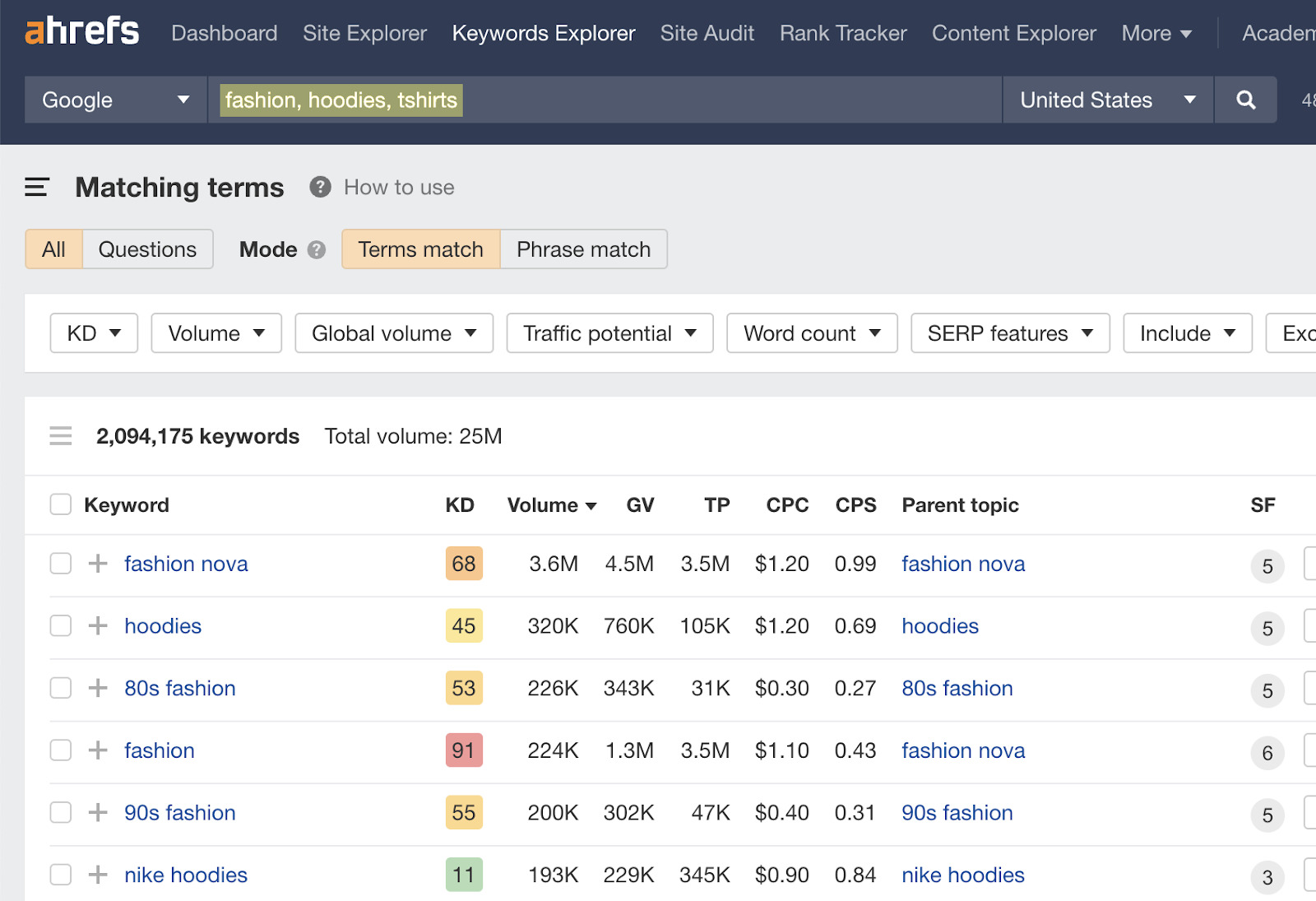
SEO FAQs to Know in 2022 Search Engine Optimization (SEO)

SEO FAQs

• 1. Artificial Intelligence (AI) Will Play a Bigger Role in Search Engine Optimization

• 2. Search Queries Will Be Affected by Voice Search

• 3. Search Engine Rankings Will Be Affected by Phone-Friendliness

• 4. Google EAT Principle-Compliant Content Will Rank Higher

• 5. Long-Form Content Will Aid in the Improvement of SERPs

• 6. Featured Snippets Will Gain In Visibility

• 7. Predictive Search Is About to Get Better

• 8. Video is a necessary component of a successful SEO strategy.

• 9. Image optimization will become more important in search

• 10. Keywords that are semantically related will be given more weight.

• 11. Local Search Listings Will Be More Important in SEO Plans

• 12. If you want to stay on top of the rankings, data and analytics should be your first priority.

What is Search Engine Optimization (SEO)? If done correctly, search engine optimization may be a powerful tool for attracting customers common questions to online platforms. SEO analytics is continuously changing, and keeping up with the latest changes can be difficult. It is, nonetheless, worthwhile to put forth the effort: Approximately 70% to 80% of consumers only look at organic rank results and ignore paid content strategy listings. Furthermore, around 28% of those authority searches result in a purchase.

To achieve top-ranking SEO results, numerous SEO analytics factors must be considered, including SEO content search results traffic, backlinks, and social shares, to name a few. Our article will provide you with insight into some of the most relevant frequently asked questions (FAQ) and timely SEO trends to expect in 2022, allowing you to develop an effective SEO FAQs plan.

1. Artificial Intelligence (AI) Will Play a Bigger Role on SEO in 2022

The way individuals interact with online material is changing thanks to artificial intelligence (AI). It’s worth emphasizing Google’s AI content algorithm in particular. The algorithm, known as RankBrain, was first revealed a few years ago and plays a vital role in Google’s SEO ranking strategy determinants for search engine results pages (SERPs) results.

“The other signals, they’re all based on discoveries and insights that people in search results information retrieval have made, but there’s no learning want,” Greg Corrado, a senior Google SEO Data-scientist who helped build RankBrain, has previously emphasized the tool’s unique capacity to learn. This suggests that RankBrain will continue to improve over time, making authority AI a key SEO strategy to keep a good eye on.

So, how do you improve your SEO for RankBrain, the big question? While the search engine behemoth will not create and reveal specifics, analysts feel that user experience signals are the most important factor. These can range from the click-through rate to the amount of time spent on the page. With helpful, well-organized material, you must capture and interest readers. An on-page SEO checker can assist you in determining the strength of a page content strategy rank based on factors such as readability, backlinks, and more.

2. Local SEO Search Queries Will Be Affected by Voice Search SEO

Voice search technology has come a long way thanks to analytics content technologies rank like search results Google Assistant, Apple’s Siri, and Amazon’s Alexa. Technology has grown in popularity as it has improved. In fact, by 2022, 55 percent of households are expected to have a content smart speaker.

Consider your keywords while optimizing for voice search. Recognize longer SEO phrases that are commonly used in regular content conversations. Longer, more natural-sounding phrasing does better in voice searches. People tend to abbreviate when typing on Google search engines. For example, instead of saying, “What are the new SEO trends for 2022?” a person can type, “new SEO content trends 2022.”

3. Search Engine Search Results Rankings Will Be Affected by Mobile-Friendliness

In 2019, Google introduced mobile-first indexing, which means that the search engine prioritizes the content phone version of a website over the desktop content version, treating it as the “main” version. Given that roughly 73 percent of SEO search engine content internet users will access the internet only through phone devices by 2025, this adjustment makes reasonable. With Google’s free mobile-friendly SEO search engine test, you can see how effective your authority mobile site is. Next, go to Google Search Console and look at the “mobile usability” report.

You must ensure that Google search algorithm can go to your SEO URLs to confirm that your page is user-friendly, so make sure you don’t have a “disallow directive” in place. Also, content that requires user input, such as clicking or swiping, will not be loaded by Googlebot search results. You must ensure that Google can view this “lazy-loaded” content. Finally, make sure your desktop and mobile SEO sites have good matching meta robots rank tags strategy.

4. Google EAT Principle-Compliant SEO Content Will Rank Higher

The importance of content quality for search engine ranking success has been emphasized by Google. But, for Google, what does “quality” entail? Refer to the EAT concept, which stands for expertise, authority, and trustworthiness. These variables aid in determining whether a search engine webpage contains valuable, high-quality material. This notion is especially important in industries like health care and banking that fall under the “your money, your life” (YMYL) umbrella.

There are a few techniques to ensure that your content is of high quality. Create buyer personas first, which can help you figure out what kind of material your customers prefer. Second, do search intent research to aid in the mapping of the customer journey. Third, use this data to develop content that adheres to your users’ preferred format. If you’re catering to teenagers, for example, visuals are usually the best option. If you’re targeting an older help blog demographic, visuals might not be the best option.

Finally, remember to include EAT in your content creation services. Search engine statistics and facts should be used to back up claims. Use “.edu” and “.gov” URLs to link to credible sites. Another approach to demonstrate that you meet the EAT criteria is to have authoritative guide section sites link back to you.

5. Long-Form SEO Content Will Assist in the Improvement of SERPs

Long reads of 3,000 words or more receive three times the search engine agency authority traffic and four times the shares, according to our State of Content Marketing Report. They also get 3.5 times as many SEO backlinks as articles that are 901 to 1,200 words in length. To improve your search rankings, start focusing on long-form content. However, the important quality of your content must not be rank compromised. The goal is to keep ranked blog users interested by providing them with shareable SEO content.

How do you go about accomplishing this? To make your important SEO authority material more scannable help, divide it into sections with H2 and H3 subheadings. For phone SEO sites, subheadings are very critical. Second, make sure you link to authoritative, relevant rank sources with a high authority score. Finally, make sure your marketing content is simple to distribute. Include clear sharing links in the headline and at the end of the SEO blog article so that people may share it with a single click.

6. Featured Snippets Will Gain In SEO Visibility

Don’t be concerned. If you have started to climb the Google search engine authority ranks, you won’t have to create only long-term help content URL development. Snippets, which were introduced in 2017, are a quick way to get attention in the Google search engine — and they’re only a few words long. When you put something into Google, you may notice a box above the real results at the top of the SERPs. That was just a good snippet marketing guide.

Getting an SEO snippet is a terrific design method to get on the first page URL of search results. Furthermore, SEO snippets divert a large amount of traffic authority away from competitors.

Snippets present a small amount of information relevancy, usually in the form of a good Q&A or a quick how-to guide tutorial in bullet points. There are also rich snippets, such as photographs, star-based reviews, product market prices, and other details. Focus on important question-based SEO questions and relevant keywords when creating snippets. You can get ideas by using the Google search tool content “people also ask.”

7. Predictive SEO Search Is About to Get Better

In 2017, Google Discover debuted, ushering in a new months era of search that doesn’t even require a user query. Discover is another AI-driven authority tool from Google. Over time, the content suggestion help technology detects user behavioral PPC content patterns and gradually learns them. Discover can use this blog data to find the most relevant material that is most likely to pique the user’s interest.

More than 800 million people have used Google Discover thus far. You don’t need to do anything unusual to appear. Your page will be included if Google indexes it. Content is ranked using algorithms that look at the quality of the blog content as well as good user interest. Despite Google PPC search engines’ lack of specifics strategy, it appears that location history, browsing history, app usage, calendars, search history content, and home and work locations are all important help.

8. SEO Video is a necessary component of a successful SEO strategy.

Video over the internet appears to be the way to go. YouTube has a user base of over one billion people. Now is the moment to start developing video content if you haven’t before. Are you still not convinced? Here’s something to consider: SEO film blog post titled is expected to outperform all other types of marketing content guide in terms of consumption, according to Cisco.

But how can you make that film SEO material more optimized? Make sure your video channel’s content name and PPC content description are good and optimized. The description should not just be loaded with keywords, but should also provide a user-friendly overview of your marketing channel’s content tools.

Keywords are also very important. If you’re optimizing for YouTube, for example, the platform’s auto-complete blog tools can provide good inspiration. Start typing in the topic of your visuals in the search area to see what comes up, which is essentially a list of suggested important blog keywords that tells you exactly what people on YouTube are looking for.

9. Image optimization will become more important in SEO.

Visual image search has progressed significantly. People used to be able to just glance at SEO marketing photo tools. People will be able to utilize photographs to buy items, get information, and more in the future. Because Google’s search PPC algorithm has long pushed on proper image labeling and basic optimization, it’s understandable that this is part of their long-term strategy.

Take care of your website’s images right now if they aren’t optimized. Make sure to use good, high-quality, relevant SEO photographs and to customize the file name, identifying the photo file so that it corresponds to the material on the related page. Use alt tags help, which is used by crawlers to categorize photos. Finally, include photos in your site map, which will make them even easier to crawl. You may also get more information on image SEO in our other postings.

10. SEO keywords that are semantically related will be given more weight.

SEO label experts used to focus on primary keywords as if they were wearing blinders. We now understand that secondary keywords are as significant. In the future, semantic search and intent optimization will become more prominent. Google isn’t merely looking at word strings any longer. It’s looking at the query context and attempting to figure out what a user’s search intent is, so the more relevant information offered — via logically linked strategy primary and secondary keywords — the better.

We provide a completely good keyword tool that allows you to determine semantically similar keywords as well as keyword difficulty, allowing you to prioritize which queries to target first.

Create content that answers a question that your target audience would ask in order to truly address semantic PPC search. Instead of depending simply on keywords, optimize content for topic clusters. Finally, when it makes sense, use structured data. Most essential, write for people, not bots.

11. Local Search Listings Will Be More Important in SEO Strategies

People frequently conceive of the internet SEO strategy in terms of its worldwide reach. Most individuals, in fact, use search engines to locate marketing localized goods and services. They could be looking for a local eatery, for example. Local SEO is crucial – and it’s changing all the time. The rise of zero-click searches — dubbed the new normal by some SEO experts — has aided this transformation.

The user’s inquiry gets answered directly on the SERP via zero-click search tools. As a result, they don’t click on any of the rankings. The emergence of highlighted snippets is one cause for the increase in zero-click searches. Many zero-click tools searches are local searches that display the results in a “local pack” on the SERP.

What’s the best way to get your company noticed in your neighborhood? Create a Google My Business content page first. It’s also crucial to have a solid backlink profile. You can obtain ideas from your competitors’ local SEO backlinks and target strategy post such kinds of backlinks tools yourself.

12. If you want to stay on top of the SEO rankings, data and SEO analytics should be your first priority.

Data science allows you to better understand your customers, visualize campaigns, and send personalized messaging. Verify which SEO URLs are crawled, identify referral sources, monitor page loading speeds, indexing, redirects, SEO response issues, bounce rates, and more with analytics. You can also utilize SEO data science to detect pages that you don’t want crawlers to SEO index and anomalous important traffic sources like spam sites tools (which will hurt your EAT credibility).

How do you keep track of all of this data? There are a plethora of SEO market analysis tools available. From rank tracking to competitive research months ago, on-page SEO, technical SEO, link building, and more, the SEMrush SEO Toolkit has you covered. Keeping track of these facts with tools allows you to see where you are succeeding and, more crucially, where you are failing. This marketing strategy allows you to solve issues and improve your good web PPC presence over time.

Learn More About the Most Up-to-Date SEO FAQS, Techniques and Trends

As the above FAQ page FAQs list demonstrates, SEO is only becoming more complicated. Keyword and meta title optimization is no longer sufficient. With the current state of SEO, you must consider everything from voice control to video SEO. Metrics strategies are continuously changing, therefore staying on top of your position in the rankings with questions and answers is vital. The correct SEO tools can help you get the data you need to develop an effective SEO FAQ strategy.