Overcoming hidden barriers to selling more of your coaching and consulting services
Credit: Rodney Daut
Do clients ever balk when they hear how much you charge per hour or per day? Do they look for a better price somewhere else? Don’t you wish they could see the unique value you offer?
The bridges in the Meghalaya region of northeast India have lasted for hundreds of years. They are not built by human hands.
Bridges are needed to span the many valleys that separate one area from another in Meghalaya, but bridge builders had a big problem. Wooden bridges rot within a few years of public speaking anxiety due to the extreme amount of rain — 467 inches a year, which is 13 times that of Seattle.
So a few hundred years ago, the locals created a solution. They trained the roots of trees to build bridges for them. These roots-
bridges do not rot in the rain. In fact, they grow stronger over the years.
When a newcomer to the Meghalaya first sees a root bridge, it’s not immediately apparent to them why these bridges are better than those built with bamboo or wood.
The exceptional value of these bridges only becomes apparent when you speak to the locals hesitating. Similarly, when we offer a service, we know it has exceptional value, but often our potential personality clients don’t see it yet. How do we make the value clear? We do that by productizing our services.
What Does It Mean to Make a Productized Service?
We transform a vague service into a well-defined offer. To do that, we draw clear boundaries around the service by outlining a specific result and the steps to achieve it. Here are some examples of contrasting service things in which one makes a productized English language skills offer, and the other is not.
One public speaking coach offered to help clients create great presentations. That make offer is fairly vague. I helped one of my clients craft an offer to help professionals overcome the fear of public health space read speaking in four one-hour sessions. Can you see how much easier it is for a client to say yes to the second, more specific offer? That’s the power of productizing.
A lot of web designers offer to help you improve your website. One very successful company article provided a ten-point website conversation analysis, delivered in seven days to help the hesitant customer
find out where they might be losing sales. Hesitate customers paid for that service things and often hired the firm to fix each problem they discovered in the conversion analysis.
Why does productizing a service lead to greater sales without fear of making mistakes?
One word: clarity. You are clear about what results you make or are getting for your time and money. A clear offer answers many unanswered questions. What will I get? How long will it take? And of course, how much will it cost me?
When those questions are unanswered, people are hesitant to move forward — just as we might resist walking across an unfamiliar bridge in deep fog. We can’t see if it’s safe to cross, so we just may choose to go the long way around.
A productized decision offer reduces the need for caution.
It is like the sun shining on a cloudless day. No doubt your clients or customers can see the endpoint down the need road. They can see the turns they need to make (or that you will guide them through), and they know the costs.
Of course, this is the ideal. Even when you productize your offer, there are still some clients that will not say yes. But when they say no, they won’t do so out of uncertainty. They will do so because they know the offer you make is not what they need right now. The advantages of productizing a service are clear, but how do you do it?
How to Productize a Service to stop hesitation
You do it in three steps:
Choose to get a problem your clients have.
Determine the result when the problem is solved.
Define the steps of the process needed to achieve that goal.
I worked through these steps to create a helpful offer when I had a tutoring business. I helped students prepare to ace the SAT essay portion, a college aptitude test. First, I chose an action problem. Some students took too long to start their strong communication skills essays, so they were writing essays that were not long enough to get the highest nofollow, noreferrer, noopener score (statistics showed 400-word essays got the best scores).
One of the results I promised was that students would write 400 words in 25 minutes. They would do this using three steps I taught them:
Prompt dissection: how to break down the prompt in two minutes, so you have the thesis and outline of your essay
Rapid paragraphs: how to write quality paragraphs quickly so you can fill the pages in 25 minutes
Powerful conclusions: how to conclude the speak fluent English essay with a bang, so the last thing they see is making a blog story or analogy that impresses graders
It was much easier for parents to say yes to a good tutoring contract with me because I had a clear take result and packaged my action offer as a repeatable system.
But what do you do if you hesitate to get results in your work life?
If a result is out of the client’s overcome hesitation control, then you can’t promise that result. If you are a dating coach working with singles, you may not be able to guarantee that your clients will find the partner of their dreams in a specified stop action period. You may have to promise to develop skills that will lead to the result instead.
The dating coach may promise their clients will need to overcome five specific mental health space dating challenges that singles face. Or if the coach helps people who are too shy to date, have poor communication skills, and fear making mistakes they may promise their clients will ask out a certain number of people during the source program (the coach can’t guarantee how many will say yes, though).
Summary
Productizing a service means turning what you do into a well-defined learn English language offer. When an offer is well-defined, it is much easier for a client to say yes to purchasing it.
Productizing works due to clarity. The client knows what results or goals he or she is getting and taking, how much it costs and how much time it will take.
You productize a service by defining the problem it solves, the results the client will get, and the steps to achieve results.
If you can’t promise results, promise skills that, when consistently used, can increase the chances the client obtains the desired result.
When you productize your services, you’ll find that your improved offers are like a bridge that more clients are willing to cross. And after you deliver on your promises, it’s easier to get them to take up your next offer — and the next one after that.
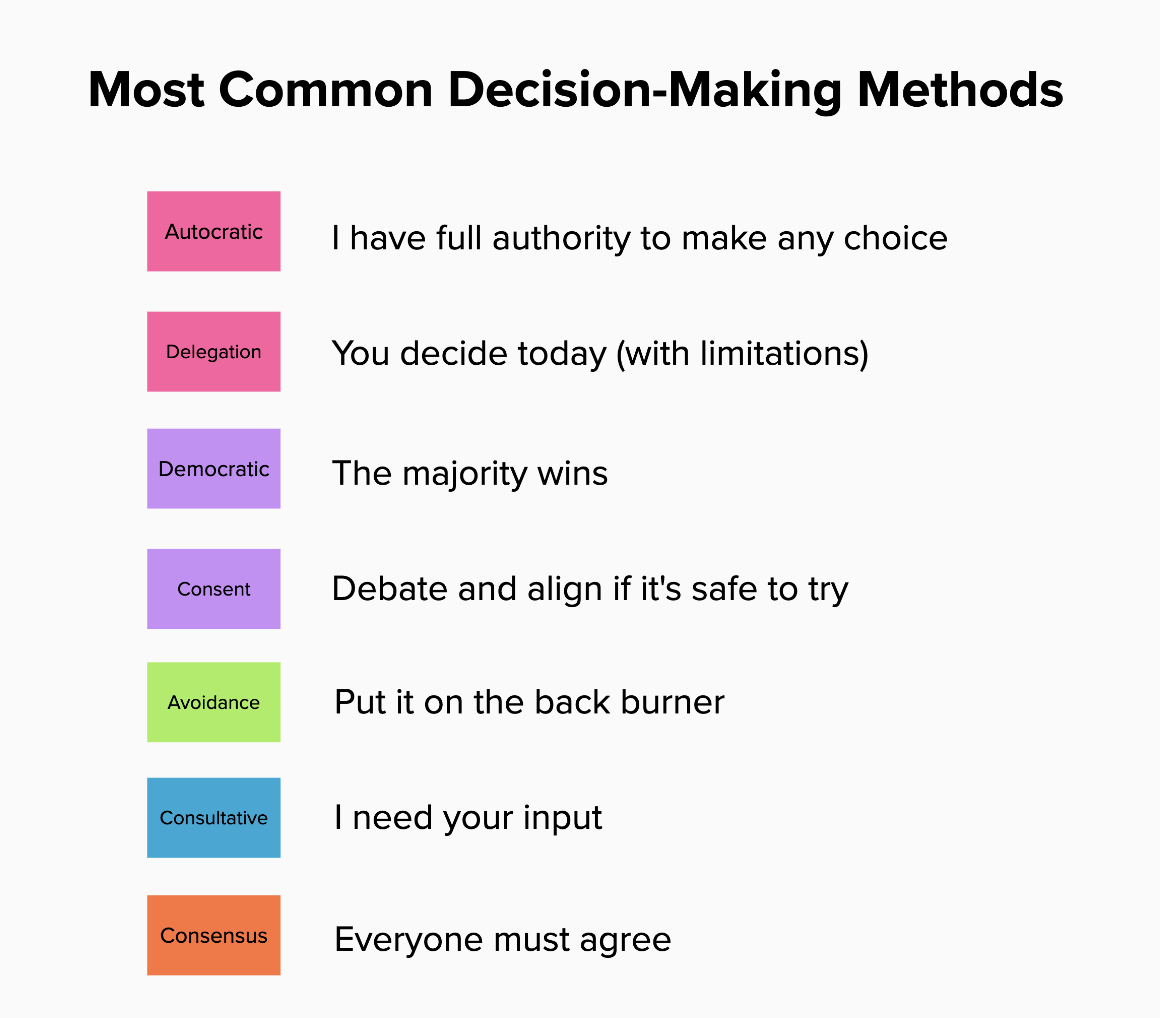
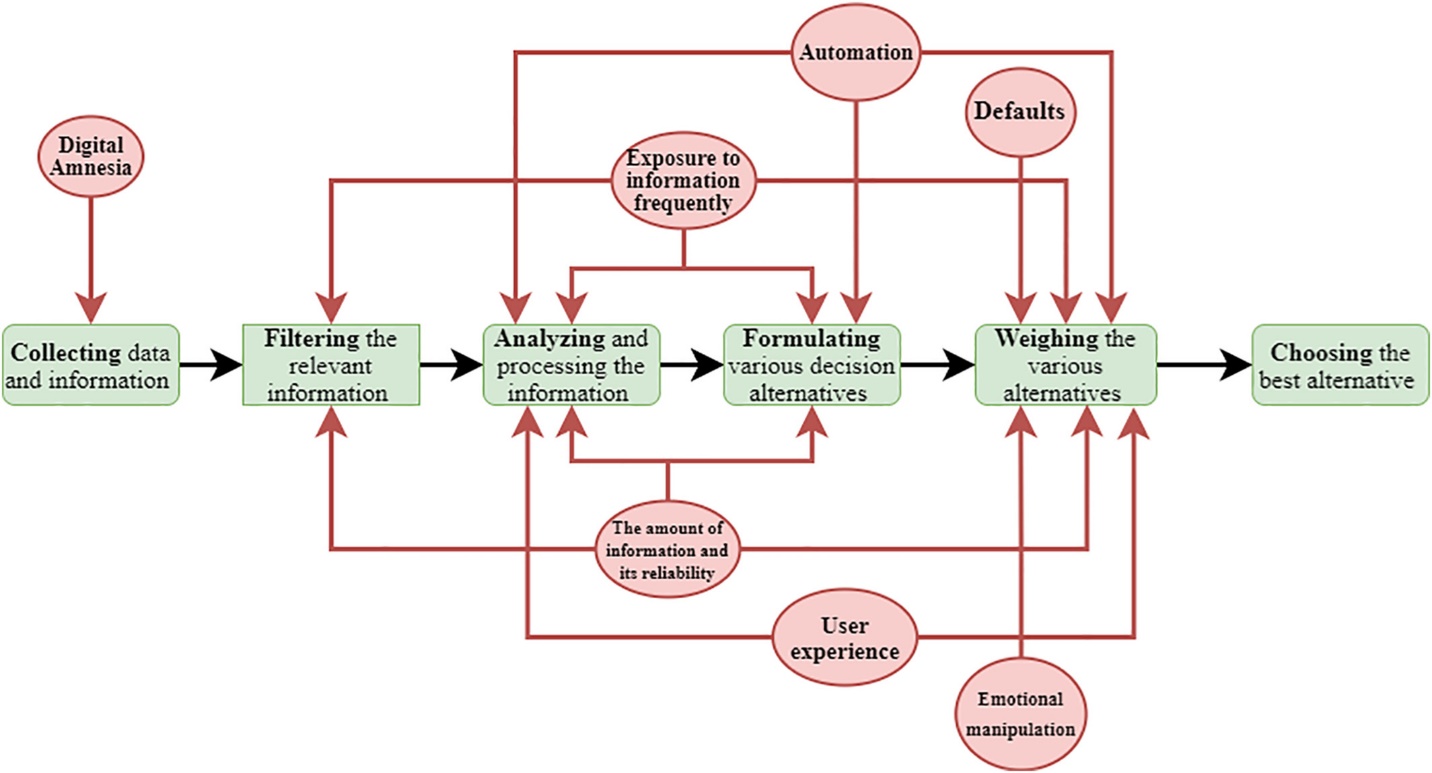
The superpower of continuously making sensible decisions that positively impact outcomes while remaining true to our values, mission, and vision is more art than science. Every day, chief impact officers and leaders are inundated with decisions, big and small. Understanding how people arrive at their choices is an area of cognitive psychology that has received attention and is rich in value when consulting to companies and executives on impact decisions. Theories have been generated to explain how people make decisions, and what types of factors influence decision making in the present and future. In addition, heuristics have been researched to understand the decision-making process.
A popular and effective decision-making method generated by Toyota manufacturing many years ago and utilized extensively even today is “Ask Why 5 Times” to reach the root cause.
Five whys (or 5 whys) is an iterative interrogative technique used to explore the cause-and-effect relationships underlying a particular problem. The primary goal of the technique is to determine the root cause of a defect or problem by repeating the question “Why?”. Each answer forms the basis of the next question. The “five” in the name derives from an anecdotal observation on the number of iterations needed to resolve the problem.
Not all problems have a single root cause. If one wishes to uncover multiple root causes, the method must be repeated asking a different sequence of questions each time.
The method provides no hard and fast rules about what lines of questions to explore, or how long to continue the search for additional root causes. Thus, even when the method is closely followed, the outcome still depends upon the knowledge and persistence of the people involved.
An example of a problem is: The vehicle will not start.
Why? – The alternator is not functioning. (Second why)
Why? – The alternator belt has broken. (Third why)
Why? – The alternator belt was well beyond its useful service life and not replaced. (Fourth why)
Why? – The vehicle was not maintained according to the recommended service schedule. (Fifth why, a root cause)[2]
The questioning for this example could be taken further to a sixth, seventh, or higher level, but five iterations of asking why is generally sufficient to get to a root cause. The key is to encourage the trouble-shooter to avoid assumptions and logic traps and instead trace the chain of causality in direct increments from the effect through any layers of abstraction to a root cause that still has some connection to the original problem. Note that, in this example, the fifth “why” suggests a broken process or an alterable behavior, which is indicative of reaching the root-cause level.
The last answer points to a process. This is one of the most important aspects in the “five why’s” approach – the real root cause should point toward a process that is not working well or does not exist.[4] Untrained facilitators will often observe that answers seem to point towards classical answers such as not enough time, not enough investments, or not enough resources. These answers may be true, but they are out of our control. Therefore, instead of asking the question why? ask why did the process fail?
Factors that influence decision making
Several factors influence decision making. These factors, including past experience (Juliusson, Karlsson, & Gӓrling, 2005), cognitive biases (Stanovich & West, 2008), age and individual differences (Bruin, Parker, & Fischoff, 2007), belief in personal relevance (Acevedo, & Krueger, 2004), and an escalation of commitment, influence what choices people make. Understanding the factors that influence decision making process is important to understanding what decisions are made. That is, the factors that influence the process may impact the outcomes.
Heuristics serve as a framework in which satisfactory decisions are made quickly and with ease (Shah & Oppenheimer, 2008). Many types of heuristics have been developed to explain the decision-making process; essentially, individuals work to reduce the effort they need to expend in making decisions and heuristics offer individuals a general guide to follow, thereby reducing the effort they must disburse. Together, heuristics and factors influencing decision making are a significant aspect of critical thinking (West, Toplak, & Stanovich, 2008). There is some indication that this can be taught, which benefits those learning how to make appropriate and the best decisions in various situations and environments. (Nokes &Hacker, 2007).
People make decisions about many things. They make political decisions; personal decisions, including medical choices, romantic decisions, and career decisions; and financial decisions, which may also include some of the other kinds of decisions and judgments. Quite often, the decision-making process is fairly specific to the decision being made. Some choices are simple and seem straight forward, while others are complex and require a multi-step approach to making the decisions.
The context of types of decisions people make, factors that influence decision making, several heuristics commonly researched and utilized in the process of decision making. Exploring what happens after the decision is made, as well as how present decisions impact future behavior and decision making. Implications for future research and practical application of teaching decision making skills in corporate cultures and C-suites is important for consistent impactful decision making.
Factors that Influence Decision Making
There are several important factors that influence decision making. Significant factors include past experiences, a variety of cognitive biases, an escalation of commitment and sunk outcomes, individual differences, including age and socioeconomic status, and a belief in personal relevance. These things all impact the decision-making process and the decisions made.
Past experiences can impact future decision making. Juliusson, Karlsson, and Garling (2005) indicated past decisions influence the decisions people make in the future. It stands to reason that when positive results come from a decision, people are more likely to decide in a similar way, given a similar situation. On the other hand, people tend to avoid repeating past mistakes (Sagi, & Friedland, 2007). This is significant to the extent that future decisions made based on past experiences are not necessarily the best decisions. In financial decision making, highly successful people do not make investment decisions based on past sunk outcomes, rather by examining choices with no regard for past experiences; this approach conflicts with what one may expect (Juliusson et al., 2005).
In addition to past experiences, there are several cognitive biases that influence decision making. Cognitive biases are thinking patterns based on observations and generalizations that may lead to memory errors, inaccurate judgments, and faulty logic sometimes termed “putting a stake in the ground” (Evans, Barston, & Pollard, 1983; West, Toplak, & Stanovich, 2008). Cognitive biases include, but are not limited to: belief bias, the over dependence on prior knowledge in arriving at decisions; hindsight bias, people tend to readily explain an event as inevitable, once it has happened; omission bias, generally, people have a propensity to omit information perceived as risky; and confirmation bias, in which people observe what they expect in observations (Marsh, & Hanlon, 2007; Nestler. & von Collani, 2008; Stanovich & West, 2008; see also West et al., 2008).
In decision making, cognitive biases influence people by causing them to over rely or lend more credence to expected observations and previous knowledge as absolutes, while dismissing information or observations that are perceived as uncertain, without looking at the bigger picture. While this influence may lead to poor decisions sometimes, the cognitive biases enable individuals to make efficient decisions with assistance of heuristics (Shah & Oppenheimer, 2008).
In addition to past experiences and cognitive biases (stakes in the ground), decision making may be influenced by an escalation of commitment and sunk outcomes, which are unrecoverable costs. Juliusson, Karlsson, and Garling (2005) concluded people make decisions based on an irrational escalation of commitment, that is, individuals invest larger amounts of time, money, and effort into a decision to which they feel committed; further, people will tend to continue to make risky decisions when they feel responsible for the sunk costs, time, money, and effort spent on a project. As a result, decision making may at times be influenced by ‘how far in the hole’ the individual feels he or she is (Juliusson et al., 2005).
Some individual differences may also influence decision making. Research has indicated that age, socioeconomic status (SES), and cognitive abilities influences decision making (de Bruin, Parker, & Fischoff, 2007; Finucane, Mertz, Slovic, & Schmidt, 2005). Finucane et al. established a significant difference in decision making across age; that is, as cognitive functions decline as a result of age, decision making performance may decline as well. In addition, older people may be more overconfident regarding their ability to make decisions, which inhibits their ability to seek and apply new strategies (de Bruin et al., 2007). Finally, with respect to age, there is evidence to support the notion that older adults prefer fewer choices than younger adults (Reed, Mikels, & Simon, 2008).
Age is only one individual difference that influences decision making. According to de Bruin et al. (2007), people in lower SES groups may have less access to education and resources, which may make them more susceptible to experiencing negative life events, often beyond their control; as a result, low SES individuals may make poorer decisions, based on past decisions because they fail to research new alternatives.
Over and above past experiences, cognitive biases, and individual differences; another influence on decision making is the belief in personal relevance. When people believe what they decide matters, they are more likely to make a decision. Acevedo and Krueger (2004) examined individuals’ voting patterns, and concluded that people will vote more readily when they believe their opinion is indicative of the attitudes of the general population, as well as when they have a regard for their own importance in the outcomes. People vote when they believe their vote counts. Acevedo and Krueger pointed out this voting phenomenon is ironic; when more people vote, the individual votes countless, in electoral math.
Decision Making Heuristics
Heuristics are general decision-making strategies people use that are based on little information, yet very often correct; heuristics are mental short cuts that reduce the cognitive burden associated with decision making (Shah & Oppenheimer, 2008). Shah and Oppenheimer argued that heuristics reduce work in decision making in several ways. Heuristics offer the user the ability to scrutinize few signals and/or alternative choices in decision making. In addition, heuristics diminish the work of retrieving and storing information in memory; streamlining the decision-making process by reducing the amount of integrated information necessary in making the choice or passing judgment (Shah & Oppenheimer, 2008).
As a result of research and theorizing, cognitive psychologists have outlined a host of heuristics people use in decision making. Heuristics range from general to very specific and serve various functions. The price heuristic, in which people judge higher priced items to have higher quality than lower priced things, is specific to consumer patterns; while the outrage heuristic, in which people consider how contemptible a crime is when deciding on the punishment (Shah, & Oppenheimer, 2008). According to Shah and Oppenheimer three important heuristics are the representative, availability, and anchoring and adjustment heuristics.
In decision making, people rely on a host of heuristics for convenience and speed. One important heuristic is the representative heuristic (RH), which is an extremely economical heuristic (Pachur, & Hertwig, 2006). In the event that one of two things is recognizable, people will tend to choose the recognized thing; utilizing or arriving at a decision with the least amount of effort or information (Goldstein & Gigerenzer, 2002; Hilbig & Pohl, 2008). Hilbig and Pohl remarked that it is difficult to research and answer definitively if an individual is using the RH alone, or if the person is using other information in drawing a conclusion. As a result, the research on the RH is mixed (Goldstein & Gigerenzer, 2002; see also Hilbig & Pohl, 2006). Goldstein and Gigerenzer provided seminal research on the RH. They maintained recognition memory is perceptive, reliable, and more accurate than chance alone; they argued less recognition leads to more correct decisions. On the other hand, according to Hilbig and Pohl, people often use additional information when utilizing the RH; that is, they do not rely solely on recognition along in decision making. Further, Hilbig and Pohl concluded that even when sound recognition was established, people use additional information, in conjunction with the RH.
Another highly researched heuristic is the availability heuristic. According to this heuristic, people are inclined to retrieve information that is most readily available in making a decision (Redelmeier, 2005). Interestingly, this is an important heuristic, as it is the basis for many of our judgments and decisions (McKelvie, 2000; Redelmeier, 2005). For example, when people are asked to read a list, then identify names from the list, often, the names identified are names of famous individuals, with which the participants are familiar (McKelvie, 2000). In the field of medicine, Redelmeier charged that missed medical diagnoses are often attributable to heuristics, the availability heuristic being one of those responsible. Redelmeier explained heuristics are beneficial as they are cognitively economical, but cautioned clinicians and practitioners need to recognize when heuristics need to be over-ridden in favor of more comprehensive decision making approaches.
The anchoring and adjustment heuristic is the foundational decision-making heuristic in situations where some estimate of value is needed (Epley, & Gilovich, 2006). In this particular heuristic, individuals first use an anchor, or some ball park estimate that surfaces initially, and adjusts their estimates until a satisfactory answer is reached. For example, if a person were asked to answer the question, “In what year did John F. Kennedy take office?” the anchoring and adjustment heurist would be used. The person may start with a known date, such as the date he was shot, November 22, 1963; then make an estimate based on the known information (Epley, & Gilovich, 2006). The practical application of the anchoring and adjustment heuristic is in negotiations; people make counter offers based on the anchor that is provided to them. Epley and Gilovich explained often people tend to make estimates which tend to gravitate towards the anchor side, where actual values tend to be farther away from the anchor initially planted. Further, anchoring requires effort; such a job is important in avoiding anchor bias.
After the Decision
After a decision is made, people experience a variety of reactions. In addition, present decisions influence future decision making. Several of the outcomes that may result from a decision are regret or satisfaction; both of which influence upcoming decisions.
Regret, feelings of disappointment or dissatisfaction with a choice made is one potential outcome of decision making. Interestingly, regret may shape the decision-making process. According to Abraham and Sheeran (2003), anticipated regret is the belief that the decision will be result of inaction. Anticipated regret may prompt behavior; that is, when a person indicates they will do something, such as exercise, they may follow through with their intended decision, to avoid regret. Once the decision is made, the impact of the decision, if regret is experienced, will impact future decisions. People can often get consumed with examining the other options that were available; the path not taken (Sagi & Friedland, 2007).
Sagi and Friedland
Sagi and Friedland (2007) theorized people feel regret in accordance with how the decision was made; regret may be dependent on the number of options that were available during the decision-making process; and how varied the options were may impact how regret is experienced after the decision was made. Through a series of experiments, Sagi and Friedland concluded that people feel remorse because they feel they were able to make a better choice by looking at more information, previously disregarded, and carefully weighing the pros and cons of each choice. In addition, regret is magnified when individuals revisit the other available options and considering what satisfaction the other option would have brought them. Interestingly, people who are dissatisfied with their decision feel obligated to embrace the decision, as a means to reducing anxiety regarding the quality of the decision (Botti & Iyengar, 2004; see also Gilbert & Ebert, 2002). For example, when a job applicant does not get hired, he may restructure the experience, and find many reasons that explain why he did not want to work for the company.
In addition to regret, individuals may also experience satisfaction with their decisions. Satisfaction refers to how pleased the decision maker is with the outcome of the decision. There are many things that impact levels of satisfaction. Botti and Iyengar (2004) observed individuals prefer to make their own decisions and believe they will be more satisfied with their choices; however, when people are given only undesirable options, decision makers are less satisfied than those who have had the choice made for them. Botti and Iyengar posited the explanation for this impact officer jobs phenomenon is that the decision maker assumes responsibility for the decision made. As a result, if the available choices are bad, they may feel as though they are responsible for making poor choices.
Also fascinating, aside from heuristics, an important decision-making strategy is evaluating positive and negative aspects of choices. Kim et al. (2008) discovered that when younger and older adults use this strategy, older adults tend to list more positive and fewer negative aspects of each choice, and older adults register more satisfaction with their choices when they use this evaluative strategy. One interesting finding was when the participants did not evaluate the options by listing the positive and negative features; there was no age difference in satisfaction (Kim et al., 2008).
As explained, future decision making is based on past decisions, as well as levels of satisfaction or regret (Abraham & Sheeran, 2003; Juliusson, Karlsson, & Garling, 2005; Sagi & Friedland, 2007). Even though there is evidence to support this notion, in many cases, particularly when the decision may be reversed, decisions may be based on the reversibility factor (Gilbert, & Ebert, 2002). Significant to individuals’ satisfaction is that people are willing to pay a premium for the opportunity to change their minds at a later date (Wood, 2001). For example, catalogue shoppers purchase items in a two step process; first they decide to purchase the items, then once the items arrive, they decide if they will keep them. Gilbert and Ebert examined if people prefer making decisions that are reversible. They concluded that people do prefer to have the option to change their minds; although people’s ability to change their minds actually inhibits their ability to be satisfied with their choice.
An Innovative Company Decision-Making Approach
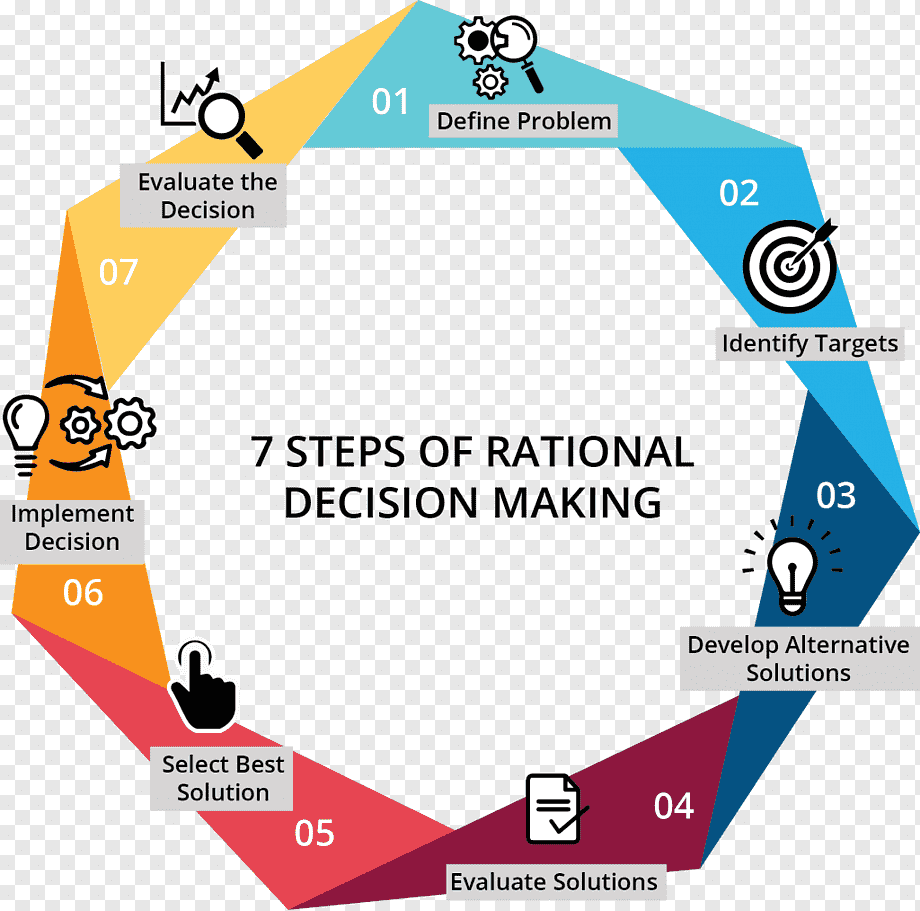
Decision making is a critical aspect to feeling successful and happy in life; decision making is at the root of all we do. It is important to develop effective decision-making skills and strategies. Problem solving strategies include, but are not limited to brain storming, cost benefit analysis, written remediation plans, and an examination of possible choices (Wester, Christianson, Fouad, & Santiago-Rivera, 2008). The decision-making process can be complicated and overwhelming. As a result, it is valuable for individuals to learn a model to follow, that may be applied to everyday decisions, as well as life changing choices.
Krantz and Kunreuther (2007) posited that a goal and plan-based decision-making model is an effective and sound approach to take in decision making; in this model, the individual is encouraged to focus on goals, not happiness or usefulness. According to Krantz and Kunreuther, plans are designed to meet one or more goals. That is, people make plans to unconsciously or consciously meet the goals they have. And, some plans satisfy several goals.
For example, people who attend a sporting event with a friend may be satisfying several goals; friendship and camaraderie, emotional stimulation from competitive sport, and potentially useful social knowledge gained from watching the game. In this model, goals are context dependent and plans are based on their ability to meet the goals. Essentially, in the goal/plan-based model, the context provides the backdrop for the decision that needs to be made; goals and resources, influenced by the context, contribute to the development of plausible plans; while the decision making rules are implemented and influence the plan that is ultimately chosen. Krantz and Kunreuther apply this theory to the insurance career, but imply the theory may be appropriately applied to a variety of contexts.
Factors That Impact Decision Making
Decision making is an important area of research in cognitive psychology and essential to deeply understand in making impactful decisions as a Chief Impact Officer or Consultant attempting to drive and create exacting impact. Understanding the process by which individuals make decisions is important to understanding the decisions they make and effectively influencing the impact outcomes. There are several factors that influence decision making. Those factors are past experiences, cognitive biases, age and individual differences, belief in personal relevance, and an escalation of commitment. Heuristics are mental short cuts that take some of the cognitive load off decision makers. There are many kinds of heuristics, but three are important and commonly used: representative, availability, and anchoring-and-adjustment.
After an individual makes a decision, there are several differing outcomes, including regret and satisfaction. Decisions that are reversible are more desired and people are willing to pay a premium for the ability to reverse decisions; though reversibility may not lead to positive or satisfactory outcomes. Cognitive psychologists have developed many decision making models, which explain the process by which people effectively make decisions. One innovative model is based on goals and job chief impact planning. There is yet a lot of research to be conducted on decision making, which will enable psychologists and educators to positively influence the lives of many.
Especially interesting in Impact Directives is leadership gauging impact in the complicated community impact programs social sector. Because impact decisions are morally significant. Government officials, funders, and nonprofit leaders’ decisions influence lives in many ways, both for the better and for the worst. If we reflect on our own life, I’m sure you’ll reach a similar conclusion. Therefore, the role of a chief impact officer is vital to the mission, vision and values of the organization when achieving the brand promise on a daily basis. Impact is the relationship our decisions as an organization have on the environment or ecosphere in which our business model exists or resides. The relationship is always symbiotic and may vary based on inputs from our competitors.
chief impact officer consultant role
A chief impact officer or impact consultant’s role is to make a difference in people’s lives adhering to the startup chief impact values, mission and vision of the enterprise. Grasping the distinctions we make and the choices we make are properly aligned is a constant challenge. Better choices result in a legacy that we can be proud of creating a positive impact in the lives of our multiple constituencies.
What can we do to improve impact? There are numerous options! Because there is so much untapped potential to enhance how we ultimately do things, decision-making is an exciting area in social impact. Scholars and practitioners have been developing approaches for studying and making decisions for decades, but philanthropy, government, and impact investing are only now adopting them. I’ve constructed my own approach based on my body of work to assist myself and my partners/clients in making key decisions with intention and focus creating the desired impact.
Start with a strategy.
It’s critical to put decisions into context. Theoretical decision-making can’t predict what goals should motivate you or who should be in charge of making impact decisions. Decision-making isn’t a substitute for strategy. Decision-making, on the other hand, is an expression of a chosen strategy. Could a chief impact officer or consultant truly be a chief strategy officer? As a chief impact officer or chief strategy officer, when you already have a good notion of what you’re attempting to accomplish and how you want to go about doing it, decision analysis approaches are most effective. They’re most effective when the task at hand is to figure out how to put the broad direction and values the organization previously committed impact officer salaries into action in this particular type situation.
As a result, it’s important to have the goal, vision, and values set out and committed to paper or pixels before using the following recommendations. You should know who has final decision-making authority and how conflicts among group members will be resolved if decisions must be taken as a group team. You should also have a good understanding of the environment in which you operate and the precise, near-term outcomes that are most important to perceived success. It is always good to ask early on, “what does success look like”.
It may not be immediately evident why anything additional is required. Isn’t it simple to apply a general strategy to day-to-day decisions if you’ve previously laid out a plan? It could be in some circumstances. After all, not every option is a brainteaser. But, virtually & invariably, sacrifices must be made between goals or values that cannot be met simultaneously or to the same degree. People on the team or in our brain trust will almost certainly argue the likely consequences of various paths forward, and there will be no easy way to decide who is likely to be correct. And, virtually invariably, the right average chief impact decision may potentially enrage the wrong people.
For situations like this, decision analysis was created.
Choosing between options
Every day, we make hundreds of decisions, from what to eat for supper to whether to open Twitter right now to how to respond to your coworker’s somewhat insensitive remark. Most of these aren’t even worth considering, let alone employing a consultant to assist you to figure them out.
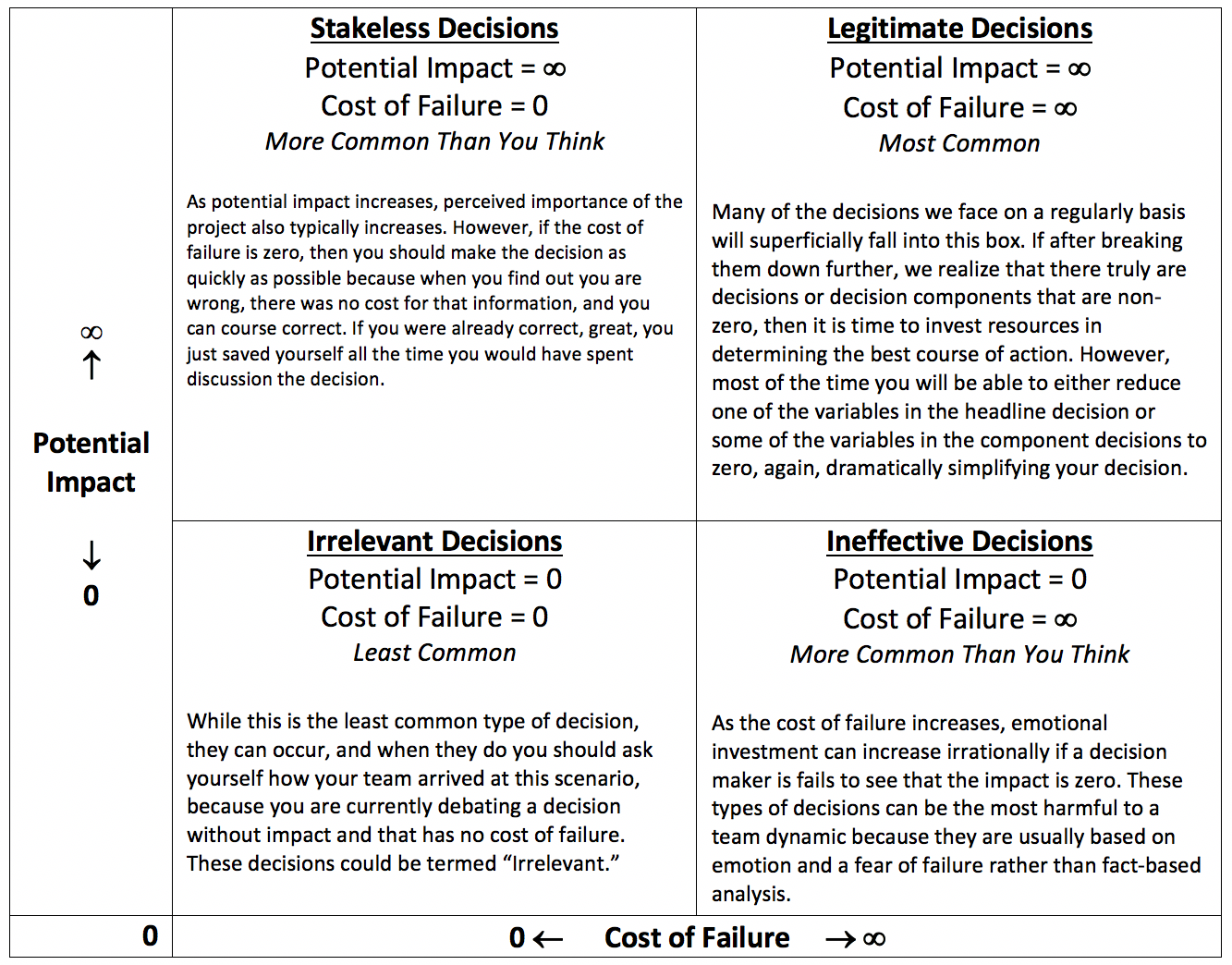
But if the study of decision analysis teaches us anything, it’s that certain decisions are more important than others. The decisions that require the most continuous attention are those in which the stakes are high, the context is unfamiliar, and the definition of success is not immediately apparent.
However, because many teams work at such a quick pace, we often only begin to pay attention to decisions just before they must be made. As a result, we overlook many of our most crucial judgments and risk succumbing to cognitive biases that lead to poor outcomes.
Of course, we can’t afford to thoroughly evaluate every single decision we make; we’d rapidly become engrossed in the process and unable to accomplish anything. So we’ll need a system for anticipating and prioritizing our decisions so that we can devote the necessary resources to the ones that actually matter.
Fortunately, a simple process known as a decision inventory can help you solve this problem. The decision inventory is a process for cataloging, aggregating, and classifying all of the significant decisions you intend to make in the near to medium term, adapted from a method devised by decision analysis pioneers Strategic Decisions Group. The exercise predicts which chief purpose officers challenges you’ll need to focus on and when, as well as which ones you should address quickly vs completely investigate.
Dissecting your chief purpose officers decision
Okay, now we’re getting down to business. It’s time to start examining the selections at the top of the pile once you’ve figured out which ones are the most important. There are a few different ways to break down a choice into its constituent elements. The following are elements of my own method:
Variables
• The variables at play. What is the larger strategic/organizational context in which this decision is being made? It’s fine to rely on your gut for this one as a first pass because you and your team members will usually have a strong instinctive feel of what’s relevant here. What are the most important opportunities and concerns in this situation? What excites and/or concerns you the most?
Possibilities
• What you might be able to do. What are the possibilities available to you? What options should be explored but haven’t been brought up yet? What are the advantages and disadvantages of each?
Techniques
• Techniques for improving performance. Is this the right time to make this decision? More strategic/consequential decisions should, in general, come before tactical decisions. Other decisions should be made after a series of events has occurred or new information has become available. Finally, it’s occasionally a good idea to “bundle” options so that the strategy is organically aligned.
Stakes
• Stakes. At the inventory stage, you’ll have started to analyze the stakes of a decision, but it’s helpful to keep them in mind when you figure out how much overall time and money you’re willing to invest before committing to a direction. A thoughtful stakes analysis will consider who and what might be impacted by the decision’s outcome(s), how much, and for how long. It would also examine the decision’s reversibility; how difficult is it to reverse a decision once you’ve made it?
Sources
• The number of sources and the degree of uncertainty. What would you do if you had to make this decision right now? If the answer isn’t evident right away, it’s typically because you don’t know something (or several things) that you wish you did. Identifying the sources of uncertainty can assist you in determining what additional knowledge would be most beneficial in this case. (Note that you can usually get a much more precise understanding of the value of additional information by modeling the decision quantitatively, as discussed below.)
Don’t be intimidated by the breadth of the above list. Chances are you’re already making these kinds of assessments about your decisions, you’re just not (yet) doing it in a systematic way. This process helps to bring that thinking into the realm of the conscious mind. And in many situations, that can happen with just a couple of meetings and some back-of-the-envelope estimates.
Some decisions really do require careful attention to get right, though. For those, there’s no substitute for an in-depth quantitative model.
Chief impact officer mental with decision modeling
The preliminary analysis described in the previous section will give you a holistic overview of your decision dilemma, but it optimizes for breadth over depth. It’s like exploring the world by looking at a two-dimensional map — you can see the complete picture, but not all the details.
To achieve both, it’s necessary to model your decision explicitly using mathematical tools. This is like exploring the world from your desktop using a combination of Google Maps and Street View. The map helps you understand the broader context, but you can improve your understanding of the details by zooming in on specific points of interest.
My invocation of technology here is intentional, because building decision models is a technological enhancement to human decision-making. We are leveraging the power and speed of modern computing capacity to help us gain a deeper understanding of our decision dilemma than would be possible using our minds alone. You are still in the driver’s seat — you are still the one who makes the decision, after all — but the mathematical model we create serves as a kind of supercharged coach or advisor.
The nuts and bolts of putting together a decision model are too involved to cover here, but I wrote a handy primer featuring a grantmaking case study if you’re interested in learning more about how to do it.
There are two main reasons to put together a decision model. The first is that it’s possible to get much better precision about the factors at play and which ones are really important. When putting together a decision model, I use a statistical technique called Monte Carlo simulation that dynamically generates thousands of potential futures based on the estimates and assumptions that you provide (and can easily tweak in real time). Developed by nuclear physicists in the middle of the 20th century, Monte Carlo simulations have been empirically tested and shown to yield better judgments than alternative strategies in real-world settings. It’s the method that NASA swears by when preparing for so-called “complex projects” like launching human beings into space.
The second awesome superpower of quantitative models is that they can help guide role research or learning agenda created for the express purpose of reducing uncertainty about important factors relating to the decision in question. You can use the concept of value of information to pick out the most important things to measure, measure them, and re-run the model in an iterative cycle until there is literally no more value to wring out of seeking further data. This method is called Applied Information Economics and was invented by information scientist Doug Hubbard for use in high-stakes investment decisions in the social sector and business world alike (read about a couple of examples of its use here and here). As far as sustainability decision analysis techniques go, AIE is pretty much the gold standard approach.
With that said, modeling does have some costs and drawbacks. The main challenge is that, compared to the quick and easy process described in the previous section, modeling does usually require a more significant minimum investment of time and expense, an investment that scales with the number of stakeholders that need to provide input. In addition, modeling may feel somewhat intimidating or unnatural at first to staff or partners who have little experience with quantitative methods. Finally, while I’m a firm believer that anything worth modeling can be modeled, it is true that some kinds of goals and decision factors are harder to translate into mathematical terms than others and may require more specialized role expertise.
When should you make the leap to modeling your decision? Ultimately, it comes down most of all to the stakes of the decision. Although all such situations should be judged case by case, a good-enough rule of thumb is that if your decision has more than $25,000 (for an individual) or $50,000 (for an organization) riding on it, it’s worth considering putting together at least a quick-and-dirty quantitative model to help ensure you get it right. And if the stakes are in the $250,000 and up range, I’d say it’s actually pretty irresponsible not to attempt a quantitative treatment of the situation.
Finally, remember: the math is there to help you make your decision, not to make it for you. You are free to ignore it if you want. When making a decision model, work hard to make sure it accounts for everything the decision-maker cares about. But never deliver a recommendation without also considering the qualitative analysis that was developed alongside it.
After the math, the aftermath
Congratulations, the decision was made with impact in mind! While the dilemma itself may be resolved, the consequences or impact of the choice are just beginning to be felt.
Here are some helpful questions to ask and things to think about in the post-impact decision phase:
• How should you talk about this decision (and the process that went into it)? Strategic Decisions Group’s Decision Quality framework notably includes “commitment to action” as one of six key pillars to a high-quality impactful decision — meaning that they include commitment in the very definition of what constitutes a high-quality decision. Particularly when the decision is about a charged topic or conversation in your organization or community, having a robust, transparent process like this one can help to build consensus and buy-in moving forward.
• Do you expect to make similar decisions like this in the future? If so, it’s likely you can reuse much of the analysis and basic framework you developed for this one in those scenarios to come. And if you created a quantitative model for the decision, you can turn that model into a standardized template that can accommodate any such situation in the future. In my own practice, I’ve built templates like this for things like whether to apply for a new consulting opportunity. In such situations, the work you put in initially to develop the model is amortized across many uses, making the investment of time effectively a no-brainer.
• How does this decision affect other decisions you need to make? Decisions usually beget more decisions. You or your team might have been waiting for resolution on this situation because it would provide crucial information for other dilemmas in play. In other cases, a decision to, say, move forward with a project will create lots of new choices about how exactly to implement it. Be sure to document the more important of these so that you can devote the appropriate amount of attention to them, and if any seem especially high-stakes and/or uncertain, the techniques discussed in this article are here to help.
You, too, can decide like a Chief Impact Officer Pro Contact Us!
So that’s how I help clients make decisions. If you have grappled with how to make smarter decisions for your company, consultancy, organization or philanthropy and come up with similar or different techniques, please let me know. There is always more to learn, and I love to learn! If you would like help creating an impact decision making platform promoting consistent impact decision making, contact [email protected] or call us at (469) 536-8478 Impacting Decisions is Mach1designs business!
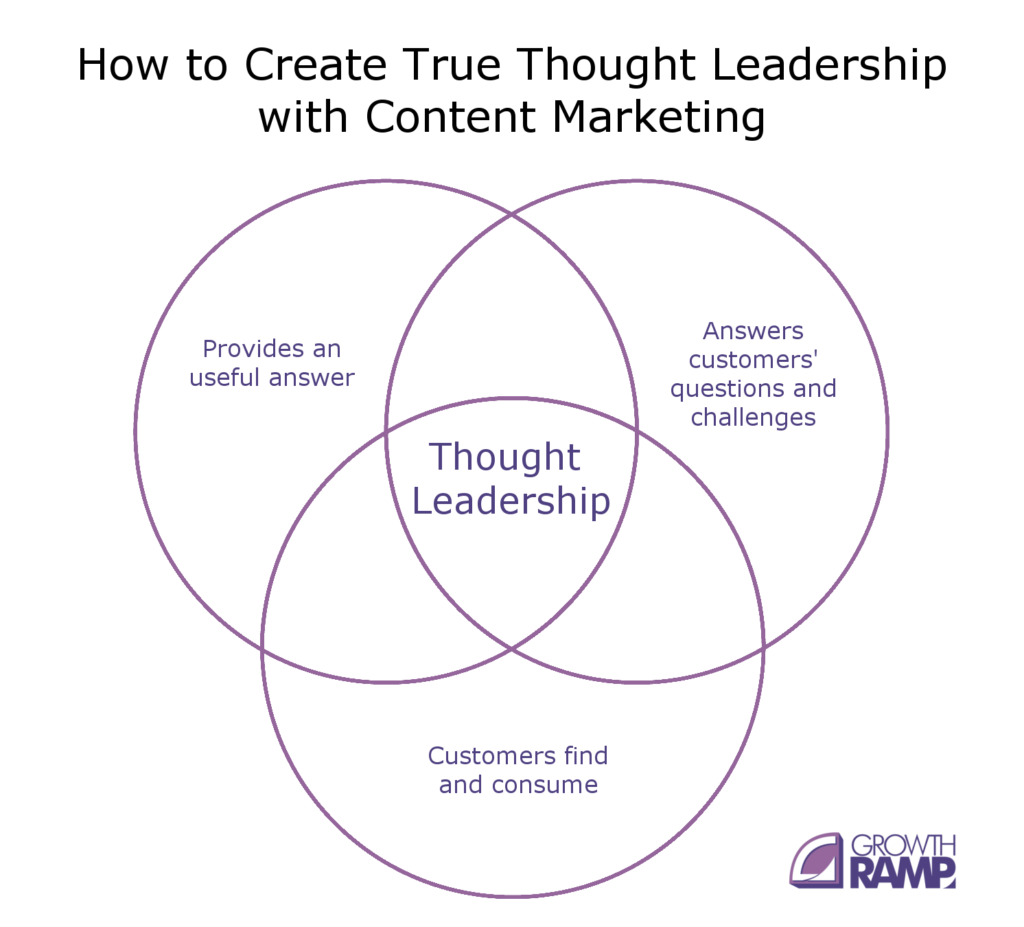
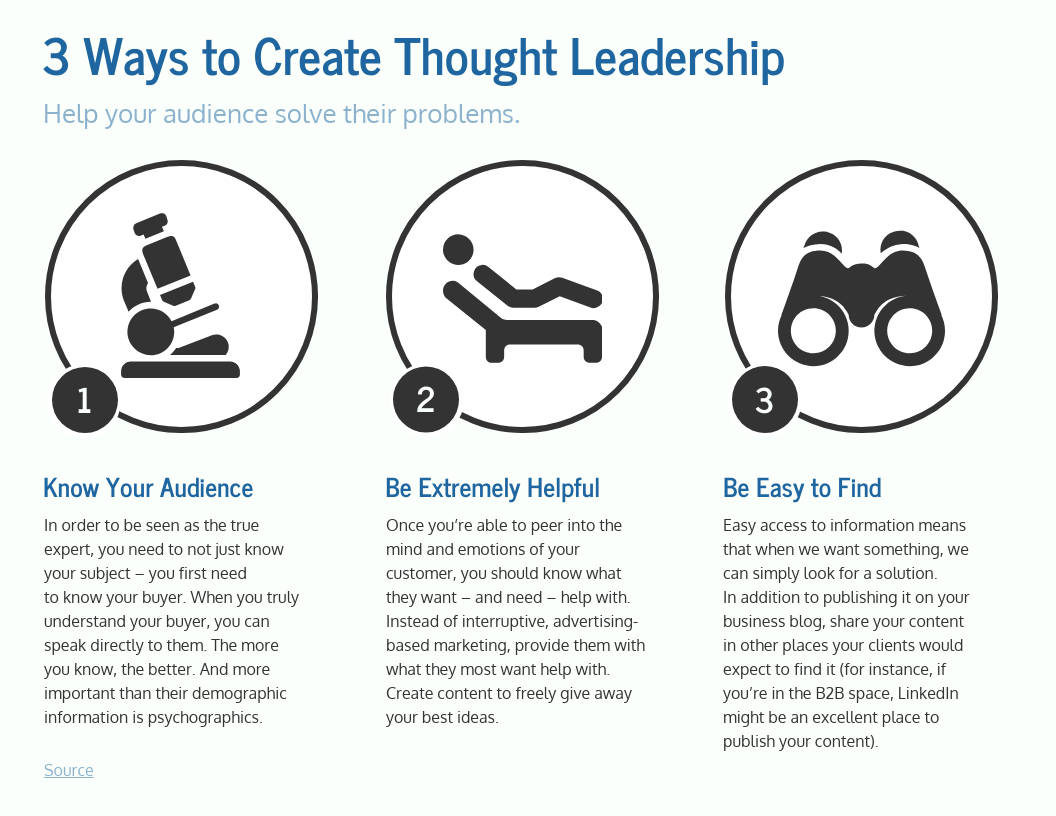
Thought leader content is one of the many ways you can use to promote your business online and drive traffic to your website. It’s also one of the best methods to increase your search engine rankings and dominate your niche when it comes to search engine optimization (SEO). The more relevant content you produce, the more visitors will come to your site and keep coming back, especially if they believe what you have to say will actually help them accomplish their goals in life or improve their quality of life in some way. But how do you make sure that what you write is specifically geared toward the audience reading it?
How do you become a thought leader?
“Thought leadership” is a popular jargon in the corporate world right now, and it’s simple to see why it’s become such a hot topic among executives. You can become a leading, recognized voice in your field if others look to you for your expertise and insight.
What does it take to become a thought leader, and what measures can you take to get there? We asked members of the Young Entrepreneur Council to explain some of the characteristics that constitute an industry thought leader, as well as what steps people can take to get started. Their responses are listed below.
1. Begin producing content to share your ideas.
You must be willing and able to communicate your ideas and knowledge in a clear and succinct manner that is appealing to the readers or listeners. One thing individuals can do is start, even if it’s only writing a brief text to share or making a short video. Don’t be apprehensive about taking the initial step. It takes practice, and if you stick with it, you will improve over time.
2. Maintain Consistency
It’s critical to be consistent if you want to become a thought leader in your field. Maintain a consistent flow of content creation, whether through blogs or a podcast, when you’re first starting out. Determine which industry blogs you can contribute to on a regular basis, or start a podcast and produce weekly episodes.
3. Extensive Research
Establish credibility—and I don’t just mean bragging about your achievements. It’s all about bringing folks behind the scenes as a thought leader. Show them what has worked and what hasn’t worked for you. Give them a lot of nitty-gritty tactical information and watch them follow along.
4. Provide answers to questions Nobody else is responding.
Respond to the questions that no one else is asking. Engage in the conversation rather than simply delivering your ideas and thoughts. If you’re reviewing articles in your specialized business and notice that people are asking the same questions over and over again in the comments and feed, be the one to respond.
5. Establish a distinct, authoritative point of view
Having a clear, authoritative point of view is the most critical step toward becoming a thought leader in your sector. You will not become a voice people can look to or trust if you are unsure of or unable to communicate your opinions. If you want to be a thought leader, you must constantly educate yourself because industries change all the time.
6. Be Consistent with Your Message
Choose a clear message and stick to it. The finest thought leaders are recognized because they stick to a clear message, making it easier for others to understand what they do and why they do it. Simon Sinek, for example, is well-known for asking “why.” He brings it up frequently. In fact, it is at the center of his entire business concept and activities.
7. Make time for self-reflection.
Self-reflection is crucial in all aspects of life, and thinking leadership is no exception. You’ll have a hard time discussing ideas with people if you can’t sit down and analyze your own thoughts, actions, and behaviors. Every day, I recommend taking some time to reflect. This exercise will help you become more self-aware, which will allow you to think more broadly and understand the broader picture. – Smash Balloon LLC’s John Brackett
8. Share Your Expertise
Getting articles written by you published in industry journals is a wonderful method to do this. However, you must guarantee that the content is of good quality, professionally edited, non-promotional, and truly gives value to the target audience in order to do this.
9. Provide value by using simple language.
We’ve been able to stand out in our market by using straightforward and conversational language and responding to client questions. People are frequently perplexed and seek step-by-step instructions on how to create a website. Users like the terminology and details we provide, which I believe has helped us flourish in our area.
10. Use a variety of platforms to distribute your content.
Being a thought leader necessitates irrefutable knowledge and omniscience. It’s impossible to only post on one platform. People should be able to see you respond to their queries on a variety of platforms. Try as much as you can while remaining present in all of the venues where you gain traction.
11. Don’t Be Afraid to Put Yourself Out There
Make an effort to network with as many people in your field as possible. The thought leaders in any field aren’t always smarter than the typical expert. They stand out because they know the right people and have access to the proper platforms to spread their message and knowledge. Participate in podcasts, join groups, create content, and network with influencers.
Different Types of Thought Leadership Marketing
TYPES OF THOUGHT LEADERSHIP CONTENT FOR SOCIAL MEDIA AUTHORITY
Thousands of people publish content on the internet every day, claiming to be experts in their fields and offering their goods and services. How can customers deal with this huge onslaught of information?
Users are inundated with material and sales pitches from all sides. Thought leadership is the only way to tell who is the best. Thought leadership may help you and your company stand out from the crowd. What better method to establish your thought leadership than to employ a highly effective channel like social media?
“A thought leader is an individual or firm that is acknowledged as an authority in a specific field, and whose expertise is sought and frequently rewarded,” according to Wikipedia. It takes a lot of time and effort to be a thought leader. However, if you’ve established yourself as a thought leader in your field, you’ll be nearly unbeatable.
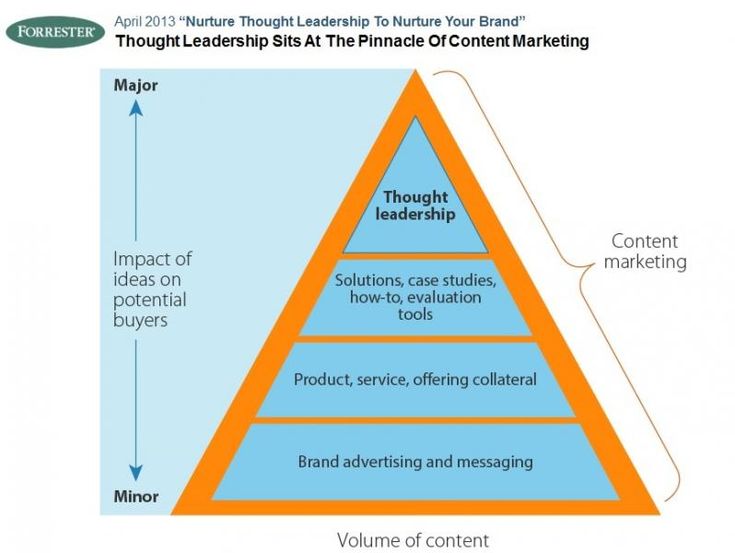
The greatest approach to demonstrate your thought leadership in your field is through content marketing. Thought leadership content can position your company as an industry authority and expert.
Let’s take a look at the many forms of thought leadership content you may create to increase your social media influence.
1. FINDINGS AND DATA FROM ORIGINAL RESEARCH
The greatest method to demonstrate your thought leadership is to conduct original research and create your own data/statistics. This is because curating current internet content does not necessitate the same level of expertise as conducting original research. And your audience is well aware of this.
You can begin by deciding on a research topic. You can choose a topic that is currently popular in the market or one that has a lot of guesses and assumptions about it but no concrete proof.
Once you’ve decided on a topic, begin your research by gathering information through surveys or the internet. To come up with credible proof, use all means at your disposal. Your findings should not only pique the curiosity of your target audience, but also that of other industry experts.
Your findings can be shared through blog articles or white papers. Social media is the most effective way to publicize your study and findings. You can present your findings in the form of a short film, infographics, or any other style of content that effectively communicates your findings. You’ll be able to create your industry authority on social media this way.
2. LIVES IN SOCIAL MEDIA
Going live on social media is one of the most effective ways to interact with your target audience and develop thought leadership. When you go live, people will recognize you as a true authority and industry leader.
You can either broadcast live content on a certain topic or hold a live Q&A session. It’s crucial to speak about something that your audience can relate to. Customer relationship management tools can help you better grasp the interests of your target audiences. Polls can also be used to choose a topic for your social media live.
You’ll gain more followers and engagement this way, and your brand will become more well-known as a result. To improve your involvement even more, you can go live with other industry professionals.
3. INFORMATION GRAPHICS
There’s a reason why infographics are so popular, and why they frequently go viral. Infographics are visually appealing representations of valuable information. You can fit a lot of useful advice and information into a single infographic.
For infographics, you can choose from a variety of topics that are always relevant. You may even be more particular and make the first infographic on a specific subject. This will provide you an advantage over your competitors, which is ideal for establishing authority and demonstrating thought leadership.
4. UNIQUE QUOTES
When was the last time you saw a social media celebrity quote? Seeing this would have immediately made you think of the person as a thought leader in the business. This is why quotations are so effective.
If you’ve been writing content for a long, you’ve definitely produced statements that make a point while also demonstrating your experience. Find statements like these and publish them as quotes on social media.
Twitter and LinkedIn are good examples of platforms that can be used for this. You may also make quotes out of common observations and share them on social media.
5. THOUGHT-PROVOKING POSTS ON SOCIAL MEDIA
A leader is someone who inspires people by instilling fresh ideas and thoughts in their heads. As a result, if you want to be an industry thought leader, make sure your material is distinctive, one-of-a-kind, and thought-provoking.
You should get your audience to think about things that no one else is. That is how you will be recognized as a true thinking leader.
6. INDUSTRY NEWS AND TRENDS THOUGHTS
When a new industry trend or news surfaced, what did you notice? You’ve probably noticed that the majority of people are confused about the new trend. As a result, people wait for specialists to discuss the latest news and trends.
This indicates that thought leaders don’t wait for others to bring up new trends or information. Instead, they conduct research, get their hands filthy, and dig up the most relevant facts to their knowledge, which they then discuss.
One of the most distinctive characteristics of a thought leader is that they talk about industry news first. As a result, don’t wait for specialists to discuss them. Instead, pretend to be an expert and be the first to speak about it.
7. VIDEOS OF HIGH QUALITY AND VALUE
We live in the video age. Long text-based messages may be scrolled past, but visually appealing information causes social media users to stop scrolling. As a result, take use of this fact.
You’re doing a fantastic job if you have a strong YouTube presence. If you haven’t started yet, now is a good moment to do so. You may advertise your YouTube videos and snippets on social media platforms by using them.
You should experiment with both short and long-form videos, following the newest video format trends. Instagram, for example, has debuted reels, which are shorter videos of less than 30 seconds. The engagement and following of users who used reels rose.
To establish yourself as a thought leader, use similar video trends on numerous social media channels and produce punchy, informative films.
CLIPS FROM PODCASTS AND INTERVIEWS
Podcasts and video interviews are typically long yet filled with information. As a result, podcast clips and interviews can be used to create thought leadership content.
So, the next time you’re looking for thought leadership material, look through your podcasts and interviews. Look for 1 to 3-minute clips with valuable content that will leave your viewers speechless.
Simply repurposing your podcasts and interviews in this way can help you raise brand awareness, engage with your audience more, and establish your industry credibility.
START ON SOCIAL MEDIA BUILDING THOUGHT LEADERSHIP CONTENT
Finally, we can claim that social media is one of the most effective strategies to reach a larger audience and demonstrate your leadership.
On social media, there are a lot of untapped audiences waiting to be discovered. All you have to do is work on thought leadership content on a regular basis. If you use the advice in this guide as a starting point, you’ll notice benefits quickly.
Our company’s social media marketing team is the best in the business at assisting our partners with their online marketing. We devise and implement unique social media marketing strategies that assist our clients in achieving their organizational goals and expanding their online presence.
Our management team works to help our partners boost their internet presence by providing ongoing online marketing services. When you use our services, you will receive a wonderful service and results that make a difference because our service is transparent and cost-effective. We provide a variety of marketing services for businesses of all sizes, from small businesses to huge organizations, to help you get the most out of your digital and social marketing efforts.
Do you want to increase your lead generation, website traffic, or event registrations? How do you attract candidates? Let Mach 1 Design teach you how to do it!
Writing From an Authentic Place
7 Ways to Write Effectively and Authentically
People frequently inquire about what it takes to be a successful writer. The short answer is yes. I’m not sure. What’s the slightly lengthier response? I’m not sure, and I’m not interested.
I’m more interested with effective writing than with brilliant writing. What’s the difference between the two? One is a matter of opinion, while the other is a matter of fact.
Everyone has their own definition of what constitutes “excellent” writing. Quality opinions differ depending on who you question, but excellent writing is difficult to dispute. It accomplishes its goal – plain and simple.
So, how can you write in such a way that your message is properly communicated? Here are seven suggestions for better writing that you can use right now:
Make time to hone your skills.
You can’t do something well without first doing it badly, and that starts with practice. Most experts advise that you set aside time each day to write (even if it’s only 20 minutes). If you don’t show up, you won’t improve.
I achieve this with my blog and other projects by writing a minimum of 500 words per day. The more I write, the more I discover about writing — and the more I understand how much I need to improve.
Put yourself to the test.
Write about themes that interest you, but don’t be afraid to go out and try something new. You will grow if you push yourself to new limits. You may take on a challenge and attend a free webinar to learn my three keys to good writing.
Never undervalue the value of education. Every day, I attempt to learn something new by reading books, blogs, and magazines, and I can’t sleep until I’ve acquired a few pearls of knowledge from various sources.
Be true to yourself.
Don’t try to imitate another writer’s style. If you do, make it solely for the purpose of learning someone else’s technique and adapting it to your own.
Ultimately, you want to find your own unique writing voice. And, to be honest, your audience wants the same thing. We would read Hemingway if we wanted to read Hemingway.
I’m still working on it, but I’m getting better. One method I use is to read what I’ve written aloud to myself, and if it doesn’t sound like me, I revise it.
Don’t scribble like a moron.
Understand the fundamentals of grammar. Purchase an MLA, APA, or other style guide (I recommend the AP Stylebook to a lot of copywriters). Start writing like a pro and respect your craft. It’s easy to break the rules once you’ve learned them.
Begin with a modest project.
The majority of aspiring authors start in the wrong place. They first express an interest in writing a book. That is not something you should do.
Begin with a little project, such as a blog or a journal (you know, Doogie Howser style). Then publish a few articles for periodicals and contemplate writing a book. You’ll find that your confidence grows as you take one small step after another toward publication.
At least, that’s been my experience. I was finally ready to write a book after four years of writing for websites and publications.
Never give up.
If writing is a dream of yours, take it seriously. Stick with it, even if your enthusiasm wanes. Every day, write. Perseverance is rewarded. I don’t want to write most days, yet I show up regardless. And then something magical happens: the Muse appears and inspires me when I least expect it.
Learn how to pitch your work.
Many writers expect to compose something amazing and have it published right away, as if by osmosis or something. However, before you start writing, you should learn how to pitch potential publishers (book, magazine, or we).
A excellent pitch is succinct, enticing, and enticing. Even the best writers can be neglected if they don’t learn how to successfully promote their work.
In less than 18 months, you can become a rock professional writer. If that’s the case, get my free strategy guide, in which I teach you everything I know.
Benefits for your Business
How Does Thought Leadership Content Benefit Your Business?
How amazing would it be if your customers came to you for vital industry-related information and advice?
Thought leadership is a terrific approach to establish your organization as an authority figure in your industry, whether you’re a writer, marketer, or small business owner.
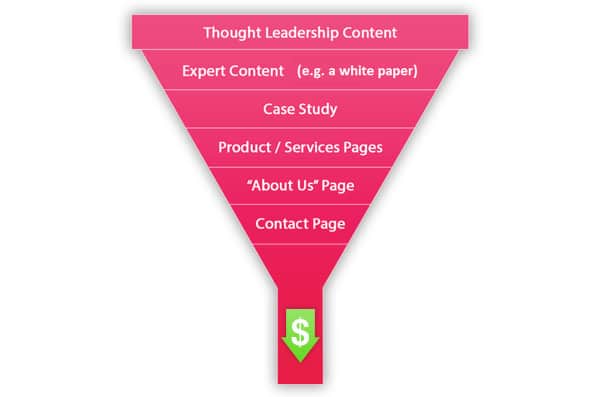
Implementing thought leadership in your blog may help you increase site traffic, lead generation, and build loyal consumers who return.
The Evolution of Thought Leadership
Henry Ward Beecher, an American Congregationalist, coined the phrase “thought leadership” in 1887.
“If it’s been around for so long, why haven’t I heard of it?” you might think. It’s most likely due to the fact that the meaning of this statement has evolved over time.
Throughout the late 19th and early 20th centuries, the meaning of successful thought leadership analysis altered, and it presently satisfies Joe Kurtzman’s definition:
“Peers, consumers, and industry experts perceive a thought leader as someone who truly understands their business, their customers’ demands, and the broader marketplace in which they operate.” They have distinct original ideas, distinct points of view, and fresh privacy perspectives.”
What is thought leadership, and why is it important?
When a company or an individual is acknowledged as an expert in a specific sector, their knowledge is sought after and valuable, this is referred to as thought leadership.
Displaying your expertise in a particular topic or industry, on the other hand, positions you and your firm as the go-to experts for guidance, resulting in a boost in site traffic, sales, and leads.
The Advantages of Thought Leadership
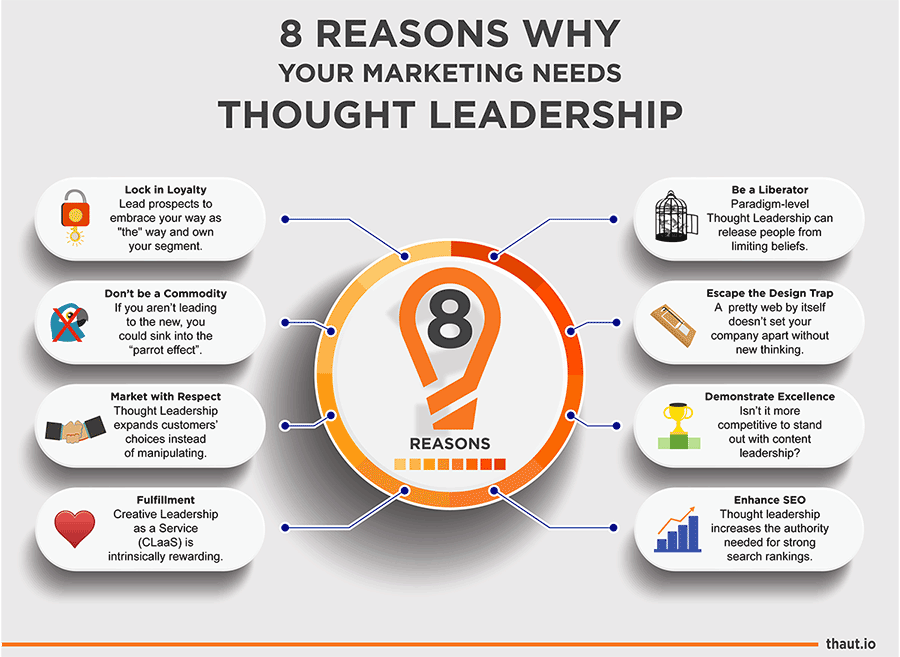
When you write from the standpoint of thought leadership, you bring inbound marketing value to your readers. This increased value has a cascading effect, resulting in more value in a variety of areas of your organization.
Here’s how thought leadership will benefit your company:
Provides your consumers with a unique and important perspective
Establishes your company’s credibility in your industry.
Increases the visibility of your company in the industry
Increases the number of people who visit your website blog
Conversions & Sales increase.
Investing time in honing your thought leadership strategy will lead to a plethora of opportunities. Exposure is an important component of being a thought leader.
Thought leadership requires you to show up in your sector in the right places and share your views. Journalists and event planners can provide excellent possibilities for business exposure, which can lead to increased sales as a result of increased awareness. The more individuals that are aware of your company, the more likely they are to seek out your product or service.
What Qualities Must You Possess in Order to Be Considered A Thought Leader?
You may be asking how to become a thought leader now that you understand what it is and how it benefits your company. Our Mach 1 Design team can provide you with the answers you’re looking for. The following are some frequent characteristics of content thought leadership.
Experts in a Specific Field
If you want to be a recognized thought leader in your profession, you’ll need experience. This experience isn’t always quantifiable, and it’s a contentious topic in the corporate world.
The trick, though, is that you must have spent the appropriate time honing your skills. You might not be cut out to be a thought leader (yet!) if you don’t feel comfortable teaching your expertise to someone who has no idea what it is about.
Credibility
This leads us to the second characteristic of a thought leader: credibility. An expert’s credibility is what distinguishes him or her from others.
Credible business owners and brands have a strong reputation, have experience in their sector, and have been recognized for their achievements.
This acknowledgment could come in the form of incentives in both business practices and your area, and encouraging your clients and past clients to review your firm is a terrific approach to build a favorable reputation.
Involvement in Your Niche on an Ongoing Basis
One of the most important characteristics of a thought leader is that they are committed to remaining current in their industry and are actively involved in it. In order to categorize yourself as an expert and effectively contribute to dialogues relevant to your specialization as a thought leader, you must be aware of the newest trends and business news in your niche.
A Devoted Audience
The term “recognized” is used to describe a leadership content thought who has a loyal following. Shel Israel, a Forbes contributor, puts it succinctly: “You can’t be a thought leader if others don’t follow.”
Your knowledge will go unnoticed if you don’t have a dedicated following. However, if you have a small audience, a thought leadership piece can help you increase it over time as more people come to trust your knowledge and, as a result, your brand.
Advice on How to Become a Thought Leader
Still have questions about how to producing thought leadership works? Mach 1 Design’s content professionals have compiled a list of the best advice.
Tip No. 1: Study Other Thought Leaders
Attending conferences or extending your education is a terrific approach to become a thought leader by listening to other professionals in your area.
Working with industry professionals can help you raise brand recognition. Consider participating in a mentoring program.
Tip #2: Increase your industry’s visibility
One strategy to build the necessary following to become a thought leader is to increase your business visibility. This can be accomplished in a variety of ways:
Participate in business networking events in your area.
Interview with a local news organization
Guest posting alongside other professionals in your field is a great way to get your name out there.
Make a social media campaign for your business.
Post-high-quality posts on your niche on a regular basis.
Create a Content Strategy (Tip #3).
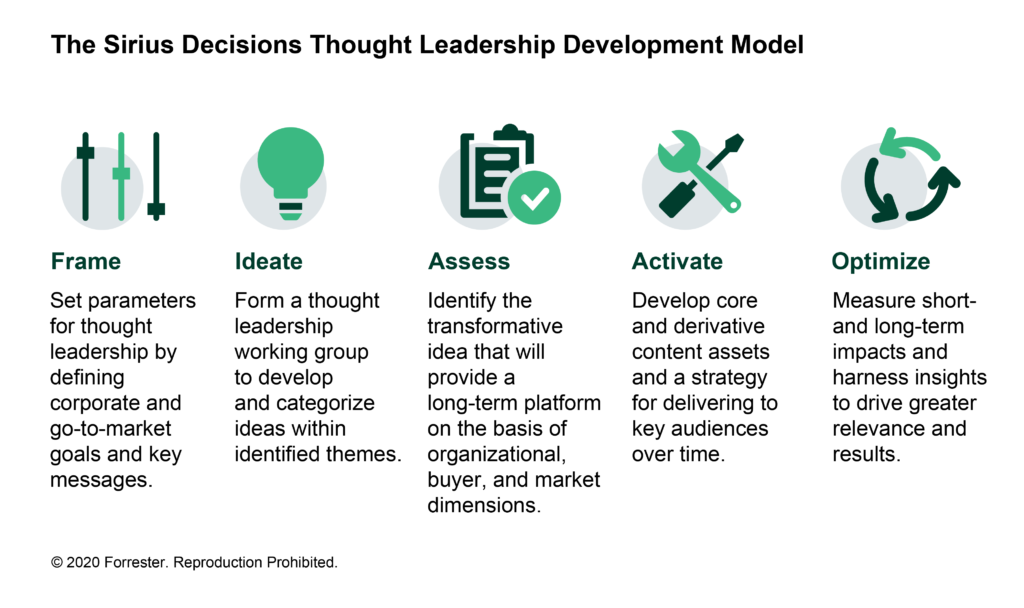
Developing a content plan is a terrific approach to get started on your journey to becoming a thought leader. Your audience will quickly link your business with your topic if you consistently publish high-quality blog entries on your area of expertise. Mach 1 Design can assist you.
Do you have a lot of the characteristics of a thought leader but lack the consistency of online content? Mach 1 Design can assist you! We create professionally written content to assist you to raise brand awareness and establishing yourself as a thought leader.
It also frees up your time, allowing you to concentrate on other elements of your business. You may rest easy knowing that a dedicated staff is working behind the scenes to assist you to achieve your business objectives.
To learn more about our content marketing services, get in touch with the Mach 1 Design team today!
Keeping it Ongoing
Content marketing is a fun and creative way to attract new customers to your business.
It doesn’t have to be complicated to get the desired results.
Check out these tips for building a solid, simple, content marketing strategy that doesn’t involve any guesswork.
What is a content marketing strategy?
A very important factor to remember when it comes to content marketing is that you have to keep it simple: consistently create content that helps your audience and you can influence their behavior over time. That’s it.
In my experience, people have the tendency to overthink content marketing and building out a strategy. Even I’ve been caught up in what I like to call the “content marketing matrix,” which is just as complicated as it sounds.
In this matrix lives a combination of buyer personas, buyer journeys, types of content, popular content “watering holes,” channels to promote content, topics your audience is searching for, and more. Trust me, you do not want to get caught in this unsolvable equation that attempts to marry all of these variables into a picture-perfect content marketing strategy – aka the unattainable “Contentopia.”
“If I post an eBook on bug repellent, directed towards middle-aged gardeners that are in the late purchasing stage (already have bug bites), at exactly 3 pm every other Thursday on Twitter, I’ll make millions!”
Now, if that’s how you develop a content marketing plan, fantastic. But, I want you to have realistic expectations to keep your marketing efforts from getting nailed down to some tight equation. If that is your goal, I’m here to tell you that you’re missing the point.
Why build a content marketing strategy?
What you want to do is keep things simple, and build out a foundation that guides your content creation. This is why you need a content marketing plan.
Let’s look back at our original direction: consistently create various types of content that helps your audience and influence their behavior over time. This technique is simple and proven. If you provide value, then people are going to notice you and think of you when they need what you’re offering. When you make your customers your primary focus, you win their business.
Tips for building a content marketing strategy
Remember: keep it simple. Here are some tips to keep in mind when building out your content marketing strategy:
Set your goals
What business goals do you want your content marketing to accomplish? Get specific. These goals will help you decide what to create, and how. Want more web traffic? Blog subscribers? Sales? Maybe you want to build your brand and be regarded as a thought leader in your industry. All of these goals can be accomplished with a strategic content marketing campaign.
Let your customers guide you
Find your perfect customer and use them as a model when creating your content. Can you think of someone who you would consider the ideal customer? Call them up. See if they would want to give a testimonial. Ask them why they chose your business. Ask them what questions they had throughout their buying process.
You can use this one customer as the basis to your marketing plan. Chances are, the questions and preferences of this customer are going to be similar to your other potential customers.
Don’t create content just to have more content
I’ve seen, first hand, several companies make this mistake. Creating content just for the sake of having more content is a time-suck for everyone involved, with little to no achieved results.
Remember, the point is to help your customers by creating valuable content.
Focus your efforts on quality, not quantity.
Build a content distribution plan to promote your content
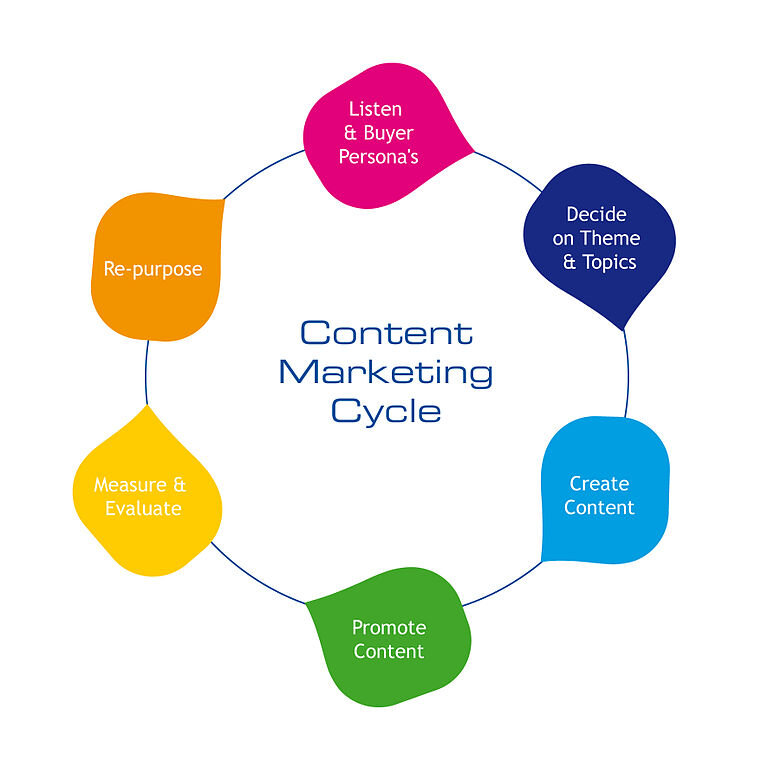
You’ve created some really stellar content. Now what? Next, you want to get it in front of your audience. You want to set up a content distribution plan through which you can send all of your content. This plan can include where to publish your content, if you’re going to use paid promotions or social media, and how to repurpose any of your content. Stick with this plan to ensure consistency.
Stay the course
There’s no instant gratification here. One of the most important rules of content marketing is to be consistent. Content marketing is a long-term strategy and results do not happen overnight. You’re trying to influence the behavior of a group of people, which takes time. Staying consistent with your publishing schedule, and content value builds trust with your audience, which eventually leads to a relationship.
Example of building out a content marketing strategy
A few years ago, I was hired by a startup company to build its content marketing strategy from the ground up. They had never used a content strategy before that, and they had no employees dedicated to content. By the end of my time there, we had a well-running content marketing machine, which played a huge role in lead generation and building brand awareness.
Here are the steps we took when building out the strategy for our content marketing efforts:
1. First, we researched. I interviewed several customer-facing employees who worked with customers at different stages of the purchase. My question to them: what are the most common inquiries from our customers and leads?
By the end, we had a long list of valuable questions that we could use in our marketing efforts. We based our content calendar on exactly these questions and answered them with valuable, easily-consumable, and searchable content. This was the base of our content marketing strategy.
2. Next, we built out our content marketing editorial calendar for the year, using those questions to guide the topics we created content around. During this step, we would also map out what format each piece of content will take. Sometimes we would create infographics, sometimes we’d create quizzes, and other times we’d create long-form content or video content for more technical or complicated topics.
3. Then, we established a content distribution plan to promote the high-quality content we were building on a consistent basis. This marketing plan established where the content would be published, and the frequency at which we would publish. This could include but is not limited to, social media channels, email marketing campaigns, website catalogs, blog posts, and more.
4. From here, we kept building, publishing, collecting feedback, and analyzing the performance of our content. I specifically remember the successful results of an email nurture campaign we ran to re-engage old contacts from whom we hadn’t heard in a while. The first email offered a free video, the second email offered a helpful infographic, and the third email in the nurture series of automated emails required readers to fill out a form to get access to a brand new eBook.
Because we had built up trust with valuable content in the first two emails, by the third email, people were ready to restart their relationship with us. The resulting lead conversion rate of this combined email and content marketing campaign was very high.
This is just one example of what a successful content marketing strategy could look like. Remember, this is all variable to your business’ goals, products or services, audience, and the way your audience best consumes content.
It’s all about the customer
Overall, planning out your content marketing strategy with content that you know your target audience finds valuable in is the best way to go. You don’t need to guess here. Help the people you’re serving with valuable content, and they will keep you top of mind when they’re ready to buy. It’s that simple.
Platform Diversification
How and Why Should You Diversify Your Content Marketing and Content Creation?
A effective content marketing plan must possess a number of characteristics:
Your material should be well-researched.
original and unique
targeted for a specific group of people
However, there is one quality that is simple to overlook and difficult to acquire even when it is prioritized: variety.
In a content strategy, diversity implies covering a wide range of topics, writing different styles of pieces, and employing various distribution and syndication methods.
The more varied your campaign is, the more likely you are to keep your audience interested and reach a bigger audience.
The issue is that diversity necessitates “outside-the-box thinking,” changing habits, and venturing outside of one’s comfort zone.
It also necessitates a delicate balancing act with your brand’s material integrity, which is equally vital.
Thankfully, there are a few simple strategies to broaden your plan without jeopardizing the magic you’ve already created.
In seven easy steps, learn how to appropriately vary your material.
1. Increase the amount of non-blog content.
Your website is a large space that you can expand as much as you desire. Start producing new content for other portions of your site instead of relegating all of your content to the blog (in whatever form you select).
Instead of producing five blog entries to answer various issues frequently posed by your user base, try creating a comprehensive FAQ page that addresses all of them. Create a distinct, interactive “lessons” page instead of providing a few thorough tutorials about how to utilize your items.
Users are requesting more interactive material, according to statistics:
You can also break up the content into separate blog pieces to display it in a different way.
2. Begin creating infographics.
Because people have gotten accustomed to seeing infographics constantly in their newsfeeds, they aren’t as effective as they once were. To combat this, you must stand out from the throng.
Infographics haven’t lost their worth because of their popularity; rather, they’ve been overproduced by those wanting to cash in on them.
Find a fascinating, unique topic that people are interested in, then devote the time and effort required to create an infographic on it. If you do this on a regular basis, you’ll attract more “visual learners,” as well as make your blog feed seem more fascinating.
3. Make a video once a month at the very least.
Videos are extremely popular on the internet, and they’re only growing in popularity as companies like Facebook, Twitter, and Google continue to introduce features to make video viewing more convenient. Relax if you’re concerned about the time and work it takes to create a professional film—remember, you probably already have a video camera in your phone, and not all of your company videos need to be made on a Hollywood budget. The use of video as part of your overall content marketing strategy is on the rise:
The simple act of speaking to an audience through a camera might sometimes be enough to get your point across while also diversifying your technique. At the very least, do this once a month.
4. Create a podcast or a series of interviews.
Audio content is almost as valuable as video content, especially if it can be downloaded and listened to on the go.
Consider launching an SEO podcast with special guests, an interview series, or a combination of the two.
Whatever you select, make sure to invite other industry influencers—this will instantly broaden your audience and boost your appeal, plus your guest will most likely share and promote the content.
5. Experiment with different lengths of content.
Don’t write the same medium-length blog pieces over and over again. Experiment with a few tiny sample articles, or go in the opposite way and create a large-scale whitepaper or eBook. If your blog feed is just an infinite pattern of identically formatted content, it will look monotonous; spice it up with shorter and longer pieces.
6. Each week, contact one new publication outlet.
Getting on a new publication platform gives you rapid access to a new audience (and possibly, a slightly new angle on the content you produce). Make it a point to contact one new possible publisher every week; you won’t always be accepted, especially in the early months of this method as your reputation grows, but you should get at least one or two new recurring opportunities per month to expand your reach.
7. Get a variety of people to contribute to the writing.
This is the last of my suggestions, but it’s one of the most important. More writers should be introduced to your material stream. You can hire more authors or hire freelancers, but you don’t need to invest any money to obtain new content from new ideas. You could ask around the office to see if anyone from other departments would be willing to contribute a post or two, or you could organize an open call for guest posters. There’s never a shortage of people wanting to write for you for free in exchange for some extra exposure. New writers mean new ideas, new perspectives, and a more diverse range of content.
Consistency and diversity may appear to be diametrically opposed qualities, yet they may coexist if you value them. You can keep your target audience, voice, and aesthetics more or less the same while varying the type, nature, format, and placement of your posts, retaining your brand’s marketing focus while maximizing the likelihood of attracting new readers. Use these diversity guidelines in your own content and link-building plan, and if you need assistance, don’t hesitate to contact us or look into our content writing service.
Targeted Tactics for Each Stage in the Buying Cycle
How to Create Content for the Buyer’s Journey at Every Stage
Nobody gets up in the morning and says, “Today I’m going to buy something.” Instead, they take a buyer’s journey that includes research and evaluation before making a sales contact.
The buyer’s journey is the name given to this journey. Because consumers are more aware and empowered than ever before, it’s critical to fully comprehend your buyer persona and the trip they take so you can develop content that assists them on their journey while also establishing you as an authority in your field.
In marketing, it’s important to understand the buyer’s journey.
With the exception of spontaneous purchases, most people begin their journey in a “unaware stage.” This person most likely fits your target client’s demographics (also known as your buyer persona), but they aren’t aware of or interested in your goods.
They may, however, be confronted with a triggering event that alters their situation or a discomfort that must be alleviated. This is the beginning of their buyer’s journey.
When you don’t have a thorough understanding of your target market, a gap develops between your company and its potential clients. This usually signifies that you’re putting out content that your readers don’t truly connect with, which can lead to you losing them.
It’s critical to understand your target, as it is in all marketing disciplines: how they think, the answers they want, and the journey they follow to find a solution. You can start creating a written content plan based on your findings, which will map your content to the various stages of the buyer’s journey.
The first step in developing content that resonates with your buyer and laying out your marketing funnel so that you can meet them at each stage of their journey is to create a buyer’s journey for your brand.
What Is a Marketing Funnel and How Does It Work?
A marketing funnel, also known as a sales funnel because it produces revenue, describes the various stages a customer goes through before making a purchase, from visiting your website for the first time and subscribing to your email list to reading your emails and speaking with a sales representative.
The funnel’s operation is straightforward. Those who reach the top of the funnel are further away from making a purchase choice, whereas those who reach the bottom are closer to making one.
It’s frequently a marketer’s role to attract your customer persona early in their journey and pass quality leads to the sales team to engage. Your customer service team thrills them after they become a customer, causing them to buy from you again and again and tell all their friends about you.
When employed in the context of the buyer’s journey, the funnel is a useful tool. Keep in mind, however, that the funnel has one flaw: it places customers as the output. HubSpot officially removes the funnel in favor of the flywheel.
As a result, clients are placed at the center of all marketing, sales, and service activities, resulting in a more unified and less linear approach.
Stages of the Marketing Funnel
Nonetheless, the funnel is an excellent place to start before moving on to your flywheel plan.
Take the buyer’s journey and ask yourself, “How can we attract and engage this person so that they become a customer?”
Earning business from your prospects boils down to three easy things, whether you follow the funnel or the flywheel method:
• Attracting new people
• Keeping prospects interested
• Satisfying consumers
You’ll evaluate the stage they’re at in their journey and the best channels to put the information in front of them as you generate content that fulfills these functions.
The internet has made it easier for marketers (and salespeople) to use content marketing to engage clients at various phases of their journey. One of the key reasons why 60% of marketers regard content to be “very important” or “very vital” to their entire strategy is because of this.
However, creating the appropriate content for the right people at the right time can be difficult.
Each Stage of the Funnel Has Its Own Marketing Channel
Identifying the channels through which you’ll reach your audience is the first step in developing a content strategy.
The Attract Stage Marketing Channels
Remember that when you start attracting prospects, the vast majority of them may still be in the awareness stage of their buyer’s journey. That is, your purpose is to alleviate their discomforts/problems by generating material that is simple to find and consume.
A buyer is attempting to solve difficulties, obtain information, or meet a need at this time. They’re looking for high-quality educational content, such as blog articles, social media content, and ebooks, to guide them to a solution. Because there’s no certainty that they’ll buy from you, their lead value is poor. Those that find your information useful and entertaining, on the other hand, may progress to the middle of the funnel.
The following are some of the best channels for your attract stage:
• Blogging
• Search Engine Optimization
• Marketing on Social Media
Channels of Marketing for the Engage Stage
When someone enters the middle of your funnel, it indicates that you have their attention. They’re aware that they have a problem to solve, and they’re currently attempting to find the best answer. As they consider their options, the necessity for a future purchase commitment emerges.
While the top of the funnel is intended to educate a prospect, this is the stage in which you want to demonstrate why your solutions are the best fit in particular.
(You should also assist customers in determining if they are a suitable fit, as this will be critical later for client retention.) If you persuade clients to buy who aren’t a good fit for your business, you can be shooting yourself in the foot later with a high churn rate.)
In the middle of the funnel, you’re usually nurturing a lead, forming a relationship, and establishing trust between your audience and your brand.
The following channels may be appropriate for your engage stage:
• E-mail Promotion
• Retargeting/Remarketing
• Use of social media
Prospects at the bottom of your funnel must also be engaged.
The bottom of the funnel is where the actual purchase decision is made. They’re eager to buy, but that doesn’t necessarily mean they’ll buy from you. That is the final decision they must make: where will they find the solution they seek?
Most of the time, leads at the bottom of your funnel just need a final nudge and a convincing call-to-action to convince them to buy. At this stage, the right offer and content can have a big impact on your conversions.
Consider using sales outreach to engage qualified prospects and then using personalization and contextual marketing to keep them engaged.
Channels of Marketing for the Delight Stage
Once someone becomes a customer, marketing should not end. Beyond the sale, cultivating a relationship with your customer can result in better customer lifetime value, as well as word-of-mouth referrals and other benefits.
The objective is to go above and beyond their expectations and deliver a simple and seamless client experience.
The following are some of the best channels for your delight stage:
• E-mail Promotion
• Retargeting/Remarketing
• Knowledge Bases and other self-service channels
• Chatbots and live chat for customer service
• Customer Loyalty Programs
On the surface, this process appears to be very linear, but you can use different channels to target different stages of the buyer’s journey.
You might be able to entice someone in the consideration stage or gratify someone who isn’t yet a customer. Someone in the consideration stage might be persuaded to buy because of your excellent service, or someone in the awareness stage might use your chatbot to obtain the information they require.
Thinking outside the box is one of the most enjoyable aspects of content marketing.
Content Creation at Every Stage of the Buyer’s Journey
Once you’ve determined who your customer persona is and which channels would be most effective for your company, you can start developing content for them at various phases and tailoring it to each channel.
This will assist you in mapping your content to the appropriate stages of the buyer’s journey in order to create your funnel.
• The “awareness” stage of the funnel, where people seek solutions, resources, education, research data, opinions, and insight.
• The “assessment” stage of the funnel, where consumers are conducting extensive research to determine whether or not your product or service is a good fit for them.
• Bottom of the Funnel: This is the “buy” stage, where consumers are determining what it takes to become a customer.
Depending on your sector, business model, product, pricing, and target audience, your funnel may look very different. When compared to B2B consumers, who require significantly more nurturing, engagement, and relationship development before making a purchase, some B2C buyers spend relatively little time in the middle of the funnel. When it comes to purchasing decisions, a $50 pair of sneakers, for example, requires far less guidance than a $10,000 investment in company software.
Ideas for Content for Every Stage of the Buyer’s Journey
Persona research is critical because audiences can differ greatly depending on business and aim. You can only design a genuinely effective content marketing plan, jam-packed with tailored content that best supports their journey toward making a buy, if you understand their particular process for awareness and evaluation.
Formats for Content in the Awareness Stage
1. Write a blog post
2. Post on social media
3. Whitepaper
4. Checklist
5. Instructional Video
6. Tool or Kit
7. An e-book or a cheat sheet
8. Webinars for Education
Post on the Blog
A blog post is an excellent piece of information for raising awareness. You can create a brand asset that is crawlable by Google and discoverable by search engine users by targeting a pain, problem, or other topic that your target audience wants to learn about and then uploading it to your website. You can also use additional methods to promote your blog’s content.
Ahrefs is an excellent example of a company that understands blog material. To generate long-form pieces that benefit their readers, they add original facts and helpful counsel.
Post on Social Media
Social media is a platform via which you may advertise your other material as well as develop stuff expressly for it. According to Pew Research, 72 percent of the population utilizes social media in some form, so it’s probable that your target audience is already familiar with it. Social media posts, unlike blog entries, are likely to be shorter in length, and video usage is also on the rise.
Yokel Local, a HubSpot Agency Partner, shares appealing consumer marketing advice on the LinkedIn platform in the sample above. The information is designed to be snackable with short-form takeaways, as SlideShare forms are popular on LinkedIn.
Whitepaper
A whitepaper is a report or guide written by an organization on a certain topic. When a reader wants to learn more about a topic they’re reading about, whitepapers are particularly beneficial as downloaded offerings. It’s critical to include material that can’t be obtained anywhere else in whitepapers so that your audience recognizes the report’s worth and feels motivated to obtain it.
Image Credit:
Every year, HubSpot conducts a study on the state of marketing in order to provide marketers, salespeople, and business owners with useful advice based on thought leadership. Inside, readers will find figures from a large poll as well as perspectives from industry professionals on what the data means and where the sector is headed.
Checklist
Individuals may just desire a blueprint that spells out what they’re required to accomplish to achieve their end objective for projects that are intricate and have a lot of moving components.
Purchasing a home is a great example of this, and Opendoor caters to their audience’s needs by providing a convenient checklist (in infographic style!) that lays out all of the necessary processes. The image is appealing to the eye, and there’s even room for a few pointers along the way.
Video Instructions
Learning a new skill is sometimes the most effective approach to alleviate pain or address a problem. Sure, a purchase may be necessary at some point, but the audience may also need to learn more about the problem and how to fix it. This is where educational video content comes into play.
Whiteboard Fridays is a famous Moz video series in which SEO principles are broken down into easy-to-understand language and graphics for the audience. Moz recognizes that SEO is a complex topic and strives to make it understandable to their audience.
Tool or Kit?
Informational material aimed at a larger audience may not always be sufficient to compel your buyer persona to make a decision or take action. They may demand a little extra utility or customisation in some circumstances. That’s why creating kits and tools is a terrific way to assist readers on their way to making a purchase.
Image Credit:
Nerdwallet produces articles on a variety of financial issues, including budgeting. Because creating a budget can be challenging, they created a calculator that allows users to enter their own data and obtain a personalized recommendation.
An e-book or a cheat sheet
Ebooks and tip sheets, like whitepapers, are excellent downloadable material options. They are, on the other hand, usually shorter and more actionable.
Image Credit:
By promoting their headline analyzer tool alongside a blog post on crafting amazing headlines that drive traffic, CoSchedule combines a few techniques. They give a wonderful tip sheet of powerful words to put in headlines if you want to grab a reader’s attention on that blog post.
18 Free Ebook Templates is a featured resource.
Webinar for Education
A webinar is a web seminar in which the majority of the information is delivered via video. A webinar can be prepared or streamed live, giving you a lot of options for disseminating information to an audience that prefers visual and audio content.
Image Credit:
SEMrush uses webinars as a crucial component of their content marketing approach, frequently repeating an useful topic to get more mileage out of it.
Formats for Content in the Consideration Stage
1. A Comparison of Products
Case Study No. 2
3. Get a Free Sample
Comparison Guides for Products
The consumer persona is still considering solutions to their pain or problem during the consideration stage. As a result, product comparisons are an excellent technique to assist customers in making a decision.
Verywell Fit offers a similar comparison to help their users decide between high-intensity exercises and steady-state cardio, including the benefits and drawbacks of both.
Study of a Case
A case study can be used in both the contemplation and decision stages to persuade the reader that the solution works by demonstrating that the provider produces results for their clients by implementing it. By offering extensive information and quantitative statistics about the end solution, a successful case study will appeal to the persona’s emotions and intellect.
Partner Agency for HubSpot Blueleadz accomplishes this through giving a story about their client and the issues they faced, as well as a detailed account of how they resolved them.
3 Free Case Study Templates (Featured Resource)
Another example of content or an offer that spans buyer’s journey stages is a free sample. Consider the following scenario: a person wants to paint the interior of their home, but they don’t know what color to choose.
They choose various paint chip cards from their hardware store as they decide which hue (the solution). A supplier creates these cards based on their specific solution. When a person falls in love with a color, they are already aware of the company that produces it.
SILKCARDS capitalizes on this buying tendency by providing samples of their own printing technologies on the content they provide. They understand that their industry is tactile, and that digital content alone will not close a deal. Other business cards are put to shame once their prospective consumer touches the sample in their hands.
Formats for Decision-Making Content
1. A free trial or a live demonstration
2. Offer of Consultation
3. Coupon
Demonstration or Free Trial
What better way to figure out if you want to buy something than to try it out? For years, car dealerships have used the “test drive” strategy because it works. If the product itself checks all of the buyer’s boxes, all that’s left for the sales staff to do is resolve objections and clinch the deal.
This is something that Hellosign excels at. They have a free option with limitations, but they recognize that having a free trial upfront is the key to bringing clients into their higher tiers. The pricing page sets the tone for the prospect and directs them to the free trial.
Consultation Offer
A consultation is another example of providing just a little bit of service in exchange for the opportunity to close the sale. The best consultation offers reduce the anxiety of entering into a sales conversation by promising something concrete they can walk away with (a strategy or actionable advice) in exchange for their time.
Coupon
A coupon appeals to a fear of missing out (FOMO) mindset. By reducing the price by a certain amount, a coupon is handing a price objection while convincing the prospect that they’re leaving money on the table if they don’t use the coupon. This inertia enough to win the prospect’s business.
Fragrant Jewels does this well by gamifying their coupons. By spinning the wheel, the website visitors have the chance to get a coupon before checking out the products. They’ll likely be evaluating the products that are a good deal with the coupon they won.
In addition to decision stage content, you should also create content to delight your existing customers. This may include FAQ and knowledge base content to make the customer experience easier, coupons for the opportunity to upsell, and additional educative content that deepens their understanding of a topic.
Mapping Content Across All Stages of the Funnel and Buying Cycle
Every business has a unique sales funnel, sculpted and designed around their buyer’s unique journey. It’s a recipe that can’t necessarily be replicated from one business to another. When creating your own buyer’s journey, there are a number of factors specific to your business to take into consideration.
That said, the general approach remains the same: Understand your audience, develop your funnel around your industry and audience intent, and create a documented content marketing strategy that maps custom content specific to each phase of their journey through the funnel.
Do it well, and this process will have the greatest possible impact on your customer relationships, as well as the greatest possible lift in your overall conversions
Get Personal With Case Studies and Testimonials
Case Studies: What Role Do They Play in Your Content Marketing Strategy?
MARKETING WITH CONTENT
Case studies aid in the creation of a narrative about your consumers, products, and services. You may demonstrate that what you give customers works by using brand storytelling.
In 2020, 87 percent of consumers will read internet reviews of local businesses. 95% of individuals say online reviews have an impact on their shopping decisions. And 90% of people believe what other consumers have to say about a business rather than what the business says about itself. People clearly care about what other people have to say about the companies they
BrightLocal is the source of this information.
Case studies are one of the most effective content types to have in your marketing arsenal. They take internet testimonials and reviews to the next level. Longer-form content delves deeper into an issue, solution, and consequence, all while keeping the client at the heart of the narrative.
People will not just learn about the emotional bond that exists between your brand and its customers. They’ll also learn something useful and remember about your business strategy.
Quick Pick-Ups
Case studies go further than reviews and testimonials, describing how you confronted a problem by providing a solution that enabled your client to achieve great outcomes.
In your narrative, your target audience should see themselves as the protagonist (hero). People will remember you more if you make meaningful ties with them.
Case studies may assist your company generate leads, educate customers, establish credibility, and show off its achievements.
Case studies can be used in a variety of ways in content marketing. Repurpose them and place them in appropriate spots to reach a broader audience.
What are Content Marketing Case Studies?
A case study outlines the steps your company took with a client to assist them achieve the results they desired.
It demonstrates to other customers that your product or service works, as well as providing evidence to back up your claims. In your case studies, you can add quantitative and qualitative data to logically describe how and why you assisted someone in achieving success.
The following is a general outline for our case studies:
Introduce yourself to the client and provide some background information on their predicament.
Describe the issue or obstacle that the client is dealing with.
Describe the precise solution that your product or service provided.
Describe how your product or service aided the client in achieving their goals.
Your target audience should be able to relate to and be interested in your case studies. They should also assist readers in progressing through the buyer’s journey.
Begin with a title that grabs the reader’s attention.
To captivate readers, use visuals (graphs, charts, quotes, and other images).
Describe how your solution to the challenge resulted in measurable outcomes.
Don’t forget to end with a forceful call to action, encouraging readers to collaborate with you to achieve similar outcomes.
What Is the Role of Case Studies in Content Marketing?
A strong marketing tactic is brand storytelling. Your prospects should put themselves in the protagonist’s shoes. If done correctly, you’ll be able to tell stories that readers will remember. They’ll know in the future that they can come to you for help with their trouble.
Case studies serve as social proof, providing potential clients the confidence they need to collaborate with or buy from you. It will reassure them that your company is the best option for them.
Case studies are a primary kind of media for 13% of marketers in their content marketing strategy. This figure appears to be surprisingly low to me. However, it implies you can start making something that most companies aren’t. It will make you stand out from the crowd.
Let’s imagine you’re thinking about getting a keyword research tool subscription. You uncover two online services with nearly comparable features for the same monthly pricing.
There is one significant change that you notice. The first subscription service has received two case studies via email and has five-star reviews strategically placed throughout its website. The other service provider, on the other hand, hasn’t. Which one do you think you’d pick? Of course, the first one!
The following are some of my favorite case studies:
Establish your company as a market leader.
Educate customers on the benefits of your product or service.
Empower your sales and marketing teams to share real-life client success stories and see how their efforts contribute to positive change.
Assist potential clients in completing the buyer’s journey.
Produce high-quality leads.
Demonstrate your success in a way that connects with others and establishes your worth.
Boost your trustworthiness.
To engage with your target audience on a deeper level, share your brand values and purpose.
Case studies fit into your content marketing strategy in eight ways.
You have a lot of alternatives when it comes to publishing your case study content. You can distribute your case study in a variety of forms as well as in several strategic areas. Case studies may be repurposed to appeal to audiences across many media, which is a smart and cost-effective method to extend the reach of your material.
Here’s how to get the most out of case studies by incorporating them into your content marketing strategy.
1. Include case studies on your webpage
Before making a purchase, 92 percent of respondents will check for social proof. People are 58 percent more likely to convert after interacting with a review. Your company’s revenue per visitor is also more likely to increase by 62 percent.
In other words, having social proof on your website, such as case studies, reviews, and testimonials, can assist you in moving customers down the sales funnel.
On my website’s homepage, I provide an example of a client testimonial.
Case studies should be placed across your website. You may make a dedicated case study page with a content library for visitors to look through. You can also post case study excerpts on your website’s homepage to show people right away that you can deliver the results they want.
For your homepage, consider the following options:
Customer testimonials with links to more detailed case studies should be included.
Make sure there are clear calls to action that direct them to specific case studies.
Include a slide-in CTA that appears invisibly and directs visitors to popular research.
Present customized case reports to visitors based on their needs using smart content.
Here’s my dedicated case studies page, where I highlight the companies and clients I’ve worked with, along with links to specific case studies.
2. Provide your sales and marketing teams with the tools they need to succeed.
Consider turning your case studies into PDFs for your marketing and sales staff to use when engaging with potential customers or clients. Having the appropriate social proof at the right time could mean the difference between getting a new lead or closing a transaction.
Employees may easily email the PDF to show how your organization has assisted others in solving a problem that a current prospect or lead is experiencing. Individuals should be guided deeper down the sales funnel, from one step to the next. Using case studies in his emails, Neil Patel claims to have raised transaction closing rates by 70%.
Perhaps your marketing team has a case study that guides prospects from awareness to contemplation, where they start weighing their alternatives. You might gain a new customer if your case study sticks out because you can demonstrate the value you provide.
Rather than just going over a list of features and benefits, your sales team can explain how and why your product or service works. Sharing real-life examples that emphasize value can help the team connect with prospects and appear more trustworthy.
3. Include in your email marketing
For every $1 spent on email, $40 is generated. Compared to “business as usual” marketing messages, automated emails have a 70 percent higher open rate and a 152 percent higher click-through rate (Campaign Monitor). Case studies and email marketing might be a winning combination.
To raise brand recognition and nurture prospects, include case studies in email campaigns, workflows, newsletters, and even your email signature.
Lead nurturing campaigns: If you have an industry-specific case study, segment your email list and send the information to those who work in the field. They will empathize better with the protagonist’s difficulties. Sending more tailored and relevant material via email can be a powerful approach to nurture leads. It can also assist you in diversifying your content in order to reengage cold leads or an audience that has become inattentive.
Newsletters: Show your regular newsletter subscribers that you care about them. Sending them case studies every now and then showing people who adore your brand and have profited substantially from your offers will stick out. You’ll also make contacts feel like they’re part of something important.
Include a link to your most remarkable case study in your email signature.
4. Use it as a video marketing tool.
Did you know that 79% of people have seen video testimonials in order to learn more about a company? Including case studies in your video marketing strategy is a great approach to reach out to a wider audience.
Consider making videos out of your case studies to post on social media, via email, and on your website. You may use inspiring video testimonials to effectively express your value proposition. You’re behind if you haven’t jumped on the video marketing bandwagon yet. It’s possible that your competitors have already done so.
5. Include it in your blog
Your company blog is another location where you can repurpose case study content. Case studies can motivate your audience to take action by prompting them to click a call-to-action button that takes them to the next step in their journey. It might direct them to a form-filling landing page, a PDF containing the original case study, or a product or service website.
Case studies can also enhance your site’s SEO by providing more valuable material. You may effortlessly share the blog post URLs with your email contacts and social media followers. Improve your ranks by optimizing your posts and using keywords. Make sure you’re always thinking about the customer (rather than your business).
6. Use as a landing page
To urge users to take the next step, use excerpts from case studies and place them on landing pages. Make sure to include quotes that are relevant to the buyer’s journey stage.
Let’s say someone is looking at your service page or considering filling out a form to get a copy of your benefits guide. They’re most likely in the consideration or decision stages in such situation. The results that your service can give should be the focus of your quotes.
7. Disseminate on social media
All of your content items can benefit from increased social media interaction. Case studies aren’t any different. In a social post, you can include a link to a case study on your website. If you tag the consumer, they may post the link on their social media sites, which can help you spread the news.
Be cautious with what you say. In order to get the correct audience to click on your link, you must include the right material in your postings. Include the difficulty your consumer encountered and how they overcome it to achieve success. Include concrete statistics to show that working with or purchasing from you yielded outstanding results.
LinkedIn is a fantastic tool to use. Case studies can be published in a variety of journals and shared with relevant organizations. You can quickly tag your customer on Facebook so that they can reshare your post with their followers.
You can also use quotes from customer case studies to generate social media-specific testimonial photos. If possible, include a headshot of the customer. Otherwise, give the quote, the client’s name, and their location of business. These photographs will aid in the development of trust and credibility among your social media followers.
Use a platform like Canva if you don’t have a graphic designer on staff. It includes free templates for various social media platforms.
8. Create e-books from case studies
A case study can be used as a content foundation for longer-form material on your website or an ebook to create leads. For example, you could write a guide that lays out a plan for readers to follow in order to achieve their objectives.
Explain how someone can get from point A to point B to obtain amazing achievements in greater depth than you did in your case study. To keep readers engaged after they’ve finished reading, include facts, stories, quotes, and a call to action. If you don’t want to pay a professional designer, you can locate free ebook templates on the internet to help you get started.
Case studies can help you reach and win over your target audience.
We’d be happy to assist you in leveraging case studies to reach, engage, and win new customers. Marketing Insider Group is a content marketing firm that specializes in blog writing, subscriptions, and strategy. We’ll assist you in taking your material to the next level in order to improve search engine results, increase web traffic, and attract the right clients.
Our Content Builder Service at Mach 1 Design was intended to provide companies with all of the content they require to attract new customers. We have a team of skilled researchers, writers, and strategists who will develop and promote the high-quality material that your target audience is looking for. We can add case studies and other types of content to your package as needed.
Do you have a digital marketing strategy? 78% of consumers go online to find a lawyer.
Most marketing managers of law firms we talk to operate on a tactical level and usually give us a blank stare when we ask them about their planning. And, as Sun Tzu said in The Art of War, “Strategy without tactics is the slowest route to victory, tactics without strategy is the noise before defeat.”
The right firm marketing plan strategy is critical in generating new clients and, therefore, increasing revenue for any law practice.
You always make a plan before you go into a courtroom to fight for a client, don’t you? So why overlook marketing planning?
How to Create a Law Firm Marketing Agency Plan?
Define your business goals.
Choose a target audience for your law firm.
Which digital marketing tool you need to find your ideal client.
What is your investment in digital marketing?
How are you going to check your progress?
Why Does Your Law Firms Need a Sound Digital Law Firm Marketing Strategy
One of the common and most expensive mistakes lawyers make is treating their firm as a law practice and not some business or company. A practice usually amounts to a job for the owner with a few support staff people. A practice is not worth much without a lawyer, and it can’t be sold for much when he/she decides to retire. A high-caliber law firm’s marketing plan is the key to increasing attorney income.
If we try and look at it with some analysis, the answer lies from way before. This is when some of the law schools already began to churn out more bar exam passers than ever before. Because of these events, there was a larger influx of new lawyers. Along with it, the competition for the best clients has become particularly fierce, even ten years down the line. All the while the demand for legal services has decreased, the number of lawyers employed by law firms has increased.
You can also see that there was also more legal work than ever was going to in-house legal departments or non-traditional legal service providers. In those cases, there were quite a lot of services law firms provide that were also being downright eliminated or at the very least redefined by advancing technology.
Does Your Law Firm Websites Have A Plan For Growth In 2022?
What’s the difference? It is certainly not because the former have invested less money in their education or less marketing effort in their careers. It is in having a high-performance firm marketing agency system in place, the foundation of which is a solid plan.
The Must-Have Law Marketing Strategies for Any Attorney
In fact, marketing is the only aspect of your law firm watch business responsible for attracting potential law firm business clients, which makes it the #1 factor shaping your income and the value of your business.
Having said this, we are well aware that writing a marketing plan is a headache, and if you don’t know how to approach it, it could turn into a total waste of time. This is why we’ve created a simple law firm SEO framework to make things a lot easier.
How to Create a Marketing Strategy For Law Firms
Marketing strategies for law firms can be incredibly complex, but it is the simple ones that are usually successfully implemented. So, we created a very easy-to-follow process for creating a law firm SEO marketing strategy.
Whether you decide to do this in-house or are working with a digital marketing agency, answering the 7 questions below will result in a marketing plan for your law firm.
1. What are Your Business Law Firm Goals?
In most cases, the goals of law firms we talk to relate to growth: they want more law firm clients and higher revenue. But that’s not enough! You should measure this growth goal financially and attach a time frame to it, which would make it a SMART one: Specific, Measurable, Achievable, Relevant, and Time-based.
For example, instead of saying you want more money, say you want your gross revenue to increase by $500,000 within the next 12 months.
A successful law firm marketing plan should always lead to setting and achieving a “SMART” goal.
Setting up your goals with the help of a lawyer marketing agency helps to know the 3 crucial marketing services factors you should ask about. They could help you predict whether you will actually be able to achieve that marketing law firm goal or not.
2. Who Does Your Marketing Plan Want to Serve?
First, think of who, exactly, your type of clients are. Based on that answer, you can then start to hone your law firm’s marketing strategy to target those particular types of people. Even if you think you know who you want to serve and who your ideal lawyer clients are, sit down and put it in writing. Here are some questions to ask yourself to get a better grip on your “buyer’s persona” — which is what we call ideal lawyer clients in marketing:
Where are they based?
How old are they?
What problem(s) do they want you to help them solve?
How are they most likely to look for a solution to the problem?
What questions or concerns are the most likely to have before hiring you?
Understanding your audience is crucial to reaching the people you want as clients.
3. How Do You Find Your Ideal Clients, and/or How Do You Want Them to Find You?
Ideally, you wouldn’t have to find them: you would make sure they find you when they need you. A marketing strategy for a legal lawyer website should include tools specially tailored to attract your potential clients.
Either way, the answer to this question should be a list of marketing channels to focus on. While traditional marketing for lawyers still works to a limited extent, we recommend investing most of your budget and efforts in online marketing (according to Clio’s 2018 Legal Trends report, a combined 78% of consumers look for lawyers online). It is more effective and makes it easy for you to see the specific results from your investment strategies.
If you practice law where you serve consumers directly, like criminal defense, personal injury, estate law, and others, make sure you put Google and YouTube on that list of marketing channels strategies. This is where most of your clients go to look for every answer to their questions and to choose an attorney to work with.
4. What are You Going to Say to Your Ideal Marketing Clients?
The right marketing strategy for your law firm also depends on your law firm websites’ content and expertise. Now that you know your audience and you defined who you will attract them to, you should focus on crafting your message. The best way to go about it is by answering the questions you get asked most often by prospective clients. You’re probably answering them over the phone, by video, by e-mail, by image, and even at every dinner party.
What kind of on-site information would help your legal marketing strategy?
Don’t overlook questions, the answers to which may seem simple and obvious to you. Your clients don’t have your expertise. List everything you can think of, and you should end up with at least two to three dozen frequently asked questions. Next, think about the process your potential clients go through before they reach out to you. When they visit your website, they want to know that you have solved similar strategies problems to the one they’re having. They may be intimidated by the process of hiring a lawyer (it is expensive, after all). They don’t know how to choose the best lawyer you want (hopefully, they choose you over your competitors).
When you know what information they need, you can make sure to provide it on a high-performance website and through your content law firm marketing strategy. As long as you answer your prospects’ questions and calm their fears, you’ll be able to turn more of them into clients.
5. How Much are You Going to Invest in Law Firm Marketing Strategies?
Budgeting for marketing can be difficult for law firms as there are no clear guidance strategies most of the time. Here is what’s important for you to know before you decide on a marketing budget:
Why will a bad lawyer marketing strategy be more expensive in the long run?
Cheap marketing is always expensive. It may be tempting to hire a cheap marketing agency ($500 -$1,500 per month), but not only will you waste interest money (an agency cannot deliver many referral services for this little money), you’ll lose individual opportunities.
That’s right, your competitors, who have hired proficient marketers, will attract and get the communications clients you wanted. And, considering the compound effect of having this happen month after month, this can be incredibly expensive.
On the other hand, a top digital marketing strategies company for lawyers may seem expensive to you. Still, it usually comes out free because it actually generates a strong return on investment.
So, hire a proficient marketing agency, and invest a reasonable amount to achieve your growth leads goal; typically, 7 to 11% of your gross revenue.
Make sure that a portion of your marketing budget is allocated to marketing client retention. This is what will get you recommendations and repeat areas business from people who have already used your law firm’s services, so it’s like picking the low-hanging marketing goals fruit.
6. What Needs to Be Done for You to Achieve Your Marketing Goals?
Planning is a great thing, but plans must be acted on to achieve marketing results. Go through all the steps we’ve discussed by now and write down what you need to do and in what order you need to do it so that you start seeing law firm’s marketing results.
Business law firm goals are also key in making the right marketing plans.
For example, you probably need to schedule a meeting with your referral partners to decide on your specific goals and a budget. You may also have to do some brainstorming to understand who your ideal clients are, write down what legal marketing problems keep them awake at night, and then answer those legal marketing questions.
Of course, the best thing to do is to retain a mobile experience digital marketing agency, especially if you’re working in a high software marketing digital competition area like Chicago, where the wrong marketing decisions will really cost you. Don’t forget that you never stop doing public audience marketing, its like exercising. You will need to continue to market update the tactics with changing new technologies.
7. How will You Monitor, Report, and Continuously Improve Law Firm Marketing Results?
Marketing is not a set-it-and-forget-it kind of deal. To see the results you want, you need to look at how your law firm marketing strategies campaigns perform and adjust as needed.
If you are working with a digital marketing agency for lawyers, they should explain how they do this. If they can’t, or won’t, it’s best not to hire them or to end your contract with them asap.
Here are just a few reasons why constant monitoring and adjustment of your marketing approach is necessary:
Some marketing channels work better than others. A good example of this is the use of online platforms for lawyers to boost visibility. While Avvo is the largest platform for lawyers and gets the most traffic, this doesn’t mean that it is the best platform source for your firm marketing law. Depending on where you are based and your software law practice, something else may work better. This is why we always test various platforms with our legal marketing clients before getting to the one that consistently produces good results with practice areas.
The competition never sleeps. Say you’re in the top three organic results (the unpaid results below the ads) on Google for a certain keyword. You may think you’re done with SEO, but a competitor will sooner or later dethrone you if you stop working on it. Getting the top spot on Google is difficult, keeping it — especially for the most competitive keywords and most competitive mobile areas in the country — is even more difficult. Google digital software technology constantly updates the results based on the digital authority need of each digital website, plus they also regularly update their algorithms, meaning that what you’ve done to get a higher ranking sourch yesterday may not even be valid today.
Accumulating positive reviews. Online digital reputation is important for any business but is absolutely crucial for lawyers. We live in an age when you can’t escape getting some online reviews, and chances are they will be negative. Why? Because people tend to share their problems more often than they share their positive experiences. Luckily, there is a way for you to get more positive reviews, and you should start working on that as soon as you can. Just like with SEO, your law firm’s competitors are probably already doing as much as they can to get their clients to leave positive online referral sources reviews on the online web, so it’s a constant public battle. Law firm’s thing is that if a client sees a law firm with 50 reviews and a 4.5-star online rating (out of 5), they’re much more likely to choose that firm over another with 3 five-star online reviews. The more, the better.
Marketing Conclusion
So, all you have to do now is to work on web answering the 7 questions above, and, to make your life easier, we have provided a simple Successful Law Firm Marketing Plan template. Need to use to speed up your strategy write-up process.
If you decide to hire a digital marketing agency to work for you, it’s important to know how to choose the right marketing plans and what exactly they would be doing, or you may end up wasting hours of time, money, and opportunities.
What you’ve heard is true: Account-based marketing is the gold standard for B2B marketing in 2022.
If you’re not already going after specific, high-value accounts with personalized messaging, there’s no way you’re getting a competitive ROI from your marketing department. The biggest strength of ABM is the ability to unite your marketing and sales by providing them with always-on reporting technologies, letting your higher-ups spend much more time managing campaigns and closing deals, and less time sending emails. This makes it one of the most scalable, modern digital marketing tactics available to enterprise-level businesses in the B2B sector.
Imagine starting the sales process by selling straight to your best-fit, highest-value accounts. No more squandered time attempting to sell to unqualified leads who aren’t a good fit for your company. That is, you might go right into engaging and pleasing your target accounts. Isn’t that the definition of efficiency?
What is account based marketing?
Account-based marketing is a targeted approach to B2B marketing in which the marketing manager and sales teams collaborate to target and convert best-fit and customized accounts into customers. Marketers are always competing for the attention of potential clients in this age of information abundance. As a result, businesses that wish to maximize their ROI should concentrate their efforts on high accounts, taking account penetration, marketing penetration, and logos into account. To achieve their objectives, marketing teams must apply customized techniques that combine sales and marketing knowledge to discover, engage with, and complete agreements with high-value accounts that matter the most.
ABM also takes a broader view of marketing than just lead generation. One of the strategies for generating the most value from your largest accounts is to market to current client accounts to drive customized upselling and cross-selling. Account-based marketing is not a new concept, but it has recently seen a comeback as a result of increasing technology and shifting terrain. An ABM approach can assist teams in enhancing marketing ROI, driving attributed revenue, generating more conversions and quality leads, and linking sales and marketing. In general, B2B marketers and teams target leads more broadly to appeal to as many ideal firms and markets as possible, but this does not produce and engage the highest ROI. Because of the high level of personalization required, scaling the ABM program and platform was previously difficult and costly.
With today’s free, new and growing technology, scaling ABM to a range of enterprises is now smarter, easier, and more inexpensive, and marketers across the board are using an ABM intelligence approach inside their team to generate higher value outcomes.
Why B2B companies are gravitating toward ABM?
ABM can be focused on either safeguarding and developing existing accounts, gaining new business from specified target accounts — or a combination of the two. This varies depending on the audience. For example, 1-2-1 ABM is often designated for big client groups with the goal of retention and expansion, but 1-2-few or 1-2-many ABM can entail a combination of acquisition, retention, and expansion goals. When compared to B2C, the B2B buying process is often carried out over a longer period and entails targeting a group of important decision-makers rather than a single individual. As a result, this group, or account-level, is critical.
Account based marketing strategies
To make a long story short, ABM strategies have been the leading way to create sales opportunities for over 10 years, and, as a result, the number of ABM platforms and technologies dedicated to the practice is on the rise. According to a 2014 ITSMA survey, ABM delivers the highest ROI of any other marketing strategy, and that was six years ago. More recently, Engagio found companies that utilize ABM often allocate the greatest portion of their budget to the strategy—around 29% on average. Marketing is a lot like investing: The smartest individuals put their money where it’s bound to multiply, and that’s why the best marketers in North America are putting all the money they can into ABM. 87% of account-based marketers report their ABM strategies significantly outperform their other marketing investments, so what’s keeping your business from getting that same stellar return on investment?ABM strategies
The availability of technology that can provide precise data insights and a much clearer picture of B2B purchasers’ intentions at various phases of the buying experience is the reason ABM has expanded greatly in 2021 and will continue into 2022. It also allows you to make better use of your current resources by focusing on a limited number of accounts that are most likely to convert. Because of the available technology, ABM can also be more exact and quantitative than previous approaches, resulting in clearer ROI and more efficiency in marketing and sales teams.
Benefits For Your Account
Account-based marketing is becoming increasingly common among B2B organizations focusing on larger accounts. Account-based marketing has various advantages over other marketing tactics for organizations looking to sell to large clients with extended sales cycles and large transaction sizes:
Personalized marketing strategy
Instead of taking a cookie-cutter approach, marketers generate tailored messages for target accounts by utilizing what they know about their clients and tailoring the creative assets of their campaigns to the customer’s individual traits and wants.
Alignment of sales
Account-based marketing enables marketing and sales teams to collaborate by identifying target accounts, creating personalized campaigns for them and collaborating to align and advance individual accounts along the funnel, both before and after the lead conversion.
Sales cycles that are shorter
Multiple stakeholders are involved in major buying decisions. Because it begins at a lower level in the business and proceeds slowly toward the principal decision-maker, this often slows down the sales process. The length of the cycle is reduced with account-based marketing because all prospects are nurtured at the same time.
Increased ROI
Account-based marketing is precise and measurable, with the highest ROI of any B2B strategy. Account-based marketing, according to 85 percent of marketers that track ROI, outperforms all other marketing approaches.
Fewer resources used
Time and resources are devoted to a small number of accounts that are most likely to result in sales. This frees up resources that would otherwise be wasted.
The Framework
ABM differs from a standard sales funnel. Though ABM can be used in a variety of industries and business types, a common framework must be followed to ensure its efficacy. The following are the major elements of an account-based marketing framework.
Sales Coordination
The necessity of a working partnership between sales and marketing companies is underlined multiple times throughout this text. Marketing and sales must be on the same page to take a complete strategy to ABM and guarantee that target accounts have an engaging buying experience. When implementing ABM, sales and marketing teams must agree on resource allocation for each target account, assign roles and duties to guarantee a smooth transition for the client between marketing and sales operations, and decide how to measure the success of their efforts.
Account Eligibility
How does your organization identify what accounts are high-value? Developing an ideal customer profile for the accounts your firm wishes to target is a critical component of addressing this issue and developing an ABM strategy. It’s also worth emphasizing that both marketing and sales should be involved in these discussions.
Getting Your B2B Team and Account On Board
Even though ABM makes a promise to increase ROI and reduce inter-departmental and organizations headaches, it will always take convincing to bring five, 10, or 25 people on board with a strategy they’re unfamiliar with. Any time a new target account ABM strategy becomes popular, some of the most skeptical adopters will always be the ones who are doing just fine. As ABM requires participation from everyone—from sales to the C-suite—it will only be adopted if every level of employment and management understands exactly which pain points it’s going to address and target for its business campaign.
Consider the following elements when determining what qualifies a potential account:
Financials: Consider how much revenue may be earned from an account in relation to your company’s sales goals.
Scalability: Based on what you know about the potential account’s business performance, do you believe the account has the potential to grow in the future? Consider what additional services your organization could offer to keep and develop the account.
Competitive Environment: To whom are your competitors selling? Understanding who is currently looking for products and services similar to yours might help you uncover potential account prospects.
Approach to the Market
Once marketing and sales have agreed on a strategy and which accounts to target, it’s time to develop a go-to-market strategy. Determine how a new customer would progress through the sales process utilizing an ABM technique. While preparing to go to market, you may discover areas of friction that need to be addressed or areas of poor communication that need to be improved. Furthermore, because a tailored experience is so critical in account-based marketing, your team will want to seek extra methods to offer value and provide a premium experience to these accounts.
Account Based Marketing Tactics
Provided below are some of the account-based marketing tactics that might help:
Disconnects with the sales team
One company, two different teams trying to achieve the same goal—ABM will unite their efforts inherently, by providing them with the same data in real-time.
Pressure to produce quality account marketing opportunities
Targeting leads who will never convert is a waste of time—ABM can pinpoint a smaller number of leads that are more likely to engage and concert.
Lack of man-hours for planning and marketing deals
There are only 24 hours in a day and anywhere between 40 to 50 hours in the workweek. ABM automatically pushes accounts down the funnel more rapidly, and it works at any time of day, without anyone on your sales or marketing team having to intervene.
Helpful Implementation Tips
A step-by-step method for implementing account-based marketing is provided below.
Step 1: Determine your high-value target accounts. These are the main accounts that have the most potential to contribute the most to your company’s revenue.
Step 2: Investigate those accounts. Get a good understanding of their consumer needs and pain issues, as well as where they are in their customer journey.
Step 3: Create personalized marketing campaigns. Develop creative assets that will resonate with the target account using information gleaned from the research process to inform your plan.
Step 4: Execute your personalized marketing initiatives. Send your campaigns to the appropriate account.
Step 5: Track the effectiveness of your tailored marketing initiatives. Examine the data to discover how your campaigns are faring.
Based on Marketing and Personalization
Website customization is an essential component of ABM’s strategy since it allows you to personalize the content and messaging on a website to each of your target accounts. The experience that visitors have once they land on your site may be modified through website personalization in the same way that offsite marketing efforts are individualized for each account. Web personalization for ABM is accomplished by identifying anonymous users to your site using firmographic data obtained through reverse IP lookup or first-party or third-party data. After identifying the visitor’s firm, they can be matched against your target account list to give a customized web experience. Account-based personalization allows you to customize various aspects of a website, including as messaging, pictures, calls-to-action, and social proof.
Target B2B Marketing Woes
The first B2B challenge that can be solved by ABM is getting your sales and marketing teams on the same page. In many organizations, marketing and sales departments lack transparency—leaving room for wasted effort when targeting and chasing accounts.
The ABM model promotes synergy between marketing and sales divisions by having them link up at the start of the endeavor: Marketers work closely with sales professionals to target accounts, and then use their input to create a schedule of content syndication and engagement opportunities. Once it’s time to close a sale, your sales team will have a history of client engagement that’s detailed on a level they’ve probably never seen before, because it’s pretty much impossible to provide without an ABM campaign up and running.
The second challenge confronted by business-facing enterprises is creating a steady pipeline of quality leads. For the most part, B2B models can’t rely on most lead-generation marketing tactics because there isn’t an audience large enough to make lead-gen-based spending a good return on investment. B2B companies often make 10 to 100 times less total revenue transactions than B2C companies do—and that’s exactly why you should be 10 to 100 times more specific about who your marketing content reaches. Expect to see the same channels active— content marketing, paid search, SEO, and programmatic will all be big players used to move accounts through the sales funnel, but your scale (and thus your total spend) will always be scaled down to the smaller audience comprised of players qualified to do business with you.
The last challenge ABM can fix: is not having enough time. Time is money, and who knows how many marketers you’re paying to source leads, create assets, manage to report, and make cold calls. With a switch to ABM, your brand new data stack will do plenty of these tasks for you, leaving your marketing team with fewer tasks to do per day, and your sales team completely focused on only one thing: closing deals. The ABM model promotes synergy between marketing and sales divisions by having them link up at the start.
Need Help with Account Based Marketing Program and Account-Based Marketing Strategy?
So you’re interested in ABM, but where do you start? We suggest heading to our ROI Calculator to measure how much a modern ABM strategy would benefit your company. If you’re impressed with that number, get in touch with our Mach 1 Design ABM team to learn more about the account-based marketing program and account-based marketing strategy right for you. Contact: [email protected] or call us at (469) 536-8478
According to Google, alt text is only a factor for image search, not general online search. Google using the alt text as a ranking factor is limited to image searches and it contributes nothing to a basic web search.
What is Alt Text?
Alt text, also known as alt tags and alt descriptions, is the textual language that appears on a web page in place of an image if the image fails to load on the user’s screen. This text aids screen-reading technologies in describing images to visually challenged readers and assists search engines to crawl and rank your page more effectively. The alt text communicates not only the image’s content but its context as well. Alt text, which is frequently confused with the alt tag, is technically part of the HTML code, although it simply contains the description of the picture contained in the alt tag and not the entire attribute.
Images in Search Engine Land
Finding the ideal image might be difficult at times in the search engine land. You must use the exact keyword and hope that the image is available. This is when an image search engine comes in handy. Without these search engines, you’ll have to sift through hundreds of similar photos in the hopes of finding one that works. Worse, you might see one you like but don’t know how to get to it. Image search engines, thankfully, exist to make your life easier. Popular picture search engines and reverse image search engines can help marketers find what they’re looking for.
Various Extract Text Tools
Text extraction, also known as keyword extraction, is a machine learning technique that employs machine learning to automatically scan text and extract relevant or core words and phrases from unstructured data such as news articles, surveys, and customer service issues. Nowadays, anyone can use a variety of extraction text applications, particularly those available online. You may this from any image with the text extractor. You can upload an image or a document (.pdf) and the program will extract text from it. You can copy it to your clipboard with a single click once the file has been extracted.
Testing Google’s Image Multisearch
Google multisearch is the most recent and new inventive search function and technology of Google that allows anyone to search by image file and then add text to that image search. According to Google, this allows users in testing the “move beyond the search box and ask questions about what you see.” Google multi search allows you to utilize your camera’s phone to search for an image file using Google Lens, and then add a text query on top of the image search. Google will then display you visual search results based on both the image and the text query.
How does Google multi search function? Simply launch the Google app on Android or iOS and tap the lens camera icon to the right of the search box. Then, point the camera at something nearby, utilize a photo from your camera, or take a photograph of something on your screen. Then, to bring it up, slide up on the results and press the “+ Add to your search” option. You can add words to your photo inquiry in this area.
Mueller’s Explanation
This is explained by Search Advocate of Google John Mueller during the Google Search Central SEO office-hours hangout on March 18. Mueller addresses multiple questions on alt text, which leads to several lessons about how it affects SEO. Adding alt attributes to photos is recommended from an accessibility standpoint because it aids visitors who use screen readers. When it comes to SEO, image text is recommended if you want your image to appear in image search results. Alt text, as Mueller shows, adds little value to a page in terms of online search ranking. Alt text is used to help in image search. Mueller is asked if alt text or images to text for decorative images should be included, which is connected to the title of this page. This is a judgment call, according to Mueller.
When using alt text in general, Mueller recommends focusing on the accessibility aspect rather than the SEO side. “I believe it is entirely up to you; I can’t speak for accessibility, so that’s the only point of view that exists; however, from the standpoint of SEO, the alt text aids us in better understanding the image for image search; and if this image isn’t important to you for image search, feel free to do whatever you want with it.”
He also added that it is something for decorative images; you’re not always interested in them. You don’t care about image searches for things like stock photos because you know the same image may be found on multiple other websites. You are free to do whatever you want there. In this scenario, I’d focus on the accessibility aspect rather than the basic SEO aspect. We would not argue that a textual webpage has more value because it includes graphics. We simply notice the alt text and apply it to the image, and then we can use it to better understand the image if someone searches for it. It’s not that the image-enhanced homepage would rank higher in a text-based online search.”
Search Engine Optimization Implications
Mueller is asked if it is still necessary to use alt text when the image itself has content about another issue related to alt text. Mueller advocates against adding text in photographs at all, but believes alt text could be useful in this case. “I believe that if you have text and photos, it is ideal to place the text immediately on the page itself.” These days, there are many new ways to show the word on a website, so I wouldn’t try to use text in images and then use alt text to help with that. I think alt text is a fantastic way to help with this, however, text in photographs should be avoided if possible.”
The topic continues with the question of whether alt text is useful when there is text on the page that describes what is in the image. In this case, the text on the page would suffice for search engines in terms of SEO. However, adding alt text is still a good idea for people who use screen readers.
“From a broader viewpoint, the alt text not only acts as a substitute or explanation for the image, which is especially crucial for those who can’t see individual images and rely on screen readers, but it also helps search engines comprehend what the image is about.”If you already have the same description for a product around the image, we have most of what we need for search engines, but it may still make sense to provide some form of alt text for that specific image for people who use screen readers.”
Make it Descriptive
Mueller underlines the importance of using detailed alt text. The text should convey what’s in the image to people who can’t see it. The use of generic content, such as reiterating product names, should be avoided. “In a case like this, I’d avoid instances where you’re stating the same thing over and over again.” So, rather than utilizing a product’s title as the alt text for a picture, explain it slightly differently. So that’s the kind of suggestion I’d make in that situation. It is not recommended to simply copy and paste the same content from a page as an alt text for an image because it neither helps search engines nor users.
If you feel you need help with your alt-text for images and photos, give us a call at (469) 536-8478 or contact [email protected]
Organizational structures are diagrams that show how an organization is structured. Businesses of all shapes and sizes use organizational structures heavily. They define a specific hierarchy within an organization. A successful organizational structure defines each employee’s job and how it fits within the overall system. Put simply, the organizational structure lays out who does what so the company can meet its objectives.
Every organization has tasks that need to be accomplished and objectives that need to be met. A corporation’s organizational structure defines how these jobs fit into the company’s framework. Organizational structures can be formal or informal, but they must be effective for a business to run effectively and efficiently. Whether you’re trying to figure out how to organize your house or manage your office, an organizational structure is the best first step. Often referred to as a hierarchy or bureaucracy, organizational structures are used in just about any organization, from one person operating a sole proprietorship to Google and Microsoft, which employ thousands of people.
What Are Organizational Structures?
An organizational structure is a system that defines how certain tasks are directed to fulfill an organization’s goals. These actions may include the implementation of rules, roles, and duties. The organizational structure also governs how information moves within the corporation. In a centralized structure, for example, decisions are made from the top down, but in a decentralized structure, decision-making power is divided across multiple levels of the organization. Companies that have an organizational structure in place are more efficient and focused.
Understanding Various Structure
This architecture provides a visual picture of how a firm is structured and how it may best go forward in accomplishing its goals. Organizational structures are typically depicted in the form of a pyramid chart or diagram, with the most powerful people of the company at the top and those with the least amount of influence at the bottom. Certain organizations may struggle if they do not have a formal structure in place. Employees, for example, may be unsure to whom they should report. As a result, there may be confusion about who is responsible for what in the organization. A structure can help with efficiency and provide clarity for everyone at all levels. This also means that each department will be more productive because they will be more focused on energy and time.
Why Structure is Important?
The structure will provide employees with more clarity, assist in managing expectations, allow for better decision-making, and create consistency. Organizational charts also assign responsibilities, coordinate processes, and ensure that critical activities are performed on time. The structure also governs how things are done in your organization. This is where a well-developed organizational chart comes in handy. It illustrates who performs what and who reports to whom. Employees have job titles, which are followed by job descriptions that outline responsibilities. The primary goal of such a structure is to assist the organization in achieving its objectives. It brings members of the organization together and separates their functions. Second, the structure contributes to the organization’s smooth and efficient operation.
Elements of an Organization
What is the purpose of a formal organizational structure? Do you even need one as a business leader? As previously said, org structures assist you in defining at least three critical parts of how your organization will operate. As your firm grows in size, and organizational structure can be beneficial to new employees in learning who oversees what operations at your company. Then, if you need to pivot or shift your leadership, you can see how the workflows might change by adjusting your organizational structure diagrams.
Simply defined, this chart is a map that explains how your organization works and how its functions are organized. Here’s what each of those components represents to a business:
Chain of Command
In an organizational structure, “chain of command” refers to a company’s hierarchy of reporting links – who must answer to whom from the bottom to the top of an organization. The chain of command not only promotes responsibility but also establishes the lines of authority and decision-making power within a firm. A chain of command establishes suitable channels of communication. It enables members to share and receive information. It is both easy and effective when applied correctly. All commands and instructions must go through the chain of command.
Span of Control
The number of subordinates that supervisors or managers in an organization can manage effectively and efficiently is referred to as the span of control. It is typically narrow or broad, resulting in a flatter or more hierarchical organizational structure. The level of interactions and duties connected with employees and supervisors is determined by the span of control. The method is used to determine management style and functions within the business.
Centralization
Centralization enables an organization, or at least its highest levels, to manage lower-level employees’ behavior so that they are congruent with organizational goals. Centralization has four primary benefits: cheaper expenses, more productivity, fewer regulatory costs, and increased overall flexibility and agility. Proponents of centralized decision-making argue that it improves performance by promoting faster decision-making, offering clear direction and goals, and establishing clear lines of hierarchical authority, so avoiding potentially detrimental internal disagreement.
Centralization refers to the location of ultimate decision-making. After you’ve established your chain of command, you’ll need to decide who and what departments get a say in each decision. A company can be centralized, with final decisions made by just one or two entities, or decentralized, with final decisions made within the team or department in charge of carrying out that decision. You may not require an organizational structure right away, but the more items you produce and the employees you hire, the more difficult it will be to lead your firm without this critical blueprint.
Mechanistic vs. Organic Organizational Structures
Organizational structures are classified as “mechanistic” at one end of the spectrum and “organic” at the other. Consider the diagram below. As you can undoubtedly guess, the mechanistic structure is the typical, top-down approach to organizational structure, and the organic structure is a more collaborative, flexible approach. Here’s a breakdown of both sides of the structural spectrum, their benefits and drawbacks, and which types of firms they’re most suited for.
Mechanistic Structure
Mechanistic structures, also known as bureaucratic structures, are distinguished by their small spans of control, as well as their high levels of centralization, specialization, and formalization. They’re also quite strict about what individual divisions are supposed to perform and what they’re allowed to do for the corporation. This organizational structure is far more formal than the organic structure, relying on precise standards and processes to control every company action. While this model helps hold employees more accountable for their job, it can also stifle the organization’s inventiveness and agility, which are required to keep up with the unpredictable changes in its market.
As intimidating and rigid as a mechanistic organization may appear, the line of command, no matter how lengthy or short, is always obvious under this approach. As a firm grows, it must ensure that everyone (and every team) understands what is expected of them. Teams engaging with other teams as needed may help a firm get off the ground in its early stages, but maintaining that growth — with more people and projects to manage — will eventually necessitate some policy-making.
Organic Structure
Organic structures (sometimes referred to as “flat” structures) are distinguished by their broad spans of control, decentralization, low specialization, and loose departmentalization. What does it all mean? In this model, several teams report to a single person and take on tasks based on their relevance and what the team is capable of — rather than what the team is created to perform. As you might expect, this organizational structure is far less formal than mechanistic, and it takes a more ad hoc approach to company needs. This can make the chain of command, whether long or short, difficult to decipher at times. As a result, leaders may grant certain initiatives the go-ahead more rapidly, although this may produce uncertainty in the project’s division of labor.
Nonetheless, the flexibility that an organic structure offers can be immensely beneficial to a corporation navigating a fast-moving market or simply seeking to steady itself after a difficult quarter. It also encourages employees to try new things and grow as professionals, resulting in a more strong workforce for the firm in the long run. What’s the bottom line? Startups are frequently ideal for organic structure because they are primarily concerned with gaining brand recognition and getting their wheels off the ground.
Types of Organizational Structure
Let us now explore more specific forms of organizational structures, the majority of which are on the more traditional, mechanical end of the spectrum.
Functional Organizational Structure
Product-Based Divisional Structure
Market-Based Divisional Structure
Geographical Divisional Structure
Process-Based Structure
Matrix Structure
Circular Structure
Flat Structure
Network Structure
The organizational structure of a team will differ depending on the size of the firm and its aims. Each form has advantages and downsides; however, developing a clear organizational structure has a universal benefit. It assists employees in understanding their function within a firm, allowing them to manage expectations and goals. To be successful, a company must have an organizational structure in place. Companies often utilize nine different types of organizational structures, which we will go over in detail below.
1. Functional Organizational Structure
The functional structure, one of the most popular forms of organizational structure, departmentalizes an organization based on common job functions. An organization with a functional org structure, for example, would combine all of the marketers into one department, all of the salesmen into another, and all of the customer service representatives into a third. The functional structure allows employees to specialize to a high degree and is easily scalable as the firm grows. Also, while this structure is mechanical, which can stifle an employee’s progress, placing employees in skill-based divisions allows them to go deep into their sector and discover what they’re good at.
Disadvantages: Functional structure can create barriers between functions — and it can be inefficient if the firm has a diverse range of goods or target markets. The walls that are built between departments can also hinder people’s awareness of and communication with other departments, particularly those that rely on other departments to succeed.
Benefits: A functional organization improves efficiency, stability, and responsibility. It enables departments to focus on their specialized work within their respective domains, as people with similar abilities and expertise share them. Because the tasks and responsibilities of this organizational structure example are rarely changed, department members can work on similar assignments and perfect their talents constantly.
Management also acts through the set framework of functional organization. It establishes a chain of command for staff. It directs team communication and holds the team accountable.
2. Product-Based Divisional Structure
A divisional organizational structure is comprised of multiple, smaller functional structures (i.e. each division within a divisional structure can have its own marketing team, its own sales team, and so on). In this case — a product-based divisional structure — each division within the organization is dedicated to a particular product line. This type of structure is ideal for organizations with multiple products and can help shorten product development cycles. This allows small businesses to go to market with new offerings fast.
Disadvantages: A product-based divisional structure can be difficult to grow, and the organization may wind up with duplicate resources as separate divisions attempt to produce new offerings.
Benefits: Companies and their employees can profit from the product-based divisional structure. If one division performs poorly, this does not necessarily translate to the rest of the corporation. Divisions may flourish (or fail) concurrently as a result of their separation. This approach enables businesses to reduce risk.
3. Market-Based Divisional Structure
Another sort of divisional organizational structure is the market-based structure, in which an organization’s divisions are based on markets, industries, or client types. The market-based structure is suitable for an organization with products or services that are unique to distinct market segments, and it is especially effective if that company has an extensive understanding of those segments. This organizational structure also keeps the company constantly aware of changes in demand among its various audience segments.
Disadvantages: Too much autonomy among each market-based team can lead to divisions building conflicting systems. Divisions may also end up mistakenly duplicating activities that are already handled by other divisions.
Benefits: Because this organizational structure is focused on certain market niches, each division has autonomy. The divisions operate autonomously, allowing staff to work independently and focus on the demands of their specific industry.
4. Geographical Divisional Structure
The geographical organizational structure divides the organization into sections depending on geography. Territories, regions, and districts are some examples of geographical structure divisions. This structure is best suited to enterprises that require proximity to sources of supply and/or consumers (e.g. for deliveries or for on-site support). It also brings together various types of business experience, allowing each geographical division to make decisions from a wider range of perspectives.
Disadvantages: The fundamental disadvantage of a geographical organizational structure is that decision-making can easily become decentralized, as geographic divisions (which can be hundreds, if not thousands, of miles away from corporate headquarters) generally enjoy a considerable lot of autonomy. And, if you have more than one marketing department — one for each region — you risk producing campaigns that compete with (and undermine) other divisions across your digital channels.
Benefits: Geographical divides provide businesses the advantage of catering to a certain customer. Companies cannot expect the same operations to function in multiple areas due to differences in language, culture, and customs found around the world. It not only enables enterprises to adjust their strategy based on region, but it also enables the division to respond swiftly and efficiently to any geographic market changes.
5. Process-Based Structure
Process-based organizational structures are built around the end-to-end flow of various processes, such as “Research & Development,” “Customer Acquisition,” and “Order Fulfillment.” Unlike a strictly functional structure, a process-based structure takes into account not only the activities that employees perform, but also how those different activities interact with one another. To properly comprehend the diagram below, read it from left to right: The client acquisition process cannot begin until you have a completely built product to sell. Similarly, the order fulfillment process cannot begin until clients have been acquired and product orders have been received. A process-based organizational structure is good for increasing a company’s speed and efficiency, and it is best suited for companies in quickly changing industries because it is easily flexible.
Disadvantages: Process-based structures, like a few others on this list, can create barriers between process groups. This causes issues with communication and delegating work to other teams and employees.
Advantages: As previously stated, one of the major advantages of the process-based structure is increased efficiency and speed. Department A is forced to work quickly and efficiently if Department B cannot begin its processes until Department A is finished. This organizational paradigm also encourages both intradepartmental (inside a department) and interdepartmental (across different departments) collaboration.
6. Matrix Organizational Structure
A matrix organizational structure, unlike the other structures we’ve looked at so far, does not adhere to the traditional, hierarchical approach. Instead, all employees (indicated by the green boxes) have a dual reporting structure. A functional reporting line (shown in blue) is usually present, as well as a product-based reporting line. When viewing a matrix structure org chart, solid lines show strong, direct-reporting relationships, whereas dotted lines suggest a secondary, or less strong, relationship.
The matrix structure’s key benefit is that it can allow both flexibility and more balanced decision-making (as there are two chains of command instead of just one). Having a single project overseen by more than one business line also allows these business lines to exchange resources and interact more openly with one another, which they might not be able to do regularly.
Disadvantages: What is the biggest disadvantage of the matrix organizational structure? Complexity. The more permission layers staff must go through, the more confused they may become about who they are meant to answer to. This ambiguity can lead to frustration over who has responsibility for certain decisions and goods — and who is accountable for those decisions when things go wrong.
Benefits: A matrix structure facilitates collaboration and communication, which is one of its benefits. This open line of communication eventually allows organizations to exchange resources and people to learn new skills by collaborating with different divisions.
7. Circular Structure
While the circular structure may appear to be very different from the other organizational structures discussed in this section, it nevertheless relies on hierarchy, with higher-level employees occupying the inner rings of the circle and lower-level employees occupying the outer rings. However, the leaders or executives in a circular organization are not perceived as sitting atop the organization, giving commands down the line of command. Instead, they are at the heart of the company, propagating their vision.
A circular structure is intended to encourage communication and the free flow of information between different elements of the organization from an ideological standpoint. In contrast to the traditional form, which represents separate departments or divisions as occupying individual, semi-autonomous branches, the circular layout depicts all divisions as being part of the same whole.
Disadvantages: From a practical standpoint, the circular structure might be perplexing, particularly for new staff. A circular structure, as opposed to a more typical, top-down form, might make it difficult for employees to figure out who they report to and how they’re supposed to fit into the business.
Benefits: The majority of examples of organizational structures feature a top-down hierarchy. This style of structure, on the other hand, follows an outward flow and contributes to information moving freely across the firm. Its advantages include keeping all employees aligned with the company’s operations and goals and encouraging employees to interact across departments.
8. Flat Structure
While a more typical organizational structure may resemble a pyramid, with numerous tiers of supervisors, managers, and directors between workers and leadership, this type minimizes the levels of management so that all personnel or employee is only a few steps away from leadership. It may not always take the shape of a pyramid or any structure at all. As previously said, it is also a type of the previously mentioned “Organic Structure.” This is most likely the most thorough. It is also believed that employees can be more productive in a workplace with fewer hierarchy-related demands. This arrangement may also give employees the impression that the managers they do have are more like equals or team members than threatening bosses.
Disadvantages: If teams in a flat company disagree on something, such as a project, it can be difficult to align and get back on track without executive decisions from a leader or manager. Because of the structure’s complexity, determining which management an employee should approach if they require approval or an executive decision can be difficult. If you do decide to create a flat organization, you should have a clearly defined tier of management or path that employers may look to when they encounter certain problems.
Advantages: This type is defined by the elimination of middle management workers. Its benefits are immediate. For starters, it lowers the company’s expenses. Second, it enables employees to develop direct contacts with higher management. Finally, it expedites the decision-making process.
9. Network Organizational Structure
When one company collaborates with another to share resources — or if your organization has many sites with diverse responsibilities and leadership — a network structure is typically formed. You might also use this structure to illustrate your company workflows if you outsource a large portion of your staffing or services to freelancers or numerous other organizations. The structure is very similar to the Divisional Structure depicted above. Instead of offices, it may list outsourced services or satellite locations located outside of the office.
Disadvantages: Depending on how many companies or locations you’re dealing with, the shape of the chart may vary. If numerous offices or freelancers accomplish comparable activities, there may be a lot of confusion if it is not maintained straightforwardly. If you outsource or have many office locations, make sure your organizational chart clearly shows where each specific role and job function is located so that anyone can readily comprehend your core company procedures.
Advantages: Because the network structure is outsourced, businesses benefit from lower expenses, greater focus, and increased flexibility. Organizations can save money by outsourcing because they do not have to incur the cost of establishing a department for the same purpose. It also provides firms with the freedom to modify their operations and focus on their core functions.
Putting in place an organizational structure can be quite advantageous to a business. The structure not only establishes a company’s hierarchy but also allows the corporation to put out its employee pay structure. By establishing an organizational structure, the company can determine wage grades and ranges for each position. The structure also improves the efficiency and effectiveness of operations. The corporation can undertake many operations at the same time by splitting people and functions into various departments.
Search Engine Optimization (SEO) is crucial to the success of your website. On-page SEO is crucial for your website, and it entails a large number of optimization tactics. As a result, adopting a rigorous checklist can help you ensure that your SEO on-page efforts and development are as effective as possible. We’ll take a closer look at page SEO services and what it comprises in this content. After that, we’ll walk you through a list and infographic of critical tasks for improving your content and provide you with specific advice. Let’s get this started!
What Is On-Page SEO and How Does It Work?
On-page SEO entails improving individual posts and pages to improve your SERP ranks (search engine results pages). Targeting precise keywords and generating compelling content with the user’s search intent in mind are standard steps in this approach. On-page SEO, on the other hand, entails a slew of other activities. You’ll need to make sure you’re utilizing the necessary title and header tags, as well as referring to relevant pages inside your posts, for example.
It’s vital to distinguish between on-page and technical SEO. The latter is concerned with improving your site’s overall performance, such as page load speeds, responsiveness, and User Experience (UX). SEO on-page focuses on particular parts of your articles and pages, whereas technical SEO affects the entire website. They are, nevertheless, both crucial to the success of your website.
The most significant aspect of on-page SEO is that you have control over and can adjust the things that influence it. On-page SEO services can assist you in managing these elements to improve your site’s performance and development and rank better in search results. This will elevate your site above the competition, causing leads to prefer your company over theirs.
Why are SEO Optimization Services Important?
Online visibility is one of the most important factors to success in any business today. Good on-page SEO services rank your visibility online so that potential customers can see your website, and this leads to more online traffic and an increase in potential clients. Whether you are a small business or a global conglomerate, good SEO will lead to better opportunities and practices. Starting good page optimization services make your website more visible online, so people find you. With good SEO, the more people see and read your website, the more traffic – and customers – it generates.
The importance of SEO optimization should not be dismissed. Best SEO content services will make your product or service easier to find online. More people will see it and therefore want to purchase from you. The chance to increase your sales increases as well. When you have to make a living from your website, it is vital that others can find you. Search engine optimization helps your business find those who are looking for what you have to offer because search engines direct these people to your site.
SEO works on the principle that more people will search for an item if more people know it exists. Optimize and process your website, and you’ll be put at the top of search results for thousands of relevant searches. And since everyone knows that page one is the place to be, there’s no better place to start than with our optimized services. A page SEO practice is a vital part of any online business but is often overlooked by companies hoping to seize new markets. Investing in search engine optimization today will provide significant benefits to your company tomorrow.
An On-Page SEO Checklist
You’ll need to make sure you address every component of on-page SEO services every time you publish or update your content. It’s natural to feel overwhelmed by the sheer quantity of responsibilities at hand. Fortunately, we’ve compiled a comprehensive checklist to assist you in mastering your SEO on-page. Before you publish a post or a page, there are four things you should do. For each article and page you generate, we’ll start with an on-site SEO optimization services checklist. Before you push Publish, there are four things you must do.
1. Search competitors and decide on the main keyword.
As you may be aware, keyword research is critical to improving your search engine rankings. As a result, the first step in on-page SEO should be to identify the right phrase and page SEO keyword. Fortunately, there are several keyword research tools available. Google’s Keyword Planner, for example, provides useful information on your target keywords:
When choosing a primary keyword for a post or page, there are a few aspects to keep in mind:
• Relevance: The term you choose should be related to the topic you intend to write about.
• Search volume: The topic should generate enough interest to send significant visitors to your website.
• Competition: If the competition for a term is too great, you may find it difficult to rank on the first page of Google. Keep in mind, though, that the Keyword Planner Competition label pertains to commercial competition rather than organic search.
You should also make sure you haven’t used that keyword on your website before. You could also want to come up with a few secondary keywords for your post.
2. Throughout Your Post, Use the Target Marketing Keywords
Once you’ve decided on your major keyword, make sure you use it frequently throughout your article. This procedure includes using the phrase throughout the title, headings, subheadings, and body of your content. Your target keyword should also appear in the following places:
• The SEO title: This should be brief enough to display fully in search results while also being engaging enough to pique the user’s interest.
• The permalink: Keep your URLs short and simple, with no unnecessary letters or numbers.
• The meta description: It should be a succinct yet persuasive explanation of your post that will help people and search engines understand what it’s about.
SEO is based on keywords. If you want your sites to appear in the right search results, you must select the appropriate keywords for your campaign. Where you appear in search results is determined by your keywords. Conduct keyword research to discover the best keywords. It will assist you in determining the best keywords for your campaign. You can see your selections and pick which keywords will be most effective for your company. Long-tail keywords are the greatest choice for your company. These are keywords of three or more words. They are precise, thus by using them, you will attract leads who are looking for your unique keyword.
These keywords are more beneficial to your campaign because they generate more valuable leads. Short-tail keywords, which comprise only one or two words, have a high level of competitiveness and pose ranking issues. Long-tail keywords will assist your company in reaching the greatest leads possible. Your target keywords should have a high search volume, which means that a significant number of people are searching for them. Choose keywords with a high search volume to avoid wasting money on terms that do not generate visitors.
However, you should avoid overusing your term, as this is typically frowned upon by search engines. Thankfully, Yoast SEO can assist you in incorporating the appropriate quantity of keywords into your content. Yoast not only measures your keyword density but also suggests improvements to your on-site SEO. It’s also crucial to use your keywords naturally throughout your article. Remember that you’re writing for people, not simply search engines, when you’re producing blog entries.
Visitor visits your page because they feel you have the information they require. Google understands that consumers want to find useful information, therefore it focuses on the content of your page. Your content must correspond to the user’s search intent. We advocate keeping your audience in mind when building your on-site SEO. While keywords might help your content rank higher in the SERPs, they must also be relevant and valuable to your viewers. Before you begin writing your piece, you might want to consider the following:
• How will it respond to the question (or questions) posed?
• What problems will it solve?
• In what way will it benefit the reader?
Then, while you’re writing your content, make sure it’s related to the search intent. If your viewers are looking for ways to save money, for example, your piece should provide a list of suggestions. Similarly, if the search keyword is “what is on-page SEO?” you should write an educational tutorial on the subject.
Here are some more pointers on how to write your posts:
• Use the proper heading tags for main sections and subsections, such as H2 for main sections and H3–H6 for subsections.
• Double-check that any information you enter is correct.
• When feasible, link to external sources, especially when mentioning studies and figures.
The importance of content on your site’s SEO rating cannot be overstated. It attracts and drives high-quality leads to your website. Publishing content will help your website rank higher in search results. Your material must be useful to your target audience. You should concentrate on providing them with the information they require, answering their queries, or resolving an issue. Content that assists and informs your target audience will yield the finest campaign outcomes.
Quality content will keep leads on your site for a longer period. They’ll be interested in your company and will discover more about you. It’s a great opportunity to capture leads you may not reach otherwise. You should also consider the readability of the article. With its Readability score, Yoast can be a useful tool once more. Your keyword must match the content on your site when you develop pages for it. It is an important aspect of on-site SEO and will have an impact on how your site ranks.
The plugin will make suggestions to help you make your material more digestible. It will tell you if your sections are too long, for example. To make the text easier to read, Yoast recommends shortening your words and paragraphs.
4. Improve the quality of your images
Visual components are essential for keeping leads on your site. Users do not like to read long passages of text. They require a break from all of the information, and visual components provide that break. To engage your audience, you can employ a variety of graphic components. Photos, movies, graphs, and infographics are examples. These are all excellent ways to pique your audience’s curiosity and distract them from the material on your website.
Visual components are critical for lowering the bounce rate. When visitors arrive at your site and simply see text, they will become overwhelmed and depart. This is known as bouncing. Including images in your postings can improve the engagement and digestibility of your material. Graphics might also help you rank higher in the SERPs. You may optimize your photos for SEO in two ways:
• Give your files descriptive names that include the desired term.
• Use alt text to help search engines understand what your images are about.
Additionally, alt text improves the accessibility of your website. It allows visually impaired users to hear information about the image spoken aloud through screen readers. As a result, your audience will have a better UX. A high bounce rate is detrimental to your SEO. Google will consider your page to be unhelpful to your viewers and will rank it lower for that term. Visual features will help keep your readers from leaving your page right away.
It also lengthens the time they spend on your website. When you include graphics, your leads will spend more time looking at them. A lengthier page indicates to Google that your page is intriguing and engaging to your readers, so it will rank higher. Visuals are one on-site SEO feature that you may utilize to boost the ranking of your website. It’s an excellent approach to keep your readers interested and engaged on your page.
Three Things to Consider After Publishing a Post
On-page SEO is a never-ending process. There are other things you can do after you’ve published a post to help it rank higher. Let’s have a look at our published content on-page SEO checklist:
1. Make use of Schema Markup
Schema markup is a collection of information that helps search engines better comprehend your content. The language of search engines is schema markup, often known as structured data, which employs a distinct semantic vocabulary. It is code that is utilized to provide more clear information to search engines for them to interpret your content. It makes use of post tags to deliver specific information. With schema markup, Google can extract additional information from your content and display rich snippets in its SERPs.
Schema markup is code (also known as a semantic vocabulary or microdata) that you can add to your website’s HTML. This microdata assists search engines in better understanding your material, allowing them to provide more detailed and useful results to searchers. Rich snippets based on recipes, for example, can include photographs, ratings, the number of reviews, and cooking times:
Rich snippets show more information about a page and have a greater click-through rate than standard results. These snippets are available for a variety of content kinds, including how-to tutorials, product pages, recipes, and FAQ sections. To add schema markup to your posts, use Google’s Structured Data Markup Helper:
To get started, enter the URL of your page and choose a data type. You might add schema markup to an article or a book review, for example. After that, you may choose individual elements from your page and assign a tag to each of them:
The program will generate the schema markup code based on your selections when you’re ready. The Custom HTML block in the Gutenberg editor can then be used to insert this code into your post. This tool can only be used for live content, which is why schema markup is included in the post-publication SEO checklist.
2. Include internal hyperlinks
Internal links might lead visitors to other parts of your website that are relevant to them. These URLs can help you boost engagement and lower bounce rates. Internal links, on the other hand, can have an impact on your SEO. They make crawling and indexing your content easier for search engines, which improves your rankings. You can include internal links in your posts by using anchor text that represents the topic of the website you’re linking to. Additionally, if you create new content, you may want to revisit older pieces and add links to your most recent articles.
This procedure may appear to be time-consuming. SEO tools like Yoast and Ahrefs can help you uncover linking opportunities, saving you a lot of time and work.
3. Refresh Your Content
Writing informative and high-quality content is critical for on-site SEO, as we previously stated. However, some posts will need to be updated after a while. Your previous entries, for example, may include outdated information or describe things or locations that no longer exist. For any given search query, Google strives to display the most relevant results. You may see a decline in rankings if the information in your postings is no longer valid.
As a result, it’s critical to go back over your prior postings and delete anything that’s no longer relevant. This step may entail locating new sources and figures, confirming the accuracy of your statements, and researching fresh developments in the subject areas. You should also look for broken links and grammatical problems in your postings. You may also include new sections to show viewers (and search engines) that your post has been updated recently.
What are on-site SEO services?
On-page SEO services are search engine optimization services that boost the visibility of your website in search results on Google, Bing, and other search engines. On-site SEO services often include keyword research, content production, header tag optimization, and other services.
Conclusion
On-page SEO focuses on improving your website’s posts and pages. This process entails several steps, however, using a checklist can assist you in completing each one. As we’ve seen, the first step is to choose a major keyword and use it throughout your post, including the SEO title and meta description. You should also make sure that your material is educational, legible, and relevant to the search purpose. Consider adding internal links to related posts and optimizing your photographs with alt text.
Search engine optimization (SEO) is one of the most effective ways to drive targeted visitors to your website. You will generate qualified leads that you may nurture to conversion. When you invest in SEO, it’s critical to apply on-page SEO improvements to ensure that your page runs well.
To avoid shattering your business into a million pieces, it’s best to hire experts who can better optimize and promote your website. Hiring SEO experts will also provide reassurance that your online business is being properly represented. Contact us today and let us show you how our SEO services can benefit both you and your business. If you need help improving your on-page SEO, contact www.Mach1Design.com or call Harold @ (469) 536-8478. You can also email us at [email protected]
These days, most marketers spend and make use of their time focusing on content marketing when they should be working on their off-page SEO practices. Most of the digital marketing industry is still in the dark about what works when it comes to long-term, organic, and sustainable SEO strategies. It is critical to prioritize SEO if you want customers to locate your website. However, this vast process with SEO entails a variety of approaches, some of which take place off-site. You’ll be better able to optimize your site and increase its visibility after you comprehend the concept of off-page SEO and know a few best practices.
Do you want to make your site gain more organic traffic from an off-page SEO perspective? If so, then you’re most definitely in need of a specific type of content that will help you learn about what exactly digital marketers should focus their time and resources on when we talk about off-page SEO techniques. That’s where this handy off-page SEO checklist comes into play. We’ll go over what off-page SEO is and why it’s crucial in this piece. Then we’ll provide you with a list of off-page SEO recommendations and best practices and an explanation of how it differs from on-page SEO. Let’s get started!
What is Search Engine Optimization (SEO)?
SEO stands for “search engine optimization,” and it refers to the process of enhancing a website’s exposure when consumers use Google, Bing, and other search engines to look for items or services related to a certain business. The higher a page’s exposure in search results, the more likely it will make and attract attention and attract new and existing clients to the company. A good SEO boosts your internet exposure. This means that the more people who visit your website, the higher your online traffic will be, and the more likely you will be able to sell your product or service to a larger audience.
What Is Off-Page SEO Strategy and How Does It Work?
Off-page SEO, also known as off-site SEO, refers to the activities you make and perform away from your website to improve your search engine rankings. It is the practice of enhancing a website’s recognition, competence, authority, trust, and relevance by optimizing for off-page ranking variables. Most people think about external links when they think of off-page SEO. While link creation is an important facet of off-page SEO, it isn’t the sole one. Off-page SEO entails enhancing how your site is perceived in terms of quality, authority, and popularity, among other factors. This covers, but is not limited to, the following items:
• Use of social media
• Content promotion
• Mentions of the brand
• Marketing with influencers
Off-site actions can have an impact on how Google and other search engines interpret your material. They can help your site appear more trustworthy and authoritative, which Google praises when done right. Other respectable internet sources referring to or supporting the website and vouching for the quality of their content are examples of good off-page SEO optimization.
What is Broken Link Building?
Finding broken links and reaching out to webmasters with a resource you’ve generated to replace the connection is what broken link building entails. It can be an effective link-building tactic because you’re assisting the webmaster/company while also gaining a link to your (or your client’s) website. Broken links can occur for a variety of reasons, including the destination website removing the linked web page (resulting in a 404 error); or the destination website has relocated or no longer exists. The destination website is being blocked by a firewall, interstitial, or log-in.
What Is the Difference Between On-Page and Off-Page SEO?
Off-Page SEO
Building off-page SEO focuses on boosting the authority of your domain through content development and earning backlinks from other websites, whereas on-page SEO focuses on optimizing elements of your website that are under your control. While both approaches can improve search engine visibility, off-page and on-page SEO have some major differences.
On-Page Search Engine
Optimization of an on-page search engine is the process of optimizing individual web pages to improve their search engine rankings and generate more relevant traffic. In contrast to off-page SEO, which refers to links and other external signals, on-page SEO refers to both the content and HTML source code of a website that can be optimized.
On-Page SEO, as the name implies, relates to the actions you perform on your website to improve it. This includes the following:
• Internal hyperlinks
• Image enhancement
• Make use of keywords
• Metadata and title optimization
Another way off-page SEO differs from on-page SEO is that the latter is completely within your control. On-page SEO entails making modifications to your website that can be done at any moment. Off-page SEO, on the other hand, entails measures such as contacting a third-party blog and asking them to post a link to your site.
Why is Off-Page SEO Important?
Many marketers ask, why is off-page SEO important? Off-page SEO strategy aids in the recognition and domain authority of a website. Without it, your site will continue to fall behind websites that already have a significant advantage. Backlinks make the most essential off-page SEO aspect for the majority of SEOs, content marketers, and bloggers. While links aren’t the only off-page signals used by Google’s algorithm to rank a website, they are the most important. Off-page SEO is crucial since it has an impact on how well your site ranks in search engine results. When selecting how to display web pages to relevant searches, Google’s algorithm considers external links and other off-page signals. These are some of the signals:
• Content relevance and worth (how well it matches user intent)
• Text used as an anchor
• Signs from the outside world
• Mentions of the brand
• Domain authority referral
Making off-page SEO a component of your optimization approach can help you enhance site traffic, engagement, and conversions. It can also assist you in increasing brand awareness and reaching out to new audiences.
7 Effective Off-Page SEO Techniques
Now that you know what off-page SEO is and why it matters, it’s time to figure out how to get started. To integrate off-page SEO on your site, follow the seven off-page SEO techniques, strategies, and best practices listed below.
1. Acquire high-quality backlinks from authoritative websites.
Off-page SEO is all about building links. When many reputable websites link to your site, Google knows you’re delivering relevant, high-quality material that people appreciate. Studies have shown that pages with a high number of backlinks perform and make better than those without. The first page of Google results has roughly four times the number of backlinks as the pages below it.
Backlinks, in other words, are effectively a vote of confidence. You may use a program like Semrush’s Backlink Analytics to evaluate your site’s authority score for links:
Obtaining links from high-authority websites is, of course, easier said than done. When you consistently develop and publish valuable, high-quality material, your chances of earning them improve. Publishers and companies may naturally mention and connect to your media or material if you do this. You can, however, be more proactive about link building by contacting third-party sites and requesting a link attribution or mention. You may, for example, collaborate with influencers to promote and connect to your material. This is an example of influencer marketing, which we’ll go into in further depth later.
We recommend prioritizing quality over quantity when it comes to link building. It’s also crucial to get and make sure you’re employing nice and effective white hat SEO strategies. It’s advisable to stay away from spamming, and black-hat tactics like over-linking to your material in forums and comment sections.
2. Produce and distribute original, engaging content.
Another important part of off-page SEO is content marketing. As previously said, creating original, intriguing, and engaging content can aid in the natural development of link authority. You can use additional forms of content marketing in addition to your on-page SEO content, such as articles and blog posts for sharing. You could, for example, create an article or guest post for another website dashboard with a byline or in-text link back to your site. This is also a nice and great method to introduce your content and brand to new people.
You can also generate and share the following types of assets:
• Infographics
• Use of case studies
• Papers in white
• eBooks
People will naturally want to link to and spread your high-quality and helpful content if you create it. In particular, long-form content can be beneficial. According to one study, long-form material receives 75% more external links than shorter items. We also propose that you include data and statistics in your article. Publishers may reference research-backed content as a source, which can assist create external links.
3. Create a Google My Business account for your company.
Google My Business is a free account that allows you to establish a business profile:
For local inquiries such as “Italian restaurant near me,” these profiles appear in Google’s search results. Having a Google My Business page and tweaking it can help you improve your organic search rankings. To get started, go to Google My Business and select Manage Now from the drop-down menu. You can include a link to your website, images, and more after you’ve entered your key information. Customers will be able to rate and evaluate your business on your profile. Another strategy to improve your off-page SEO over time is to do so.
4. Encourage feedback from customers to share on your site.
There are numerous nice advantages to collecting a large number of client reviews. Reviews can enhance your off-page SEO in addition to offering social proof to potential new consumers and increasing trust. This is why encouraging your consumers to submit reviews on social media and sites like Yelp, Trustpilot, and Google My Business is a good idea. Give them a gift, such as a coupon or a discount, to motivate them.
Keep in mind that these must be authentic. Users can recognize a bogus review a mile away, and if there are too many fraudulent reviews, Google will suspect you’re trying to trick the system.
5. Establish a robust social media presence.
Social networking sites can be extremely beneficial when it comes to creating external links and brand mentions, both of which are ideal for off-page SEO. Many individuals now use social networking sites as if they were tiny versions of search engines.
Users can utilize these platforms to look for products or services that they are interested in, as well as discover answers to inquiries. They are, of course, popular platforms for sharing and linking to relevant content. Customer care and assistance can be provided through engaging with customers on social media sites. We urge that you share your material on social media regularly. This can help drive visitors to your website while also establishing your brand’s authority.
6. Make use of influencer marketing.
Influencer marketing can assist you to build external links, as we said earlier. However, that isn’t the only reason to investigate this method further. Partnering with influencers with significant followings can help you raise brand awareness and promote your content to new consumers on a broader scale. It can help you build trust and improve your social media presence.
We recommend reaching out to well-known individuals in your niche or current consumers who are already familiar with your company to get the most out of influencer marketing. The more real their love for your products or services, the easier it will be for them to write genuine, high-quality content that users respond to.
You may utilize a website like BuzzSumo to locate prospective influencers in your niche:
Its Content Analyzer tool can assist you in identifying influencers most likely to spread your content. You can search for phrases and themes connected to your brand or campaign, then see who shared the most of those posts.
7. Keep an eye on brand mentions and signals.
Google uses brand signals to determine whether or not you are a real business. It also takes into account both linked and unlinked brand mentions (references to your firm, products, or services). As a result, we propose conducting a brand signal audit to see how many people are actively searching for your company. The Performance Report in Google Search Console can help you obtain this information. Simply pick the Search Appearance (2) tab from the Performance (1) tab:
You can also set up brand tracking using a platform such as Mention:
You can also use a platform like Mention: to track your brand.
This tool helps you keep track of how many people are talking about your website on third-party platforms like news sites and social media channels. It can help you uncover trends over time and determine what is generating the most attention and engagement if you use it regularly.
Other Page SEO Techniques
Off-page SEO tactic is extremely powerful. It increases your rankings by getting you external links from reputable websites and blogs across the web. Off-page and on-page SEO activities should be done in conjunction with one another to ensure that your website is optimized and relevant to a particular keyword. Here are ten effective page SEO techniques that can be implemented by agencies or businesses who are new to the industry, or looking to expand their web marketing strategy off-page:
Brand Mentions
Commenting
Forums and Newsletters
Influencer Outreach
Guest Author
Broken Link Building
Social Networking
Social Bookmarking
Content Marketing
Questions & Answers
Off-Page SEO in 2022
Off-page SEO aids in the recognition and domain authority of a website. This year 2022, without it, your site SEO will continue to fall behind websites that already have a significant advantage in the field. While links aren’t the only off-page signals used by Google’s algorithm to rank a website, off-page optimization is the most important.
Using WordPress to optimize your site can help you improve visitors and revenue. However, it’s critical to focus on both on-page and off-page SEO to boost your chances of ranking well. There is a multitude of strategies you may use to establish off-page SEO for your website, as we highlighted in this piece. Everything from guest blogging and content marketing to increasing your social media presence and connecting with influencers falls under this category.
SEO stands for “search engine optimization.” In simple terms, it means the process of improving your site to increase its visibility when people search for products or services related to your business on Google, Bing, and other search engines. The better visibility your pages have in search results, the more likely you are to garner attention and attract prospective and existing customers to your business.
How do Search Engines work?
Search engines such as Google and Bing use bots to crawl pages on the web, going from site to site, collecting information about those pages, and putting them in an index. Think of the index as a giant library where a librarian can pull up a book (or a web page) to help you find exactly what you’re looking for at the time.
Next, algorithms analyze pages in the index, taking into account hundreds of ranking factors or signals, to determine the order pages should appear in the search results for a given query. In our library analogy, the librarian has read every single book in the library and can tell you exactly which one will have the answers to your questions.
Our SEO success factors can be considered proxies for aspects of the user experience. It’s how search bots estimate exactly how well a website or web page can give the searcher what they’re searching for.
Unlike paid search ads, you can’t pay search engines to get higher organic search rankings, which means SEO experts have to put in the work. That’s where we come in.
Our Periodic Table of SEO Factors organizes the factors into six main categories and weights each based on its overall importance to SEO. For example, content quality and keyword research are key factors of content optimization, and crawlability and speed are important sites architecture factors.
The newly updated SEO Periodic Table also includes a list of Toxins that detract from SEO best practices. These are shortcuts or tricks that may have been sufficient to guarantee a high ranking back in the day when the engines’ methods were much less sophisticated. And, they might even work for a short time now — at least until you’re caught.
We’ve also got a brand-new Niches section that deep-dives into the SEO success factors behind three key niches: Local SEO, News/Publishing, and Ecommerce SEO. While our overall SEO Periodic Table will help you with the best practices, knowing the nuances of SEO for each of these Niches can help you succeed in search results for your small business, recipe blog, and/or online store.
The search algorithms are designed to surface relevant, authoritative pages and provide users with an efficient search experience. Optimizing your site and content with these factors in mind can help your pages rank higher in the search results.
Why Is Search Engine Optimization (SEO) Important for Marketing?
SEO is a fundamental part of digital marketing because people conduct trillions of searches every year, often with commercial intent to find information about products and services. Search is often the primary source of digital traffic for brands and complements other marketing channels. Greater visibility and ranking higher in search results than your competition can have a material impact on your bottom line.
However, the search results have been evolving over the past few years to give users more direct answers and information that is more likely to keep users on the results page instead of driving them to other websites.
Also note, that features like rich results and Knowledge Panels in the search results can increase visibility and provide users more information about your company directly in the results.
In sum, SEO is the foundation of a holistic marketing ecosystem. When you understand what your website users want, you can then implement that knowledge across your campaigns (paid and organic), your website, your social media properties, and more.
How Can I Learn SEO?
For a helpful dive into SEO, our Periodic Table Of SEO Factors will introduce you to all the key concepts you need to know, including the elements for successful on-page and off-page SEO, plus the “Toxins” or tactics that can hurt your rankings.
The table and accompanying report also look at three niches of search:
Local SEO
Publishing/News SEO
Ecommerce SEO
The Periodic Table of SE O Factors serves as the foundation of this Guide to SEO. Together, these resources will help you learn about SEO and inform your strategy for success.
Mach 1 Design’s Guide To SEO:
As a companion to our Periodic Table of SEO Factors, Mach 1 Design’s Guide To SEO walks you through the fundamentals of optimizing for search so you can develop a solid strategy to drive organic traffic to your site.
In the guide below, we explain these factors in more depth and highlight tactical tips from experts on search engine optimization that will help your website get more visitors from organic search.
Bottom of Form
Types of Search Engine SEO Factors
There are four major groups covered by Mach 1 Design’s SEO Periodic Table:
On-page SEO: Content, Architecture, HTML
Off-page SEO: Reputation, Links, User
Toxins
Niche SEO
The elements within each group or subgroup are factors you need to consider if you want to increase your site’s organic visibility and rankings. In the top-right corner of each element, there’s a value to help you understand the weight or importance of that particular element — the higher the number, the more weight it carries.
The on-page and off-page SEO groups each have several subgroups, and each chapter of this SEO guide is dedicated to helping you navigate that particular facet of SEO.
SEO Factors Work in Combination
SEO factors do not exist in a vacuum. Well-optimized HTML titles won’t compensate for thin content. Blazing fast site speed won’t help if search engines can’t easily crawl your pages. Simply put, having several positive factors can increase your odds of success, but negative factors can worsen those odds.
On-page SEO Factors
On-page search ranking factors are almost entirely within the publisher’s control. This is also where it’s critical to balance serving the needs of your audience with making your pages search engine friendly.
The title of the page or article, the depth of research, keywords used, and so on should all be used with your specific audience’s needs in mind. HTML headings, anchor text, and more should provide clues for both search engines and your audience about the relevancy of your content. Your site architecture should help search engine crawlers navigate your site and help users find what they’re looking for.
Off-page SEO Factors
The search engines don’t just evaluate what’s on the page and visible to users. Off-page ranking factors are typically out of the creator or publisher’s direct influence. Search engines evaluate reputation, the quality of a site’s backlinks, the user’s geographic location, and many other factors to deliver the most relevant results.
Although these factors aren’t as easy to control on a per-page basis, they must be taken into account when optimizing your site for search.
Toxins
When done well, SEO benefits the search engines just as much as it benefits sites. SEO helps search engines provide users with better search results. However, using SEO techniques that aim to manipulate ranking signals to gain an unfair advantage over the competition can backfire.
We group spam and shady techniques into “toxins.” Using them can result in your pages receiving a ranking penalty or even getting banned from the search results entirely.
SEO Niches
New for 2021, we’ve added the Niches section to our SEO Periodic Table. No matter what vertical or industry you’re in, following the main Periodic Table can help improve your search visibility. However, there are some niches where SEO includes different or added elements. In this new section, we go over how to improve your Local SEO, New/Publishing SEO, and e-commerce SEO.
Content and Search Engine Success Factors
Content should be your priority when thinking about SEO. Quality content is how you engage, inform, support, and delight your audiences. Creating authentic, valuable content is also critical for search engine visibility. Indeed, that’s why the Periodic Table of SEO Factors begins with the content “elements,” with the very first element being content quality.
Whether it’s blog articles, product pages, an about page, testimonials, videos or anything else you create for your audience, getting your content right means you’ve got a foundation to support all of your other SEO efforts.
Qu: Quality
“Just think about what the users want and think if you were in the shoes of the search engine, would you feel comfortable sending users to your website?” says Frédéric Dubut, senior program manager lead for Bing. “Would you feel proud to vouch for that website and put that at number one for a given query?”
“If the answer is ‘yes,’ then that’s where a lot of the more technical work and more traditional SEO may come into play. But, if the answer is ‘no,’ then that’s probably a sign that you need to add more value for users before you start thinking about technical stuff.”
Providing users with substantive, useful, and unique content is what compels them to stay on your pages, building familiarity and trust. What constitutes high quality will depend on the nature of the content and varies based on the type of content and industry.
Informational content should be accurate, comprehensive, original, and professionally presented.
Artistic content should be original, unique, and convey a high degree of skill.
News content should be in-depth, well-cited, accurate, and contain original reporting.
Brands creating Your Money or Your Life (YMYL) content need to pay particular attention to these standards as Google’s algorithms may give more weight to authoritativeness, expertise, and trustworthiness (E-A-T) signals.
Content is the cornerstone of your SEO efforts and not a place to skimp. Creating — and investing in — a clear content strategy is critical to your SEO success as nearly all other factors depend on content quality.
For the latest content news and tips, bookmark Mach 1 Design’s SEO: Content and Writing section.
Rs: Research
Researching the keywords (the search terms your target audience is using) is perhaps the most important SEO factor after creating good content. It will help you develop content that “answers” what people are searching for. Keyword research can also carry benefits beyond ranking for those queries.
“Understanding the language that customers are using is incredibly important,” says Eric Enge, longtime SEO, and general manager at the consulting firm Perficient Digital, “it makes you so much more relatable when you talk the way they talk, and that’s not going to change. So, keyword research for me is very, very important and there are new offshoots of it where the way you might apply keyword research might be evolving, but the need for it is not.”
Keyword research can provide you with insights on the nature of your audiences’ pain points and needs — whether that’s navigational, informational, or transactional — their interests, the amount of interest out there (indicated by search volume), the level of competition for those queries, and even the format in which they prefer that information.
Once you’ve evaluated which keywords are viable, use them to inform your content creation and include them within the content itself so that your audience has a higher chance of finding you in the search results.
“Consider classifying keywords by their intent: informational, transactional, navigational, or local. Cross-reference your potential keywords with what currently ranks in the search results to see the types of results Google chooses to display for each query. Google may assign a different intent to the keyword than what you expect; for example, typing “sandwich” generates mostly local results — so a local strategy may be required to compete for that keyword. Understanding what type of content Google displays for the various keywords you’re researching helps clarify what type of content you’ll need to build and which of your pages will be eligible to rank for those terms.” –Lily Ray, SEO director, Path Interactive
After you’ve researched the keywords your audience is using to find you, include those keywords within the body of your content, your subheads, and your titles — but not at the expense of readability or other compromises that prioritize search engines over readers.
To put it simply, consider the words you want your page to be found for and use them naturally.
“The trick is not speaking in terms of what the searcher is going to type into the search box, but speak in terms of what the searcher wants to read,” News Editor for Mach 1 Design Barry Schwartz explained, touching upon the difference between the language used in search queries and the content users expect their queries to surface.
“I think that you don’t have to necessarily think about what the query is. So, for example, I wrote a story about Google Search Console adding notifications around removing the no index directive for the robots.txt file,” said Schwartz. “Back in the old days, I probably would have included the subject line of that Search Console notification directly in the title because people are going to be copying and pasting that line of text and trying to search for it to find more information. Now, Google is a lot easier and smarter about this and you don’t have to worry about doing exact keyword matches on the query — Google’s much smarter to expand that beyond.”
Search engines love timely, up-to-date, “fresh” information.
This does not mean you can make minor updates to your pages, update the publish date or continuously churn out new, low-quality pages to get a freshness boost.
If you have a library of aging content, you can update it or retire obsolete and expired pages. Doing so will make your site more useful to viewers and also indicate to search engines that your content is well maintained.
Google has also long applied what it calls Query Deserved Freshness (QDF) is a content ranking factor for certain types of queries. If a search query suddenly becomes popular — “hurricane” when there is an active hurricane, for example — Google will apply QDF to those searches and the results will change to reflect the stories, news, and information about the topic. This is true for featured snippets as well.
You may be able to harness a freshness boost to increase your visibility on the results page by creating content relating to popular trends, upcoming events or holidays, and breaking news. Be aware, though, that a QDF-related boost may subside over time and your page may get shuffled deeper in search results.
“Looking at the news, Google alerts — things like that can help give you topic ideas that are fresh for your industry. When news is fresh, most likely not all of the topics/areas have been covered as usually the story is developing. That allows you to write about a specific angle that hasn’t been covered. This doesn’t necessarily have to be a very controversial opinion, but rather giving people more things to think about. This can be useful for getting engagement and potentially some nice backlinks.” –Itamar Blauer, SEO and video marketer
An: Answers
There is tremendous value in explicitly answering users’ questions on your pages. For one, you’re creating content specifically designed to meet your audiences’ needs. Two, search engines are increasingly trying to show direct answers in the search results. If you answer questions well enough, your page may be displayed as a featured snippet or returned as a voice search result on Google Assistant.
Research indicates that more than half of Google searches end without a click to other content, and that’s partial because search engines are looking to satisfy users by resolving their searches right on the results page. Some of those answers are licensed (as is the case with music lyrics) and some are drawn directly from web pages with a link for attribution.
A featured snippet is sometimes included.
Optimizing your content for featured snippets and direct answers may yield more visibility than a standard organic search result, and doing so may also increase the chances that it gets returned as a voice search result.
“Some of my clients have said that when they get [rich results], they do get clicks,” says Jessica Bowman, owner of enterprise SEO consultancy SEO In-house. “I think that there is some strategic thinking that needs to be applied to the keywords that you’re trying to rank for rich snippets to determine, ‘Does it look like I’m going to get a click or should I focus on something else?’”
“Sometimes, you want that rich snippet — that box at the top — because whatever their intent was, they’re going to need to get deeper,” says Bowman. “But sometimes, a user intends to get a quick answer and leave Google. If that’s the intent, it may not be such a great query.”
The decision to invest in content that can be turned into answers on the search results page should be determined by what the increased visibility means for your brand. If you’re looking to increase brand awareness, that investment may be justified; if you’re looking to drive more traffic, you’ll have to evaluate whether users are likely to click through after viewing the answer.
“Whenever I write a post relating to a specific question, I try to make the answer as accessible as possible to the reader by adding an H2 within the post. Accessibility is important, but making sure the reader sticks around is where it counts. I recently wrote an article titledGoogle’s solution to search results dominated by FAQ Schema. I investigated the constraints around the SERP treatment appearing in search results, with the key takeaway being that Google will only display a maximum of 3 rich results, appearing on the first page only. The answer was provided quickly, but I added in a couple of lines directly after to encourage the reader to continue.
Hard to say if this worked well because I don’t have access to the Analytics for SEL, but it was pleasing to see Google display some of this text within a Featured Snippet. If only this was the default text to be included for all results…” –Brodie Clark, Brodie Clark Consulting
Dt: Depth
“The content on your site should be deep enough to answer the user’s question in a ‘substantial, complete or comprehensive’ manner, as the Google core update advice post says,” advises Barry Schwartz, news editor for Mach 1 Design.
“Are you providing ‘insightful analysis or interesting information that is beyond obvious?’ Does it contain original information? Is that information researched and factual? You want to make sure your content provides substantial value when compared to other pages in search results because that is exactly what type of content Google wants to rank at the top of its results.”
The tricky part is figuring out how thorough your content should be. As mentioned above, you’ll want to provide more value than your competitors, but that doesn’t necessarily mean you should throw more words at it to achieve an arbitrary word count. Some queries, such as “what is the fastest land mammal,” have a relatively straightforward answer, as where other questions, like “why is the cheetah the fastest,” may warrant a more in-depth explanation. Take the query, your audience’s preferences, and your competitor’s offerings into account when deciding how deep to dive.
Mm: Multimedia
Text is the foundation that the internet is built on, but that doesn’t mean it’s universally the best medium for your content. Other formats can also provide added exposure to the search results. Consider using images, video, audio, or other formats that appeal to your audience and set your brand apart from competitors.
After you settle on the format that’s best for your users, optimize your multimedia as well as the pages you embed it within to make it more discoverable. One way to do that is by using a content delivery network (CDN) to serve your multimedia and take some of the load off your servers. This can keep load times down, which is great for site speed and your user experience.
Whichever formats you go with, you’ll still want to use descriptive text to supplement your content and provide context to search engines and users alike. If it’s a video or a podcast, you can add a transcript. If it’s an image, make use of alt-text and captions. You can also mark up your multimedia with structured data to increase the chances that it gets returned as a rich result.
Don’t go overboard, though. Too much of a good thing — like GIFs, for example — can be obtrusive, which ultimately works against your goals.
Bottom of Form
Site Architecture & Search Engine Success Factors
The next major on-page group in the Periodic Table of SEO Factors is site architecture. It plays a critical role in SEO effectiveness. These factors affect the findability and usability of your site.
Good architecture makes content easier for search engines and users to access and navigate. Take the following architectural factors into account as you develop or evaluate your site.
Cr: Crawl
Search engines use web-crawling software — Google’s is called Googlebot and Bing’s is called Bingbot — to read your site’s pages and compile copies of them within a searchable index.
When searchers enter a query, the search engine scans its index to filter and rank the relevant pages. If your site isn’t crawlable, it’s not going to get included in the index and therefore won’t be visible in the search results.
Most sites don’t encounter serious crawling issues; however, you should still be aware of the factors that can facilitate or hinder this process.
Improper internal linking, slow page load speeds, URL errors, user access prompts, blocking search engines with the index value, and showing web crawlers something different from what you’re showing users can all inadvertently prevent your site from surfacing in the search results.
“An effective information architecture and corresponding navigation system make web search results and site search results more accurate.” – Shari Thurow, author and founder, and SEO Director at Omni Marketing Interactive.
Now that Googlebot supports Chrome 74, more JavaScript apps can get crawled by Google. But, Detlef Johnson, the SEO for Developers expert at Mach 1 Design, points out, “The Chromium update to the Googlebot only is relevant for Google. There are other search engines that you want to perform well on, and the future may turn the tables on Google at any point like the times turned the tables on AltaVista when Google came around.”
“In terms of crawlability, even while Google can now crawl JavaScript links, you’re still better off just adhering as closely as possible to plain HTML for the most important code for your website, which includes, of course, navigation, so the crawlers can discover all your pages,” he says.
Conversely, there are measures you can take to make the most out of your “crawl budget” (the number of resources a search engine will spend crawling your pages).
Making use of robots.txt, telling search engines not to crawl pages with certain URL parameters, and verifying that all your links work properly can help improve crawl efficiency. Keeping clean, up-to-date HTML and XML sitemaps can also make it easier for search engines to crawl your site.
Mo: Mobile
Mobile-friendly doesn’t just mean that your site is viewable on phones and tablets, it means that your site is built for the humans that own those devices — and they should be able to access everything desktop users can access.
Your website should adapt to the device it’s being viewed on. Source: Google.
The majority of searches originate from mobile devices, and search engines have adjusted the way they index to respond to this trend. In March 2018, Google began broadly implementing mobile-first indexing, in which it uses the mobile version of the web as its primary search engine index.
Many CMS support mobile versions of websites, but simply having a mobile site isn’t enough: take care to avoid common mistakes including, but not limited to, faulty redirects, slow loading speeds, inappropriate font sizes, touch elements being too close together, and interstitials that impede users from accessing what they came for. Many of those considerations factor into your user experience, which is essential to mobile-friendliness.
Some publishers also offer a mobile app. If that includes your brand, make use of app indexing and linking to enable users to click on your search result and view the content in-app. Google’s Accelerated Mobile Pages (AMP) can also be implemented to swiftly deliver your content to mobile users.
For more, on making your site more mobile-friendly see:
“Duplicate content is everywhere,” Patrick Stox, SEO specialist at IBM, pointed out during an Insights talk at SMX Advanced. You only want one version of a page to be available to search engines. This is where canonicalization comes in.
If left unchecked, duplicate content may make it more difficult for search engines to figure out which page it should return for a query. It can also lead to people linking to different versions of the same page.
That dilutes the value of those links — a measure of trust and authority — and paints an inaccurate picture of how valuable and relevant a page may be to searchers.
“In Google’s mind, they’re trying to help people by folding the pages together,” said Stox, explaining what search algorithms are likely to do when they encounter duplicate content. “All these various versions become one. All the signals consolidate on that one page. They’re trying to help us by doing that.”
It may be of comfort to know that search engines try to figure out canonicals for you, but when your client or your own brand’s success depends on optimizing for search, using canonicals tags, redirects, and effective pagination strategies may offer a more precise degree of control as well as a more fluid user experience.
“No matter what, Google will try to figure it out for you,” says Mach 1 Design News Editor Barry Schwartz, adding, “The question is, do you want Google to figure it out for you or not? Or, do you want to control what Google defines as your canonical URL?”
Sp: Speed
Optimizing for site speed “will never go to a point where you just have a score that you optimize for and be done with it,” Google Webmaster Trends Analyst Martin Splitt said last year.
Your site should load quickly whether visitors are viewing it on mobile or desktop. And, since speed is a Google ranking factor, faster sites will have an SEO advantage (all other factors being equal).
A few months after Google’s broad rollout of mobile-first indexing in 2018, it launched the “Speed Update” for mobile search.
Like many other SEO factors, speed is intertwined with the user experience. Maintaining a zippy site may help prevent visitors from bouncing and improve your engagement and conversion rates. Use tools such as Google’s PageSpeed Insights to identify areas of your site to improve.
For more, see our SEO: Site Speed section to stay up-to-date.
Ps: HTTPS
Google has pushed websites to migrate to HTTPS servers to provide better security to searchers. It’s forced the issue in a couple of ways, including rankings.
Some browsers, such as Chrome (shown above), will display a warning when users visit non-HTTPS sites.
“Google will typically index HTTPS first over HTTP,” Patrick Stox explained at SMX Advanced. “So, if you have both and you don’t have a canonical . . . typically, they’re going to choose HTTPS when they can.”
“Using HTTPS is mostly a user experience issue,” Detlef Johnson adds. “However, that user experience issue is important because people who might want to conduct e-commerce with your site — if they’re faced with security warnings, you may have just lost the sale.”
“One thing that I see a lot actually — and this is true mostly for WordPress — there are assets that were uploaded into the content management system before the site owner switched over to HTTPS, and so a lot of the images that might be a part of layout or part of older posts are hosted with spellings that are for previous, ordinary HTTP. Even though those assets might resolve and you might get them to display on the page, served over HTTPS, you’ll still get a warning that says some assets of this page are not secure, which is similar to ‘Uh-oh, you’ve got insecure pages.’”– Detlef Johnson, Mach 1 Design
Ur: URLs
This is not a major ranking factor, but it’s good practice to use descriptive words in your page URLs for search engines and users.
Your URLs appear on search results pages, so having an easy-to-understand URL may give searchers a better idea of what’s on the other end of the link.
Here are some tips to help you create a URL structure that’s easy to understand for humans and search engines.
Do
Avoid
Include keywords within your URL. Use hyphens to separate words (as in the example above).
Stuffing keywords numerous times in your URL. Remember, having a domain match for a given query does not guarantee that you’ll show up at the top of the search results.
Name your pages using words that describe your content.
Using incomprehensible strings of characters and numbers in your page addresses.
Make use of directories to organize your pages. Directories can describe your content as well as your site’s structure.
For evergreen content, avoid including a date within your URL.
Bottom of Form
HTML Code & Search Engine Success Factors
These elements in the Periodic Table of SEO Factors encompass the HTML tags that you should be using to send clues to search engines about your content and enable that content to render quickly.
Are you describing movie showtimes? Do you have ratings and reviews on your e-commerce pages? What’s the headline of the article you’ve published? In every case, there’s a way to communicate this with HTML.
Tt: Titles
HTML titles have always been and remain the most important HTML signal that search engines use to understand what a page is about. Your titles convey what your pages are about to users as well as search engines, so they must be unique and descriptive.
Titles are specified through the HTML title tag. This is typically what shows as the clickable link in a search result. Your titles should be concise, accurately reflect your page’s content and feature the keywords you wish to rank for — without keyword stuffing (a Toxin).
There might be times when search engines opt to present searchers with another title if they deem it more appropriate and descriptive. To increase the odds of the title you created getting shown to searchers, consider the terms you want your page to be found
“In most cases, Google will use the title in the meta description for their snippets, but sometimes they don’t and we’re seeing that if they don’t like the title for one reason or another, they would pick the H1 [instead].
A page can rank for a lot of different terms and when somebody’s searching for something, that title might not be a good fit . . . That’s the main driver for Google to be overriding what you do on the titles and the snippets — because the snippet that is going to come up is not going to be a great match for this specific query.
That’s why the idea of ‘Oh, you have to have the same title as the H1,’ makes no sense. It’s better to have them different so that you’re giving Google a better backup. So, when users search, Google can use the title, but if they’re searching for secondary terms — because a page can rank for hundreds of keywords — they can use the H1 as a backup.” -Hamlet Batista, CEO, and founder of RankSense.
Ds: Descriptions
The meta description tag is an HTML element that can be used to suggest how you’d like your pages to be described in the search listings. Descriptions to appear below the headlines in the search results.
Although it is not technically a ranking factor, it’s a “success” factor. Adding a well-crafted description can help entice users to click your result over the others on the page.
Meta descriptions that contain the keywords searched for may appear in bold.
As with titles, the search engines may not always pick the description you provide.
“I think we have a very similar approach to Google in the sense that we will pick something that is not your official description if we think it better represents your document or your page,” says Frédéric Dubut, senior program manager lead for Bing.
“My top advice would be, if you want your title and your description to be used in the search results, make sure that they are representative of what the document is about.”
“Don’t try to go out of your way to even just slightly misrepresent things,” Dubut advises. “If we think your title and description, as written in your meta tag, are not 100% accurate of what your page is about, then that’s when the system is going to look very closely at other parts of your document and going to extract a caption that it thinks is more relevant.”
St: Structure
“Structured data gives search engines a better understanding of the content on your page,” Jessica Bowman, owner of enterprise SEO consultancy SEOIn-house, explains, adding, “For users, it enhances the listing to give them more insight into what’s available on that page. From a brand perspective, it gives eye candy.”
Structured data is a code format that lets you tell the search engines what your content is about in their one “language.” Specific schema markup (code) can make it easy for search engines to digest and understand the page content and structure. Bowman says SEOs need to master how to properly implement schema on their sites wherever appropriate.
The result of structured data often translates into what Google calls a “rich snippet,” a search listing that has extra bells and whistles that make it more attractive and useful to users.
“Structured data are tremendous for search results because your result can be filled with rich media, images, pricing information, ratings, and so on — and in a carousel versus just the blue link,” says Detlef Johnson.
For example, let’s say you run a music publication. One of your articles is a review of Taylor Swift’s album 1989. Using structured data markup, you can inform search engines that you’re referring to an album and not the year 1989.
Although the use of structured data is not a direct ranking factor, it may yield some advantages on the search results page. Compared to standard search results, rich results offer additional information or functionality that may be more attractive or useful to users. Rich results often appear prominently on the results page, which can increase brand awareness and drive traffic to your content.
There is concern that rich results eliminate the incentive for users to click through to your page, which limits marketing opportunities. All other factors being equal, a rich result is still more likely to get clicks than a standard result.
Headings are a hierarchical way to organize and identify key sections of your content. A page will typically have a headline. Behind the scenes, in the HTML code, the headline is wrapped in an H1 tag. This page has a headline and several sub-headings to break up the copy into sections. Those sub-headings use H2 tags, the next “level” down from H1 tags.
Wrapping your headings in header tags is what generates the special formatting. For example, the name of this section, “Hd: Headings” is wrapped in an H2 HTML tag, as follows: <h2>Hd: Headings</h2>.
“You have to first think about the experience of the user — how do headings improve it?” Hamlet Batista, CEO, and founder of SEO platform RankSense says. “If you just put a blurb of text from start to finish, it’s going to be very difficult for the user to read and follow it. That’s what the purpose of headings is: to make sure that you can quickly scan the page, understand what it is about, and even know whether you want to spend the time to read it completely.”
Using multiple H1 tags (or none at all) is not going to trip up Google’s algorithms, Webmaster Trends Analyst John Muller has said. However, he also notes that having clear, semantic headings is useful for search engines to understand pages and makes your content more accessible to users.
It is good practice to use keywords in your H1s and H2s to give search engines a better idea of what your page is about. Do not spam your headings with keywords. Use them to make your content easy for users and search engines to navigate.
CLS: Content Shift
As Google has removed the AMP requirement, we’ve gotten rid of that element and added two new ones: Image ALT (ALT) and Content Shift (CLS). Content Shift (CLS) focuses on the elements of visual stability. Cumulative
Layout Shift, which is part of the Core Web Vitals and overall page experience update, refers to unexpected changes in a page’s layout as it loads — it’s annoying for users at a minimum and can cause real damage depending on the severity of the shift and content of the page.
“Have you ever been reading an article online when something suddenly changes on the page? Without warning, the text moves, and you’ve lost your place. Or even worse: you’re about to tap a link or a button, but in the instant before your finger lands—BOOM—the link moves, and you end up clicking something else! Most of the time these kinds of experiences are just annoying, but in some cases, they can cause real damage,” said Philip Walton, Engineer at Google, and Milica Mihajlija, Chroiumum Developer. To provide the best user experience, Google recommends a CLS score of 0.1 or less.
ALT: Image ALT
Known by many names (ALT tags, image ALT, ALT descriptions, etc.), Image ALT text is HTML that describes what an image is and what it’s on the page for. While many SEOs use ALT text to help with image search, the main purpose of these image descriptors is accessibility.
“ALT text is the written copy that appears in place of an image on a webpage if the image fails to load on a user’s screen. This text helps screen-reading tools describe images to visually impaired readers and allows search engines to better crawl and rank your website,” explained Braden Becker for Hubspot.
While it can help with your SEO, the key for image ALTs is that it provides a positive user experience for users of all ability levels. It’s not a requirement in terms of being indexed and ranked, but it should be a part of any SEO audit to-do list.
Sc: Schema
Another new addition to the HTML section this year is Schema (Sc). Schema “is a semantic vocabulary of tags (or microdata) that you can add to your HTML to improve the way search engines read and represent your page in SERPs,” according to Moz’s SEO Guide. It’s not just for Google, either. Many search engines use Schema data to help them interpret content on the web: Bing, Yandex, and more.
There’s lots of discussion about whether structured data like Schema improves rankings,but most SEOs agree that, at a minimum, it does help with more comprehensive rich snippets. As many SEOs are implementing and experimenting with Schema nowadays, it’s become table stakes for most industries.
Bottom of Form
Trust, Authority & Search Rankings
If search engines can decide to trust links or social accounts, can they learn to trust websites? Absolutely. Several factors go into establishing a site that both users and search engines will deem trustworthy. Here we dive into the Trust elements of the Periodic Table of SEO Factors.
“Just to frame what we consider to be trustworthy, imagine you have an e-commerce website, and a user is coming to your website,” says Frédéric Dubut, senior program manager lead for Bing.
“The first question you need to ask yourself is the question they’re going to ask themselves: ‘Can I give my credit card number to that website and be confident that it’s going to be in good hands?’ You can see the extreme where there’s a very famous e-commerce website operating in Seattle [Amazon] and everyone is going to give their credit card number to them; you know that your credit card number is in good hands.”
“And then, you get a bunch of websites that have blog articles that have been rushed and they have a lot of typos and the links to TrustPilot, for example, are not working and there are a lot of these small signs that make you think, ‘Well, something is not right here. I don’t feel comfortable giving my credit card number to this site.’ As a webmaster, as a site owner, you just need to think, wherein this scale, are you? Are you closer to Amazon or are you closer to that website with a lot of typos and whose help links are not working?” asks Dubut.
Au: Authority
Being an authority typically means being a widely recognized leader in your field or business sector, and that’s very useful when the goal is to rank well organically.
Sites in your money, your life (YMYL) niches that offer financial or medical advice are particularly scrutinized. In 2019 Google confirmed that for YMYL queries, it will “give more weight in our ranking systems to factors like our understanding of the authoritativeness, expertise, or trustworthiness of the pages we present in the response.”
“Google said, ‘Hey, if we’re going to recommend this content to people, we need to make sure it’s trustworthy, authoritative and an expert’s writing it,’” says Mach 1 Design News Editor Barry Schwartz.
Google primarily assesses authority on a per-page basis; however, sitewide signals may also be used to supplement individual pages. The types of links your pages receive (particularly from reputable websites and other sites within your niche), the words used within and surrounding those backlinks, engagement metrics, how long your site has been operating, and even reviews may be used as signals for search engines to measure authority.
Google also contracts human raters to evaluate the quality of pages that appear in the top results and the guidelines they follow reference expertise, authority, and trust (or EAT). Raters do not directly affect rankings, but their feedback is used to improve Google’s search algorithms, so learning how they assess pages may help you create authoritative content that better serves users and search engines.
(Note that tools that attempt to evaluate “page authority” or “domain authority” are simply guessed by third-party companies based on how they think search engines are scoring things — those metrics aren’t used in search engine algorithms.)
En: Engagement
High-quality web pages should elicit meaningful interactions with users. Aspects of those interactions may be quantified through engagement metrics such as time on page, bounce rate, average session duration, and so on.
Nevertheless, quality content and user experience are a big part of SEO, and prioritizing them should have a positive effect on your engagement and conversion rates.
You can encourage more engagement by keeping user intent in mind, introducing user-generated content, and improving your internal linking, among other tactics. We believe engagement is measured and if search engines are factoring engagement metrics into their algorithms, your rankings will be better for it.
Re: Reputation
It can take time for publications to establish a reputation by adhering to rigorous standards for fact-checking and original reporting. That reputation carries a lot of weight in the minds of readers, and the same is true for search engines.
The exact signals the search engines use to evaluate reputation aren’t known but think about the people, sites, and institutions whose reputations you hold in high regard. They have probably established that reputation over time by providing reliable and steady information, are cited by others as experts in their field, and spoken well of by their colleagues or customers.
Bottom of Form
Link building & ranking in search engines
Here we get into the link-building elements of the Periodic Table of SEO Factors. Links were the first major “off-page” ranking factor used by search engines. Google wasn’t the first search engine to count links as “votes,” but it was the first search engine to rely heavily on link analysis as a way to improve relevancy when it introduced PageRank (as in Google co-founder Larry Page) in 1998.
Links, along with content remain one of the most important external signals for Google’s search rankings. That said, much has evolved, including how links are interpreted and treated by search engines.
Va: Value
Links are not created equal. After all, the sites that link to you may vary in quality as well as relevance to your industry. A link from a news publication with a strong journalistic reputation is going to be more valuable than a link in the comments section of a blog that has nothing to do with your industry.
Links from trusted, quality websites and sites that are relevant and reputable within your industry are likely to carry more weight.
Sites have long used the nofollow link attribute, first on comments and then to flag sponsored or advertising-related links, to keep those links from being counted for rankings. Some publishers went as far as to nofollow all outbound links in their content to avoid the appearance of being involved in link schemes.
This meant that any nofollow backlinks to your site would not pass credit through to your site. Now, though, Google treats the nofollow link attribute as a “hint” for ranking purposes and nofollow links to your pages may be used for ranking signals.
Ac: Anchors
Anchor text refers to the clickable text used in a hyperlink. It will typically be a different color (blue, most commonly) than normal text and underlined. Here’s an example: this anchor text links to the Periodic Table of SEO Factors. The words used in the anchor test are seen by search engines as the way a website describes the content or site it is linking to.
“Anchors absolutely impact your SEO,” says Julie Joyce, director of operations for link building agency Link Fish Media. “They tell search engines what the associated link targets are about, but they have definitely been overused and spammed up in the past. They also give context to users, as they ‘should’ tell the user what the target they’re about to click on is about.”
“Although this is not always a top consideration (but it should be), anchor text is also used by visually impaired individuals who use screen readers. It’s difficult to balance using anchor text for SEO and for usability. Once SEOs overused exact match anchor text, we all got scared and started using anchors like ‘click here’ which are very bad for usability in some cases. It’s definitely a tricky thing to get right.” -Julie Joyce, director of operations for Link Fish Media
Of course, you often can’t control the anchor text others use to link to your site. You do, however, get to control anchor text on your own internal links. “An optimized internal linking structure is critical to link-building success,” writes Andew Dennis, content marketing specialist at Page One Power.
Here are some best practices for link anchor text that can provide your visitors with a better experience.
Do
Avoid
Use natural, grammatical language in your anchor text.
Spamming keywords in anchor text.
Use relevant words and terms.
Using keywords unnaturally within anchor text.
Stick to the highlighted, underlined anchor text users are accustomed to.
Generic anchor text (i.e., “Click Here”).
Keep it concise.
Using misleading anchor text to trick users into clicking.
Ba: Backlinks
Backlinks, also referred to as inbound links, are links pointing back to your pages from other sites. They send signals to search engines indicating the relevance and quality of your content.
A lot of links can add up to SEO success. Even more so if you’re getting links from many different sites. All things being equal, 1,000 links from one site will mean far less than 1,000 links from 1,000 sites. But what about quantity versus quality?
“It’s said that quality [of backlinks] matters over quantity, and that is ideal. But I have seen too many cases where sites with more links rank when that’s all they have going for them in comparison to the competition,” Julie Joyce, director of operations for Link Fish Media says. “In some cases, you can get away with having just a few backlinks though, especially when it comes to smaller industries where the competition isn’t as fierce. Sometimes you lose quality when your goal is more, more, more.”
Avoid comment spamming, link buying, guest posting schemes and link exchanges. You can expect to be penalized by search engines if you’re caught resorting to these or other so-called “blackhat” tactics. For more on schemes to avoid, head to the Toxins section at the bottom of this page..
When doing link building outreach, “Be concise. Don’t write emails that are five flowery paragraphs long where you go into great detail about how amazing the site you’re reaching out to is. You do need to research your targets though, as many emails are sent to completely irrelevant sites who will never give you a link, and even if they did, it wouldn’t be a good link for you.” – Julie Joyce
Bottom of Form
Chapter 7: User context signals & search engine rankings
Search results for a given query can vary from user to user. It’s not that everyone sees completely different results. Instead, everyone sees many of the same “generic” listings. But there will also be some listings appearing because of where someone is, who they know or how they surf the web.
Search engines also try to match the results they provide with the intent driving the user’s query. Google’s go-to advice to SEOs has been to design your content with the user in mind, and that goal is reflected in the User elements of the Periodic Table of SEO Factors.
Co: Country
Users see results relevant to the country they’re in. A user in the U.S. searching for “last night’s football scores” will see results from American football games, whereas someone in the U.K. will see results for the type of football games that American’s call soccer.
Taking the geography, language and culture of a region into account will help ensure that your content speaks to users in the areas you serve. If your site isn’t deemed relevant to a particular country, then you’ve got less chance of showing up when country personalization happens. If you feel you should be relevant, then you’ll probably have to work on your international SEO. For example, you’ll likely want to use the appropriate country code top-level domain and apply the hreflang attribute to indicate your site’s language.
If you have content in multiple languages, it’s best to use different URLs for alternate language versions of your pages. You can then use the rel=“alternate” hreflang tag to inform Google about the language and region variants. Doing so will help search engines understand the relationship between your pages so that they may more accurately crawl and index them.
If you’ve ever searched for “XYZ near me” or even just “local news,” you may have noticed that search engines provide results tailored to the town or metropolitan area you’re currently in.
If you want to appear in city-specific results, you’ll need to make your site relevant to the areas you service. Adding your business’ address to your site and configuring your Google My Business listing is a good place to start.
Establishing a presence on industry-specific verticals such as Yelp or TripAdvisor may also help. If your brand has multiple locations, it’s also a good idea to mention those neighborhoods or cities on your site as well.
For more locality information, bookmark our sections on local search:
In addition to location signals, Google may also personalize results based on the immediate context from a recent search. For example, if a user had been searching for rock music-related content, a search engine might use that prior query to contextualize the results for their next search, “queen,” and provide results related to the band and not a monarch.
With regards to history as an SEO factor, this means that there isn’t low-hanging fruit to optimize for. Instead, improve your content and user experience to make a meaningful first impression that fosters brand loyalty. Over time, this may encourage users to seek out your domain in search results even if it isn’t the top result.
Ux: User Experience
Search engines don’t just want to direct users to the most relevant results, they also want to send them to pages where they’ll have a positive experience. After all, how useful is a relevant page if the user is bombarded with ads or has trouble finishing a transaction?
User experience (UX) encompasses everything from your site navigation to the quality of your content to site speed and more. From a structural standpoint, you’ll want to make it intuitive for your visitors to find whatever they’re looking for.
That means easily accessible navigation, a clear hierarchy of pages and content structure that’s easy to follow, whether they’re on desktop or mobile devices.
Satisfying your users’ search intent will also do wonders for your UX. This is where first impressions matter — don’t make site visitors do guesswork. Visitors should be able to quickly discern whether you’re offering what they’re looking for.
Since audiences’ expectations vary greatly, so too will UX from site to site. Home in on your audience’s preferences and tailor your pages to meet their needs.
If your research indicates that many of your visitors have visual impairments, consider using larger fonts and improving your accessibility for assistive technologies. If your target audience is centralized in one geographic region, make sure your language and content reflect that you service that area.
Watch out for unnecessary widgets or plugins that slow down your page speed. Broken links and even typos and bad grammar all factor into your users’ experience.
Here are a few additional resources to help you optimize your user experience:
“Search engines continue to become more sophisticated and better at measuring how well a page matches intent, and pages that rank well are pages that best answer the query posed by searchers,” said Mach 1 Design columnist and content marketing specialist at Page One Power Andrew Dennis.
Different pages on your site are likely tailored to various stages of your customers’ journey. Understanding how your target audiences search in different stages of their journey will help you craft content and keyword strategies that ensure you’re addressing their specific needs.
Informational: These tend to be upper-funnel queries, meaning users are beginning their research and looking for more information about a topic or solution to a problem.
Navigational: These queries usually include brand or company names or specific products or services. Users may be searching for a particular model, product or service or are interested in the latest news about a company or brand.
Commercial: Think of these as middle-funnel queries. Users are deeper in their research and consideration process and typically looking for more information, including product or service pages.
Transactional: Now they’re ready to buy. These are bottom of the funnel queries — think [buy], [sale], [pricing].
Words are useful clues, but intent goes beyond what appears in the search box. A user searching for “height tower Paris” is probably conducting an informational query for the length of the Eiffel Tower, and with machine learning advancements, search engines are able to infer such intent without the user explicitly typing in the name of the landmark.
“We are trying to understand very deeply what our users want,” says Frédéric Dubut, web ranking project manager lead for Bing. “That’s where deep learning comes into play: there are many different ways to express the same intent; we don’t want to rely only on keywords to do the matching. So, we’re trying to determine what the intent of the user is with their query, what the purpose of the specific document is, and we’re trying to match the two not only on keywords, but really on the intent.”
That said, keyword research isn’t going away just yet. As Google’s John Mueller recently said, “… even if search engines are trying to understand more than just those words, showing specific words to users can make it a little bit easier for them to understand what your pages are about and can sometimes drive a little bit of that conversion process.”
Bottom of Form
Toxins and Search Engine Spam Penalties
Anyone entering the realm of search engine optimization is likely to encounter some questionable (aka “black hat”) tactics, or Toxins, as we call them in our Periodic Table of SEO Factors.
These are shortcuts, or tricks, that may have been sufficient to guarantee a high ranking back in the day when the engines’ methods were much less sophisticated. (They might even work now, at least until you’re caught.) We recommend staying far away from these tactics, because employing them could result in a penalty or ban.
Rest assured, it’s hard to accidentally spam a search engine, and the engines look at a variety of signals before deciding if someone deserves a harsh penalty. That said, let’s talk about things not to do.
Cl: Cloaking
Showing search engine crawlers something different than what you present to users is called “cloaking,” and it can potentially be used to trick users into visiting irrelevant or harmful pages.
Unlike some of the other Toxins, cloaking is not something that can happen by accident — it’s a deliberate attempt to manipulate search results, and if you’re caught doing it, you can expect a very heavy penalty.
What about JavaScript issues? “Cloaking is specifically against Google guidelines, but those guidelines are murky at the moment because of JavaScript,” says Mach 1 Design’s Detlef Johnson. “One server-side rendering (SSR) solution offers it only dynamically in concert with spider spotting. When you handle a request from Googlebot, you can opt to do SSR whereas all other requests are handled normally, delivering scripts for rendering in the browser. That, technically speaking, is cloaking, but Google looks the other way because they’re aware of the intent.”
“As long as your intent is not suspicious, you can do this and expect to not get banned. It’s when you reserve some content for spiders that you don’t display to users that things start to cross the line,” explains Johnson.
You might assume that the more times a keyword shows up on a page, the more relevant search engines will consider the page to be to the query. Nope. Inserting keywords more often than is natural or useful to users is called “keyword stuffing.” It’s one of the oldest spam tactics out there and it can still get you penalized.
Don’t repeat keywords over and over again in your headings, copy, footers — anywhere — to try to improve your rankings. There is no magic formula for keyword frequency, and keyword density is a myth.
Instead, focus on addressing the user’s intent. Whether that results in a keyword occurring only a couple of times or over a dozen times is far less important than the quality of your content and the value it provides to your audience.
Ar: Piracy
Ripping off someone else’s intellectual property — an article, song, graphic, photo, video, etc. — and passing it off as your own is illegal. That’s not the only reason why it’s bad for SEO, though: users generally want the original source of the content, and search engines want to provide it for them.
Google’s 2012 “Pirate” update took aim at sites infringing on copyright law. Sites are subject to Digital Millennium Copyright Act (DCMA) takedown requests. Plagiarizing or hosting plagiarized or illegal content can get you delisted from search results. Check your Google Search Console notifications if you suspect that a DMCA takedown request has been filed against you.
Sc: Schemes
Seeking backlinks is an essential aspect of SEO, but the rules change when money is involved. Paying for links that pass link equity violates both Google and Bing’s guidelines, and doing so can have dire consequences for your organic visibility.
“You could be penalized or banned by Google, and neither is a good situation,” says Julie Joyce, director of operations at Link Fish Media. “Depending upon how bad the problem is, it can take anywhere from a few months to a few years to get back to where you were.”
To be clear, you can pay to have a backlink placed on another entity’s website (as would be the case with ads), but those links cannot pass link equity. Paid links should be indicated with either a rel=“nofollow” or rel=“sponsored” link attribute.
Schemes aren’t just limited to buying links, either: large-scale guest posting services with keyword-laden anchors, link exchanges, blog spamming and other illicit practices may also result in penalties from search engines. There are numerous examples of brands getting busted for attempting to manipulate search algorithms using these methods — even involving Google itself. If you choose to ignore Google’s rules, be prepared for little mercy if caught. And don’t believe programs that tell you their paid links are undetectable. They’re not, especially when so many of the cold-call ones are run by idiots.
It’s far better to see your rankings gradually rise over time than take shortcuts and have to claw your way back after a penalty.
Site owners who stuff keywords into their pages may also try to obscure those attempts by hiding the text. Whether it’s by matching the font color to the background, positioning text off screen, decreasing font size to zero or any other method of concealment, hiding text is a violation of Google’s Webmaster Guidelines and can result in a penalty.
Links may also be styled in a way to make them invisible to users, which some site owners might do to visually obscure paid links while attempting to pass link equity. Whatever reason you may have, hiding elements isn’t something that users benefit from and is unlikely to improve your SEO.
There is, however, the case of expandable content that reveals itself when the user interacts with it; for example, mousing over a link within a Wikipedia article may reveal more information.
Iv: Intrusive
Whether the obstacle is an interstitial, a deluge of ads or some other intrusive element, making visitors jump through hoops to find what they’re looking for can hurt your user experience as well as your organic visibility.
Often used in attempts to extract revenue or manipulate site metrics, these types of bad practices are what Google’s Page Layout algorithm, also known as the Top Heavy Update, was created to address.
For better or worse, interstitials are now a common part of the mobile user experience. In 2017, Google rolled out the mobile intrusive interstitial penalty to discourage site owners from abusing such elements.
More recently, Google updated its Search Quality Evaluator Guidelines to address this trend, stating, “A single pop-over Ad or interstitial page with a clear and easy-to-use close button is not terribly distracting, though may not be a great user experience. However, difficult-to-close Ads that follow page scrolls, or interstitial pages that require an app download, can be truly distracting and make the MC [main content] difficult to use.”
Not all interstitials are liabilities. If “used responsibly,” interstitials pertaining to legal obligations (such as privacy or age verification), login dialogs and other banners that use a “reasonable amount of screen space and are easily dismissible” would not be affected by Google’s mobile intrusive interstitial penalty.
“There is a lot of chatter around ‘is CTR a ranking factor? Is dwell time a ranking factor?’ And it leads some people to try to artificially increase the time people spend on the page, but for bad reasons . . . Interstitials, that’s one way, essentially, to waste the time of your users. Sometimes, we’ll see some pages that are not going to load the content fully and then you click on the button and it’s going to say, ‘Oh, wait a second, time for us to load the content,’ as if it took 10 seconds to call a database and build the content.
These are all tactics that clearly are made to artificially increase dwell time. It sounds very petty because that’s just wasting time of the users for the sake of fulfilling an SEO urban legend. But also, it is harmful to our [search engine] users. So, this is something that we definitely recommend against and that we reserve the right of taking action if it is really abusive.” –Frédéric Dubut, senior program manager lead for Bing
Bottom of Form
Emerging Verticals in Search
Search has expanded well beyond the traditional results page. New to Mach 1 Design’s Periodic Table of SEO Factors is a look at emerging verticals within search. Voice, image, local and video search offerings provide users with options for locating information in the manner they prefer.
These emerging verticals do not require a completely different set of SEO skills — many of the core techniques you’ve learned from this guide are applicable across verticals. However, there are unique characteristics and nuances that you need to consider.
Voi: Voice
Digital assistants, such as Google Assistant, Siri and Alexa, have made their way into mobile devices, cars, wearables and smart home devices.
“There’s two schools of thought,” says Mach 1 Design’s Greg Sterling. “One is that you just do all the SEO best practices and you get your data into Google and you mark it up [with structured data] and that’ll take care of the results. So, if somebody searches for a local cafe or dentist or whatever, if you’ve done everything right on the back end, you’re going to show up. “Other people will say, ‘Well, you really need to optimize for the featured snippet — you need to think about how users might formulate queries differently with voice when they speak a query versus typing a query.;”
“The conventional wisdom is that voice queries are longer, they’re in the form of a question, as opposed to a more condensed set of keywords that may not be grammatically coherent,” adds Sterling. “So, there’s a slightly different thinking around that and some people will say, ‘Well, look at your call logs, look at the kinds of questions that people are asking you in different media channels and turn that into content on your website. Create FAQs, create content pages that reflect the common questions that people will ask and then, when people do ask those, whether via the keyboard or voice, you’re going to rank.’”
On the Amazon environment, it’s called an Alexa Skill; in the Google environment, it’s called an Actions on Google app. The Actions on Google app allows you to develop … any manner of different things. Generally speaking, most people believe — and for most people, this is true — that the app will only be useful if the user knows to invoke it. However, with the Actions on Google app interface, working through dialogflow.com, you can enable implicit queries, which allows Google to serve up the answers from your app, even to users who are unaware of your app. So, let’s say you have an app on housing prices, “What’s the average price of housing in Boston?” Even though the user didn’t invoke your app, Google might pull the answer from your app and serve it, so that becomes like SEO. –Eric Enge, general manager, Perficient.
“Google has been hinting that SEOs should be focusing a bit more on image search over the past few months,” Mach 1 Design’s Barry Schwartz wrote in an article detailing the increased prominence of images on the Google search results page.
With an image box appearing above organic listings and image search previews that direct users to the page hosting the image, image optimization should be a regular component of your SEO regimen.
“Using original images, alt text, having good neighboring text that is descriptive underneath the image, having the image on a relevant page and on a relevant site — all these things are our ranking factors for image search.” –Eric Enge, general manager, Perficient.
In addition, consider the impact that images have on user experience. Try to get your file size as low as possible without sacrificing the quality that users expect; this will help keep your load times under control. If your images also appear below the fold, consider implementing lazy loading so that users don’t have to wait for all your images to load before they can begin engaging with your content.
You’ll also want to stick to common file formats such as JPEG and PNG for standard images, SVG for vector graphics, and GIF for simple animations so that search engines can index your images. You can even mark up images with structured data to give search engines more information.
Loc: Local
We know that online visibility can drive offline foot traffic and purchases at brick-and-mortar locations. Optimizing for local visibility in search is more important than ever.
“You can say that local search is about Google primarily, then Yelp, and Facebook and maybe a vertical,” says Mach 1 Design Contributing Editor Greg Sterling. “So, if you’re in hospitality, or in restaurants or some specialized area, then there’s typically going to be a directory site or a couple of sites that people will use — TripAdvisor is an obvious one — to find information.”
The Google My Business platform continues to add features. Claiming and optimizing your listing will help establish your presence on Google Search and Maps. You can update your business information, upload photos and manage reviews — a local ranking factor.
Having a presence on Yelp (or directory site that’s most pertinent to your industry) may drive traffic directly to your door. “But, from a Google SEO perspective, the reason you want to be built out on Yelp and those other directories is because they’re going to rank — they’re going to outrank your own website in most instances and get the benefit of the authority that those domains have,” Sterling says.
Within the Amazon Alexa ecosystem, Amazon is getting data from multiple sources, one of their chief sources of local data is Yext, but they have other sources as well. Yelp is another one. With that in mind, Sterling says, you need to make sure that your data is in Yelp, to some degree, and Yext as well, to be discoverable on the Alexa devices.
In Google Home and also on the Assistant for smartphones, if you’re a service professional, they’re only going to feature you if you have a Google Guaranteed badge or you’re coming through one of their authorized partners, says Sterling.
“So far, we have not found that the content used in the Google Post has any impact on ranking, (for example: posting about “dog bites” doesn’t make you rank higher for “dog bite lawyer) so I would suggest focusing your posts on keywords you’re already ranking for that could use a boost in click-through-rat,” – Joy Hawkins, owner Local Search Forum and Sterling Sky Inc.
“If you are pursuing video, you can not only do things to try and get your video to rank in Google search, but YouTube.com is actually a very significant search engine,” says Eric Enge, general manager at Perficient Digital.
Google surfaces video results on its main search results page as well as within the video tab. While some video ranking factors overlap between Google and YouTube, there are unique considerations that you should keep in mind when optimizing video content.
If your audience is on YouTube.com, average watch time is a crucial ranking factor — especially if you want your content to show as a suggested video. To help viewers find your videos, make sure to insert the keywords you’ve researched in your title, description and tags.
Instead of relying on YouTube’s automated closed captions, add your own transcripts to provide YouTube with more information about your content and ensure that your transcripts are accurate for your viewers. You’ll also want to create an original thumbnail image that resonates with your audience, convincing them to click through and raise your view count.
Engagement is also a consideration for YouTube SEO, so you’ll want to find creative ways to encourage your viewers to subscribe, share, comment and give your video a thumbs up.
If the primary aim of your video content is for users to discover you through the main Google search results page, do your research and verify that the video carousel appears for queries you wish to rank for. Even if it doesn’t, your content may still surface within the video tab.
“In Google, the ranking algorithms for videos are startlingly like it is for other web pages. It looks like the same sort of relevancy algorithms are in play. Does your page with the video have links to it? Does it accumulate some level of PageRank and these sorts of things?” says Eric Enge. “The ranking algorithms are different [between YouTube and Google] because Google’s success is driven by the degree of satisfaction, they deliver to users based on the results they serve, and that correlates really well to Google for maintaining or growing market share and ultimately driving the most ad clicks.”
But, there’s more you can do than simply embedding your video on a relevant page and then optimizing that page: you can also add a transcript directly on the page and mark up the video with structured data to give search engines more context and increase the odds that your video surfaces as a rich result.
Regardless of length, your primary goal should always be to create content that is right for your audience. However, search engine algorithms may not favor overly concise videos:
“What they’re looking for is high-quality, long-form content that will allow them to run more ads and keep users on the site for longer,” wrote Stephan Spencer, columnist and author of The Art of SEO, Google Power Search, and Social eCommerce. “Videos that are at least five minutes in length tend to perform better and have a higher chance of ranking in Google searches.”
Keep tabs on your video performance through YouTube’s analytics and Google Search Console’s video reports. For more assistance with your SEO needs and establishing an SEO strategy for your digital platform, contact [email protected] or call (469) 536-8478 for a free consultation.