We are going to go over all 48 digital marketing definitions so you can get familiar with the right terms!
The Marketing Definition Are:
1. CTR – Click-Through Rate
Click-through Rate identifies the percentage of people who click on link. Usually placed in an email, an ad, website page… etc. The higher the CTR percentage, the more people went through. CTR is extremely important for many parts of the Digital world.
2. CPA – Cost per Acquisition
Cost per Acquisition is a pricing model where companies are charged by advertising platforms only when leads, sales or conversions are generated. It’s been around for awhile but has been generating much more traffic as a common pricing model in late 2013 and early 2013. Best part about CPA is you are only charged for the results that you want.
3. CPC – Cost per Click
Cost per Click is a pricing model where companies are charged by publishers for every click people make on a displayed/test ad which leads people to your company’s website (hopefully to a landing page!).
4. CPM – Cost per Thousand
Cost per Thousand is a pricing model where advertising impressions are purchased, and companies are charged according to the number of times their ad appears per 1,000 impressions. It’s definitely a favorite form of selling ads by publishers because they get paid regardless by just displaying ads. CPM model really only makes sense if you are trying to increase brand awareness.
5. Conversion
When a visitor takes the desired action while visiting your site, it is called conversion. This can be a purchase, membership signup, download or registration for newsletter.
6. Impressions
This term is used to define the number of times a company’s ad will appear to its target audience. Impression could also be related to a website and the number of times the web page appear in total.
Example of how impressions work: 1 visitor could view 5 pages which would create 5 impressions. 2 visitors could view 5 pages which would generate 10 impressions.
7. Keyword
A keyword is word or phrase that your audience uses to search for relevant topics on search engines. If you are a flower shop, a relevant keyword could be “Buy Red Roses” [short keyword] or “Looking to purchase roses from a flower shop” [long tail keyword]
8. Organic Traffic
This is traffic that is generated to your website which is generated by a Search Engine. This could be traffic from Google, Yahoo or Bing. It’s also known as “Free” traffic. Organic traffic is the best type of traffic!
9. Paid Traffic
Paid search is when a company bids on keywords and makes advertisements around those keywords to be displayed on search engines. These results appear separately, either on the top, bottom or right side of a search results page. Paid traffic also encompasses any form of paid advertisement that directly points to your website.
10. SEO – Search Engine Optimization
Search Engine Optimization is a way a company optimizes its webpage allowing the website to rank higher on a search engine’s results page (SERP). The higher your ranking, typically more traffic is generated (if the keyword has traffic) and more targeted traffic.
Search Engine Results Page is the list of results provided by a search engine after a search query is made. Essentially, if you are looking for where your website ranks for “Best Digital Marketing Agency” a SERP report will let you know that your website is ranked #4. Meaning that your website is in the Fourth position (1st page).
13. Domain Authority
This is a scale from 1-100 that search engines use to determine how authoritative a company’s website is, 1 being the lowest rank and 100 being the highest. The higher your domain authority the more Search Engines trust you.
14. Keyword Stuffing
This is the practice of using too many keywords in content in hopes of making it more visible on search engines. You will be penalized by search engines if you resort to it. Never keyword stuff, just provide great and valuable content.
15. META Description
The META description is the few lines of text that appear on the search engine results page.
16. RSS – Really Simple Syndication
Really Simple Syndication is a technology that allows users to become subscribers of content and ultimately get automatic alerts if updates are made. They would need an RSS Reader which is where they receive all the updates. Here are a few popular RSS Readers:
This is a way of marketing where the audience is encouraged by companies to pass on their content to others for more exposure. Usually, a successful viral marketing campaign has an easy share functionality. If you had to pay a lot to generate awareness, it wouldn’t be considered “Viral Marketing” (it would be considered paid traffic).
18. Subscriber
A subscriber is a person who allows a company to send him/her messages through email or other personal communication means. These subscribers are high value to publishers and businesses alike. Subscribers keep coming back!
19. Social Networking
Social networking is the practice of using web-based platforms (or mobile) to build online communities where people share common interests or activities. The most common social networks are: Facebook, Linkedin, Twitter, Pinterest… just to name a few.
20. Landing Page
This is the page on a company’s website that is optimized to act as the entry page to a site. When redirected from external links, this is where the visitors will be led back.
21. KPI – Key Performance Indicator
KPI’s appear in all types of marketing and businesses use them to measure the success of their campaigns. Your KPI can be any type of analytic like a click through rate, engagement rate, bounce rate and so on. We will talk about several marketing terms that be can key performance indicators in your campaigns.
22. CPA – Cost Per Acquisition
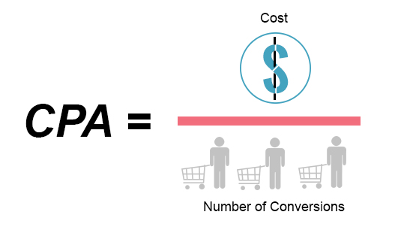
This is a metric used to determine how much it costs to acquire one customer. You can calculate this by dividing the total cost of your campaign by the number of conversions. This metric is important because it actually shows you how much you are spending per conversion. If this cost is too high, you should consider reworking your marketing campaign.
23. Lookalike Audiences
Lookalike audiences are built using email lists. This is a way to target users that are similar to the ones you already have. You can upload your email list to your Facebook ad campaign and it will take these emails and find similar users to target. You can even exclude the emails that you upload if you do not wish to advertise to current customers. With lookalike audiences, you’ll be able to easily reach new customers that are similar to your existing customers. If you do not have an email list, work on acquiring quality subscribers with these seven tips!
24. A/B Split Testing
When running any type of advertisement, it’s best to split test. This means you will have 2-3 similar ads that are all running at the same time to see which performs best. You can run the same image and switch up the copy or vice versa. A/B split testing will help you better target your audience by showing you which advertisement people liked more. When you are finished with your split test you will be left with an ad that performs great and helps you capture those potential buyers!
*This can be applied to email marketing as well.
25. CPI – Cost Per Impression
CPI measures how many times your ad appears on a site whether or not the users actually sees or interacts with it. This is similar to the marketing term “reach” but reach measures how many people see your content and impressions measure how many times your ad or content was displayed. Impressions build brand recognition while reach will help you build your brand. You can learn more about the differences between reach and impressions here.
26. Lead Generation/Lead Magnet/Lead Nurturing
These three marketing terms go hand in hand. Lead generation is exactly what it sounds like – how your business generates leads or how you grab the attention of your customers. A lead magnet is a small giveaway, free ebook, guide, etc. that your business offers to customers in exchange for their email. A lead magnet is a tool that is going to help your business capture those potential customers. Once a potential lead becomes a lead, you will need to nurture them until they become a customer. Typically business nurtures their leads through their sales funnel. Lead nurturing can be in the form of sending emails, retargeting them on social media, or actually calling your potential customers to follow up with them.
27. CTR – Click Through Rate
When running a social media advertising campaign, the click-through rate shows how many times an ad was clicked on by users. In order to calculate your CTR, you will need to take the total number of clicks your ad received and divide it by the number of times it was shown (impressions). Then convert that number to a percentage.
*You will see this term again in our email marketing section*
28. Engagement Rate
Blog, Facebook posts, tweets and photos on Instagram all have engagement rates. This is how much users are interacting with your brand. How many comments did you get on that post? How many shares did that blog receive? Usually the higher your engagement rate is, the better your content is – which is great for SEO. If search engines see that users are interacting with your website and social media channels you will be viewed as a notable source in your industry.
29. Remarketing
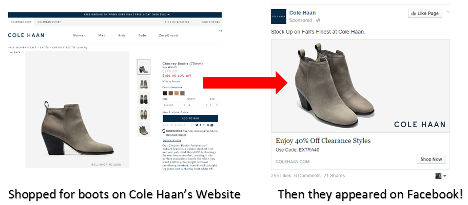
Chances are you have seen remarketing almost every day. If you are shopping online and are viewing a pair of shoes, this pair of shoes will most likely show up again on another website you visit. Remarketing is a tactic used to get customers who did not make a purchase back to your site.
If your business sells more than one product you can set up carousel ads to appear on other sites as well as social media channels. These ads are composed of several products that your customers have already viewed. Since they have already looked at these products, they are probably interested in them and are more likely to buy if they see the product again.
30. Relevancy Score & Quality Score
When running campaigns on Facebook, you will receive a relevancy score for your creative and copy in your advertisements. This score is given to each of your ads by Facebook. It is a way for them to decide how relevant your advertisement is and how it compares to other similar ads.
Google essentially does the same thing for your paid search ads by giving you a quality score. Many factors go into your quality score, and it can be improved over time.
Why should you care about your relevancy score or your quality score? Well, the higher your score, the more your ads will be shown over your competitors and the less money it will cost to do so. A better score lowers your cost per click. Not every click is going to be a conversion so getting your CPC as low as possible is key.
31. B2B and B2C
Business to business (B2B) and business to consumer (B2C) are two marketing terms that describe who businesses interact with. Do you market to other business or directly to consumers – our social media experts can help you decide which platforms your business should be on. You strategy is going to look a lot different if you are targeting customers instead of businesses or decision makers. There are some social media channels that B2B companies should be on that B2C companies should not be on. Your ad strategy if you are targeting other businesses is probably going to be different that an ad strategy that is targeting consumers. Make sure you know who your audience is!
32. CTA – Call To Action
A call to action is usually a button used to get your customers attention and make them click, purchase, give their email or any other action you want them to take. A call to action can be used in social media advertisements, email campaigns or on your website. Your CTA should be big, bold and be able to grab your customers attention. An effective CTA is also short, sweet and to the point. When someone lands on your website they should immediately know what action you want them to take whether it is to shop a sale, enter their email or browse your newest products.
33. Buyer Persona
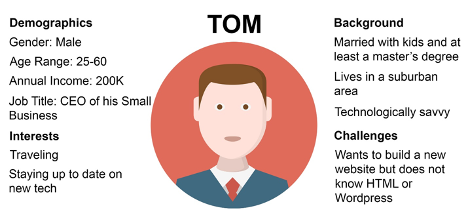
A buyer persona is something that you or your marketing team create that will give you a better idea of what your potential customers look like. This will include demographics like gender, age and interests. This is not just some made up persona. It is based on research of your target market so that your customers’ buying motivations, behaviors and goals are considered. Zeroing in on the demographics of your potential customers is an important step in your marketing strategy so don’t skip it!
34. Pixel
This is a snippet of code that is inserted onto your website for tracking purposes. It can gather analytics and data on your customers and their movement across your website. You can also use pixels to retarget customers with Facebook. Since the pixel on your site is tracking every customer that visits, you can use this data to target them in future Facebook ads.
Your pixel will look like a bunch of words and symbols if you are unfamiliar with HTML but all you really need to worry about is copying and pasting it in the correct place on your website. Facebook provides great tutorials on how to do this for almost all major website platforms.
35. Thank You Page
A thank you page is imperative if you are an ecommerce business. Why do you need a thank you page pixel? Something we see often is customers going through the checkout process and the site not tracking their conversions. A simple thank you page is all you need to track your ROI. This page can be added after people make a purchase on your site but if you are not an ecommerce business you can add a thank you page to your contact form. This will show you where your customers are coming from and make tracking your conversions really easy!
Search Engine Marketing Terms
36. SEO
Search engine optimization or SEO is the organic way to move your site up in search engine rankings. There are many moving parts to SEO such as selecting target keywords that you want your business to rank for, optimizing your pages with those keywords, writing blogs, and acquiring backlinks. Our digital marketing specialists are experts in on-page optimization, blogging, and acquiring backlinks and can help you quickly optimize your site! This method of search engine marketing takes time as the search engines will need to crawl your site to pick up on any changes you make. If you want to rank now, there is a quicker way, but it will cost you.
37. Business Blogging
This is quite the same as “regular” blogging but is optimized for businesses. The articles that are usually found in a business blog are keyword optimized and are created to provide educational, helpful and professional insights. They are also typically bundled with a downloadable offer such as eBook, case studies, checklists, etc. To sum it up, this type of blogging is usually meant to grow your email list.
38. PPC
Pay Per Click has similarities with SEO but these are paid ads that run on Google. PPC is instant. As soon as you set up your ad campaign, you can begin ranking immediately. If you have the budget and you are willing to spend it, you will be at the top of Google search results in no time at all. PPC also involves keyword research but instead of on-page optimization, you will need to create ads. Ads include two short headlines, a description, and a link to your website or landing page. You can also include extensions like your business’s phone number or links to additional pages on your site.
SEO and PPC work great individually, but together they can skyrocket your business! Learn more about the differences between these two digital marketing terms and how to use each of them with our beginner’s guide to SEO vs PPC.
39. DA – Domain Authority
This is a number 1-100 that is assigned to websites by Moz, a marketing analytics company. The higher your Domain Authority, the more powerful your website and higher your chances of ranking. When doing keyword research, domain authority is a metric that will help you determine whether or not you will be able to compete with the companies that are already ranking.
For example, if your DA is 20 and you do a google search for your keyword and the websites that appear all have DA’s of 50-70, you are probably not going to be able to rank for that word.
40. PA – Page Authority
Each page on your website has a rank as well as your site as a whole. It’s important to make sure you are distributing page authority evenly across your site. If you have one page (let’s say your homepage) on your site that is ranking number 1 in search and has a PA of 100 that’s great but what about your other pages? The more pages that have high PA’s, the more likely they will be able to rank which means your business has a better chance of showing up in search results.
41. Bounce Rate
A bounce rate in terms of search engine marketing is when a user lands on your site and only views one page. Google Analytics will show you the bounce rate for your website. If this number is high, you will need to make some adjustments. The more pages a user views and the more time they spend on your site, the higher the chances for you to move up in search rankings.
*You will see this term again in the next section as it is a little different when it comes to emails.
42. Above the fold
Content that is “above the fold” is any content that appears before the user has to scroll. So what should go above the fold on your site? Your most important content as well as your H1 tag (for SEO purposes) and a call to action! If a customer lands on your site and they do not immediately know what is going on, there is a chance they will press that back button. The call to action on our homepage is to talk to an expert and “accelerate your marketing.” It is clear that we are a social media marketing and management agency and that we want you to contact us to talk to an expert about your social media marketing campaign.
43. List Segmentation
Segmenting your email lists can work wonders for automation. There are so many ways to break up your lists – by industry, age, location, new and returning customers and the list goes on. These lists can be used to create automation or to funnel into automatons. If you need help creating some killer automations to move your leads through your sales funnel, let our email marketing experts build your campaign! You can have a new customers automation, a returning customers automation or an automation for customers who have not made a purchase in a certain amount of days. However you want to segment your lists, there should always be a strategy in place.
44. Bounce Rate
A bounce rate in the email marketing world is the percentage of emails that were not delivered in your campaign. If your bounce rate is high, there might be as issue with your email or the domain that you are sending from so make sure you are always checking your bounce rate whenever you send out an email.
There are two types of bounces, a hard bounce and a soft bounce – two very important marketing terms that you need to know in order to run successful email campaigns.
25. Hard Bounce
In your email campaigns you will undoubtedly see bounces. Hard bounces are emails that were not delivered. There are essentially two reasons for this. The email could be wrong so if you do have a small subscriber list, check to make sure your email address are correct or you have been blocked. This is why it is so important to build your email list organically. This means that you have gathered emails from people and have their explicit permission to send them emails. Do not buy email lists. This can really hurt you in the long run – if enough people block or report you as spam your deliverability will plummet.
46. Soft Bounce
A soft bounce means that your email was delivered but bounced back because the user’s inbox was full, their email server was down at the time of delivery or maybe the email was too large. Some email APIs will continue to attempt to deliver to these emails several more times before they give up. If the soft bounces continue, eventually the API will remove the email address from your subscriber list.
47. Open Rate vs Total Opens
Some email platforms will show you an open rate as well as the number of total opens. It is important to know the difference between these two email marketing terms. Your email open rate tells you how many users opened your email. Sometimes people will go back and open the same email two or three times, especially if there is a coupon or special offer associated with it. Total opens accounts for every time your email has been opened.
48. CTR – Click Through Rate
While open rates look great on paper the click through rate is the metric you should be most concerned with. The goal of most email campaigns is to keep email subscribers engaged and keep them coming back to your site. Engagement can be measured by the open rate and click through rate measures how often they go to your site, or how often they click through. These metrics work together because without people opening your email there’s no way they can click through to your site.
43. List Segmentation
Segmenting your email lists can work wonders for automations. There are so many ways to break up your lists – by industry, age, location, new and returning customers and the list goes on. These lists can be used to create automations or to funnel into automations. If you need help creating some killer automations to move your leads through your sales funnel, let our email marketing experts build your campaign! You can have a new customers automation, a returning customers automation or an automation for customers who have not made a purchase in a certain amount of days. However you want to segment your lists, there should always be a strategy in place.
44. Bounce Rate
A bounce rate in the email marketing world is the percentage of emails that were not delivered in your campaign. If your bounce rate is high, there might be as issue with your email or the domain that you are sending from so make sure you are always checking your bounce rate whenever you send out an email.
There are two types of bounces, a hard bounce and a soft bounce – two very important marketing terms that you need to know in order to run successful email campaigns.
25. Hard Bounce
In your email campaigns you will undoubtedly see bounces. Hard bounces are emails that were not delivered. There are essentially two reasons for this. The email could be wrong so if you do have a small subscriber list, check to make sure your email address are correct or you have been blocked. This is why it is so important to build your email list organically. This means that you have gathered emails from people and have their explicit permission to send them emails. Do not buy email lists. This can really hurt you in the long run – if enough people block or report you as spam your deliverability will plummet.
46. Soft Bounce
A soft bounce means that your email was delivered but bounced back because the users inbox was full, their email server was down at the time of delivery or maybe the email was too large. Some email APIs will continue to attempt to deliver to these emails several more times before they give up. If the soft bounces continue, eventually the API will remove the email address from your subscriber list.
47. Open Rate vs Total Opens
Some email platforms will show you an open rate as well as the number of total opens. It is important to know the difference between these two email marketing terms. Your email open rate tells you how many users opened your email. Sometimes people will go back and open the same email two or three times, especially if there is a coupon or special offer associated with it. Total opens accounts for every time your email has been opened.
48. CTR – Click Through Rate
While open rates look great on paper the click through rate is the metric you should be most concerned with. The goal of most email campaigns is to keep email subscribers engaged and keep them coming back to your site. Engagement can be measured by the open rate and click through rate measures how often they go to your site, or how often they click through. These metrics work together because without people opening your email there’s no way they can click through to your site.
Is Social media too time-consuming and results too dismal?
Everyone is on social media. That’s why you are also juggling Instagram, Facebook, Twitter, Yelp, Pinterest, Snapchat (just to name a few) accounts. Are you getting the results that you were expecting?
Juggling multiple social media accounts is not easy. Firstly, they are relatively different and the people who use them are different, as well. They also use each and every one of them for different reasons. That requires lots of your time and consideration — because you want your efforts to bring the results.
Even with a social media dashboard consolidation tool, it is difficult. Social media is important. But instead of relying heavily on it, we suggest you adopt at least a couple of strategies listed below. This article will solely give ideas for retail businesses of any type — coffee shops, restaurants, hotels, car wash, hairdressers, etc. You name it. Ecommerce requires a different kind of approach; thus, we will leave it aside for now.
Here are the 5 Digital Marketing Alternatives
Strengthen Your Website
Website Organic SEO is as important or more so than your active Facebook or Instagram accounts. In fact, it may be even more important. The reason is, Google is used for search and if your website is well optimized for it, you’ll be discovered. That’s why you need to take the time to analyze your website. List the main keywords you want to rank for on Google search and make sure that your website is well optimized for these key phrases.
Here are the steps to follow
Identify and come up with a general Organic SEO strategy by researching and identifying the main keywords and overall website structure.
Make your website easy to navigate and make the navigation natural and page load speed is quick.
Have well-optimized content on your web pages. This means the text you produce should include the keywords you want to rank for.
Use original photos that are relevant to your business. Ensure they are well optimized for search. (Hint: The picture name should always be the main keyword of the page.)
Make sure all your titles and subtitles are optimized for search.
Make sure all pages are optimized for mobile users.
Connect your website to your social media accounts. Once you have people coming to your website, make sure you entice them to come and visit your shop. A strong website with relevant ranking organic SEO is a foundation for your success in search results and organic traffic. Remember that organic traffic is cost-free and can be very beneficial to your business with very high return-on-investment (ROI)
Use All That Google Has to Offer
Google is a tremendous tool for digital marketing. Not only should you rank high in Google search results, but you should also ensure that you advertise on it. Google Ads is one of the most popular digital advertising tools because it brings traffic that intends to find out more about your business.
For example, if your ad ranks for “hairdresser in downtown Miami”, it will be shown to people who are in fact looking for a hairdresser in downtown Miami — these people are your potential customers. By bringing them to your website, you’re one step closer to converting them into paying customers. Google search (organic or paid) has an advantage over social media posts. Its users intend to find particular information or a service.
If I am shown a hairdresser’s ad in downtown Miami on my Facebook feed, it may be redundant to me, because I may not be looking for such a service. Another important tool that Google has is Google for Business. It’s free and gives you an option to list your business on Google. People would be able to see the address, contact information, opening hours, etc. It makes the search much simpler for your potential customers and will also increase your traffic to the website.
Get Your Customers’ Email Addresses
Nowadays, having a loyalty program costs barely anything. If you come up with a simple registration form for your customers to become members of your brand’s loyalty program, it will give you the most valuable information — your customer’s email address.
By having their email address you’ll be able to send regular newsletters with various promotions and brand information. It is essential to have an audience and email marketing gives you that. This is a huge advantage compared to social media followers because your email content will definitely reach the people on your mailing list. This cannot be guaranteed on social media, as social media platforms control the algorithms and how the content is distributed.
When I talk about loyalty, I don’t mean having a membership card — everyone is bored of these and has definitely too many. Simply tie your customers to yourself with their email.
Re-engage With Your Past Customers
Customer relationship management (CRM) is a crucial component of your business’s success. If people visited your shop, they are likely to come again. Entice them! That’s where your email marketing strength should come in.
Don’t neglect your past customers. They are frequently busy and if you subtly remind them of yourself, they will be happy to return. For example, we are a member of a nice private club. It’s not convenient for us to visit the place every weekend as I seldom come to the area. However, I keep being reminded of my outstanding cash-back balance (loyalty program that they offer) from time to time and it keeps me enticed to visit the place again and again. Especially if there is some special occasion.
That’s why you must not neglect your past customer base. The conversion rates from the past consumers are much higher, and it takes much less effort and money to drive them back to your shop. Just have the right strategy. Don’t sound too desperate.
Get As Many Reviews As Possible
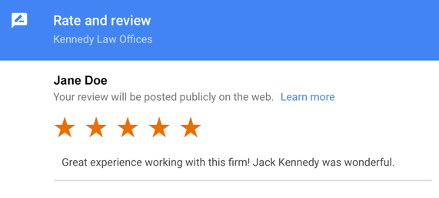
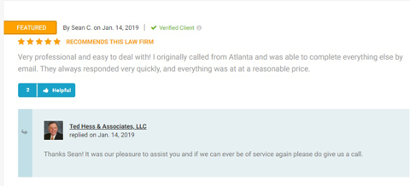
Consumers today are spoilt with choices. If I Google “hairdresser in downtown Miami”, I will be exposed to tens or even hundreds of options. How would I choose one? Based on consumer reviews. Google reviews are crucial, as Google is the first stop where people will hear about you. If they are happy with your Google reviews, they might check up on Yelp or Facebook and browse further to find out more about your brand.
Therefore, encourage your customers to leave positive reviews on Google. It costs nothing to them, but it can be a game-changer to your business. I noticed that some businesses ask people to write a review in exchange for a discount. I believe this is one of the ways to get the ball rolling, however, what is important is genuine and honest reviews. If someone leaves “great service” it actually is meaningless to a prospective consumer, because he/she won’t be able to get a better understanding of what they would be getting by choosing your business.
I wouldn’t trade discounts for reviews. I would strive to wow my customers so that they would love to share their experiences with the world.
Bottom line
I know We have been writing a lot about alternatives to social media and how businesses should start paying more attention elsewhere. I believe that social media is important, but it’s becoming very crowded and the results are hard to achieve and sustain. I suggest paying attention to alternative digital marketing strategies, but at the same time have a decent presence on social media.
We recommend about 10% of your digital marketing budget. I wouldn’t recommend relying solely on social media to drive traffic and customers. I notice this a lot. Many retail businesses, where I am, do not have a proper digital presence. They rely on Facebook and strive to get more followers. In the end, the consumer chooses their competitor, because the competitor looked more professional and better positioned himself/herself on digital space, such as website, organic SEO, and thought leader publishing, newsletter, or reviews on Google.
Don’t be one of those losing businesses. Win your customers! Wow, them with your organic SEO thought leader publishing and website customer experience. If you would like help with your digital marketing strategy contact Mach 1 Design at [email protected] or call us at (469) 536-8478
Content marketing focuses on increasing sales by providing what customers or clients are looking for when they are actively searching for it. The advantages of content marketing are numerous and the goal of this post is to help you realize how beneficial a content marketing strategy can be to your business:
What are the Benefits of Content Marketing?
Google Values Content
Generate More Sales
Aids in Sale Process Automation
Controls Conversation
Content Marketing Over Traditional Marketing
Enhances Brand Awareness
Builds Credibility
Yields Social Media Following
Drives Visibility
Ease Customer Service Team
Enables Sales Team
Scales Audience
Google Values Content
Google prioritizes high-quality content. Do you not believe me? Simply go to YouTube and search for interviews with Matt Cutts (the former head of webspam at Google). When asked how to rank higher in Google, he consistently says, “create fantastic content.”
Google is preoccupied with providing its consumers with search experiences that deliver the results they seek. High-quality content is frequently the most effective approach to give that experience. So, Google enjoys content. What does it matter? Everyone, in a nutshell.
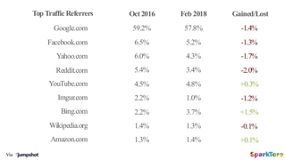
SparkToro’s 2018 study was used to create this image. According to a SparkToro analysis from 2018, Google sends 10x more traffic to the average website than Facebook (and more than 10x for any other website). Content marketing significantly increases website traffic from your most effective traffic source or organic search.
Generate More Sales
Improving website traffic is pointless unless it leads to increased sales. Effective content marketing increases sales and frequently shortens sales cycles. The majority of your customers or clients will not be ready to buy from you or use your services the first time they hear about your company.
Before making a purchase, people go through a buying process. This buying process is known as “the customer journey,” and it is faster for smaller things than for larger products, which is typically labeled a “major purchase.” The current U.S. The average sales process requires 8-20 touchpoints to guide the consumer or client through their specific customer journey in order to obtain enough knowledge and trust to make a buy decision. To illustrate, below is an inbound marketing process.
People understand they have an issue that needs to be solved before making a purchase (awareness). They spend time researching and better understanding their challenge (consideration). Then they decide which solution is best for them (decision). A well-planned content marketing strategy assists your potential customers or clients at all three stages by educating them on what they’re looking for. Content marketing, therefore, helps by:
Getting your prospective customers one step closer to making a buying decision.
Developing a relationship with your target audience to increase their likelihood of working with your company rather than your competitors.
If that isn’t enough, inbound leads, those generated through web marketing have a 14.6% conversion rate, while outbound leads (those generated through cold phoning, direct mail, and so on) have a 1.7 percent closing rate.
Aids in Sale Process Automation
Cold sales call outreach is extremely challenging and delivers low benefits in comparison to the amount of work expended. People are busy, and none of them are looking for marketing services. Many of our clients have completely ceased doing cold outreach. Instead, they decide to concentrate on digital marketing, with content marketing receiving the majority of their attention.
When potential partners are ready to work with our clients, they reach out to us. They discuss their goals, determine the best method to help them improve, and determine if they are a good fit to collaborate with. In many circumstances, they are the right partner; in others, they are not. In any case, we assist each of those potential partners (customers/clients) in locating the best solution to help them expand.
Content marketing assists in the transformation of sales from forcing a customer to buy your product or service to being a valued resource that is ready, confident, and waiting when your customers or clients are ready to buy from you or choose your service.
Controls Conversation
It’s no secret that selling a product becomes a lot easier when your buyer is actively looking for what you have to offer. As an example, suppose you sell high-end sofas. Someone looking for a $200 bed isn’t going to be simple to sell to. They’ve already decided on the type of sofa they want by the time they step into your store. But what if you could talk to that person as they were looking for beds? What if you could convince them of the value of paying a premium for quality before they decided how much they were willing to spend?
It’s priceless to be able to steer the conversation when your most likely clients are educating themselves. Everything from car insurance to company software is the same. So why not write about these issues of discussion? Why not take command of the conversation while your consumers are deciding what they require? Your competitors are most likely beating you to the punch and stealing your finest potential clients.
Content Marketing Over Traditional Marketing
Nobody enjoys being disturbed in the middle of their day by individuals on the phone attempting to sell them something. Ad blockers are now used by 40% of internet users, and this number is growing over time. Banner advertisements can be an effective approach to promote your brand. However, spending money on TV advertisements and other forms of promotion that disturb your clients does not appear to be the most effective approach to win them over in today’s new environment.
Content marketing, conversely, enables you to build customer relationships by putting your brand in front of your customers in a way that helps them. So, pay hundreds of dollars for a 30-second television commercial or thousands of dollars for a static billboard? Content marketing is far less expensive and is way more effective.
Enhances Brand Awareness
Assume you manage an investment firm and intend to publish an instructive post that ranks first on Google for “how to invest in stocks.” Every month, 40,000+ people search for that precise term. Every year, you now put your brand in front of 480,000 potential clients. And that’s just for the precise phrase “how to invest in stocks.” Every month, another 40,000 individuals search for the exact phrase “how to buy stocks,” not to mention the various near versions. Every year, at least one million people look for this topic.
Builds Credibility
Every year, your investing piece is now seen by over a million potential clients. 25% of those people will click on your article. Assuming you devote time and effort into making the article useful to your audience, 250,000 people will now regard your brand as a thought leader and reputable information source each year. Many of those visitors will eventually become customers for you, or they will tell a friend about your website and turn their buddy into a customer.
Yields Social Media Following
Each potential consumer who discovers useful material on your website becomes a potential brand champion. Many of these readers will follow you on Facebook or Twitter to keep up with future items you create. Many of these readers will also share your content on social media with their friends and family, which helps to geometrically build your following over time.
Drives Visibility
Content marketing draws much more traffic to your product pages, both directly and indirectly.
Directly:
Assuming you create articles on your products or services, many of your visitors will visit your product or service pages after reading your articles especially if your articles link out to those product pages.
Indirectly:
When you create high-quality blog content, other websites will link to it. Each new backlink is viewed by search engines as proof that your post is a valuable resource. And each page to which your content connects is regarded as a more useful resource as well. So every time someone connects to that blog item that links to your product page, it gives a little love to your product page.
Ease Customer Service Team
Is your customer service or intake team answering the same questions on a daily basis? Take the time to provide an insightful answer to those questions, whether it’s how to reset your password or how to use your product. Compile them into a blog article or series of blog entries that your customer care team can distribute when they receive those common inquiries. Many clients will even get these answers through an online search rather than contacting your customer service team in the first place.
Enables Sales Team
Inquire with your sales or intake staff about the types of queries they receive on a daily basis. Create relevant material in response to these common sales questions/concerns raised by prospects. Give those items to your sales team now. Request that they improve these articles based on what they see as producing the best results for your team. Congratulations. With quality content and answers to frequently asked questions from prospective consumers or clients, your website has just become your new best salesperson (and it works for you 24 hours a day, seven days a week).
Scales Audience
Setting up display adverts of their items to customers who visit their product pages but leave the site without purchasing a thing is one of the most efficient marketing methods for e-commerce enterprises. Content marketers can use the same strategy.
How To Get Started with Content Marketing?
Consider the following: do I have the time to study content marketing and do it myself, or does it make more sense to collaborate with a professional team that does it every day? Download the Mach 1 Design content marketing guide if you like the first strategy. This will provide you with the step-by-step structure that we utilize every day to scale businesses through content marketing.
Mach 1 Design may be the appropriate content marketing firm for you if you’re looking for a partner to help you with content marketing.
Simply said, there is no better long-term marketing investment for your company than content marketing. It’s the marketing service that increases your ROI without confusing your customers. Now that we have a better understanding of why a content marketing strategy is useful, we should look at how to create one.Here’s what a content strategy at its most basic, and how to build your own in basic steps:
Brand and Value Proposition
Audience and Needs
Goals and Audience Connection
Measurable
Establish Message
Choose Right Channels
Collect Feedback
Storytelling and Strategy Improvement
Brand and Value Proposition
Determine your identity and what you have to offer. What exactly is your mission? What is your (personal or brand) global vision? What is it that you or your organization knows more about than others, is better at than others, and/or that people would like to learn from you about? Make a note of these. For the time being, choose one to three topics to write about.
Audience and Needs
Determine what people you could assist genuinely require by conducting study and speaking with them. It’s definitely a good idea to do some keyword research here as well. Determine who your target audience is – this will help you design a better strategy and content.
Goals and Audience Connection
Determine how you can assist the people in your audience, as well as what a fair goal you could reach for yourself with the help of content marketing. Could you, for example, give individuals advice? Would that be in the form of free stories or an e-book? If you’re already at this point, it might be useful to write (or amend) a simple value proposition. What product or service could you provide that genuinely meets the needs of your target audience?
Measurable
Link a few KPIs (Key Performance Indicators) to your objectives. It is recommended that you maintain track of no more than three major KPIs at a time. How many people will you be able to reach? How many people are going to read your stories? How many consumers will you serve in a certain amount of time if you’re selling something? Make sure the numbers are as specific as feasible, not too high but still posing a decent difficulty. Also, keep track of your results so you may adjust your strategy as needed.
Establish Message
With the trinity of Needs, Solution, and Result, create messaging that reflects your understanding of what your audience needs, how you can help them, and how it will benefit them. The Need, Solution, Result structure can be developed into a single piece, but it can also serve as the foundation for a three-part plot, leading your reader from a problem to your answer, proof of your solution, and a Call-to-Action. Perhaps the simplest content flow is three sections connected together in this manner, building up to a (paid) offer.
Choose Right Channels
Share where your audience listens and reads for the topic matter and type of narrative you’re sharing on a regular basis. What platforms are your target audience or potential consumers using? Conduct research, speak with individuals and test the response you receive through various channels.
Collect Feedback
Measure and track comments from your audience and customers on your messaging on a regular basis. Examine data that relates to the KPIs you listed in step four. Will you be keeping track of views? Shares? Clicks on links? Will you be tracking website page views, contact form submissions, or both? Why? Don’t forget to get qualitative feedback as well: talk to people. Inquire about their reactions to your content. Is it useful? Is it significant? What could you do to make it better?
Storytelling and Strategy Improvement
Improve your story on a continuous basis depending on feedback and data from step 5: return to step 1 and repeat. That’s the sum of it.
It is not necessary for your content strategy to be flawless. It simply has to make sense. And, ideally, you’ve talked to people in your target audience to ensure that you’re not just making assumptions, but that you’re also taking into account what people truly need.
Finally, you don’t have to plan out a content strategy for the entire year. It’s frequently advisable to plan for three or six months ahead of time. That way, you’ll be ready to assess what works and what doesn’t after the first few months of sticking to the plan. This will make your content strategy a lot more responsive to what the world around you is telling you, and thus far more successful.
Content Marketing Success
A basic content strategy is what distinguishes the advanced content developer or marketer from the total novice. And it’s what makes you feel like you know what you’re doing, and it’s what keeps you focused on what you should be focusing on next. Furthermore, it assists you in determining which piece of content you should focus on next, which is critical if you want to maintain the habit of creating and distributing content online.
Finally, a content strategy that incorporates data monitoring and feedback gathering are what distinguishes the expert from the advanced content creator. Because doing so allows you to consistently improve your material, the method you provide it to your audience, and, ultimately, your odds of meeting your content goals. A well-documented content plan is essential for content marketing. Despite this, according to HubSpot, only 37% of B2B organizations that utilize content marketing have a documented content strategy.
A content marketing plan is essential because it enables everyone in your organization to grasp the what, how, and why of your communications. Are you able to recognize your company’s most important marketing and sales opportunities? Do you know where you’re squandering money – either draining your budget or missing out on potential revenue? Your top answers to those queries are likely to entail software investments that aren’t paying off or marketing outlets that you’ve overlooked. Those and other obvious replies aren’t incorrect, but they overlook an opportunity that almost every organization possesses but few realize.
We’re talking about how to improve your written communication skills. According to one researcher, poor writing costs American firms about $400 billion each year. That figure is based on the fact that workers spend 22 percent of their time reading, a figure that rises for higher-paid individuals. The more time employees spend attempting to grasp bad communication, the more paid hours they lose. Though the number is imprecise, even half of the lost revenue cited in this study would be a significant sum.
This study only considers the costs of poor communication from the standpoint of productivity. What about marketing costs squandered due to unread copy? Sales offers squandered because the value of a service isn’t effectively communicated? A large part of this is due to a lack of a robust content strategy.
Mach 1 Design focuses on providing businesses with the tools they need to boost their content marketing and digital communications. We know that readers’ online behavior has changed in the last five years. Mobile devices account for more than half of all web traffic. The average human attention span is now shorter than that of a goldfish. All of these variables, as well as others, are altering the landscape of content marketing and communications in general. We created this website as a recap of our content marketing experiences, as well as the lessons we’ve learned about digital communications in general from working with our fantastic customers.
Poor Writing Costs American Firms over $400 Billion Yearly
We’ll go far deeper than just making outlines for a piece of writing here. A strong content marketing or communications strategy has a lot of moving parts. Fortunately, there are numerous tools available to assist with these duties. On this page, we’ll show you a variety of tools and templates, both third-party and our own creations.
Anyone whose job requires writing and communication will profit from the information presented here. Content and social media marketers, internal communications experts, salesmen, and others will find resources to help them succeed at work. We’ve made every effort to make these teachings as applicable as possible. Our goal is for you to be able to utilize everything we’ve shared here right away.
Mach 1 Design Complete Guide in Content Marketing Strategy
Creating Personas
Identifying your audience is the first and most important step in cleaning up your messages. Our content strategy at Mach 1 Design is what we call “writing on purpose,” and we don’t believe in producing material for the sake of posting content. Every piece of writing should be directed at a specific audience and inspire them to do a specific action. Unfortunately, proper targeting is challenging, and many organizations struggle to find the correct tone of voice for their audience. Persona creation is an excellent tool for assisting your efforts. A persona is a made-up character established to represent your ideal customer.
These personas should be central to any content strategy and, along with concepts such as the buyer’s journey (which we’ll cover later), are the starting point for anything you write. So, how do you go about assembling personas? It’s a process of deep introspection, and it requires you to consider your current audience, desired audience, and the value you provide as a company. We’ll explore all of that in-depth, but first, a word on why this all matters:
Pitfalls of Poor Targeting
Assume you work for a company that makes project management software. This may theoretically be marketed to everyone, but there is something about your product that makes it appropriate for corporate legal firms. Many businesses nowadays, particularly those in the SaaS industry, place a premium on making their content engaging and conversational. This technique may be ideal for attacking a large number of groups, but it is less likely to work in the conservative legal world.
Starting From UVP
Consider your Unique Value Proposition, or UVP, as a good beginning point for developing your personas. Your UVP is a statement that defines the value of your product and the benefits you deliver to customers in the simplest and clearest terms possible. Many organizations are truly struggling to decipher this. They discover that a clean and unambiguous answer is out of reach after years of investigating and explaining all the amazing aspects about themselves.
However, it is critical to translate the benefits of your business into simple words. This enables you to think logically about your consumers and why they choose you. Examine a list of clientele and a list of professions with whom your salesmen frequently converse. Compare it to your assumptions about who your UVP’s target audience is. You’ll have a clear picture of one or more audiences who demand your attention as a writer when those groups intersect. These are folks that are interested in your message and would like to hear from you.
Examining your UVP is crucial, but it just gives you a hazy picture. The next stage is to take your insights and shape them into a living, breathing thing.
Craft of Character
Consider yourself to be drafting a letter. Which sounds easier: addressing a group of people with a few broad similarities or approaching an old friend? Making your audience real, personal, and specific aids in the creation of effective content and, as a result, the development of rapport with potential buyers. To create a persona, you don’t have to genuinely pretend you’re writing to an old buddy (though if that works for you, go for it). What you must do is create fictional characters, individual people who personify your target audience.
Try to give these characters as much depth as possible. Don’t presume you know them intimately right away. Rather, go through all of the character creation stages we’ve covered above. There’s a chance you’ll be startled by what you find.
Word on Style
These are the target personas for your organization. They serve as the framework for the remainder of your marketing and communication efforts. After you’ve finished outlining your personas, you should start researching style. Later on, we’ll go over the basics of developing a style guide and even provide our own.
What you can do right away after finalizing your personalities is look online for some of what’s already being written by or for like folks. You may locate genuine people online who are connected with your personas by studying their work titles and industries. If you’re lucky, you’ll come across some of these real people who have published their own writing, such as blog articles on LinkedIn.
Even if they haven’t, others are almost probably writing with these folks in mind. Whether it’s industry blogs, marketing materials, or something else, that writing will provide you with a glimpse into the style connected with your new personalities. Take note of the style they employ. Is it conservative, entertaining, technical, or solution-oriented? Is it written in extended, in-depth paragraphs or in short, journalistic ones? All of this will assist you in developing a writing style suitable for your new personality. The next step is to decide what to write.
Topics and Formats
Choosing the right themes and forms for your material is as crucial a part of your strategy as anything else covered here. The most important thing to remember is that you’re attempting to convince your target audience to visit your website and eventually convert to paying clients. What problems do they face on a daily basis? What marketing materials will assist them in overcoming these challenges?
Examine each persona’s hopes, dreams, concerns, sufferings, barriers, and hesitations. Cross-reference those with your UVP, and you’ll have no trouble coming up with a list of topics. The issue of usefulness applies to both topic and format choices. Topics and formats may already be widespread in your target sector. However, it is critical to put yourself in the shoes of your character and consider whether there is a content gap in the sector that needs to be addressed.
Audience
You may be wondering how to reach the personalities you’ve identified for your work once you’ve decided who they are. Marketers typically have a set of distribution tactics at their disposal, such as social media and email outreach. While they are excellent practices, they cast a wide net. Why not make the most of your identities if you went to the work of creating them?
Determining where your personas are most likely to be reading content is a difficult process that requires some trial and error. However, the more skilled you become at this, the more your efforts will be rewarded. You’ll have more control over where your efforts are directed, and you’ll know which channels require more attention to increase conversions. Some of the effort involved in channel discovery is intuitive, while others are learned abilities. Today, we’ll look at a couple from opposite sides of the spectrum to get you started. Take our recommendations as a starting point, as always. There are an infinite number of new skills to learn.
Internal vs External Communications
Let’s start with one of the simpler questions. Do you intend to write for internal or external stakeholders? While the majority of this website is aimed at marketers whose primary purpose is to acquire new consumers, some of you reading this may also be internal communications professionals. The other tips above may be less relevant for individuals on the internal side, but there are still many avenues for you to examine. Internal newsletters, distributed via email or your workplace intranet, have a lot of potential. Some Mach 1 Design users are already doing so.
Furthermore, although it may seem paradoxical, you may want to consider using external marketing to assist you meet internal goals. Seeing their firm in the press or going viral on social media will thrill employees in ways that traditional internal communications cannot.
Diving in head first to Google Analytics
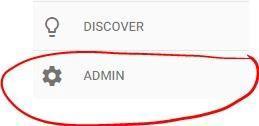
Moving on to external audiences, there is no better tool for discovering new ways to reach your target audience than Google Analytics. The Segments function, in particular, allows for significantly more in-depth studies than you may have known were feasible. To create a new segment, open any report and look towards the top of the page for a box labeled All Users, followed by another box labeled Add Segment. Select Add Segment, and then click the red New + button in the upper lefthand corner of the newly created window. Then you may experiment with the unlimited possibilities, or you can utilize the Import from Gallery option to check out some custom configurations produced and made public by other power users.
Segments allow you to view statistics for a specific group of users based on demographics, traffic type, and other factors. Google Analytics collects massive quantities of data with each visit to your site, and Segments are your secret weapon for organizing it all. How can this assist you in locating your target audience? Assume you want to improve your social media approach. You have a good notion of who your ideal consumer is, and you’ve created some amazing content for them.
This is simply scraping the surface of what Segments can do. The alternatives are nearly limitless, and they can help inform your strategy significantly. Segments can also tell you a lot about the devices your visitors are using to access your content. However, before you get into Google Analytics on that front, there is one piece of advice that applies to practically every business today.
Don’t Neglect Mobile
There are few trends that are broad enough to encourage all organizations to pay attention to them. One of these is the increase in mobile traffic. On average, mobile accounts for approximately 55% of all internet traffic – more than half. As a result, while contemplating the methods through which you’ll reach your target audience, you must assume that many of them will be watching your material on a mobile device.
The shift to mobile has an impact on your email marketing as well. Mobile devices only allow around half the characters that a desktop computer does. You can either develop shorter subject lines or subject lines where the first half entices viewers to read the complete thing. Both strategies will work, but you should use one of them.
These are just a few examples of how you can think of your marketing channels. We haven’t covered important topics like paid advertising, earned media, how to find relevant conversations on social media, and more. This should, however, be enough to get you started.
Mapping Buyer’s Journey
Content marketing can be intimidating. It’s possible that you’re working with a variety of content kinds, such as blog posts, newsletters, case studies, eBooks, white papers, and webinars, and you’re confused about what fits where. What material is appropriate for your company? What will pique the interest of your target audience and entice them to become customers?
When you learn how to include the concept of a buyer’s journey into your content strategy, your success as a digital marketer will skyrocket. The buyer’s journey is a framework that describes the processes a person takes in recognizing a problem, researching that problem, and ultimately acquiring a solution to solve that problem.
Awareness
In the awareness stage, the potential buyer is confronted by some problems. They’re aThe potential buyer is confronted with a dilemma at the awareness stage. They are conscious of their dissatisfaction, but they don’t know what’s generating it or whether it is unique to them. This is usually when someone searches for the symptoms of their problem online, looking for any information they can discover. People in the awareness stage are not ready to be sold to, but they will be open to any source that may help them name and frame their problem. They are still developing the terminology around the problem that will aid them in their search for a solution.
This is an excellent moment to raise awareness of your brand. You will rank higher if you can provide information that helps people comprehend a problem they are having, and if you can optimize that material around the search keywords they are using. Blog entries that articulate and describe a problem, assist readers in contextualizing that situation, and offer a variety of solutions are more likely to resonate with people in the awareness stage.
The goal of content aimed at the awareness stage should be to educate, define, contextualize, clarify, and inform. The greatest strategy to attract people into your funnel is to provide material that assists them in understanding their problem and prepares them for the next step: searching for a solution.
Consideration
Potential buyers in the consideration stage have a better understanding of the root cause of their problem and are now studying several types of remedies. The knowledge they got and the vocabulary they developed in the awareness stage determine how and where they search, which is why that stage is so important. Content aimed at the contemplation stage should strive to explain and even demonstrate how your product or service can efficiently answer the specific problem highlighted by the consumer in the awareness stage — and preferably entice them to test it out for themselves.
Decision
During the decision stage, the potential buyer is researching a few products or services in depth. They have a good idea of what they want in a solution and are seeking the one that best meets their requirements. The buyer will most likely make a purchase at the end of this stage. In this stage, your goal is to persuade prospects to buy your solution rather than a competitor’s. The content for the decision stage should highlight the benefits of your solution and provide convincing evidence of how it assisted others who encountered similar problems in succeeding.
Identifying Gaps with Content Audit
Make a spreadsheet that lists all of the content your organization has created and is planning to create in the future. The spreadsheet should have columns for its state (published or planned), type, title, buyer’s journey stage targeted, persona targeted, and URL. Simply filling out this sheet will give you a good indication of where you could be short in the material. You may see, for example, that the majority of your information is targeted toward the decision stage and that very little is geared toward awareness. Perhaps your awareness stage is well-covered, but your consideration stage content is lacking.
Identifying gaps aid in future planning. Concentrate your content production efforts on addressing these gaps and ensuring that every buyer’s stage/persona combination is well covered by quality material.
Establishing Goals
The goal of mapping content to your buyer’s journey is to be more effective at attracting visitors through your funnel by supplying them with the content they need to take the next step toward a purchase. So, after identifying where each piece of content fits in the buyer’s journey, you must determine whether those assets are actually doing their job. The goals you set for each piece of content are dependent on both the buyer’s stage they belong to and the sort of content. Only when you’ve established a goal for each asset can you evaluate its effectiveness and begin optimizing it.
Mach 1 Design Content Goals
Here are 6 content goals we use at Mach 1 Design:
Acquisition: To attract new visitors
Activation: To turn visitors into subscribers (micro-conversion)
Education: To engage subscribers and keep them coming back
Revenue: To persuade visitors to make a purchase (macro-conversion)
Expansion: To encourage customers to upgrade
Referral: To delight customers and turn them into evangelists
The goals do not necessarily correspond to the stages of the journey. While acquisition and activation are most commonly connected with the awareness stage, depending on the circumstances, activation could also fall neatly into the deliberation stage. What’s essential here is that giving goals to content allows you to measure and optimize its efficacy. Only when you’ve established a goal for each asset can you evaluate its effectiveness and begin optimizing it.
Building Content Calendar
A strong content strategy must be well-organized. To be successful, you must be able to understand the big picture in terms of what content assets you’ve previously developed, what’s coming up, and what you have planned for the future. As previously said, part of this entails determining which content assets correspond to the stages of the buyer’s journey.
A thorough timeline is also an important organizational tool. Creating a content calendar provides you with supervision that allows you to manage your time and expectations, as well as the flexibility to add or remove content assets in any way that best supports your overall business goals.
Spreadsheet Set-Up
Mach 1 Design’s calendar has several columns indicating the following:
Is the content currently in progress?
What is the estimated deadline?
What is the status of the project?
Who is the project owner?
What is the type of content?
Is the content part of a campaign?
What is the title?
What is the business goal for your content?
Which stage of the buyer’s journey are you targeting?
Which persona are you targeting?
Since content marketing is a continuous endeavor rather than a one-time activity, you’ll want to ensure that you set acceptable expectations for concurrent projects. Working on too many major things at once ensures that you will miss your deadlines. This is common sense, but without the organization given by your content calendar, it’s difficult to put into practice. When filling out your calendar, make sure that larger projects are spread out and that only smaller projects are running concurrently. Fortunately, it’s quite easy to predict which projects will take the most time and effort. This is frequently related to the number of words and the amount of research required.
Where to go from here
The bulk of your style guide should be based on the work that you put into the values, mission statement, and product description. Suggested sections that your style guide can include are how to write:
For social media
For marketing and sales emails
For landing pages
About people within the organization
Technical and legal content
As well as:
Spelling conventions for numbers and more
Preferred grammar, punctuation, and much more
Those sections will vary depending on what writing your organization does. Different industries all require different written materials. However, the purpose is always to make sure everyone can write with a consistent style and usage across the company, whatever the purpose. Everything in those other sections should evolve from the work we explained previously. Take your values, mission statement, and product description, and examine the vocabulary and syntax you use. Which verbs and nouns are the correct ones to use for your business? Do you use longer or shorter sentences? Does the vocabulary choice make you sound technical or friendly?
Beyond the vocabulary and syntax, you’ve already picked out, come up with some other acceptable choices. These choices will also likely vary depending on where that writing will live. Try to cover as many scenarios as possible, but make sure they all align with your original efforts. After that, you’ll have all the components of a great style guide. If you follow all our instructions here, you’ll have all the most important components finished.
Write Style Guide
Creating and sustaining a distinct voice is critical for any brand. It allows them to stand out and establish rapport with their audience. Having a consistent voice throughout all of a company’s communications makes them more distinctive, recognizable, and trustworthy. A company’s style guide is often where the guidelines for brand voice and textual assets are compiled. Not all organizations use a style guide, but it’s a tool that all should consider adopting. A good style guide can be accessed, understood, and utilized by anyone in any department.
Distributing your style guide
Finally, a word on making sure your style guide is used. There isn’t an easy answer for how to make sure your colleagues conform to your style guide. However, there are a few steps you can take. The most important thing is making sure people are aware that the style guide exists and making it easy to access. A company-wide email should take care of the awareness portion. Hosting the guide in a central place like a company intranet, or even just a Google Drive that everyone can access will accomplish the rest.
Once people know how to find your style guide, getting them to use it is a bottom-up task. Luckily, once you get a reputation as a good writer at a company, it’s common for your coworkers to ask for help on everything from emails to presentations to social media. As you guide them, make sure they learn to see the style guide as a resource to make their efforts easier. If you’re successful, you’ll see a big transformation across your company. Effective, consistent writing makes any organization feel like a trustworthy, well-oiled machine.
6. Tips to keep your writing fresh and sharp
Throughout this page, we’ve discussed how to write on purpose. We covered topics such as targeting your writing to specific groups of people and organizing your content writing efforts. Implementing all the tips found on this page will make you feel like you have a lot more control over your writing.
Good writing is sometimes underappreciated, but it’s the cornerstone of any successful business. Without good, consistent writing, a brand can’t take shape. Customers and prospects churn due to inconsistent messaging. Even employees in the organization will be unable to produce consistent results. One assumption this page has made thus far is that you, the reader, are comfortable with your basic writing skills. We’ve spoken as though you only want advice on applying your mighty pen to your company’s marketing efforts.
But what if you need more confidence as a writer in the first place? We haven’t forgotten those of you who find yourselves with content marketing responsibilities but scant training in the written arts. The good news is there are a few simple steps you can take to vastly improve your writing. Stick with us through this section and we’ll introduce some essential tips and resources.
Got a question? Choose your guru wisely.
Grammar and style questions can certainly be Googled, and you can also ask teammates for their opinions. However, you may get different answers from different people or websites. This leads to inconsistent writing, which itself leads back to the problems we mentioned earlier. For this reason, you as a writer should choose a central authority to answer all your questions. This happens to be a problem many have previously tackled.
Central authorities for grammar and style questions are style guides. You’ll recall that we explored how to create a style guide for your business. This doesn’t prevent you from working with another style guide as they sometimes address different concerns. You can even pull parts of your company’s style guide from a previously extant one.
Some well-known systems writers use are MLA, APA, Chicago, and Turabian. You may recall these from writing essays in high school or college. Though they’re sometimes written by or for specific industries (APA, for example, is the American Psychological Association), they all establish fundamental standards for grammar and style. They should all address any questions you might have. Just make sure to use the same one every time. Special mention goes to The Elements of Style by Strunk and White, first published in 1959. This has been a go-to in English classrooms since it first arrived on the scene.
Sometimes less is more
A basic style guideline that should inform a lot of your writing choices is the economy of words. This means using as few words as possible to make your point. The economy of words is meant to make your prose straightforward, elegant, and easy to understand. Written communication in the English language always holds the economy of words as a golden rule. Other common style rules, like avoiding the passive voice, often have a secondary effect of enforcing the economy of words. “The report was printed by the man” has more words than “The man printed the report,” but they communicate the same idea. Therefore, if you look for ways to maximize your economy of words, you’ll use the active voice by default.
The economy of words enforces other common-style rules as well. Because of this, if you’re going to memorize one rule of style, make it economy of words. If you’re going to memorize one rule of style, make it economy of words.
Don’t change things up
Consistency is a topic we’ve touched on a lot, but it deserves an additional mention here. Whatever rules you choose to follow, stick to them. Certain style and grammar questions have multiple answers, depending on which style guide you follow. Not choosing the same rule every time leads to sloppy writing. This is why we talked about creating your style guide. Referencing those guides mentioned above is a great starting point, but it’s not enough. You need to make choices about which rules you follow in relevant situations. Consciously defining those and sticking to them is the trick to becoming a good writer.
As you continue your content writing journey, we hope you’ll continue to reference the tips and resources on this page. Mach 1 Design is committed to helping content creators across locations and industries maximize their output. We believe that good content is a necessity for all modern businesses. If you have any other questions about producing awesome content, please reach out to one of our experts! We’d be happy to hear from you.
7. Bonus section: future trends in content marketing
Thanks for coming on this journey with us. Throughout this page, we’ve taken a deep dive into the details of what makes a good content marketing strategy. Hopefully, at this point, you’ve seen that content marketing, indeed any business communications activity, is more involved than posting the occasional blog entry. Of course, your strategy will also be affected by current trends in the field. Because of the nature of digital advertising, content marketing is here to stay. However, there will always be a need for new techniques that help content marketers set themselves apart.
We at Mach 1 Design are avid followers of current and potentially upcoming content marketing trends. Staying a step ahead of the pack helps you get noticed, which is the ultimate goal of most marketing efforts. With that in mind, we thought we’d share some of the trends we think will be important in the coming months and years. Let the principles we’ve already discussed guide you as you experiment with these trends, and remember to always be on the lookout for how the industry is evolving.
The death of PDFs
PDFs were introduced in 1993 as a way to correctly render documents on any operating system. For a long time, they were the standard format for all kinds of content. With the changes the internet and smartphones have brought to marketing in general, we’re seeing PDFs fall out of favor after nearly three decades. Unfortunately, the format that once enabled advances in communication is now inhabiting it.
Because they aren’t responsive and don’t allow page-by-page analytics, PDFs are less than ideal for the connected and mobile world of which we’re all now a part. Both a better reading experience and more in-depth insights can be attained with web-based formats. Content marketers have taken longer than some other professions to catch on to this trend, but the benefits of moving away from PDFs are already accessible. It’s only a matter of time before this antiquated file format has disappeared completely from the content marketing arsenal.
Responsiveness
It’s no longer acceptable to publish content that forces your audience to pinch and zoom in just to be able to read it. This will turn away readers quicker than you can say “Please buy from my competitors.” With over half of your audience likely now reading on a mobile device, you need to ensure everything you create is built with them in mind. It’s not surprising that responsiveness is important. The challenge will come with the new content types that marketers are exploring. Aside from the trends, we mention here, the proliferation of content marketing means that companies are likely to start experimenting with new and unique content types. Those will have various combinations of written content and design, and they’ll have different levels of interaction. That means companies will have to do extra work to ensure that they are all responsive on all devices.
Interaction and personalization
The holy grail for marketers is the ability to reach all of their potential customers and speak to each of them as individuals. Big data lets us do that more easily on social media, and there’s a high degree of personalization that’s possible on companies’ websites. However, content marketing has lagged until now. As web-based content replaces traditional eBooks and white papers, there’s an opportunity to bring in some of that sought-after personalization. Not only can you address readers by name, but you can also now make sure they see content that’s related to their industry, hide case studies from their competitors, and more.
In a similar vein, interactive content is quickly becoming an important way to give conversations between you and your audience a more authentic feel. From clickable infographics to quizzes and more, interactive content holds your audience’s attention and stands out from static written documents of the past. For that reason, it’s earned its seat at the table
In-depth analytics
As we mentioned earlier, page-by-page analytics were not possible for content distributed as PDFs. However, it’s very much in the grasp of content marketers today. You’re probably already making use of such analytics for your website. Monitoring bounce rates, exit rates, scroll depth, time on page, and more gives you a good idea of how visitors react to your copy and design. That’s what gives you the ability to A/B test and improve over time. thanks to the changes happening in content marketing, you now have that ability with each page of your eBooks and white papers. Just imagine what you can do with that knowledge. Aside from the basic knowledge of what content draws more visitors and conversions, you’ll be able to test and optimize your content page by page. This means you can truly provide your audiences with the content they want to read.
Why Mach 1 Design?
By this point, you should be well on your way to becoming a content marketing expert. You certainly have enough knowledge to take your company’s marketing program to a higher level of productivity and effectiveness. Of course, as this final section highlights, there will always be new developments in the field. As you move further in your journey toward content marketing nirvana, you’ll learn to recognize and predict those trends.
We’re glad you chose to read and consider everything we’ve discussed here. To take the next step, we’d encourage you to reach out and speak with one of Mach 1 Design’s Digital Strategy Advisors. They’re our foremost experts on content marketing technology and best practices. You can book a meeting here.
It’s easier than ever to launch digital ads on sites like Facebook, Google, and Bing. Their self-serve platforms were created with small advertisers in mind. But whether you plan on spending $500 a month on digital ads or $50,000, there are some essential steps you should take before you flip the “on” switch to make sure you get the most out of your budget, no matter its size.
Establish Your Google Analytics Checklist Goals
Before you launch a single paid ad, you should have a clear goal — or list of goals — that are directly tied to your campaigns. These goals should naturally compliment your overall business objectives (e.g., increase revenue, improve customer engagement, grow your business, etc.)
Goals from paid media should be tied to concrete performance metrics rather than general statements of the desired achievement. Also — and this is a big one — your media goals should align with whatever actions you want users to take on or from your website.
If you want to get more qualified leads into your sales pipeline, then you should have more ways for prospects to do this via your site (hint: a simple contact form isn’t going to cut it for prospects higher up on the sales funnel).
Here are a few examples of incentives that can be tracked as goals in the Google Analytics checklist or whatever tracking platform you use:
Free info kit/case study/white paper
Webinar registration (great for B2B prospects or complex, longer sales cycle B2C goods and services)
Contact form with a hook (e.g., Request a personalized demo/evaluation/consult)
Free consultation (a great twist on the standard “contact” form)
Free trial (for subscription-based services — try to avoid forcing people to enter their credit card info, if possible)
Purchase
Registration
Revenue
Google Analytics (GA) makes setting goals easy. Just click on “Admin” when you log into your GA account (located at the bottom left side of the screen), and then select “Goals” from the third column.
Image Source: Google Analytics
Set Realistic Google Analytics Setup Checklist Expectations
Understanding what you can realistically expect from paid media is as important as establishing goals. For example, less than 8% of B2B product sales are closed online compared with 15% of B2C products. So if you’re a B2B company that expects to close a majority of sales directly from your ads, then your digital media campaign will definitely disappoint you. There are a few ways to help set your expectations when it comes to paid media.
First and foremost — know your market and your customer. How many leads can you realistically expect to get from your advertising efforts? What kind of incentive does your customer respond to? What percentage of your market can you reach online with your given budget? All of these things factor into the hard numbers — total sales, total revenue, total leads (per week/month/quarter), etc.
Google and Facebook both provide tools to help you understand reach and cost prior to launching a campaign. Don’t be shy about using them, but always keep in mind that these are estimates — you’ll get a much better sense of what your expectations should be once you have actual data from a live campaign to review, so plan a two-to-three week learning period into your campaign timeline if at all possible.
One other way to help set expectations is to know what the key metrics are in your industry. Wordstream publishes benchmark reports that feature industry-specific benchmarks for four key metrics: clickthrough rate (CTR), the average cost per click (CPC), average conversion rate (CVR), and the average cost per action (CPA) on Google and Facebook.
These reports will help answer simple but important questions like, “What is a good CTR on Facebook?” (Spoiler: the average CTR on Facebook across all industries is .90%)
Since metrics can vary a lot depending on the industry, it’s important to familiarize yourself with your industry’s key metrics so you can set your expectations accordingly.
Set Up Google Analytics Audit Checklist Goal Tracking
Once you’ve established your goals, it’s important to have your tracking in place by the time you launch your media. This is relatively simple if you’re just running ads on Google since you can link your Google Analytics checklist and Google Ads accounts. Here are the high-level steps you need to take to do this.
Tracking Google Ads performance
Make sure your Google Analytics admin login email and Google Ads admin email are the same.
Navigate to the ADMIN section of Google Analytics and select “Google Ads Linking” from the center column beneath the “product linking” header.
Select “New Link Group.”
If your login emails are the same, you should see your Google Ads account in this section — select it to link the accounts.
Log into Google Ads and turn on auto-tagging (under settings/account settings).
Import your goals from Google Analytics into Google Ads. Here’s a four-minute video on how to do that.
Tracking Facebook Ads and other media
If you’re running Facebook ads, email campaigns, native advertising, or just about any other kind of digital media that contains a link back to your website or landing page, then you can tag your destination links with UTM code that will be tracked in Google Analytics. This enables you to monitor goal performance from just about any digital media campaign.
Note: Bing has an auto-tagging option that you just need to switch on and you’re done! Google’s UTM Builder is free and easy to use and makes setting up UTM codes a snap.
Tracking phone calls
There are many different types of businesses that get more phone leads than web-based form leads. Healthcare websites, sensitive topical sites like divorce lawyers and mediators, and B2B companies with complex products and services that have long sales cycles are just a few.
While you can track calls from ads easily in Google Ads, it’s advisable to use a company like Call Tracking Metrics. This company enables you to not only track each different media vendor separately but to also listen in on the calls so you can monitor lead quality and identify any issues with your ad campaigns that may show up on the calls (e.g., you’re offering a promotion that the customer service representative doesn’t know about).
Many call tracking tools include the ability to track phone calls as goals in the Google Analytics checklist (including Call Tracking Metrics). This is a great way to measure the effectiveness of your ad campaigns definitively by attributing calls directly to a given vendor.
Now You’re Ready for Launch
Now that you’ve gotten all the pre-launch preparation out of the way, you’re ready to launch your ads. You’ll be glad you set up goals and track when you’re sitting down to review your initial campaign performance armed with the data you need to optimize your campaigns and get the most out of your media budget.
93% of customers or clients utilize reviews as their initial step in selecting a company, product, service, or professional organization.
Online reviews are trusted by 91% of customers or clients as much as personal recommendations since it has been dubbed that the new “word of mouth” is online reviews.
87% of customers or clients will not consider doing business with a company that has poor and low online ratings
It should come as no surprise that a legal consumer’s decision to hire you is influenced by their web reputation. According to research, by 2021, 97 percent of individuals will have viewed internet reviews as part of their purchasing process, and 85 percent will trust them more than recommendations from relatives and friends. It’s a digital world, where complete strangers help each other find a business, and where people believe a company with a big list of great reviews.
Word-of-mouth referrals are still powerful, but only for a small group of people who have a close relationship with previous clients. As a result, word of mouth is no longer sufficient to maintain a competitive edge in a saturated economy. Indeed, “online reviews are the new word of mouth.”
Online reviews help to broaden the reach of your reputation by giving more people access to the opinions of past customers, distinguishing you from the competition down the road. So, let’s look at where to get reviews and how to ask previous clients to rate your company.
Where and how do you get your reviews?
The short answer? Everywhere. While this may appear to be a worrying fact, it is correct. Reviews from different web platforms will reach your prospects regardless of where they are looking for a business. However, if you want to cut it down, concentrate on Google and Facebook, the two businesses that dominate digital advertising and where the majority of consumers end up after conducting a search.
client reviews
Google
Google has built a reputation as the go-to destination for anything by consistently displaying the best relevant content for any search. And reviews have a significant impact on the results a consumer sees when searching for, say, a security system and alarm company in Denver, Colorado.
It is indeed safe to presume that there are several businesses in and around Denver. This is when customer reviews come into play. If everything else is equal between businesses A and B, a large number of favorable online reviews will most likely be the deciding factor when Google determines who to prioritize in a search.
Google understands that consumers are significantly impacted by ratings, and they want to work with a company that has a good online image. Because Google prioritizes Search Engine Results Pages, the more good reviews your company gets, the easier it is for local people to find your business online.
Facebook
It is also worth noting that Facebook and Google perform various functions for your future client. If consumers search for a business on Google, Facebook provides information about the business they’ve found. The majority of Facebook users are conducting a “branded search,” which implies they are aware of who you are, have done some research, and are now looking at your social media profiles for further information.
Facebook provides the proof people require before contacting your business, and that validation is frequently provided in the form of ratings. Your Facebook presence may be great in terms of postings, photographs, and videos, but it isn’t complete unless you have extensive feedback from previous clients.
Ratings on social media are extremely effective since they are so personal. Unlike anonymous evaluations on search engines, Facebook places a name (and a face) behind a person’s opinion of you. In terms of how reviews are collected, Facebook differs slightly from Google. Instead of a five-star rating scale, they simply ask if they would suggest your company with a thumbs-up or thumbs-down. From there, a customer can fill in the blanks with information about their interaction with your company.
online customer reviews
Whatever method you use to collect reviews, keep in mind that they have an impact on your web reputation and are significant for legal consumers. People want to know about previous clients’ experiences, and they’re willing to trust the opinions of people they’ve never met.
Customer Rating
Aside from Google and Facebook reviews, customer ratings also play a crucial role in businesses. Customer ratings (CR) are among the most accurate quantitative measurements of customer satisfaction available. Customer evaluations have remained one of the most important elements that marketers use when assessing the performance of their initiatives. One of the measures included in basic statistics is the Satisfaction Rate. It calculates an overall percentage of how satisfied your respondents are with your products and services.
2022 Guide: The Importance of Online Reviews for Business
Welcome to 2022, when our purchasing decisions are dictated by the stars. Where a five-star rating is as valuable as a personal recommendation from an old friend, and anything less than three stars isn’t worth a second glance. Whether we like it or not, we are now living in the consumer-driven world of internet reviews. When researching a product or service, we almost always conduct an online search first. We click on whatever the search results bring up for us. We read reviews, we count the stars, and 90% of us base our purchasing decisions on what the reviews say.
Consumers trust internet reviews as much as they would a personal suggestion from a friend, according to 72%. Online reviews can be a tremendously beneficial tool for your company. Aside from the psychological impact they have on consumers’ purchasing decisions, they can also help enhance your local SEO results so that your business appears first when people search for a business in their region.
However, some business owners may be hesitant to ask their customers for online reviews because they fear that one negative comment may tarnish their online reputation. They prefer to have no reviews at all because they are afraid of straying from the specific picture they hope to project online.
What a blunder this is? Consider your online reputation to be a credit score. Bad credit is synonymous with a lack of established credit. No review is the same as a negative review. Consumers want to read internet evaluations for a burrito or a business, whether it’s for a burrito or a business.
Prospective customers want comfort regarding a company, so they look for business reviews before making a selection.
A Google Business Profile Is Key
In a recent survey, legal consumers were asked what they did after searching for a business on Google. Almost 30% indicated they would google a business review and read the reviews on a company’s Google profile, while little under 20% said they would read a review on another website. This demonstrates that Google is one of the most significant sites to have internet reviews for your business.
Although there are other review websites where customers go to make purchasing selections, Google should be a business’s first priority. Setting up a Google business profile is free, and it may be an excellent tool for generating leads.
How Google Reviews Benefit Your Business
Increased Online Visibility
Google monitors your company’s ratings and will increase your visibility based on the number of ratings you have. If you can amass enough ratings, you can propel your company to the top of Google search results, which display the first three businesses in the area that match a user’s search query. This is referred to as Google local pack because it is derived directly from the Google My Business database. Another reason why your company should have a Google business profile.
People Trust Google
A positive Google review has the capacity to persuade even the most doubtful buyers. A positive Google review, according to 74% of consumers, makes them more likely to trust a firm. Simply put, people rely on Google to be their one-stop internet concierge, advising them on what’s hot and what’s not.
Google Customer Interaction = More Leads
Google ranks your search results based on how much you interact with user reviews. So, before you assume you only need to answer to negative reviews, remember that you should also respond to positive ones. Google is watching and identifying active reactions.
Make it a practice to check your Google business profile every day and respond to every single review. Apologize when required and express gratitude when appropriate. Consider your Google profile to be a garden; in order for it to develop into a lead magnet, you must water it every day.
Increased Click-Through Rates
People will automatically flock towards your website if they check your business profile and see a good rating. As a result, your click-through rate will improve, allowing you to reach your target audience even more effectively.
Why Are Online Reviews of All Kinds Necessary?
Although Google is the optimal location for the majority of your internet reviews, other review sites can be useful as well. Whether your customers rate you on Google or Yelp, here are the reasons why online reviews are vital for your business.
Social Evidence
People are more likely to choose a company if they can discover a review that says it’s a smart investment. Social proof has a significant impact on sales and can be the deciding factor between choosing your company or a competitor. If a lead sees your company featured as a five-star review, they’ll feel it’s worth the hype. The more feedback you can get from previous clients, the more likely it is that others will want to deal with you as well.
Enhanced Visibility
Regardless of which review site you’re on, each has its own method of indexing information. The more customer reviews you have, the higher your business will rank on the platform. When you have a large number of positive reviews, algorithms favor your website as the authority, giving your business more visibility.
Trust
Trust is one of the most crucial qualities that customers look for in a business. People want someone to handle their case that they know they can rely on to do it well. Each time you receive a positive review, you boost your trustworthiness and appear more trustworthy. If your company has a plethora of positive evaluations, it will considerably improve people’s belief in you that you are the ideal person for their case.
Brand Awareness
Encouraging your customers to leave you a review will enhance the amount of time they spend talking about your company. If your consumers are talking about you online, you will increase your online presence and, as a result, your ranking. Encourage your customers to share their positive experiences on as many different review sites as possible, thereby expanding your brand’s impact across many channels.
Dealbreaker
Many clients will not purchase a service or product from a brand about which they are unfamiliar. Approximately two-thirds of shoppers rely their final purchase choice on online reviews. So, for those customers who need to examine online reviews before making a final selection, you must ensure that your company appears first by providing a consistent supply of online evaluations.
Boost of Sales
There is a lot of data out there that shows that online reviews have a substantial impact on your bottom line. According to a Harvard study, boosting your star rating can result in a 5 to 9 percent increase in sales, demonstrating that even a minor improvement in your rating can have a significant influence on your revenue.
Customer/Client Relationships are Enhanced
Many businesses make the mistake of assuming that they only need to reply to bad reviews, which is simply not the case. Reviews are an excellent method to develop your customer relationships by reacting to both positive and negative criticism. Reviews allow you to reinforce excellent experiences by thanking your past clients and keeping an open channel of communication open, while also acknowledging where you have the potential to grow.
customer rating
Giving individualized responses to comments means you’re putting a human face on your company. It’s appealing to potential clients if you have an open-to-feedback demeanor. A pleasant online demeanor in response to both positive and negative evaluations can do wonders for your reputation.
Encourages Development
Any wise company understands that there is always room for growth and improvement. Observing your consumers’ positive and negative online experiences might provide you with a deeper understanding of what they genuinely desire. If you only get one or two reviews addressing a certain issue, it’s generally not a significant deal. If, on the other hand, you notice the same issues cropping up multiple times in succession, you know it’s time to make a change.
You may make improvements where appropriate by using your customers’ experiences as information, and each review can be used as a stepping stone towards becoming the best you can be.
How to Handle Criticism
One of the most prevalent reasons why businesses are cautious to encourage internet evaluations is because they don’t want negative feedback circulating online and perhaps ruining their reputation. And, while your initial thought when you discover a poor review of your company would be, to take it down or file a defamation suit, that isn’t always the best solution. A review that contains outright inaccurate material may be considered defamation, but the question is a legal battle worth it?
Take a deep breath and try the following if you receive a bad and poor review.
Approach Professionally
Nothing seems more unprofessional than a company responding aggressively and defensively to a negative online review. Worse yet, not answering at all. Instead, respond professionally and politely, inviting the dissatisfied consumer to contact you individually, taking the conversation away from the public glare.
When answering, always make an appropriate apology if necessary, and make it clear that your primary purpose is to find a settlement. Above all, make certain that a client’s matter is kept private. If your company fails to maintain confidentiality in its response, it may cause more problems than just your online reputation.
Encourage More Positive Feedback
Since you can’t delete negative remarks, the next best thing is to drown them out. After professionally responding to a bad review, wash it away by transforming it into a minor part of a larger whole. You accomplish this by promoting more and more reviews.
If the bulk of your internet reviews are positive and there are only one or two unfavorable reviews, the negative reviews will normally be ignored. So, don’t be scared to get positive feedback from your satisfied customers in order to mitigate the unfavorable ones.
It’s as simple as sending an email to your customer at the end of their case. If they had a good experience, chances are they’ll be happy to give you one or more favorable evaluations online. It doesn’t take much persuasion for a satisfied customer to spread the word about their positive experience. You might even want to consider establishing a review landing page on your website to make it easier for clients to leave reviews.
It is crucial to note, however, that several review services, such as Yelp, explicitly say that businesses should not directly urge customers to leave reviews. So, before requesting a client to review you on a specific site, be sure you’re conversant with the legalities.
Online Reviews: A Critical Part of Clients Decision Making Process
As we approach 2022, it is clearer than ever why online reviews are so vital for businesses. Reviews will continue to be vital for clients looking for a business, therefore it’s time to prioritize online reviews as part of your organization’s marketing plan. To establish a five-star reputation for your company, you must provide your consumers and clients a cause to post a positive review.
One of the most effective methods to accomplish this is to use legal software to automate your operations. Drip marketing for businesses, two-way SMS text messaging for businesses, and automated appointment scheduling all give each client the sense that they are your only client. Another option is to incentivize your workers, who interact with customers more than you do with clients, to solicit positive feedback from them whenever they speak with them.
A common misconception among businesses, particularly professional services organizations, is that you only earn a great review when you generate a huge win with a big check. That is not correct! Excellent feedback on your employees, communication, promptness, thoroughness, quality of service, how kind your staff is to them, how they feel handled, does our staff regard them as important, how else did we help them? Are our product and experience excellent?
At the end of the day, it is important to keep in mind the importance of customer feedback, whether it is a Facebook or Google review, whatever content put out online via customers can affect the reputation of a business. Analyzing client reviews helps your organization understand overall customer satisfaction because they can provide your firm with input on what your customers genuinely desire.
Innovative strategies for gaining a competitive advantage and propelling your organization forward is the new trend for small businesses to adapt. Due to the sheer versatility it provides, major firms now embrace digital marketing. When done correctly, it is both cost-effective and methodical. And, without a question, it is the most effective approach for small firms to obtain a competitive advantage nowadays.
The world of marketing moves at the speed of light. Marketers embraced digital transformation more than ever before as they reacted to ever-changing virtual and hybrid business landscapes. To further understand, what really is a marketing trend? It is the process through which businesses adjust their business models, goods, and internal structures to new, digitally-driven consumer trends. In marketing, this digital transformation entailed organizations shifting their marketing mix to include more digital channels, such as shifting away from print advertising and toward social media.
In 2021, total digital ad spending is expected to exceed $389 billion. Staying current with trends and utilizing the most up-to-date equipment is critical to the success of any business. Here are some digital marketing trends that every small business should be aware of:
1. Take Advantage of Artificial Intelligence
Today, Artificial Intelligence (AI) is the route ahead in terms of adopting digital marketing techniques. For one thing, it provides better insights into client behavior as well as more reliable information for better decision-making.
To acquire deeper insights, a small business can now evaluate client or target customer data. Then, try out alternative tactics and see if they work with measurable outcomes. Personalized, personal, and relevant messaging help to effectively promote what a small business has to offer.
2. Engagement via Live Videos
going live marketing trend
Popular brands make extensive use of live videos as a potent marketing tool. Small companies, such as local bakeries and restaurants, can also benefit from this marketing trend as well. Now is the perfect time for new businesses to go live and connect with their target audience on a deeper level. For live videos, social media networks such as Facebook and Instagram are the go-to options for more engagement.
One of the biggest perks of going live is getting to know customers and connecting with them on a more personal level. Interacting with followers and customers can help a business establish authenticity and develop a level of trust among them. Customers who can identify with the business from which they are purchasing are more inclined to return in the long run.
3. Social Media Marketing
social media marketing
Social media has proven to be a huge boon to digital marketing throughout the years. Social media marketing can be simple and inexpensive. It’s also straightforward. A small business may get started with just a company profile on Instagram or Facebook. Attracting new clients and followers becomes easy once posts are started to be uploaded on a regular basis. For increased visibility, it is recommended to automate social posting and repost previous blogs.
A small firm can gain deeper insights into user demographics and target consumers accordingly with effective social media marketing. Using trending hashtags can also assist enhance the reach of your posts – use posts to showcase products and sell what a business has to offer for additional exposure.
4. Utilize Socia Media Stories
social media stories
Tell an interesting story as people enjoy stories, and well-known brands use storytelling to market their products and services. Instagram has noted around 500 million active users on a daily basis. But with such a figure, the question is, are you interacting with them? Social media platforms promoted the stories to a wider audience and this can be accomplished through the use of blog entries, vanishing stories, polls, live sessions, and podcasts. If readers like what a brand is saying, it will likely receive more If readers like what a brand is saying, it will likely receive more conversions.
It is also one of the more effective techniques to capture the interest of potential buyers. A brand must communicate with them and learn about their likes and dislikes, then explain what your brand has to offer and how it can benefit them. Personalization increases conversions. Facebook is also a wonderful medium for small businesses to tell their brand narrative. Furthermore, a business may sell things on Facebook’s Marketplace and use the data to analyze customer trends.
5. Geofencing Technique
geofencing techniques
Geofencing is a very successful method of acquiring clients based on their geographic location. Geofencing is a location-based service in which an app or other software uses GPS, RFID, Wi-Fi, or cellular data to activate a pre-programmed action when a mobile device or RFID tag enters or exits a geofence, which is a virtual barrier set up around a geographical area.
This is a wonderful option if your business caters to a local audience, as it increases brand awareness the smart way. You can instantly attract potential clients by using sophisticated pop-ups, like A/B testing and the use of user mapping tools can both be beneficial.
6. Locally Targeting Ads
local ad targeting
Before becoming global, businesses must first go local, and the first step is to target local clients. One method is to target local ads, which is one of the most efficient digital marketing tactics for small businesses. This will enable the link between customers and local businesses that may be of interest to them.
It is recommended to keep up with the latest trends and t Try out new approaches to see what works and what doesn’t. Do not be afraid to experiment with new platforms and techniques to better target your audience’s demography.
Why Now?
Every year, we discover new and surprising digital developments that create the groundwork for marketing’s future. Even in a tough year like 2021, we have not yet been let down. If anything, digital marketing trends in 2022 are expected to be some of the most ground-breaking ever, and this is why small businesses should adopt these digital marketing trends right now and utilize how powerful these are in growing their business.
In the world of content marketing, it’s no secret that blogs can be extremely successful. Every month, over 409 million individuals read blogs, increasing brand visibility, consumer trust, and the possibility of positive results. Furthermore, blogging increases the number of indexed pages by 434 percent and the number of indexed links by 93 percent.
For your business, this means increased inbound traffic and repeat consumers. What’s not to appreciate about that? However, each month, 8.2 million blog entries are published around the world, and the talent pool is only rising. To be competitive, you must stay current with the latest blogging trends and content marketing tactics. Here are some of the most important blog trends to watch this year, as well as quick and easy ways to incorporate them into your blog strategy.
What is blogging?
Blogging is a collection of abilities required to run and manage a blog. This comprises providing a web page with tools and software to facilitate the process of writing, posting, linking, and sharing content on the internet. Writing, photography, and other forms of media that are self-published online are referred to as blogging. Blogging began as a way for individuals to post diary-style entries, but it has already been incorporated into many businesses’ websites, nowadays ranging from travel to product reviews, and anything you can think of. Blogging distinguishes itself with regular updates, informal language, and possibilities for readers to engage and create a conversation.
What is a blog?
The term “blog” is a shortened version of the term “weblog,” which allowed early internet users to “record” the contents of their day in diary-style posts. Because blogs frequently allow users to comment, as they got more popular, communities sprang up around prominent blogs. As with most internet-based breakthroughs, many entrepreneurs saw marketing possibilities in having a blog, and the adoption of blogging among the business sector helped to enhance the medium’s appeal. A blog can not only be used to market a business but it can also be utilized to start a home business in its own right.
Who are bloggers?
A blogger is someone who manages and runs a blog. He or she expresses his or her viewpoint and knowledge on various themes for a certain audience. Bloggers have recently become well-known for a variety of reasons. For many people, blogging has become an alternative career or a side hustle. As a result of this, an increasing number of people are opting to join the ranks of bloggers. So, who exactly are bloggers? Bloggers are people who enjoy sharing aspects of their lives with you. They provide articles on a variety of themes, including arts, home design, woodworking, and money. Bloggers are mobile and do not need to be in one spot all of the time. They exist solely on the internet.
Average Blog Post and Blog Post Length
Although the length of an average blog post will vary based on your topic and readership, it is usually preferable to aim for 1,500 to 2,000 words for articles or posts. Longer pieces appear to do better in terms of ranking on SERPs. While some swear by blogging every day, there is a definite sweet spot for posting frequency. Most experts agree that writing an average blog post two to four times a week is the most effective way to increase the reach of your content.
What Constitutes Decent Blogging Traffic Stats/Statistics?
Blog entries with 1,500 to 2,000 words are recommended by experts (Databox, 2020). These key blogging traffic stats can help you plan your content. Over the last seven years, the average blog post length has increased, rising from 800 words to over 1,200 words.
Interesting Blogging Statistics
By further reading some blog statistics, you may gain inspiration for why do blogging this year. To gain wider insights and perspectives about blogging, you may want to check cool and interesting general blogging statistics here.
Million Blog Posts
Blogging is one of the most uncommon and lucrative ways to make money. There is no doubting that achieving this level of success in blogging requires hard effort, yet the right person with the right concept can earn millions of dollars while writing. There are a few things you need to do to become a wealthy blogger through crafting perfect million blog posts.
Visual Content is the first blogging trend.
Without mentioning the importance of visual content, no list of blog trends would be complete. There’s no denying that this is becoming increasingly popular. According to studies, even three days later, readers can recall 65 percent of the visual post they’ve seen. That’s a significant boost to your brand’s visibility and loyalty. Design and interactivity become more important as blogs become longer and more informative. Readers can skim text without having to read it all the way through by using visual posts. Only 16% of web readers read information word for word. The rest are scanning for information that is both rapid and efficient. If you want your readers to stay on your page, be engaged, and share your material on other platforms, you need to keep them there. Simply adding graphics, will make your material easy to skim and recall.
Trend #1: Including images in blog posts.
Adding images and videos to your content breaks up long blocks of text and gives your readers a fresh, responsive method to interact with it. Although it is usually preferred to include original content in your blogs, stock photography can be handy when creating an entertaining blog. An infographic, for example, allows users to quickly ingest information without having to read the full text. Similarly, video content is another of this year’s top blog trends, as it allows readers to connect with your pieces more engagingly. People view an average of 2.5 hours of video material every day, according to Wyzowl surveys, so including video content in your blog is a wonderful way to maximize the time spent on your sites.
Trend #2: Affiliate Marketing is the second most popular blogging trend.
The use of affiliate marketing links in your blog material is another key aspect of today’s blog trends. Outside of your website, it allows you to create an ongoing sales funnel. If you own a B2C firm, for example, you might engage a blogger to publish a review post about your product. You may then give their followers a discount if they purchase it through that post. This not only expands your profit reach but also exposes you to new audiences. In the United States, blogs account for more than 40% of all revenue, earning marketers an average of $65,800 each year. It’s no surprise that this is one of the year’s most popular blog trends due to the revenue some get from it. So, how can you use this approach to your advantage?
Trend #3: Consider affiliate marketing methods when you’re developing your blog.
Whether you’re mentioning a product or service, investigate if the company has any affiliation programs. You may accomplish this by searching for a product + “affiliate program” on Google. It’s always preferable to go with a product you’re familiar with and enjoy selling because your success will be determined by how well you sell it. A sales pitch, on the other hand, is something no one wants to read. A successful affiliated blog should be instructive and helpful, with additional blogging methods such as SEO and visual material thrown in for good measure. It is also worth noting that the Federal Trade Commission (FTC) requires you to declare any affiliate programs you participate in, which you may do with a simple byline in your post.
Trend #4: Critical Readers
Because the public impression of online material is evolving, one of the more relevant blog trends nowadays is to include critical readers in your audience pool. Readers are less ready to believe anything that isn’t trustworthy, thanks to words like “fake news” and more competition for content. Today’s reader wants confirmation that your information is truthful and balanced. and not just a by-product of content marketing. They want you to publish and back up your arguments with citations, references, and figures. You should also keep in mind the vast amount of content available on the internet. Every year, more people and businesses join the blogging world. You must write and publish content that is both validated and well-sourced to stay competitive and maximize your SEO.
It’s critical to publish and provide information that is logical, truthful, and of high quality, with reputable sources and consistent citations. Making unsubstantiated claims is a surefire way to lose readers. Furthermore, bad sources might have a detrimental impact on your SEO and overall page authority. When writing for critical readers, here are a few pointers to keep in mind:
Create truthful content that is backed up by credible sources.
Cite sources with backlinks or include them as footnotes.
Don’t make any statements that you can’t back up.
Never make a promise you can’t keep.
The most important thing to remember is to avoid writing anything that isn’t true or can’t be verified using reliable sources. Your business could suffer a significant setback if you lose your credibility. Stay informed and improve your brand integrity by providing honest blog content.
Trend #5: Writing in a Mobile-First Format
Blog trends often come and go, but mobile-first formatting is here to stay. Everyone nowadays reads the internet on their phone. From news articles in your Facebook feed to swipe-up blogs on Instagram, your consumers are constantly surfing the web from their phones. It is crucial that a website, blog, and any other digital content created is optimized for mobile and no one wants to click on an article only to have it pixelated or cut off on their screen. If you don’t have mobile optimization set up, you risk readers logging off before they have a chance to read your content. A study from Small Biz Genius shows that 88% of consumers won’t return to a website if they’ve had a bad experience.
When creating mobile-friendly blog content, it’s important to consider how your content will look on a mobile screen. One sentence on a desktop screen can look like a paragraph on mobile. Therefore, breaking up your paragraphs, using short sentences, and ensuring your website is optimized for mobile are very important. Here are a few other points to consider:
Make navigation as easy as possible.
Make your content easy to scan.
Ensure the on-page loading time is fast.
Use a mobile responsive web theme.
Do not use text wrapping for images.
As always, writing content that is simple, accurate, and concise can improve your overall mobile accessibility.
Trend #6: Estimated Reading Time
Another recurring theme in modern blog trends is estimated reading times. Estimated reading time can improve reader engagement by setting up their expectations from the start. If you know a blog takes 15 minutes to read, but you only have 10 minutes before your next meeting, you might save that blog for another day. Likewise, if a blog takes two minutes to read, you may get excited about the convenient length of the article and open it right away. Tempesta found that readers were 40 percent more engaged with blogs that included an estimated reading time, especially for longer blog posts. What’s more, search engines factor in estimated reading times when determining your rank. The longer your users dwell on your page, the better your chances are of looking authoritative to search engines
The average reading speed of most adults is 200-250 words per minute. To estimate your blog’s reading time, divide the number of words in your article by 200 or 250. Always round up your number when estimating reading times. For example, if your blog takes 1.7 minutes to read, estimate 2 minutes. This ensures your reader’s expectations are met and increases the likelihood that they read your entire blog. You can also use online calculators, such as Read-O-Meter or Decimal to Time Calculator, to help you. Some web hosting platforms, such as WordPress, have plugins available to estimate the reading time for you.
Trend #7: TL;DR Summary
One of the latest blog trends you shouldn’t miss is the “too long; didn’t read” summary. Commonly referred to as TL;DR, these summaries act as an abstract of your blog, giving readers the most important information without making them skim, scan, or read through the entire piece. This point is important in blog trends as we continue to see global attention spans drop. A study by Microsoft found that global attention spans have been declining since 2000, with the average person’s attention span now resting at a mere eight seconds according to them.
By including a TL;DR summary at the start of your blog, you can appeal to the new generation of online readers. TL;DR summaries can also have a positive impact on your SEO, as they answer questions for readers clearly and distinctly. For example, if a customer is looking for a consulting service, they don’t want to read an entire post just to get to the recommendations at the bottom. If you include your TL;DR at the top of your post, search engines can use that as the summary in search results as well (but there’s no guarantee that they will). Answering user questions right off the bat can improve your ranking and get you more clicks.
Adding TL;DR to Your Blog Posts
Your TL;DR should be the first thing your users see. You can include this as a bulleted list or a paragraphed summary at the top of your blog post. Always have a catchy headline in your TL;DR to engage your reader and draw attention to your piece. Similarly, your points should be succinct, clear, and short. Don’t write an entire essay in this space. If you find a TL;DR formula that works for you, keep using it. Having a standardized format throughout your blogs will make your content consistent and reliable. There are also online tools now offering TL;DR services.
FAQs on Blogging Trends
Is blogging a dying trend?
Although consumer preferences are leaning towards visual posts, blogging is still a perfectly valid content marketing strategy. Using images, videos, graphics, and infographics in your blog post will help you engage your audience, increase retention times, and meet all audience tastes.
Are blogs still popular in 2022?
Blogs are incredibly popular and are a great tool for many writers and marketers who want to position themselves as industry experts. Right now, there are around 600 million blogs live on the internet.
How is blogging used in marketing?
Blogging when combined with SEO optimization can help websites increase their traffic. This leads to more brand exposure and allows content marketers to control brand perceptions. To this end, blogging has become a key part of many sales funnels – and efficient CTAs can engage and motivate audiences to sign up to mailing lists or even buy products.
Need Blogging Trends Advice and Idea?
Now that you know some of the latest and greatest blog trends, how will you implement them? If your goal is to create a better content marketing strategy, you should be including most, if not all, of these trends. If your goal is to improve your SEO, you may want to focus on mobile-first formats or content. Ultimately, tapping into each of these trends can open up opportunities for new success.
Are you showcasing your SEO knowledge? Asking most (or all) of these questions will demonstrate to your potential SEO clients that you know what you’re doing.
So you want to get some new clients? Check to see if you’re asking enough – and the appropriate questions. That may appear to be counterintuitive, yet consider this:
There’s a significant probability that your company doesn’t realize the true potential of SEO or why it’s so important to their overall business plan.
According to Clutch, only 36% of small businesses (the most frequent type of organization) have an SEO strategy in 2019. At the same time, Forrester discovered that 71% of consumers use search engines first when looking for new products or services. That implies that 64% of small businesses are missing out on the single most effective way to get their products and services in front of clients.
Defining and communicating value is your job – and your competitive edge. Here are 29 questions to ask potential clients to start their wheels moving on how SEO might improve their firm while also demonstrating your expertise:
Collecting the Information
There’s a tendency to avoid asking too many questions for fear of irritating the client before you’ve even gotten your hands dirty. That is a blunder. SEO has become more connected and intertwined with corporate strategy than ever before. (Content marketing, anyone?) If a company isn’t harmonizing these, then the most advanced SEO tactics won’t work. If you don’t ask enough questions at the start, you won’t have a good understanding of what a firm needs to flourish in the SERPs. So, ask now to avoid an awkward conversation about your numbers later. Some of these questions can be asked in person, over the phone, or via Skype or Zoom.
Other questions, such as those needing thinking or length, should be given to the client through email so that they can provide feedback at their leisure. There are numerous methods for gathering this type of information. You may experiment with Typeform, Google Forms, or Survey Monkey. I like to use Google Sheets to keep things as simple and quick for the client as possible. Why? It’s simple to share the URL.
Once you’ve prepped your information gathering vessel, you’re ready to set sail on a voyage of discovery. The first round of questions is for potential clients. Listed below are some questions to ask once the client has signed on the dotted line.
1. Can I Have Access to the Following?
It is always a fascination to gain access to these tools as soon as possible.
Website CMS
Blog CMS
Google Search Console
Google Analytics
Google Ads
Potential clients may be hesitant to give you access to all of their accounts right away. If they are, explain why it is significant. Some of my favorite lines are:
Creating an SEO plan without data is akin to playing pin the tail on the donkey.
The easiest approach for me to figure out what’s going on in your ranks right now is to have a comprehensive view of the business from the ground up.
It will help me understand what we need to do to bring you to where you want to go.
You might also offer to sign a non-disclosure agreement (NDA) for their peace of mind.
2. What Are Your Main Goals & KPIs?
You will probably have a solid concept of what their objectives and key performance indicators (KPIs) should be. However, candid responses to this question can be illuminating. This data will provide you with the discussion points you need to help the customer understand whether their goals and KPIs are realistic and attainable.
3. What Is Your Current ROI & Goal ROI?
Some businesses will be stumped as to how to respond. That’s OK, but if they do, you’ll have an excellent idea of how well they’re doing with their existing setup and how much you could enhance it. Attempt to determine their average customer acquisition cost, ideally broken down by marketing channel. This may reveal the need for a conversion tracking review and audit, which you should include in your proposal.
Tip: In addition to conventional conversion tracking, ensure that phone calls are tracked as well.
4. Who Is Your Ideal Customer?
Learn about the important demographics and psychographics. When you get your hands dirty with your research, you can come upon a completely new target consumer in an untouched market. Then they’ll warmly welcome you to the squad.
5. Which Countries are You Targeting?
If the potential client intends to dominate the world, you should hone in on their top geolocations. This could provide fodder for discussion about your agency’s multilingual SEO services if you offer them.
Tip: If your client is targeting a certain country, such as the United Kingdom, make sure to advise that they reflect it in Google Search Console.
Giving a helping hand at this point will go a long way toward establishing trust and ensuring the client chooses you over your competition.
6. What Is Your Main Unique Selling Point?
This is probably something you can figure out for yourself. If something is confusing, ask. It is recommended to find out what the client believes distinguishes them from their competition. This frequently leads to important insights about the industry in general, which can aid in the development of your strategy. You might discuss how they can better use their USPs as part of your consulting package. Consider the following questions:
Are they utilizing USPs in their metadata to increase CTR from SERPs?
Is the content on their landing pages emphasizing their unique selling points?
How can you assist them in capitalizing on their distinguishing characteristics?
7. Who Are Your Main Competitors?
You’ll have done your due diligence, but it’s always a good idea to find out who the customer believes their competition is. In other circumstances, these may be firms that you were unaware of since they were not competitive in the SERPs. Gathering this data allows you to add more benchmarks and educate the customer on who their true SEO competition are based on the data you have acquired.
8. What Other Marketing Verticals Are You Investing In?
Determine the type of marketing mix they have in place. Ideally, you’ll want to know how much money they’re putting into each vertical. Obtaining that kind of information before the start of your collaboration is like pulling teeth. There’s also a chance they’re unaware. Inquire about how much money they are putting into traditional marketing, such as newspaper/magazine advertising. It’s always fascinating to see how many organizations continue to commit to (nearly) unmeasurable verticals.
9. Any SEO Agency Before or Currently Worked With?
Knowing who was in charge of the SEO show in the past might provide you with some insight into what has been going on and the standards at which it was delivered. It’s also useful to know if this is their first step into the world of SEO. In that scenario, you should consider contacting the previous agency/freelancer and asking them a few questions about working with the organization.
10. Any SEO-Related Documents We Can See?
Inquire whether the company can email you any old SEO docs that they or someone else has been working on. This could involve
Keyword research
Performance reports and metrics
Strategy briefs
Old editorial calendar
11. Have You Ever Had a Google Penalty?
You will soon find out if you gain access to their Google Search Console. Still, inquire whether they have ever been subjected to a manual penalty. Most of the time, they’ll know if they have one, but take great attention if you find one that they aren’t aware of. A Google penalty isn’t the same as being affected by an algorithm update, but it can seem the same. Pay notice if they mention anything like an “algorithm penalty,” which isn’t a thing, but if their website has triggered an algorithm, you’ll need to address that in your plan.
12. What Is Your Level of Understanding to SEO?
It’s a difficult question to answer, but I like to try to judge potential clients’ level of expertise in SEO. Knowing how much they know will allow you to communicate effectively with them. The realm of SEO does not have to be intimidating to people who are unfamiliar with it. Do everything you can to explain the complexities in simple words, and you’ll have a client for life.
13. Do You Own Any Other Domains or Subdomains?
It’s always a good idea to find out what other web assets a customer has and whether or not they want you to work on other sites as well. If you’re aware of what’s available from the start, there shouldn’t be any awkward talks later on when the customer says, “Hey, I’ve got this other website.” Can you do the same thing on that site under the same contract? ”
14. Do You Have an In-House Developer?
This one is dependent on whether you intend to make all technical modifications yourself. If that’s the case, and you intend to include the amount in the contract, there’s no problem. However, if you are providing consulting and passing the task on to the customer to implement, you need to ensure that they have capable hands in-house. Be open and honest from the start, and discuss how these technological changes will be handled.
15. What Level of Support Will We Have From the In-House Team?
Aside from the developer, you’ll want to know who you’ll be working with and whether they can commit enough time to make the collaboration work. Take advantage of this opportunity to learn if they have in-house writers, designers, or even digital marketers who will be involved in the cooperation. This information also assists you in determining how much to charge for authoring and designing assets for the content marketing portion of your SEO contract.
16. Are You Working With a PR Agency?
That’s fantastic. This will assist you in obtaining high-quality links. Wherever feasible, try to collaborate directly with the PR agency and assist them in offering their service with SEO in mind. It’s a difficult line to walk because many PR agencies are now attempting to perform SEO and vice versa.
17. How Many Times Has the URL Structure Changed?
This may appear to be a little detail, but URL architectures are quite important in SEO. When they changed the site, the customer may have updated the link structure for their blog or redesigned the hierarchy. In that instance, some follow-up questions to consider are:
Do you have a record of the adjustments and the 301 redirects?
Is the site being checked for broken links?
What is the rationale behind the existing URL structure?
18. On Which CMS was the Website Built?
WordPress is used to power 37.8 percent of all websites. However, don’t assume this is what your client is using. It’s a good idea to know ahead of time how SEO-friendly the back end will be. If it’s a custom build, make sure it has all of the necessary features for the on-page optimization you’ll be doing. If it’s a complete shambles, now is the time to discuss an improvement.
19. How Many Times Has the Site’s CMS Changed?
Perhaps they began with a CSS site, then moved on to Wix, then to Drupal, then moving on to LightCMS just before it shut down and they were forced to adopt WordPress at the end. That’s analogous to putting something through the wringer. It has the potential to wreak havoc on URL structure, file architecture, and other aspects. However, the older the site, the more likely it has undergone a few changes. Knowing its history may be useful when trying to figure out why the content is organized the way it is.
20. Are There Any Plans for a Website Redesign?
Assess whether a potential client’s present website is conversion-worthy before working with them. If it’s more out of date, it’s unlikely to convert. In that circumstance, no amount of SEO will improve their performance. If the design is problematic, inquire whether an upgrade is in the works. Even better, if you provide design services, include them in your pitch. You should be aware of the importance of the site is not mobile responsive.
21. Do You Have Any Other Offices Around the World?
Knowing this can help you determine whether or not you require local SEO. While you’re at it, check to see if they have Google My Business set up. Consider what kind of optimization you might be able to recommend there.
22. Do Changes Need to be Approved By Legal Before They Go Live?
Nothing is more frustrating than missing a deadline due to bureaucracy and red tape. Learn about their internal process. Always make ideas that allow as much autonomy for the SEO team as possible. The more flexibility you have, the faster things get done and the results come in.
23. Have You Experienced Any Abnormal Gains & Losses Over the Past 3 Years?
This may appear to be an odd question to ask, but it can provide a wealth of information on the general health of the business. Responses have been all over the place over the years, making this a nice eclectic question to slip in when the time is perfect. Some answers may include:
Web traffic abruptly increased or decreased, indicating that either something worked out or something broke.
I’ll want to explore landing a significant client and see what SEO I can leverage around it.
Taking advantage of legal action initiated against competitors.
24. Is the Business Seasonal?
Did you know that retailers generate at least 16.7% of their annual income between November and December? This figure can be as high as 26.7 percent in the jewelry industry. Other industries have different “seasons,” and knowing whether your organization is dependent on seasonal or holiday-related trends can influence your SEO strategy.
25. How Involved Would Be?
This is something you should mention in your proposal. The client must understand that they must invest some time for the collaboration to be successful. Get a sense of how self-sufficient you can be with your career. You’ll undoubtedly want to show them all the wonderful things you’re doing, but if you can establish the tone early on about how much freedom you have to get the work done, it will make your life easier in the long term.
26. Do You Have Any Guidelines?
Get some if they have any. Brief the team and ensure that everyone is aware of the company’s idiosyncrasies. Then you may sleep soundly knowing that no one will say or do anything inappropriate while representing the brand.
27. Do You Have a Specific Writing Style?
This is related to the brand guidelines. It’s a good idea to speak with any in-house copywriters and pick their brains on the brand tone. Make sure you have a strong team of writers that are familiar with your new client’s industry and provide them with a short brief. As SEO and digital PR blend more and more, having a creative writing arsenal on hand has never been more crucial.
28. Do You Have Any Design Assets We Can Have Access To?
Get complete access to everything. Images, logos, fonts, brand colors, and so forth. Most businesses will have a “brand book,” which should be kept in a centralized location that every member of your staff can access via a single URL.
29. Do You Have Any Partners Who Would Be Willing to Link to Your Website?
Who knows, you might be missing out on some fantastic link-building possibilities right under your nose. Most businesses have developed relationships with other businesses and organizations through time. Check to see if you can connect to their network and get some direct links back to the client’s domain. Wouldn’t that be a terrific place to start?
Actions Required for Ultimate Client Discovery
Here are some measures you can take as part of the client discovery process to ensure your research is as thorough as possible.
Perform a technical SEO audit.
Pages from their website/blog should be read.
Experiment with their sales funnel.
Sign up for their newsletter.
Examine your competition.
Look into their personnel on LinkedIn.
Speak with a few members of their team.
Examine their social media presence.
Read the reviews and talk to their customers.
Set up mention tracking and monitor what people are talking about you.
Knowledge Is Power
If you ask all of those questions, you should have a strong understanding of the company, how it operates, and what its SEO needs to do to bring it where you and your potential client want it to go. There is a propensity to avoid assigning additional labor to potential clients. You don’t want to irritate them, but it’s also risky to try to devise a strategy while operating in the dark. That is why you want a sophisticated information-gathering system.
What you can, research; what you can’t, ask. Impress your prospective client with your attentiveness and observation skills, and they’ll remember you when the time comes to pay for SEO services.
However, this does not mean that you’re producing quality content. There could be content without a purpose that is not effective. You need to consider the goals of your content marketing strategy. In doing so, you have to consider how to write engaging content that would also allure the audience.
Whatever that answer is, your content needs to be engaging if you want to accomplish those goals. Therefore, before going on through how to create engaging content, it is best to familiarize ourselves, with what exactly is considered engaging content.
What is engaging content?
It all depends on whom you ask and how it’s measured. For me, engaging content is all about getting results, such as:
· increase in traffic
· clicks
· opt-ins
· conversions
· sales
· comments
· likes
· mentions
Any of these metrics can be used to measure engagement when you make content.
Here’s something else to keep in mind. If your content doesn’t engage your readers, they simply won’t consume and retain the information. This will end up being a big waste of your time, money, and resources.
Don’t get me wrong. I’m not saying it’s easy to successfully create engaging content.
If you’re currently putting outposts, images, and videos that are average at best, it’ll take some more effort on your part if you want to see some results.
Not sure where to start? That’s what I’m here for.
Here are the top 9 tips for producing engaging content for your audience.
1. Be original
Today, it’s tough to make content that’s 100% unique.
There is probably someone else out there who is talking about the same thing, took a similar photo, or conducted similar research. That’s okay.
The idea is to produce content that stands out. With so much competition, it’s no surprise that producing engaging content is the biggest challenge for marketers:
How can you overcome this? Be original.
Yes, you can still blog about a topic that’s been previously discussed. But don’t write it the same way everyone else has. Add your unique voice and spin to the subject.
Share personal experiences – nobody else had them.
Often, marketers try to come up with the most cost-effective solution to create engaging content. They pay some writers with no experience to write blog posts at $20 per article.
Well, like anything else, you get what you pay for. You can’t expect this type to be original and engaging content.
Write your content so that it’s unmistakably your own. Put your personality into everything you produce. In doing so, you’ll end up growing a loyal group of followers and readers.
Again, this takes more time and effort, but it’ll be easier for you to increase your engagement metrics this way.
2. Produce actionable content
I just talked about the goals of your marketing campaigns.
What do you want? If you don’t know the purpose when you make content, the consumer won’t have any idea either.
You need to know what you want someone to do after they consume a piece of your content.
For example, let’s say you’re promoting a new product on your website. You decide to blog about it. This is a great idea, but that alone won’t get people to buy the product.
Your post needs to highlight the features and benefits, how it can be used, how you have used them, and how they can improve the lives of the consumers.
This primes the reader to make the purchase. Let’s look at an example of that.
This blog post from BuildFire talks about how to hire a developer to build your mobile app. But as a custom app building platform, the team wants its audience to use its software instead:
3. Publish accurate information
If you’ve been reading my blogs for a while, you know how much I love to include statistics and research within my content.
I recommend you do the same.
But you need to be careful of the information you publish. Basically, anyone can put anything on the Internet today. It’s important that you recognize the quality and accuracy of the websites you’re sourcing.
You may come across a relevant statistic, but if it’s on some no-name blog and doesn’t include a data source, you can’t know for sure whether the information from the engaging content is accurate.
That’s why it’s best to source your information from authority sites only. In addition to making sure the source is reputable, make sure it’s recent.
Information changes at a rapid rate.
A statistic or study from ten years ago may not be relevant today. But if your content provides up-to-date and accurate engaging content info, people will be more inclined to engage with it.
Here’s another tip to keep in mind: don’t let your old content go to waste. Just because you published something in 2012 doesn’t mean you can’t refresh it with 2018 information.
Look at how HubSpot uses this strategy to keep its content as up to date as possible:
First, they changed the title when you make content. This lets their readers know the post has been updated with new data.
But that’s not all it does. HubSpot even tells you the exact date when the team updated the post.
It’s an effective strategy to create engaging content.
This shows everyone the website strives to publish accurate information, which readers find more engaging.
If you really want to wow your audience, you could conduct research yourself, producing your own study. This will help you stay original, which I discussed above.
Yes, this will be more difficult and time-consuming. But now you know for sure the results are accurate and 100% unique.
Even if someone else conducted a similar study, the results won’t be exactly the same, and yours will be more up to date.
4. Tell a story
While data is important, it’s easier for people to relate to stories than to naked facts on making engaging social media posts and other engaging content.
That’s why we read books, watch movies, binge-watch television shows, and keep up with reality and celebrity news. We want to know what comes next in the story.
Telling a story will help you connect with your audience. It can also improve your credibility on a subject, great on how to create social media content.
For example, let’s say you’re writing a fitness blog. If you tell a story that happened during your personal certification training, your audience will realize you’re qualified and knowledgeable on the topic.
They are more likely to read what you have to say as opposed to reading content produced by someone who has never worked out a day in their life. This could be a great strategy on how to create content for social media.
You want to share stories that stimulate an emotional response from the audience:
The graphic above explains how our brains react when we have an emotional connection to a story.
Speak in a way that’s relatable to your audience. Try to evoke powerful emotions such as joy, fear, or sadness.
Just make sure your story advances your goal and encourages the reader to complete the action you want them to take.
5. Make your audience think
Being original is one thing. But being thought-provoking is another. It’s an art.
The idea behind thought-provoking content is that the reader can relate to what you’re saying. You don’t always need to talk about a concept in black and white terms.
Let the readers’ imaginations run wild in that grey area.
Ask questions with no definitive answers. Paint a picture with some abstract scenarios.
But make it relevant to current events, pop culture, and our daily lives. This will keep your audience hooked and help them with engaging social media posts. This type of strategy can also help stimulate discussions in the comments section of your content. As a result, people will keep coming back to your website to check in on the discussion.
Ultimately, this is great news for you in terms of your traffic and engagement content metrics. Each visit increases the chances of conversion.
6. Use visuals
I know I mostly talked about written engaging content so far.
But your overall content marketing strategy is much bigger than that. Pictures and videos need to be incorporated into this strategy.
Infographics take this concept to the next level. Since people remember images more than text, they will be more likely to retain information if it’s in the form of a picture or graph.
Produce videos. The possibilities with video content are nearly endless. This also works especially on engaging social media posts. Here are a few of my favorite suggestions:
· “how-to” videos
· product demonstrations
· entertainment
· discussions
· interviews
Add videos to your website, posts, email newsletters, and social media channels.
7. Master your headlines
Before your content can be consumed, it needs to be clicked on.
That’s why you need to focus your efforts on creating clickable headlines. Whether it’s on your website, social media channels, or organic search results pages, your headline will be the first thing people see.
If you’ve got boring headlines, people have no reason to click.
Just don’t give it all away with your engaging content headline. For example, if your headline says something like “Men eat more than women,” nobody will have a reason to read the article.
But if it intrigues them with a question which sex eats the most, it will pique the readers’ interest, and you’ll get more clicks.
Here’s a look at some of the best-performing headlines on Facebook and engaging social media posts.
Our top 5 insights:
Instructional headlines drove the most Facebook engagement.
Curiosity headline phrases – ie. those that hinted, teased or questioned something – tended to fare a lot better on Twitter.
The top headline phrase on Facebook had 590x more average shares than the top headline phrase on Twitter.
The ideal headline length is 11 words and 65 characters, according to the most shared headlines on both Facebook & Twitter.
The top Facebook headlines are no longer published by low-quality entertainment publications, but instead by authoritative news sites.
If you’re a publisher or content creator, the findings of this report will be relevant to you. You’ll learn which headline types actually work on Facebook and Twitter, and best practice techniques for writing headlines that click.
Headlines need to be specific and reveal enough detail to really draw readers in.
In our study analyzing 100m of the best headlines across Facebook and Twitter, we found the ideal headline length to be 11 words and 65 characters
The most engaging Facebook trigram in 2017 “will make you” garnered 8,691 shares on average.
In our updated study, however, the top phrase “of the year” managed 26,702 average shares – or 3x the amount.
We found that…
YouTube content has always been behind the most shared Twitter headlines, but with 494% growth since 2017, that ownership has turned into a monopoly.
The headline phrases that came top on YouTube in 2019/20 gave way to fairly sensational and hyperbolic content – ie.
– “in the world”
– “the power of”
YouTube videos featuring “the truth about” also generated a lot of engagement on Twitter. The most shared YouTube videos on Twitter revolved around politics and K-pop.
Four new domains entered the race in 2019/20 including time.com, forbes.com, pscp.tv (Periscope) and thegatewaypundit.com.
Periscope signals the rise of live video, while The Gateway Pundit – a far-right political news site – is reflective of the 2020 US elections.
The BBC, The Independent, BuzzFeed, and Mashable all dropped out of the race in 2019/20.
Facebook
YouTube, once third, is now firmly in position #1 for the most shared headlines, growing by an almighty 3000%. The most shared YouTube videos in 2019/20 were overwhelming “how-tos”.
Seven domains entered the race in 2019/20 – six of which were news publishers:
– cnn.com
– dailymail.co.uk
– nbcnews.com
– washingtonpost.com
– cbsnews.com
– time.com
Entertainment websites dropped off dramatically in 2019/20 – particularly lesser-known and low-quality sites like icreative.am or apost.com. Boredpand.com and BuzzFeed.com managed to hang around, but dropped 5 and 8 places respectively, out of the top 10 domains.
As we know, Facebook began culling clickbait headlines in 2017, but on January 19th, 2018 the social media giant also announced it would start prioritizing news engaging content from trustworthy sources.
Further refinement to this algorithm was announced on June 30th, 2020, centering around boosting original and authoritative news reporting.
And we can see this preferential treatment of news publishers as clear as day in the comparison above.
This, along with the decision to move away from clickbait headlines, has undoubtedly impacted the most shared Facebook phrases we’ve examined throughout this study.
If anything, we know now that our updated headline findings are based on more reliable sources.
So, if you’re a publisher and you’re reading this, you can feel that bit more confident in applying the results of this research to your own engaging content.
Headline phrases that drive the most Facebook engagement
In our analysis, we looked at the most popular three-word phrases, known as “trigrams” that gained the highest average shares on Facebook.
This pattern of communication has been used for centuries in everything from poetry to film, religion, and advertising.
With this in mind, we chose to prioritize three-word phrases throughout our headline research. Working well with how to create social media content.
These phrases could have started or ended the headline, or even connected it somewhere in the middle.
They are as follows…
In our sample of the best headlines, the phrase “of the year” came in at number one, followed closely by “in X years”.
While they sound similar – ie. both time-centric – we found their usage to be pretty different.
The headlines returning for “of the year” were concerned with rankings and awards – ie. person, film, sportsperson, or meme of the year.
Most shared “of the year” headline examples:
Greta Thunberg: TIME’s Person of the Year 2019 (time.com 2.1M shares)
American Girl’s 2020 girl of the year is 1st doll with hearing loss (goodmorningamerica.com 557K shares)
Adult Akech named Model of the Year at British Fashion Awards 2019 (cosmopolitan.com 424K shares)
The second phrase, “in X years”, returned headlines centered around newness, with the trigram often making up part of the longer phrase “for the first time in X years”.
Coincidentally, this phrase also combines the second (“in X years”), third (“for the first”), and fourth (“the first time”) most popular trigrams.
Most shared “Newness” engaging content headline examples:
Photographer And His Wife Plant 2 Million Trees In 20 Years To Restore A Destroyed Forest And Even The Animals Have Returned (boredpanda.com 3.1M shares)
Himalayas visible for first time in 30 years as pollution levels in India drop (sbs.com.au 2.3M shares)
The Most Beautiful Flower Garden In The World Has No Visitors For The First Time In 71 Years And I Got To Capture It (boredpanda.com 832K shares)
This trigram also borders on another category: Surprise. A number of years is included seemingly to invoke shock or surprise at the extent of time…
Most shared “Surprise” headline examples:
Foster mom raised 600 kids in 50 years — took in children no matter age or medical condition (spotlightstories.co 1.4M shares)
George Clooney: Racism Is Our Pandemic And In 400 Years We’ve Yet To Find A Vaccine (huffpost.com 2.1M shares)
We Are About To Witness A Rare Planetary Alignment Not Seen In 800 Years (awarenessact.com 1.1M shares)
Back to trigram #1 (“Of the year”). Why does this particular three-word phrase work so well?
Putting something or someone on a pedestal, and attaching the “of the year” accolade will generate a lot of discussion between those who agree or disagree with the decision – the “Fans” and the “Haters” so to speak – and even more so if the decision is controversial or atypical.
Supporters will share in solidarity, while many others will share to deride or mock.
With trigrams #2 through to #4, the focus on newness is about letting the audience in on the details of a rare occasion or unique set of circumstances. It builds intrigue and makes the audience want to click through to create engaging content.
To get a better understanding of the types of headlines that tended to perform best on Facebook, we categorized the top 60 trigrams.
The best headlines fell into eight main categories.
There was some crossover, but we focused on the most common patterns.
The themes included:
1. Ranking
Ranking trigrams were based on headlines that largely focused on awards or public votes.
Headline example: Joe Biden and Kamala Harris: TIME’s Person of the Year 2020 (cnn.com 418K shares)
2. Newness
Newness trigrams featured in headlines that centered around unique, rare, or one-off events and circumstances.
Headline example: For the first time in history, U.S. billionaires paid a lower tax rate than the working class (washingtonpost.com 1.2M shares)
3. Hyperbole
Hyperbolic trigrams were ones that gave way to exaggerated engaging content statements in headlines.
Headline example: Why Your Older Sister Is One of the Most Important People in Your Life (brightside.me 2.1M shares)
4. Instructional
Instructional trigrams were ones that gave way to commanding statements or phrases that suggested some sense of obligation and/or urgency.
Headline example: Everything you need to know about washing your hands to protect against coronavirus (COVID-19) (unicef.org 2.2M shares)
5. Surprise
Surprise trigrams included statements that were designed to shock or challenge standard engaging content views on a subject matter.
Headline example: There Are At Least 36 Intelligent Alien Civilizations In Our Galaxy, Say Scientists (forbes.com 990K shares)
6. Curiosity
This type of headline indicated that the content was going to reveal, explain or analyze something. This often came in the form of declarative statements ie. “here are the”, as well as listicle engaging content headlines like “X reasons why”, or prediction posts ie. “the future of”. Any headline phrase that presented some form or question was also included in this category.
Headline example: Museum Asks People To Recreate Paintings With Stuff They Can Find at Home, Here Are The Results (sadanduseless.com 3.1M shares)
7. Guidance
This headline type returned “How to” or tutorial-based headlines.
Headline example: How to make cookie cereal, the hottest new food trend (insider.com 941K shares)
8. Story
Story trigrams included headlines that were centered around a person or topic – similar to that of a case study.
Headline example: Inside the Story of How H-E-B Planned for the Pandemic (texasmonthly.com 357k shares)
Instructional headlines drive Facebook engagement
While rankings and newness topped the charts, it was instructional headlines that stole the show.
What do we mean by instructional? In this instance, we focused on modal verbs – ie. you need to, you should, you must – and any statement that required someone to do something.
We found that 13 of the top 60 most engaging content Facebook headlines were either instructional or part of a wider (commonly used) phrase that was instructional.
For example:
you need to (#6)
need to know (#7)
to know about (#9)
what you need (#19)
why you should (#33)
These phrases can be, and were, threaded together to create popular longer phrases:
Lilies and Cats: What You Need to Know About Toxic Plants (wideopenpets.com 841K shares)
What you need to know about the COVID-19 vaccine (gatesnotes.com 206K shares)
What You Need to Know About the Death of Soleimani (aclj.org 455K shares)
But what makes instructional phrases so popular with readers? Let’s talk about the connotations of trigram #6 “you need to”.
By bringing in the second person pronoun “you”, the writer of the headline places sole responsibility on the reader. It’s giving them a clear instruction and – not only that – it’s invoking a sense of FOMO: “You need to do this” subtext: “Or else…”.
Here’s a perfect example of that in the wild…
Now let’s dig a little deeper into trigram #7 “need to know”.
Commonly, this phrase refers to the practice of providing or receiving only the most important information. Think of the term “on a need to know basis” when you make content.
In the same way, a headline featuring “need to know” is clearly communicating to readers that they will get a concise overview of the most critical elements of the engaging content story. In other words, it’s teasing what the article will reveal.
In the same way as above, it also evokes a bit of FOMO: “You need to know this” subtext: “Everybody else does.”
Hyperbole is one of the most successful headline categories
Superlatives are words that exist in three forms and are used to highlight different degrees of comparison and exaggeration ie.
Much > More > Most
Great > Greater > Greatest
Phrases that gave way to hyperbolic, superlative, or generally exaggerated headlines gained a high level of engagement on Facebook.
For instance:
“One of the” #5
This trigram was very commonly followed by superlative adjectives ie. “One of the most” or “One of the greatest”.
Example headline:
Kale is now one of the most pesticide-contaminated vegetables (CNBC 610K shares)
“Of the most” #12
These headlines also gave way to hyperbolic phrases…
This Brown Siberian Husky Is One of the Most Beautiful Dogs on Instagram (mymodernmet.com 749k shares)
“X of the” #14
And same again here…
30 Of The Funniest Outdoor Signs From This Vet Clinic That Dad Joke Lovers Will Appreciate (boredpanda.com 325k shares)
“Of the best” #16
Out of all the hyperbolic and superlative words, it would seem that “best” is one of the… well… best!
Pink Beach in Zamboanga City Philippines Is One Of The Best In The World (furrycategory.com 219k shares)
FYI: You might have also spotted “of all time” in the top 20. While this is clearly hyperbolic, we found that the majority of engaging content headlines incorporating this phrase were the result of awards or public vote, and therefore placed it in the “ranking” category.
Phrases that start or end the best Facebook headlines
Our research was driven by the need to better understand the principles of great headline writing – that’s true.
But we also wanted to get to grips with optimum headline formats and composition.
To do this, we studied phrases starting, connecting, and ending only the best headlines.
Unlike the three-word phrases above, the following trigrams sit at the very beginning of the most effective headlines on Facebook.
The thing that jumps out straight away is the number of headlines beginning with a number – or “listicles” as they’re more commonly known. Six out of twenty phrases start with a number, and three more also feature a number.
Numbers promise the reader information and actionable takeaways. They’re also a great way to make headlines more specific and, therefore, clickable, according to Brian Dean (Founder, Backlinko).
Next, it’s clear that instructional (ie. “X things to”, “everything you need”, “why you should”) and curiosity phrases (ie. “X reasons why”, “what is the”, “this is the”) are also super effective, taking up twelve out of the top 20 trigrams at the start of the most popular engaging content headlines.
But when we extended our analysis to the top 60 phrases and categorized them like we did above, guidance trigrams (ie. “how to’s”) were by far the most popular.
It seems the people of Facebook are keen to learn! 🤓
Newness and guidance words work best at the start of Facebook headlines
We took a look at the most common word at the start of the most shared headlines.
Coming in at #1 was *drum roll please* 🥁…
“The”
You heard it here first 😎
Looking beyond the obvious, we found that words suggesting newness (ie. “new”) and guidance (ie. “how”) gained some big shares.
Time-centric phrases are the most popular way to end headlines on Facebook
The top four ending phrases had significantly more average shares and were all concerned with the happenings of 2020 or what was to come in 2021 – despite the dataset being an amalgamation of 2019 and 2020 data. It’s clear that these engaging content headlines focused on the effects of the pandemic.
Time-centric headlines
General time-centric headlines also worked well despite the pandemic. Overall, nine out of the 20 ending headlines were time-centric – whether that was across the “year” or down to the “second”.
Figures were used in headlines to surprise
We also noticed that when a number ended the most shared headlines – time-centric or not – it was more often than not used to induce surprise – ie.
FDA approves new test that could detect coronavirus in about 45 minutes (cnn.com 1.6M shares)
Figures were used in headlines for speed to insight
Alternatively, numbers were used to highlight speed to insight – ie. “In just 5 minutes”
Lemon Icebox Pie, An Old Favorite in just 5 Minutes (youtube.com 528K shares)
Social media trends fuelled content headlines
And, if you look at #7 on the list, you’ll see that social media trends were also fuelling some of the most shared engaging content headlines.
The phrase “social media” gave way to surprise-based headlines, which turned novel or trending social media conversation into content – ie.
Wavy Lips Are The Latest Beauty Trend Taking Over Social Media (goodlivingguide.com 397K shares).
We all use content to fuel our engaging social media posts, so why not use social media trends to fuel our engaging content?
Everyone loves to be ahead of the curve, which is precisely why this kind of content is so widely shared. Think of it as the content-conversation loop 🔁
Headline phrases that drive the most Twitter engagement
We can’t talk about headlines and not discuss Twitter. Here are the top three-word phrases on Twitter…
It seems Tweeters were very interested in the “future of” things, sharing these kinds of engaging content headlines an average of 45 times.
Most shared “future of” headline examples:
A Look at the Future of Gaming on PlayStation 5 (46K shares)
BTS talks Dynamite, life in quarantine & the future of their music… (28K shares)
Rihanna Opens Up About Her New Clothing Line, the Future of Fashion, and Her Next Album (13K shares)
This same phrase was most commonly used at the beginning of Twitter headlines too…
And when it came to the top words starting headlines on Twitter, we were excited to see some interesting clues as to the engaging contents of the headline.
Two words jumped out to us here: “study” and “report”. It seems that if you’ve got research to share, Twitter is the platform to share it on.
The phrases ending headlines on Twitter were equally interesting. Like Facebook, Twitter audiences were hyper concerned with the date, time and present developments – with the top two “2020” based headlines garnering double the shares of the next most popular phrase, and the top eight headlines all ending in this way.
In fact, at least 13 of the top 20 ending bigrams here were concerned with immediacy and reactivity. Twitter audiences clearly have an appetite for current affairs. So it is best to learn how to create social media content.
How to write headlines for Facebook AND Twitter
We’ve seen that writing for Facebook is all about instruction and exaggeration if you want those shares. But what about Twitter? Is it really that much of a different beast?
We analyzed the top 60 phrases on both Facebook and Twitter, to examine headline themes side by side and answer just that.
Curiosity headline phrases – ie. those that hinted, teased, or questioned something – tended to fare a lot better on Twitter engaging social media posts.
But if you’re looking for success on both platforms, then instructional headlines – ie. “need to know” “look at the” or “what to do” – are the way to go.
The category with the biggest discrepancy between both platforms here is “story”. Audiences evidently prefer to share stories about the people and topics they love or hate on Twitter, so if your engaging content is about “the story of”, “the history of” or “the rise of”, then Twitter is the platform for you.
Of course, headline themes can overlap, and we’re dealing with very different networks and datasets here.
In fact, we found that the most shared headline phrase on Facebook had 590x more average shares than the most shared headline phrase on Twitter.
With that in mind, it’s wise not to restrict your content to Twitter. Try writing headlines for different channels, and testing what appeals most to your audience.
What are the top crossover headline phrases?
Interestingly, eight out of the top 20 engaging content headline phrases in our 100m study were the same across Facebook and Twitter.
These included:
at least X
for the first
here are the
is not a
of the year
one of the
the first time
what you need
And when it came to the top phrases starting headlines, we found that 10 phrases – or 25% of the overall sample – crossed over on Twitter and Facebook.
the story of
the top X
the X best
the X most
this is how
this is the
what are the
what is the
what you need
why you should
These kinds of phrases were more likely to entice a share, regardless of the network they were distributed on.
Use this as a reference when you’re crafting your own headlines.
8. Hook readers with your intro
Okay, so you’ve got some people who clicked on your engaging content headline. That’s great news.
However, this doesn’t mean they’ll read through all your content. In fact, research shows that 55% of your audience spends only up to 15 seconds reading your articles.
In short, they’re not actually reading it. They’re just skimming.
Here are five marketing planning process steps that can be followed.
Step 1: Document Your Business Goals and Budget
When dealing with the tactics and execution of a marketing plan, your marketing team should ask the leadership team to define their business goals for the next 1-3 years. Your goals should be externally focused, internally focused, and it could even be a mix of both.
When it comes to the development of these goals (at the business level or otherwise), write them in the “SMART” format that ensures accountability. SMART stands for Specific, Measurable, Attainable, Realistic, and Time-bound and represents business goals such as:
o Increase product line revenue by 30 percent to $2 million in the next 12 months
o Double revenue through distributors in the next two years
o Increase profitability from 25 to 30 percent by the end of the year
While you are setting business goals, be sure to also set a marketing budget for the year. A good rule of thumb for setting a marketing budget is 6-to-12% of gross revenue with higher spending in the early phases as you establish your marketing plan foundation.
Step 2: Conduct A SWOT Analysis
When it comes to planning marketing, you want marketing that provides a consistent flow of high-quality leads to help fuel new sales opportunities and drive growth. You want your marketing plan technical target audiences and customers to be happy to hear from you and not dread it. And you have a limited budget and tight bandwidth.
The way to achieve all of this is to use a smart marketing approach that builds a marketing strategy and execution plan aligned to your business goals and starts with a SWOT of your current marketing program. Document strengths, weaknesses, opportunities, and threats in terms of your competitive position, target markets, target audiences, current positioning/messaging, the maturity of your offerings, channel partners, etc.
Step 3: Identify Your Target Personas
You probably know the profile of your most valuable prospects and the sales process your company uses to convert them from leads to opportunities to customers. However, as your company grows, you won’t know each prospect’s unique situation, and one message won’t work for all. You’ll need to customize your plan marketing approach by creating plan marketing buyer personas.
Buyer personas are fictional representations of your ideal customers based on demographic data, online behavior, and your educated speculation about personal histories, motivations, and concerns. For example, you may define one of your personas as VP of Engineering Vince, a business executive who cares most about cost and long-term support. A second persona could be Engineer Elliot, an engineering manager or senior staff engineer who is an expert in your technology area and wants to do a deep dive into the technical capabilities of your product or how you deliver a service. Elliot greatly influences Vince, but Vince makes the final marketing planning decisions. Vince and Elliot have very different marketing development concerns.
Here’s an example of a buyer persona to help give you an idea of how to develop your personas.
The first step in creating your buyer personas is to brainstorm who they could be. Once you have your full list, identify the ones who have similar needs or roles and consider merging them. From here, prioritize your list of personas by considering their impact on the final purchase decision, their relationship to your company, and the size of the audience persona group. Once you’ve finished brainstorming, create your actual personas.
Armed with your business strategy, areas of greatest opportunity, and defined persons, you are now ready to create your marketing goals. Goal setting is critical to aligning your marketing development organization, narrowing your focus, and setting your overall marketing strategy.
Documenting your goals ensures your team is aligned around your top marketing priorities and what you expect to achieve through your marketing efforts. Your goals can be externally focused, internally focused, or perhaps a mix of both.
Write your goals in the SMART marketing planning format that helps ensure accountability. SMART stands for:
· Specific
· Measurable
· Attainable
· Realistic
· Time-Bound
For example, your SMART marketing plan goal could be to “15% increase in the number of qualified leads passed to sales in the military market by Q4 2021”. Develop at least three, and no more than five, steps in marketing planning process goals.
Step 5: Build Your Activity Plan
Now that you’ve created your marketing strategy planning process goals and have a budget, you are ready to develop your activity plan. The most effective way to approach turning your marketing strategy into an execution plan is by using a marketing development campaign structure. You can think of planning marketing campaigns as buckets of activities focused on a common theme or goal.
With limited time and budget, a campaign approach gives you the big picture before you get into the weeds of which new video you will produce, which white paper you will write and promote, etc.
Planning marketing campaigns can run the gamut in scope. They can be anything from a major product launch to building thought leadership in a particular segment to increasing web traffic and leads. Here are two examples of marketing campaigns and their stated marketing plan goals and KPIs:
Campaign—Lead generation and conversion
· Description—Through content and partner co-marketing, attract quality leads that convert to opportunities
· KPI 1—Increase leads by 35 percent to 210 per month
· KPI 2—Increase lead opportunity conversion from 6 to 8 percent
Campaign—Partner marketing
· Description—Develop and implement a channel co-marketing program
· KPI 1—Publish at least one lead-generating piece of co-branded content per quarter
· KPI 2—Generate 100 net new leads through co-marketing activities
Strategy is an evolution and something that takes a great deal of time to develop. However, mapping out a clear, strategic direction will ensure a cohesive marketing plan that maps to your personas through campaigns and is time-bound and budget-driven.
Case Study: Knowles Precision Devices
Back in 2018, Knowles Precision Devices was under new marketing leadership and faced the opportunity to grab market share in a few key markets as they evolved. To meet these business goals, Knowles decided to implement an inbound marketing approach. The content was the heart of their approach, and they looked to TREW to plan, develop and execute their content marketing strategy from the ground up.
We started with a full marketing plan, establishing buyer personas, marketing goals, specific marketing plan campaigns, and overall marketing strategy that the content plan would roll up and support. We then developed a detailed content plan that focused on four primary content themes targeted to the established personas at various stages of their buyer’s journey.