The Google Analytics Pre-Launch Checklist for Your Next Marketing Campaign

google analytics

Make sure to set up proper tracking

Credit: J.M. Dooley

It’s easier than ever to launch digital ads on sites like Facebook, Google, and Bing. Their self-serve platforms were created with small advertisers in mind. But whether you plan on spending $500 a month on digital ads or $50,000, there are some essential steps you should take before you flip the “on” switch to make sure you get the most out of your budget, no matter its size.


Establish Your Google Analytics Checklist Goals

Before you launch a single paid ad, you should have a clear goal — or list of goals — that are directly tied to your campaigns. These goals should naturally compliment your overall business objectives (e.g., increase revenue, improve customer engagement, grow your business, etc.)

Goals from paid media should be tied to concrete performance metrics rather than general statements of the desired achievement. Also — and this is a big one — your media goals should align with whatever actions you want users to take on or from your website.

If you want to get more qualified leads into your sales pipeline, then you should have more ways for prospects to do this via your site (hint: a simple contact form isn’t going to cut it for prospects higher up on the sales funnel).

Here are a few examples of incentives that can be tracked as goals in the Google Analytics checklist or whatever tracking platform you use:

  • Free info kit/case study/white paper
  • Webinar registration (great for B2B prospects or complex, longer sales cycle B2C goods and services)
  • Contact form with a hook (e.g., Request a personalized demo/evaluation/consult)
  • Free consultation (a great twist on the standard “contact” form)
  • Free trial (for subscription-based services — try to avoid forcing people to enter their credit card info, if possible)
  • Purchase
  • Registration
  • Revenue

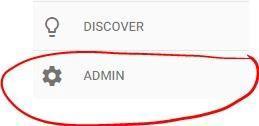
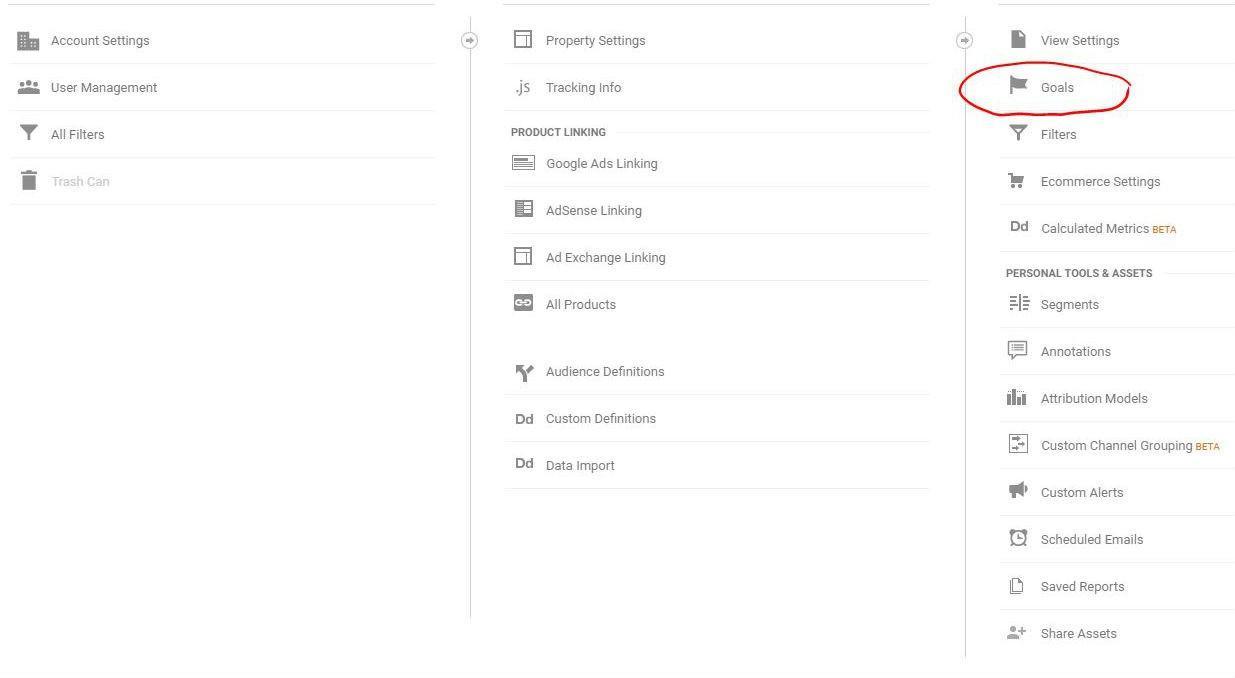
Google Analytics (GA) makes setting goals easy. Just click on “Admin” when you log into your GA account (located at the bottom left side of the screen), and then select “Goals” from the third column.

uEsjvufyqMLtciZADTxr36VwDyqxUoBSciumNxlkfo13aiN4BtRoaRyLbKExJ ObXjzzK nujLrvvBck
DhDySm JMtzVuetaDMk29elPuhWN01VDB1lRUHkpzgNh7 lCpSmZVQ18LpmcM7OusD15 aMOxA7TtrYcNv3RsaH1HsXslWLc NDL mgF0LV1dRGW4BRiigs 2HPuSIO2dZLydbYM

Image Source: Google Analytics


Set Realistic Google Analytics Setup Checklist Expectations

Understanding what you can realistically expect from paid media is as important as establishing goals. For example, less than 8% of B2B product sales are closed online compared with 15% of B2C products. So if you’re a B2B company that expects to close a majority of sales directly from your ads, then your digital media campaign will definitely disappoint you. There are a few ways to help set your expectations when it comes to paid media.

First and foremost — know your market and your customer. How many leads can you realistically expect to get from your advertising efforts? What kind of incentive does your customer respond to? What percentage of your market can you reach online with your given budget? All of these things factor into the hard numbers — total sales, total revenue, total leads (per week/month/quarter), etc.

Google and Facebook both provide tools to help you understand reach and cost prior to launching a campaign. Don’t be shy about using them, but always keep in mind that these are estimates — you’ll get a much better sense of what your expectations should be once you have actual data from a live campaign to review, so plan a two-to-three week learning period into your campaign timeline if at all possible.

One other way to help set expectations is to know what the key metrics are in your industry. Wordstream publishes benchmark reports that feature industry-specific benchmarks for four key metrics: clickthrough rate (CTR), the average cost per click (CPC), average conversion rate (CVR), and the average cost per action (CPA) on Google and Facebook.

These reports will help answer simple but important questions like, “What is a good CTR on Facebook?” (Spoiler: the average CTR on Facebook across all industries is .90%)

Since metrics can vary a lot depending on the industry, it’s important to familiarize yourself with your industry’s key metrics so you can set your expectations accordingly.


Set Up Google Analytics Audit Checklist Goal Tracking

Once you’ve established your goals, it’s important to have your tracking in place by the time you launch your media. This is relatively simple if you’re just running ads on Google since you can link your Google Analytics checklist and Google Ads accounts. Here are the high-level steps you need to take to do this.

Tracking Google Ads performance

  1. Make sure your Google Analytics admin login email and Google Ads admin email are the same.
  2. Navigate to the ADMIN section of Google Analytics and select “Google Ads Linking” from the center column beneath the “product linking” header.
  3. Select “New Link Group.”
  4. If your login emails are the same, you should see your Google Ads account in this section — select it to link the accounts.
  5. Log into Google Ads and turn on auto-tagging (under settings/account settings).
  6. Import your goals from Google Analytics into Google Ads. Here’s a four-minute video on how to do that.

Tracking Facebook Ads and other media

If you’re running Facebook ads, email campaigns, native advertising, or just about any other kind of digital media that contains a link back to your website or landing page, then you can tag your destination links with UTM code that will be tracked in Google Analytics. This enables you to monitor goal performance from just about any digital media campaign.

Note: Bing has an auto-tagging option that you just need to switch on and you’re done! Google’s UTM Builder is free and easy to use and makes setting up UTM codes a snap.

Tracking phone calls

There are many different types of businesses that get more phone leads than web-based form leads. Healthcare websites, sensitive topical sites like divorce lawyers and mediators, and B2B companies with complex products and services that have long sales cycles are just a few.

While you can track calls from ads easily in Google Ads, it’s advisable to use a company like Call Tracking Metrics. This company enables you to not only track each different media vendor separately but to also listen in on the calls so you can monitor lead quality and identify any issues with your ad campaigns that may show up on the calls (e.g., you’re offering a promotion that the customer service representative doesn’t know about).

Many call tracking tools include the ability to track phone calls as goals in the Google Analytics checklist (including Call Tracking Metrics). This is a great way to measure the effectiveness of your ad campaigns definitively by attributing calls directly to a given vendor.


Now You’re Ready for Launch

Now that you’ve gotten all the pre-launch preparation out of the way, you’re ready to launch your ads. You’ll be glad you set up goals and track when you’re sitting down to review your initial campaign performance armed with the data you need to optimize your campaigns and get the most out of your media budget.

If you would like help launching your next campaign, contact Mach 1 Design.[email protected] (469) 536-8478.

Why Customer or Client Reviews are Important?

client reviews

93% of customers or clients utilize reviews as their initial step in selecting a company, product, service, or professional organization.

Online reviews are trusted by 91% of customers or clients as much as personal recommendations since it has been dubbed that the new “word of mouth” is online reviews.

87% of customers or clients will not consider doing business with a company that has poor and low online ratings

It should come as no surprise that a legal consumer’s decision to hire you is influenced by their web reputation. According to research, by 2021, 97 percent of individuals will have viewed internet reviews as part of their purchasing process, and 85 percent will trust them more than recommendations from relatives and friends. It’s a digital world, where complete strangers help each other find a business, and where people believe a company with a big list of great reviews.

Word-of-mouth referrals are still powerful, but only for a small group of people who have a close relationship with previous clients. As a result, word of mouth is no longer sufficient to maintain a competitive edge in a saturated economy. Indeed, “online reviews are the new word of mouth.”

Online reviews help to broaden the reach of your reputation by giving more people access to the opinions of past customers, distinguishing you from the competition down the road. So, let’s look at where to get reviews and how to ask previous clients to rate your company.

Where and how do you get your reviews?

The short answer? Everywhere. While this may appear to be a worrying fact, it is correct. Reviews from different web platforms will reach your prospects regardless of where they are looking for a business. However, if you want to cut it down, concentrate on Google and Facebook, the two businesses that dominate digital advertising and where the majority of consumers end up after conducting a search.

client reviews
client reviews

Google

Google has built a reputation as the go-to destination for anything by consistently displaying the best relevant content for any search. And reviews have a significant impact on the results a consumer sees when searching for, say, a security system and alarm company in Denver, Colorado.

It is indeed safe to presume that there are several businesses in and around Denver. This is when customer reviews come into play. If everything else is equal between businesses A and B, a large number of favorable online reviews will most likely be the deciding factor when Google determines who to prioritize in a search.

Google understands that consumers are significantly impacted by ratings, and they want to work with a company that has a good online image. Because Google prioritizes Search Engine Results Pages, the more good reviews your company gets, the easier it is for local people to find your business online.

Facebook

It is also worth noting that Facebook and Google perform various functions for your future client. If consumers search for a business on Google, Facebook provides information about the business they’ve found. The majority of Facebook users are conducting a “branded search,” which implies they are aware of who you are, have done some research, and are now looking at your social media profiles for further information.

Facebook provides the proof people require before contacting your business, and that validation is frequently provided in the form of ratings. Your Facebook presence may be great in terms of postings, photographs, and videos, but it isn’t complete unless you have extensive feedback from previous clients.

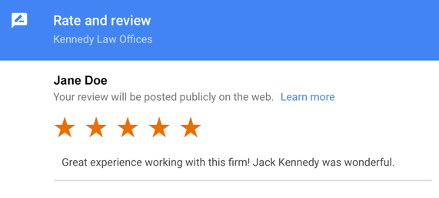
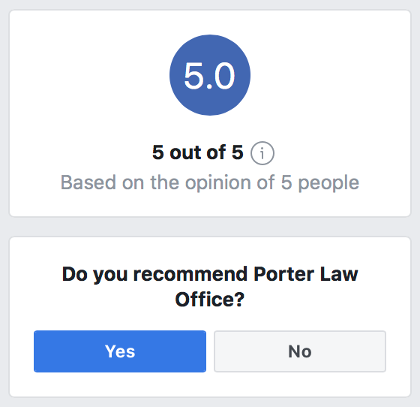
Ratings on social media are extremely effective since they are so personal. Unlike anonymous evaluations on search engines, Facebook places a name (and a face) behind a person’s opinion of you. In terms of how reviews are collected, Facebook differs slightly from Google. Instead of a five-star rating scale, they simply ask if they would suggest your company with a thumbs-up or thumbs-down. From there, a customer can fill in the blanks with information about their interaction with your company.

online customer reviews

Whatever method you use to collect reviews, keep in mind that they have an impact on your web reputation and are significant for legal consumers. People want to know about previous clients’ experiences, and they’re willing to trust the opinions of people they’ve never met.

Customer Rating

Aside from Google and Facebook reviews, customer ratings also play a crucial role in businesses. Customer ratings (CR) are among the most accurate quantitative measurements of customer satisfaction available. Customer evaluations have remained one of the most important elements that marketers use when assessing the performance of their initiatives. One of the measures included in basic statistics is the Satisfaction Rate. It calculates an overall percentage of how satisfied your respondents are with your products and services.

2022 Guide: The Importance of Online Reviews for Business

Welcome to 2022, when our purchasing decisions are dictated by the stars. Where a five-star rating is as valuable as a personal recommendation from an old friend, and anything less than three stars isn’t worth a second glance. Whether we like it or not, we are now living in the consumer-driven world of internet reviews. When researching a product or service, we almost always conduct an online search first. We click on whatever the search results bring up for us. We read reviews, we count the stars, and 90% of us base our purchasing decisions on what the reviews say.

Consumers trust internet reviews as much as they would a personal suggestion from a friend, according to 72%. Online reviews can be a tremendously beneficial tool for your company. Aside from the psychological impact they have on consumers’ purchasing decisions, they can also help enhance your local SEO results so that your business appears first when people search for a business in their region.

However, some business owners may be hesitant to ask their customers for online reviews because they fear that one negative comment may tarnish their online reputation. They prefer to have no reviews at all because they are afraid of straying from the specific picture they hope to project online.

What a blunder this is? Consider your online reputation to be a credit score. Bad credit is synonymous with a lack of established credit. No review is the same as a negative review. Consumers want to read internet evaluations for a burrito or a business, whether it’s for a burrito or a business.

Prospective customers want comfort regarding a company, so they look for business reviews before making a selection.

A Google Business Profile Is Key

In a recent survey, legal consumers were asked what they did after searching for a business on Google. Almost 30% indicated they would google a business review and read the reviews on a company’s Google profile, while little under 20% said they would read a review on another website. This demonstrates that Google is one of the most significant sites to have internet reviews for your business.

Although there are other review websites where customers go to make purchasing selections, Google should be a business’s first priority. Setting up a Google business profile is free, and it may be an excellent tool for generating leads.

How Google Reviews Benefit Your Business

Increased Online Visibility

Google monitors your company’s ratings and will increase your visibility based on the number of ratings you have. If you can amass enough ratings, you can propel your company to the top of Google search results, which display the first three businesses in the area that match a user’s search query. This is referred to as Google local pack because it is derived directly from the Google My Business database. Another reason why your company should have a Google business profile.

People Trust Google

A positive Google review has the capacity to persuade even the most doubtful buyers. A positive Google review, according to 74% of consumers, makes them more likely to trust a firm. Simply put, people rely on Google to be their one-stop internet concierge, advising them on what’s hot and what’s not.

Google Customer Interaction = More Leads

Google ranks your search results based on how much you interact with user reviews. So, before you assume you only need to answer to negative reviews, remember that you should also respond to positive ones. Google is watching and identifying active reactions.

Make it a practice to check your Google business profile every day and respond to every single review. Apologize when required and express gratitude when appropriate. Consider your Google profile to be a garden; in order for it to develop into a lead magnet, you must water it every day.

Increased Click-Through Rates

People will automatically flock towards your website if they check your business profile and see a good rating. As a result, your click-through rate will improve, allowing you to reach your target audience even more effectively.

Why Are Online Reviews of All Kinds Necessary?

Although Google is the optimal location for the majority of your internet reviews, other review sites can be useful as well. Whether your customers rate you on Google or Yelp, here are the reasons why online reviews are vital for your business.

Social Evidence

People are more likely to choose a company if they can discover a review that says it’s a smart investment. Social proof has a significant impact on sales and can be the deciding factor between choosing your company or a competitor. If a lead sees your company featured as a five-star review, they’ll feel it’s worth the hype. The more feedback you can get from previous clients, the more likely it is that others will want to deal with you as well.

Enhanced Visibility

Regardless of which review site you’re on, each has its own method of indexing information. The more customer reviews you have, the higher your business will rank on the platform. When you have a large number of positive reviews, algorithms favor your website as the authority, giving your business more visibility.

Trust

Trust is one of the most crucial qualities that customers look for in a business. People want someone to handle their case that they know they can rely on to do it well. Each time you receive a positive review, you boost your trustworthiness and appear more trustworthy. If your company has a plethora of positive evaluations, it will considerably improve people’s belief in you that you are the ideal person for their case.

Brand Awareness

Encouraging your customers to leave you a review will enhance the amount of time they spend talking about your company. If your consumers are talking about you online, you will increase your online presence and, as a result, your ranking. Encourage your customers to share their positive experiences on as many different review sites as possible, thereby expanding your brand’s impact across many channels.

Dealbreaker

Many clients will not purchase a service or product from a brand about which they are unfamiliar. Approximately two-thirds of shoppers rely their final purchase choice on online reviews. So, for those customers who need to examine online reviews before making a final selection, you must ensure that your company appears first by providing a consistent supply of online evaluations.

Boost of Sales

There is a lot of data out there that shows that online reviews have a substantial impact on your bottom line. According to a Harvard study, boosting your star rating can result in a 5 to 9 percent increase in sales, demonstrating that even a minor improvement in your rating can have a significant influence on your revenue.

Customer/Client Relationships are Enhanced

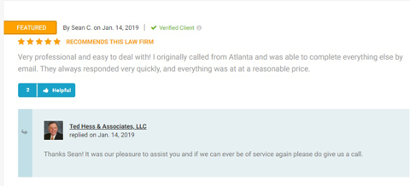
Many businesses make the mistake of assuming that they only need to reply to bad reviews, which is simply not the case. Reviews are an excellent method to develop your customer relationships by reacting to both positive and negative criticism. Reviews allow you to reinforce excellent experiences by thanking your past clients and keeping an open channel of communication open, while also acknowledging where you have the potential to grow.

customer rating
customer rating

Giving individualized responses to comments means you’re putting a human face on your company. It’s appealing to potential clients if you have an open-to-feedback demeanor. A pleasant online demeanor in response to both positive and negative evaluations can do wonders for your reputation.

Encourages Development

Any wise company understands that there is always room for growth and improvement. Observing your consumers’ positive and negative online experiences might provide you with a deeper understanding of what they genuinely desire. If you only get one or two reviews addressing a certain issue, it’s generally not a significant deal. If, on the other hand, you notice the same issues cropping up multiple times in succession, you know it’s time to make a change.

You may make improvements where appropriate by using your customers’ experiences as information, and each review can be used as a stepping stone towards becoming the best you can be.

How to Handle Criticism

One of the most prevalent reasons why businesses are cautious to encourage internet evaluations is because they don’t want negative feedback circulating online and perhaps ruining their reputation. And, while your initial thought when you discover a poor review of your company would be, to take it down or file a defamation suit, that isn’t always the best solution. A review that contains outright inaccurate material may be considered defamation, but the question is a legal battle worth it?

Take a deep breath and try the following if you receive a bad and poor review.

Approach Professionally

Nothing seems more unprofessional than a company responding aggressively and defensively to a negative online review. Worse yet, not answering at all. Instead, respond professionally and politely, inviting the dissatisfied consumer to contact you individually, taking the conversation away from the public glare.

When answering, always make an appropriate apology if necessary, and make it clear that your primary purpose is to find a settlement. Above all, make certain that a client’s matter is kept private. If your company fails to maintain confidentiality in its response, it may cause more problems than just your online reputation.

Encourage More Positive Feedback

Since you can’t delete negative remarks, the next best thing is to drown them out. After professionally responding to a bad review, wash it away by transforming it into a minor part of a larger whole. You accomplish this by promoting more and more reviews.

If the bulk of your internet reviews are positive and there are only one or two unfavorable reviews, the negative reviews will normally be ignored. So, don’t be scared to get positive feedback from your satisfied customers in order to mitigate the unfavorable ones.

It’s as simple as sending an email to your customer at the end of their case. If they had a good experience, chances are they’ll be happy to give you one or more favorable evaluations online. It doesn’t take much persuasion for a satisfied customer to spread the word about their positive experience. You might even want to consider establishing a review landing page on your website to make it easier for clients to leave reviews.

It is crucial to note, however, that several review services, such as Yelp, explicitly say that businesses should not directly urge customers to leave reviews. So, before requesting a client to review you on a specific site, be sure you’re conversant with the legalities.

Online Reviews: A Critical Part of Clients Decision Making Process

As we approach 2022, it is clearer than ever why online reviews are so vital for businesses. Reviews will continue to be vital for clients looking for a business, therefore it’s time to prioritize online reviews as part of your organization’s marketing plan. To establish a five-star reputation for your company, you must provide your consumers and clients a cause to post a positive review.

One of the most effective methods to accomplish this is to use legal software to automate your operations. Drip marketing for businesses, two-way SMS text messaging for businesses, and automated appointment scheduling all give each client the sense that they are your only client. Another option is to incentivize your workers, who interact with customers more than you do with clients, to solicit positive feedback from them whenever they speak with them.

A common misconception among businesses, particularly professional services organizations, is that you only earn a great review when you generate a huge win with a big check. That is not correct! Excellent feedback on your employees, communication, promptness, thoroughness, quality of service, how kind your staff is to them, how they feel handled, does our staff regard them as important, how else did we help them? Are our product and experience excellent?

At the end of the day, it is important to keep in mind the importance of customer feedback, whether it is a Facebook or Google review, whatever content put out online via customers can affect the reputation of a business. Analyzing client reviews helps your organization understand overall customer satisfaction because they can provide your firm with input on what your customers genuinely desire.

6 Important Small Business Digital Marketing Trends

digital marketing trends for small businesses

Why Start Implementing Marketing Trends?

Innovative strategies for gaining a competitive advantage and propelling your organization forward is the new trend for small businesses to adapt. Due to the sheer versatility it provides, major firms now embrace digital marketing. When done correctly, it is both cost-effective and methodical. And, without a question, it is the most effective approach for small firms to obtain a competitive advantage nowadays.

The world of marketing moves at the speed of light. Marketers embraced digital transformation more than ever before as they reacted to ever-changing virtual and hybrid business landscapes. To further understand, what really is a marketing trend? It is the process through which businesses adjust their business models, goods, and internal structures to new, digitally-driven consumer trends. In marketing, this digital transformation entailed organizations shifting their marketing mix to include more digital channels, such as shifting away from print advertising and toward social media. 

In 2021, total digital ad spending is expected to exceed $389 billion. Staying current with trends and utilizing the most up-to-date equipment is critical to the success of any business. Here are some digital marketing trends that every small business should be aware of:

1. Take Advantage of Artificial Intelligence

Today, Artificial Intelligence (AI) is the route ahead in terms of adopting digital marketing techniques. For one thing, it provides better insights into client behavior as well as more reliable information for better decision-making.

To acquire deeper insights, a small business can now evaluate client or target customer data. Then, try out alternative tactics and see if they work with measurable outcomes. Personalized, personal, and relevant messaging help to effectively promote what a small business has to offer.

2. Engagement via Live Videos

going live marketing trend

Popular brands make extensive use of live videos as a potent marketing tool. Small companies, such as local bakeries and restaurants, can also benefit from this marketing trend as well. Now is the perfect time for new businesses to go live and connect with their target audience on a deeper level. For live videos, social media networks such as Facebook and Instagram are the go-to options for more engagement. 

One of the biggest perks of going live is getting to know customers and connecting with them on a more personal level.  Interacting with followers and customers can help a business establish authenticity and develop a level of trust among them. Customers who can identify with the business from which they are purchasing are more inclined to return in the long run.

3. Social Media Marketing 

social media marketing

Social media has proven to be a huge boon to digital marketing throughout the years. Social media marketing can be simple and inexpensive. It’s also straightforward. A small business may get started with just a company profile on Instagram or Facebook. Attracting new clients and followers becomes easy once posts are started to be uploaded on a regular basis. For increased visibility, it is recommended to automate social posting and repost previous blogs.

A small firm can gain deeper insights into user demographics and target consumers accordingly with effective social media marketing. Using trending hashtags can also assist enhance the reach of your posts – use posts to showcase products and sell what a business has to offer for additional exposure.

4. Utilize Socia Media Stories

social media stories

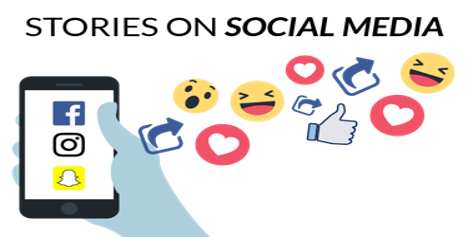
Tell an interesting story as people enjoy stories, and well-known brands use storytelling to market their products and services. Instagram has noted around 500 million active users on a daily basis. But with such a figure, the question is, are you interacting with them? Social media platforms promoted the stories to a wider audience and this can be accomplished through the use of blog entries, vanishing stories, polls, live sessions, and podcasts.  If readers like what a brand is saying, it will likely receive more If readers like what a brand is saying, it will likely receive more conversions.

It is also one of the more effective techniques to capture the interest of potential buyers. A brand must communicate with them and learn about their likes and dislikes, then explain what your brand has to offer and how it can benefit them. Personalization increases conversions.  Facebook is also a wonderful medium for small businesses to tell their brand narrative. Furthermore, a business may sell things on Facebook’s Marketplace and use the data to analyze customer trends.

5. Geofencing Technique

geofencing techniques

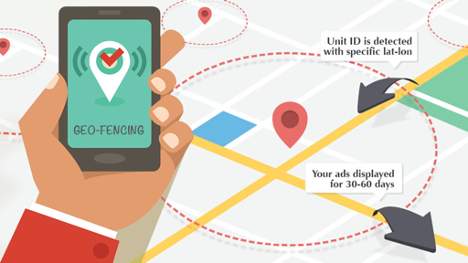
Geofencing is a very successful method of acquiring clients based on their geographic location. Geofencing is a location-based service in which an app or other software uses GPS, RFID, Wi-Fi, or cellular data to activate a pre-programmed action when a mobile device or RFID tag enters or exits a geofence, which is a virtual barrier set up around a geographical area.

This is a wonderful option if your business caters to a local audience, as it increases brand awareness the smart way. You can instantly attract potential clients by using sophisticated pop-ups, like A/B testing and the use of user mapping tools can both be beneficial.

6. Locally Targeting Ads

local ad targeting
local ad targeting

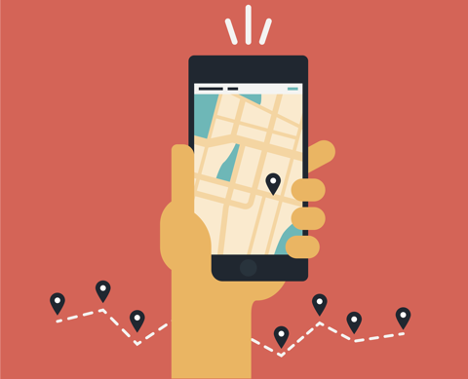
Before becoming global, businesses must first go local, and the first step is to target local clients. One method is to target local ads, which is one of the most efficient digital marketing tactics for small businesses. This will enable the link between customers and local businesses that may be of interest to them.

It is recommended to keep up with the latest trends and t Try out new approaches to see what works and what doesn’t. Do not be afraid to experiment with new platforms and techniques to better target your audience’s demography.

Why Now?

Every year, we discover new and surprising digital developments that create the groundwork for marketing’s future. Even in a tough year like 2021, we have not yet been let down. If anything, digital marketing trends in 2022 are expected to be some of the most ground-breaking ever, and this is why small businesses should adopt these digital marketing trends right now and utilize how powerful these are in growing their business.

2022’s Latest Blogging Trends and Statistics

digital marketing trends

In the world of content marketing, it’s no secret that blogs can be extremely successful. Every month, over 409 million individuals read blogs, increasing brand visibility, consumer trust, and the possibility of positive results. Furthermore, blogging increases the number of indexed pages by 434 percent and the number of indexed links by 93 percent.

For your business, this means increased inbound traffic and repeat consumers. What’s not to appreciate about that? However, each month, 8.2 million blog entries are published around the world, and the talent pool is only rising. To be competitive, you must stay current with the latest blogging trends and content marketing tactics. Here are some of the most important blog trends to watch this year, as well as quick and easy ways to incorporate them into your blog strategy.

What is blogging?

Blogging is a collection of abilities required to run and manage a blog. This comprises providing a web page with tools and software to facilitate the process of writing, posting, linking, and sharing content on the internet. Writing, photography, and other forms of media that are self-published online are referred to as blogging. Blogging began as a way for individuals to post diary-style entries, but it has already been incorporated into many businesses’ websites, nowadays ranging from travel to product reviews, and anything you can think of. Blogging distinguishes itself with regular updates, informal language, and possibilities for readers to engage and create a conversation.

What is a blog?

The term “blog” is a shortened version of the term “weblog,” which allowed early internet users to “record” the contents of their day in diary-style posts. Because blogs frequently allow users to comment, as they got more popular, communities sprang up around prominent blogs. As with most internet-based breakthroughs, many entrepreneurs saw marketing possibilities in having a blog, and the adoption of blogging among the business sector helped to enhance the medium’s appeal. A blog can not only be used to market a business but it can also be utilized to start a home business in its own right.

Who are bloggers?

A blogger is someone who manages and runs a blog. He or she expresses his or her viewpoint and knowledge on various themes for a certain audience. Bloggers have recently become well-known for a variety of reasons. For many people, blogging has become an alternative career or a side hustle. As a result of this, an increasing number of people are opting to join the ranks of bloggers. So, who exactly are bloggers? Bloggers are people who enjoy sharing aspects of their lives with you. They provide articles on a variety of themes, including arts, home design, woodworking, and money. Bloggers are mobile and do not need to be in one spot all of the time. They exist solely on the internet.

Average Blog Post and Blog Post Length

Although the length of an average blog post will vary based on your topic and readership, it is usually preferable to aim for 1,500 to 2,000 words for articles or posts. Longer pieces appear to do better in terms of ranking on SERPs. While some swear by blogging every day, there is a definite sweet spot for posting frequency. Most experts agree that writing an average blog post two to four times a week is the most effective way to increase the reach of your content.

What Constitutes Decent Blogging Traffic Stats/Statistics?


Blog entries with 1,500 to 2,000 words are recommended by experts (Databox, 2020). These key blogging traffic stats can help you plan your content. Over the last seven years, the average blog post length has increased, rising from 800 words to over 1,200 words.

Interesting Blogging Statistics

By further reading some blog statistics, you may gain inspiration for why do blogging this year. To gain wider insights and perspectives about blogging, you may want to check cool and interesting general blogging statistics here.

Million Blog Posts

Blogging is one of the most uncommon and lucrative ways to make money. There is no doubting that achieving this level of success in blogging requires hard effort, yet the right person with the right concept can earn millions of dollars while writing. There are a few things you need to do to become a wealthy blogger through crafting perfect million blog posts.

Visual Content is the first blogging trend.

Without mentioning the importance of visual content, no list of blog trends would be complete. There’s no denying that this is becoming increasingly popular. According to studies, even three days later, readers can recall 65 percent of the visual post they’ve seen. That’s a significant boost to your brand’s visibility and loyalty. Design and interactivity become more important as blogs become longer and more informative. Readers can skim text without having to read it all the way through by using visual posts. Only 16% of web readers read information word for word. The rest are scanning for information that is both rapid and efficient. If you want your readers to stay on your page, be engaged, and share your material on other platforms, you need to keep them there. Simply adding graphics, will make your material easy to skim and recall.

Trend #1: Including images in blog posts.

Adding images and videos to your content breaks up long blocks of text and gives your readers a fresh, responsive method to interact with it. Although it is usually preferred to include original content in your blogs, stock photography can be handy when creating an entertaining blog. An infographic, for example, allows users to quickly ingest information without having to read the full text. Similarly, video content is another of this year’s top blog trends, as it allows readers to connect with your pieces more engagingly. People view an average of 2.5 hours of video material every day, according to Wyzowl surveys, so including video content in your blog is a wonderful way to maximize the time spent on your sites.

Trend #2: Affiliate Marketing is the second most popular blogging trend.

The use of affiliate marketing links in your blog material is another key aspect of today’s blog trends. Outside of your website, it allows you to create an ongoing sales funnel. If you own a B2C firm, for example, you might engage a blogger to publish a review post about your product. You may then give their followers a discount if they purchase it through that post. This not only expands your profit reach but also exposes you to new audiences. In the United States, blogs account for more than 40% of all revenue, earning marketers an average of $65,800 each year. It’s no surprise that this is one of the year’s most popular blog trends due to the revenue some get from it. So, how can you use this approach to your advantage?

Trend #3: Consider affiliate marketing methods when you’re developing your blog.

Whether you’re mentioning a product or service, investigate if the company has any affiliation programs. You may accomplish this by searching for a product + “affiliate program” on Google. It’s always preferable to go with a product you’re familiar with and enjoy selling because your success will be determined by how well you sell it.  A sales pitch, on the other hand, is something no one wants to read. A successful affiliated blog should be instructive and helpful, with additional blogging methods such as SEO and visual material thrown in for good measure. It is also worth noting that the Federal Trade Commission (FTC) requires you to declare any affiliate programs you participate in, which you may do with a simple byline in your post.

Trend #4: Critical Readers

Because the public impression of online material is evolving, one of the more relevant blog trends nowadays is to include critical readers in your audience pool. Readers are less ready to believe anything that isn’t trustworthy, thanks to words like “fake news” and more competition for content. Today’s reader wants confirmation that your information is truthful and balanced. and not just a by-product of content marketing. They want you to publish and back up your arguments with citations, references, and figures. You should also keep in mind the vast amount of content available on the internet. Every year, more people and businesses join the blogging world. You must write and publish content that is both validated and well-sourced to stay competitive and maximize your SEO.

It’s critical to publish and provide information that is logical, truthful, and of high quality, with reputable sources and consistent citations. Making unsubstantiated claims is a surefire way to lose readers. Furthermore, bad sources might have a detrimental impact on your SEO and overall page authority. When writing for critical readers, here are a few pointers to keep in mind:

  • Create truthful content that is backed up by credible sources.
  • Cite sources with backlinks or include them as footnotes.
  • Don’t make any statements that you can’t back up. 
  • Never make a promise you can’t keep.

The most important thing to remember is to avoid writing anything that isn’t true or can’t be verified using reliable sources. Your business could suffer a significant setback if you lose your credibility. Stay informed and improve your brand integrity by providing honest blog content.

Trend #5: Writing in a Mobile-First Format

Blog trends often come and go, but mobile-first formatting is here to stay. Everyone nowadays reads the internet on their phone.  From news articles in your Facebook feed to swipe-up blogs on Instagram, your consumers are constantly surfing the web from their phones. It is crucial that a website, blog, and any other digital content created is optimized for mobile and no one wants to click on an article only to have it pixelated or cut off on their screen. If you don’t have mobile optimization set up, you risk readers logging off before they have a chance to read your content. A study from Small Biz Genius shows that 88% of consumers won’t return to a website if they’ve had a bad experience.

When creating mobile-friendly blog content, it’s important to consider how your content will look on a mobile screen. One sentence on a desktop screen can look like a paragraph on mobile. Therefore, breaking up your paragraphs, using short sentences, and ensuring your website is optimized for mobile are very important. Here are a few other points to consider:

  • Make navigation as easy as possible.
  • Make your content easy to scan.
  • Ensure the on-page loading time is fast.
  • Use a mobile responsive web theme.
  • Do not use text wrapping for images.

As always, writing content that is simple, accurate, and concise can improve your overall mobile accessibility.

blogging trends

Trend #6: Estimated Reading Time

Another recurring theme in modern blog trends is estimated reading times. Estimated reading time can improve reader engagement by setting up their expectations from the start. If you know a blog takes 15 minutes to read, but you only have 10 minutes before your next meeting, you might save that blog for another day. Likewise, if a blog takes two minutes to read, you may get excited about the convenient length of the article and open it right away. Tempesta found that readers were 40 percent more engaged with blogs that included an estimated reading time, especially for longer blog posts. What’s more, search engines factor in estimated reading times when determining your rank. The longer your users dwell on your page, the better your chances are of looking authoritative to search engines

The average reading speed of most adults is 200-250 words per minute. To estimate your blog’s reading time, divide the number of words in your article by 200 or 250. Always round up your number when estimating reading times. For example, if your blog takes 1.7 minutes to read, estimate 2 minutes. This ensures your reader’s expectations are met and increases the likelihood that they read your entire blog. You can also use online calculators, such as Read-O-Meter or Decimal to Time Calculator, to help you. Some web hosting platforms, such as WordPress, have plugins available to estimate the reading time for you.

Trend #7: TL;DR Summary

One of the latest blog trends you shouldn’t miss is the “too long; didn’t read” summary. Commonly referred to as TL;DR, these summaries act as an abstract of your blog, giving readers the most important information without making them skim, scan, or read through the entire piece. This point is important in blog trends as we continue to see global attention spans drop. A study by Microsoft found that global attention spans have been declining since 2000, with the average person’s attention span now resting at a mere eight seconds according to them.

By including a TL;DR summary at the start of your blog, you can appeal to the new generation of online readers. TL;DR summaries can also have a positive impact on your SEO, as they answer questions for readers clearly and distinctly. For example, if a customer is looking for a consulting service, they don’t want to read an entire post just to get to the recommendations at the bottom. If you include your TL;DR at the top of your post, search engines can use that as the summary in search results as well (but there’s no guarantee that they will). Answering user questions right off the bat can improve your ranking and get you more clicks.

Adding TL;DR to Your Blog Posts

Your TL;DR should be the first thing your users see. You can include this as a bulleted list or a paragraphed summary at the top of your blog post. Always have a catchy headline in your TL;DR to engage your reader and draw attention to your piece. Similarly, your points should be succinct, clear, and short. Don’t write an entire essay in this space. If you find a TL;DR formula that works for you, keep using it. Having a standardized format throughout your blogs will make your content consistent and reliable. There are also online tools now offering TL;DR services. 

FAQs on Blogging Trends

Is blogging a dying trend?

Although consumer preferences are leaning towards visual posts, blogging is still a perfectly valid content marketing strategy. Using images, videos, graphics, and infographics in your blog post will help you engage your audience, increase retention times, and meet all audience tastes. 

Are blogs still popular in 2022?

Blogs are incredibly popular and are a great tool for many writers and marketers who want to position themselves as industry experts. Right now, there are around 600 million blogs live on the internet.

How is blogging used in marketing? 

Blogging when combined with SEO optimization can help websites increase their traffic. This leads to more brand exposure and allows content marketers to control brand perceptions. To this end, blogging has become a key part of many sales funnels – and efficient CTAs can engage and motivate audiences to sign up to mailing lists or even buy products.

Need Blogging Trends Advice and Idea?

Now that you know some of the latest and greatest blog trends, how will you implement them? If your goal is to create a better content marketing strategy, you should be including most, if not all, of these trends. If your goal is to improve your SEO, you may want to focus on mobile-first formats or content.  Ultimately, tapping into each of these trends can open up opportunities for new success.

If you want help setting up your blog, utilizing these new trends, or producing blog content, let us know, email us at [email protected] or call (469) 536-8478tel:(469) 536-8478.

29 Things to Ask Potential SEO Clients

seo client questions

Are you showcasing your SEO knowledge? Asking most (or all) of these questions will demonstrate to your potential SEO clients that you know what you’re doing.

So you want to get some new clients? Check to see if you’re asking enough – and the appropriate questions. That may appear to be counterintuitive, yet consider this:

There’s a significant probability that your company doesn’t realize the true potential of SEO or why it’s so important to their overall business plan.

According to Clutch, only 36% of small businesses (the most frequent type of organization) have an SEO strategy in 2019. At the same time, Forrester discovered that 71% of consumers use search engines first when looking for new products or services. That implies that 64% of small businesses are missing out on the single most effective way to get their products and services in front of clients. 

Defining and communicating value is your job – and your competitive edge. Here are 29 questions to ask potential clients to start their wheels moving on how SEO might improve their firm while also demonstrating your expertise:

Collecting the Information

There’s a tendency to avoid asking too many questions for fear of irritating the client before you’ve even gotten your hands dirty. That is a blunder. SEO has become more connected and intertwined with corporate strategy than ever before. (Content marketing, anyone?) If a company isn’t harmonizing these, then the most advanced SEO tactics won’t work. If you don’t ask enough questions at the start, you won’t have a good understanding of what a firm needs to flourish in the SERPs. So, ask now to avoid an awkward conversation about your numbers later. Some of these questions can be asked in person, over the phone, or via Skype or Zoom.

Other questions, such as those needing thinking or length, should be given to the client through email so that they can provide feedback at their leisure. There are numerous methods for gathering this type of information. You may experiment with Typeform, Google Forms, or Survey Monkey. I like to use Google Sheets to keep things as simple and quick for the client as possible. Why? It’s simple to share the URL.

Once you’ve prepped your information gathering vessel, you’re ready to set sail on a voyage of discovery. The first round of questions is for potential clients. Listed below are some questions to ask once the client has signed on the dotted line.

1. Can I Have Access to the Following?

It is always a fascination to gain access to these tools as soon as possible.

  • Website CMS
  • Blog CMS
  • Google Search Console
  • Google Analytics
  • Google Ads

Potential clients may be hesitant to give you access to all of their accounts right away. If they are, explain why it is significant. Some of my favorite lines are:

  • Creating an SEO plan without data is akin to playing pin the tail on the donkey.
  • The easiest approach for me to figure out what’s going on in your ranks right now is to have a comprehensive view of the business from the ground up.
  • It will help me understand what we need to do to bring you to where you want to go.

You might also offer to sign a non-disclosure agreement (NDA) for their peace of mind.

2. What Are Your Main Goals & KPIs?

You will probably have a solid concept of what their objectives and key performance indicators (KPIs) should be. However, candid responses to this question can be illuminating. This data will provide you with the discussion points you need to help the customer understand whether their goals and KPIs are realistic and attainable.

3. What Is Your Current ROI & Goal ROI?

Some businesses will be stumped as to how to respond. That’s OK, but if they do, you’ll have an excellent idea of how well they’re doing with their existing setup and how much you could enhance it. Attempt to determine their average customer acquisition cost, ideally broken down by marketing channel. This may reveal the need for a conversion tracking review and audit, which you should include in your proposal.

Tip: In addition to conventional conversion tracking, ensure that phone calls are tracked as well.

4. Who Is Your Ideal Customer?

Learn about the important demographics and psychographics. When you get your hands dirty with your research, you can come upon a completely new target consumer in an untouched market. Then they’ll warmly welcome you to the squad.

5. Which Countries are You Targeting?

If the potential client intends to dominate the world, you should hone in on their top geolocations. This could provide fodder for discussion about your agency’s multilingual SEO services if you offer them.

Tip: If your client is targeting a certain country, such as the United Kingdom, make sure to advise that they reflect it in Google Search Console.

Giving a helping hand at this point will go a long way toward establishing trust and ensuring the client chooses you over your competition.

6. What Is Your Main Unique Selling Point?

This is probably something you can figure out for yourself. If something is confusing, ask. It is recommended to find out what the client believes distinguishes them from their competition. This frequently leads to important insights about the industry in general, which can aid in the development of your strategy. You might discuss how they can better use their USPs as part of your consulting package. Consider the following questions:

  • Are they utilizing USPs in their metadata to increase CTR from SERPs?
  • Is the content on their landing pages emphasizing their unique selling points?
  • How can you assist them in capitalizing on their distinguishing characteristics?

7. Who Are Your Main Competitors?

You’ll have done your due diligence, but it’s always a good idea to find out who the customer believes their competition is. In other circumstances, these may be firms that you were unaware of since they were not competitive in the SERPs. Gathering this data allows you to add more benchmarks and educate the customer on who their true SEO competition are based on the data you have acquired.

8. What Other Marketing Verticals Are You Investing In?

Determine the type of marketing mix they have in place. Ideally, you’ll want to know how much money they’re putting into each vertical. Obtaining that kind of information before the start of your collaboration is like pulling teeth. There’s also a chance they’re unaware. Inquire about how much money they are putting into traditional marketing, such as newspaper/magazine advertising. It’s always fascinating to see how many organizations continue to commit to (nearly) unmeasurable verticals.

9. Any SEO Agency Before or Currently Worked With?

Knowing who was in charge of the SEO show in the past might provide you with some insight into what has been going on and the standards at which it was delivered. It’s also useful to know if this is their first step into the world of SEO. In that scenario, you should consider contacting the previous agency/freelancer and asking them a few questions about working with the organization.

10. Any SEO-Related Documents We Can See?

Inquire whether the company can email you any old SEO docs that they or someone else has been working on. This could involve

  • Keyword research
  • Performance reports and metrics
  • Strategy briefs
  • Old editorial calendar

11. Have You Ever Had a Google Penalty?

You will soon find out if you gain access to their Google Search Console. Still, inquire whether they have ever been subjected to a manual penalty. Most of the time, they’ll know if they have one, but take great attention if you find one that they aren’t aware of. A Google penalty isn’t the same as being affected by an algorithm update, but it can seem the same. Pay notice if they mention anything like an “algorithm penalty,” which isn’t a thing, but if their website has triggered an algorithm, you’ll need to address that in your plan.

12. What Is Your Level of Understanding to SEO?

It’s a difficult question to answer, but I like to try to judge potential clients’ level of expertise in SEO. Knowing how much they know will allow you to communicate effectively with them. The realm of SEO does not have to be intimidating to people who are unfamiliar with it. Do everything you can to explain the complexities in simple words, and you’ll have a client for life.

 13. Do You Own Any Other Domains or Subdomains?

It’s always a good idea to find out what other web assets a customer has and whether or not they want you to work on other sites as well. If you’re aware of what’s available from the start, there shouldn’t be any awkward talks later on when the customer says, “Hey, I’ve got this other website.” Can you do the same thing on that site under the same contract? ”

14. Do You Have an In-House Developer?

This one is dependent on whether you intend to make all technical modifications yourself. If that’s the case, and you intend to include the amount in the contract, there’s no problem. However, if you are providing consulting and passing the task on to the customer to implement, you need to ensure that they have capable hands in-house. Be open and honest from the start, and discuss how these technological changes will be handled.

15. What Level of Support Will We Have From the In-House Team?

Aside from the developer, you’ll want to know who you’ll be working with and whether they can commit enough time to make the collaboration work. Take advantage of this opportunity to learn if they have in-house writers, designers, or even digital marketers who will be involved in the cooperation. This information also assists you in determining how much to charge for authoring and designing assets for the content marketing portion of your SEO contract.

 16. Are You Working With a PR Agency?

That’s fantastic. This will assist you in obtaining high-quality links. Wherever feasible, try to collaborate directly with the PR agency and assist them in offering their service with SEO in mind. It’s a difficult line to walk because many PR agencies are now attempting to perform SEO and vice versa. 

17. How Many Times Has the URL Structure Changed?

This may appear to be a little detail, but URL architectures are quite important in SEO. When they changed the site, the customer may have updated the link structure for their blog or redesigned the hierarchy. In that instance, some follow-up questions to consider are:

  • Do you have a record of the adjustments and the 301 redirects?
  • Is the site being checked for broken links?
  • What is the rationale behind the existing URL structure?

18. On Which CMS was the Website Built?

WordPress is used to power 37.8 percent of all websites. However, don’t assume this is what your client is using. It’s a good idea to know ahead of time how SEO-friendly the back end will be. If it’s a custom build, make sure it has all of the necessary features for the on-page optimization you’ll be doing. If it’s a complete shambles, now is the time to discuss an improvement.

19. How Many Times Has the Site’s CMS Changed?

Perhaps they began with a CSS site, then moved on to Wix, then to Drupal, then moving on to LightCMS just before it shut down and they were forced to adopt WordPress at the end. That’s analogous to putting something through the wringer. It has the potential to wreak havoc on URL structure, file architecture, and other aspects. However, the older the site, the more likely it has undergone a few changes. Knowing its history may be useful when trying to figure out why the content is organized the way it is.

20. Are There Any Plans for a Website Redesign?

Assess whether a potential client’s present website is conversion-worthy before working with them. If it’s more out of date, it’s unlikely to convert. In that circumstance, no amount of SEO will improve their performance. If the design is problematic, inquire whether an upgrade is in the works. Even better, if you provide design services, include them in your pitch. You should be aware of the importance of the site is not mobile responsive.

21. Do You Have Any Other Offices Around the World?

Knowing this can help you determine whether or not you require local SEO. While you’re at it, check to see if they have Google My Business set up. Consider what kind of optimization you might be able to recommend there.

22. Do Changes Need to be Approved By Legal Before They Go Live?

Nothing is more frustrating than missing a deadline due to bureaucracy and red tape. Learn about their internal process. Always make ideas that allow as much autonomy for the SEO team as possible. The more flexibility you have, the faster things get done and the results come in.

23. Have You Experienced Any Abnormal Gains & Losses Over the Past 3 Years?

This may appear to be an odd question to ask, but it can provide a wealth of information on the general health of the business. Responses have been all over the place over the years, making this a nice eclectic question to slip in when the time is perfect. Some answers may include:

  • Web traffic abruptly increased or decreased, indicating that either something worked out or something broke.
  • I’ll want to explore landing a significant client and see what SEO I can leverage around it.
  • Taking advantage of legal action initiated against competitors.

24. Is the Business Seasonal?

Did you know that retailers generate at least 16.7% of their annual income between November and December? This figure can be as high as 26.7 percent in the jewelry industry. Other industries have different “seasons,” and knowing whether your organization is dependent on seasonal or holiday-related trends can influence your SEO strategy.

25. How Involved Would Be?

This is something you should mention in your proposal. The client must understand that they must invest some time for the collaboration to be successful. Get a sense of how self-sufficient you can be with your career. You’ll undoubtedly want to show them all the wonderful things you’re doing, but if you can establish the tone early on about how much freedom you have to get the work done, it will make your life easier in the long term.

26. Do You Have Any Guidelines?

Get some if they have any. Brief the team and ensure that everyone is aware of the company’s idiosyncrasies. Then you may sleep soundly knowing that no one will say or do anything inappropriate while representing the brand.

27. Do You Have a Specific Writing Style?

This is related to the brand guidelines. It’s a good idea to speak with any in-house copywriters and pick their brains on the brand tone. Make sure you have a strong team of writers that are familiar with your new client’s industry and provide them with a short brief. As SEO and digital PR blend more and more, having a creative writing arsenal on hand has never been more crucial.

28. Do You Have Any Design Assets We Can Have Access To?

Get complete access to everything. Images, logos, fonts, brand colors, and so forth. Most businesses will have a “brand book,” which should be kept in a centralized location that every member of your staff can access via a single URL.

29. Do You Have Any Partners Who Would Be Willing to Link to Your Website?

Who knows, you might be missing out on some fantastic link-building possibilities right under your nose. Most businesses have developed relationships with other businesses and organizations through time. Check to see if you can connect to their network and get some direct links back to the client’s domain. Wouldn’t that be a terrific place to start?

Actions Required for Ultimate Client Discovery

Here are some measures you can take as part of the client discovery process to ensure your research is as thorough as possible.

  • Perform a technical SEO audit.
  • Pages from their website/blog should be read.
  • Experiment with their sales funnel.
  • Sign up for their newsletter.
  • Examine your competition.
  • Look into their personnel on LinkedIn.
  • Speak with a few members of their team.
  • Examine their social media presence.
  • Read the reviews and talk to their customers.
  • Set up mention tracking and monitor what people are talking about you.

Knowledge Is Power

If you ask all of those questions, you should have a strong understanding of the company, how it operates, and what its SEO needs to do to bring it where you and your potential client want it to go. There is a propensity to avoid assigning additional labor to potential clients. You don’t want to irritate them, but it’s also risky to try to devise a strategy while operating in the dark. That is why you want a sophisticated information-gathering system.

What you can, research; what you can’t, ask. Impress your prospective client with your attentiveness and observation skills, and they’ll remember you when the time comes to pay for SEO services.

9 Tips to Create Highly Engaging Content

Create Highly Engaging Content

Producing content can be done by anyone nowadays.

However, this does not mean that you’re producing quality content. There could be content without a purpose that is not effective. You need to consider the goals of your content marketing strategy. In doing so, you have to consider how to write engaging content that would also allure the audience.

Whatever that answer is, your content needs to be engaging if you want to accomplish those goals. Therefore, before going on through how to create engaging content, it is best to familiarize ourselves, with what exactly is considered engaging content.

What is engaging content?

It all depends on whom you ask and how it’s measured. For me, engaging content is all about getting results, such as:

·   increase in traffic

·   clicks

·   opt-ins

·   conversions

·   sales

·   comments

·   likes

·   mentions

Any of these metrics can be used to measure engagement when you make content.

Here’s something else to keep in mind. If your content doesn’t engage your readers, they simply won’t consume and retain the information. This will end up being a big waste of your time, money, and resources.

Don’t get me wrong. I’m not saying it’s easy to successfully create engaging content.

If you’re currently putting outposts, images, and videos that are average at best, it’ll take some more effort on your part if you want to see some results.

But it’s worth it. If you put in the extra effort to focus on improving your content marketing strategy, it will ultimately help your business make more money.

Not sure where to start? That’s what I’m here for.

Here are the top 9 tips for producing engaging content for your audience.

1. Be original

Today, it’s tough to make content that’s 100% unique.

There is probably someone else out there who is talking about the same thing, took a similar photo, or conducted similar research. That’s okay.

The idea is to produce content that stands out. With so much competition, it’s no surprise that producing engaging content is the biggest challenge for marketers:

How can you overcome this? Be original.

Yes, you can still blog about a topic that’s been previously discussed. But don’t write it the same way everyone else has. Add your unique voice and spin to the subject.

Share personal experiences – nobody else had them.

Often, marketers try to come up with the most cost-effective solution to create engaging content. They pay some writers with no experience to write blog posts at $20 per article.

Well, like anything else, you get what you pay for. You can’t expect this type to be original and engaging content.

Write your content so that it’s unmistakably your own. Put your personality into everything you produce. In doing so, you’ll end up growing a loyal group of followers and readers.

Again, this takes more time and effort, but it’ll be easier for you to increase your engagement metrics this way.

2. Produce actionable content

I just talked about the goals of your marketing campaigns.

What do you want? If you don’t know the purpose when you make content, the consumer won’t have any idea either.

You need to know what you want someone to do after they consume a piece of your content.

For example, let’s say you’re promoting a new product on your website. You decide to blog about it. This is a great idea, but that alone won’t get people to buy the product.

Your post needs to highlight the features and benefits, how it can be used, how you have used them, and how they can improve the lives of the consumers.

This primes the reader to make the purchase. Let’s look at an example of that.

This blog post from BuildFire talks about how to hire a developer to build your mobile app. But as a custom app building platform, the team wants its audience to use its software instead:

3. Publish accurate information

If you’ve been reading my blogs for a while, you know how much I love to include statistics and research within my content.

I recommend you do the same.

But you need to be careful of the information you publish. Basically, anyone can put anything on the Internet today. It’s important that you recognize the quality and accuracy of the websites you’re sourcing.

You may come across a relevant statistic, but if it’s on some no-name blog and doesn’t include a data source, you can’t know for sure whether the information from the engaging content is accurate.

That’s why it’s best to source your information from authority sites only. In addition to making sure the source is reputable, make sure it’s recent.

Information changes at a rapid rate.

A statistic or study from ten years ago may not be relevant today. But if your content provides up-to-date and accurate engaging content info, people will be more inclined to engage with it.

Here’s another tip to keep in mind: don’t let your old content go to waste. Just because you published something in 2012 doesn’t mean you can’t refresh it with 2018 information.

Look at how HubSpot uses this strategy to keep its content as up to date as possible:

First, they changed the title when you make content. This lets their readers know the post has been updated with new data.

But that’s not all it does. HubSpot even tells you the exact date when the team updated the post.

It’s an effective strategy to create engaging content.

This shows everyone the website strives to publish accurate information, which readers find more engaging.

If you really want to wow your audience, you could conduct research yourself, producing your own study. This will help you stay original, which I discussed above.

Yes, this will be more difficult and time-consuming. But now you know for sure the results are accurate and 100% unique.

Even if someone else conducted a similar study, the results won’t be exactly the same, and yours will be more up to date.

4. Tell a story

 While data is important, it’s easier for people to relate to stories than to naked facts on making engaging social media posts and other engaging content.

That’s why we read books, watch movies, binge-watch television shows, and keep up with reality and celebrity news. We want to know what comes next in the story.

You can learn how to increase sales by mastering the art of storytelling.

Telling a story will help you connect with your audience. It can also improve your credibility on a subject, great on how to create social media content.

For example, let’s say you’re writing a fitness blog. If you tell a story that happened during your personal certification training, your audience will realize you’re qualified and knowledgeable on the topic.

They are more likely to read what you have to say as opposed to reading content produced by someone who has never worked out a day in their life. This could be a great strategy on how to create content for social media.

You want to share stories that stimulate an emotional response from the audience:

The graphic above explains how our brains react when we have an emotional connection to a story.

Speak in a way that’s relatable to your audience. Try to evoke powerful emotions such as joy, fear, or sadness.

Just make sure your story advances your goal and encourages the reader to complete the action you want them to take.

5. Make your audience think

Being original is one thing. But being thought-provoking is another. It’s an art.

The idea behind thought-provoking content is that the reader can relate to what you’re saying. You don’t always need to talk about a concept in black and white terms.

Let the readers’ imaginations run wild in that grey area.

Ask questions with no definitive answers. Paint a picture with some abstract scenarios.

But make it relevant to current events, pop culture, and our daily lives. This will keep your audience hooked and help them with engaging social media posts. This type of strategy can also help stimulate discussions in the comments section of your content. As a result, people will keep coming back to your website to check in on the discussion.

Ultimately, this is great news for you in terms of your traffic and engagement content metrics. Each visit increases the chances of conversion.

6. Use visuals

I know I mostly talked about written engaging content so far.

But your overall content marketing strategy is much bigger than that. Pictures and videos need to be incorporated into this strategy.

Take original photos. It’s easy to take and edit photos without hiring a professional.

Look at how visual elements are being incorporated into blog posts over the past four years:

That’s because marketers recognize how much of an impact visual elements have on their successes.

You can also enhance your content by building infographics. As I said earlier, if you conduct your own research, you will have original content.

Infographics take this concept to the next level. Since people remember images more than text, they will be more likely to retain information if it’s in the form of a picture or graph.

Produce videos. The possibilities with video content are nearly endless. This also works especially on engaging social media posts. Here are a few of my favorite suggestions:

·   “how-to” videos

·   product demonstrations

·   entertainment

·   discussions

·   interviews

Add videos to your website, posts, email newsletters, and social media channels.

7. Master your headlines

Before your content can be consumed, it needs to be clicked on.

That’s why you need to focus your efforts on creating clickable headlines. Whether it’s on your website, social media channels, or organic search results pages, your headline will be the first thing people see.

If you’ve got boring headlines, people have no reason to click.

Just don’t give it all away with your engaging content headline. For example, if your headline says something like “Men eat more than women,” nobody will have a reason to read the article.

But if it intrigues them with a question which sex eats the most, it will pique the readers’ interest, and you’ll get more clicks.

Here’s a look at some of the best-performing headlines on Facebook and engaging social media posts.

Our top 5 insights:

  1. Instructional headlines drove the most Facebook engagement.
  2. Curiosity headline phrases – ie. those that hinted, teased or questioned something – tended to fare a lot better on Twitter.
  3. The top headline phrase on Facebook had 590x more average shares than the top headline phrase on Twitter.
  4. The ideal headline length is 11 words and 65 characters, according to the most shared headlines on both Facebook & Twitter.
  5. The top Facebook headlines are no longer published by low-quality entertainment publications, but instead by authoritative news sites.

If you’re a publisher or content creator, the findings of this report will be relevant to you. You’ll learn which headline types actually work on Facebook and Twitter, and best practice techniques for writing headlines that click.

Headlines need to be specific and reveal enough detail to really draw readers in.

In our study analyzing 100m of the best headlines across Facebook and Twitter, we found the ideal headline length to be 11 words and 65 characters

The most engaging Facebook trigram in 2017 “will make you” garnered 8,691 shares on average.

In our updated study, however, the top phrase “of the year” managed 26,702 average shares – or 3x the amount.

We found that…

  • YouTube content has always been behind the most shared Twitter headlines, but with 494% growth since 2017, that ownership has turned into a monopoly.
  • The headline phrases that came top on YouTube in 2019/20 gave way to fairly sensational and hyperbolic content – ie.

– “in the world”

– “the power of”

  • YouTube videos featuring “the truth about” also generated a lot of engagement on Twitter. The most shared YouTube videos on Twitter revolved around politics and K-pop.
  • Four new domains entered the race in 2019/20 including time.com, forbes.com, pscp.tv (Periscope) and thegatewaypundit.com.
  • Periscope signals the rise of live video, while The Gateway Pundit – a far-right political news site – is reflective of the 2020 US elections.
  • The BBC, The Independent, BuzzFeed, and Mashable all dropped out of the race in 2019/20.

Facebook

  • YouTube, once third, is now firmly in position #1 for the most shared headlines, growing by an almighty 3000%. The most shared YouTube videos in 2019/20 were overwhelming “how-tos”.
  • Seven domains entered the race in 2019/20 – six of which were news publishers:

– cnn.com

– dailymail.co.uk

– nbcnews.com

– washingtonpost.com

– cbsnews.com

– time.com

  • Entertainment websites dropped off dramatically in 2019/20 – particularly lesser-known and low-quality sites like icreative.am or apost.com. Boredpand.com and BuzzFeed.com managed to hang around, but dropped 5 and 8 places respectively, out of the top 10 domains.

As we know, Facebook began culling clickbait headlines in 2017, but on January 19th, 2018 the social media giant also announced it would start prioritizing news engaging content from trustworthy sources.

Further refinement to this algorithm was announced on June 30th, 2020, centering around boosting original and authoritative news reporting.

And we can see this preferential treatment of news publishers as clear as day in the comparison above.

This, along with the decision to move away from clickbait headlines, has undoubtedly impacted the most shared Facebook phrases we’ve examined throughout this study.

If anything, we know now that our updated headline findings are based on more reliable sources.

So, if you’re a publisher and you’re reading this, you can feel that bit more confident in applying the results of this research to your own engaging content.

Headline phrases that drive the most Facebook engagement

In our analysis, we looked at the most popular three-word phrases, known as “trigrams” that gained the highest average shares on Facebook.

We find trios satisfying, memorable, and impactful (see what we did there 😉).

This pattern of communication has been used for centuries in everything from poetry to film, religion, and advertising.

With this in mind, we chose to prioritize three-word phrases throughout our headline research. Working well with how to create social media content.

These phrases could have started or ended the headline, or even connected it somewhere in the middle.

They are as follows…

In our sample of the best headlines, the phrase “of the year” came in at number one, followed closely by “in X years”.

While they sound similar – ie. both time-centric – we found their usage to be pretty different.

The headlines returning for “of the year” were concerned with rankings and awards – ie. person, film, sportsperson, or meme of the year.

Most shared “of the year” headline examples:

  • Greta Thunberg: TIME’s Person of the Year 2019 (time.com 2.1M shares)
  • American Girl’s 2020 girl of the year is 1st doll with hearing loss (goodmorningamerica.com 557K shares)
  • Adult Akech named Model of the Year at British Fashion Awards 2019 (cosmopolitan.com 424K shares)

The second phrase, “in X years”, returned headlines centered around newness, with the trigram often making up part of the longer phrase “for the first time in X years”.

Coincidentally, this phrase also combines the second (“in X years”), third (“for the first”), and fourth (“the first time”) most popular trigrams.

Most shared “Newness” engaging content headline examples:

  • Photographer And His Wife Plant 2 Million Trees In 20 Years To Restore A Destroyed Forest And Even The Animals Have Returned (boredpanda.com 3.1M shares)
  • Himalayas visible for first time in 30 years as pollution levels in India drop (sbs.com.au 2.3M shares)
  • The Most Beautiful Flower Garden In The World Has No Visitors For The First Time In 71 Years And I Got To Capture It (boredpanda.com 832K shares)

This trigram also borders on another category: Surprise. A number of years is included seemingly to invoke shock or surprise at the extent of time…

Most shared “Surprise” headline examples:

  • Foster mom raised 600 kids in 50 years — took in children no matter age or medical condition (spotlightstories.co 1.4M shares)
  • George Clooney: Racism Is Our Pandemic And In 400 Years We’ve Yet To Find A Vaccine (huffpost.com 2.1M shares)
  • We Are About To Witness A Rare Planetary Alignment Not Seen In 800 Years (awarenessact.com 1.1M shares)

Back to trigram #1 (“Of the year”). Why does this particular three-word phrase work so well?

Putting something or someone on a pedestal, and attaching the “of the year” accolade will generate a lot of discussion between those who agree or disagree with the decision – the “Fans” and the “Haters” so to speak – and even more so if the decision is controversial or atypical.

Supporters will share in solidarity, while many others will share to deride or mock.

With trigrams #2 through to #4, the focus on newness is about letting the audience in on the details of a rare occasion or unique set of circumstances. It builds intrigue and makes the audience want to click through to create engaging content.

YOU MIGHT LIKE

Find The Best Headlines With BuzzSumo 📰

Get 30-day access to our headline database

Start your trial

The top themes in the best Facebook headlines

To get a better understanding of the types of headlines that tended to perform best on Facebook, we categorized the top 60 trigrams.

The best headlines fell into eight main categories.

There was some crossover, but we focused on the most common patterns.

The themes included:

1. Ranking

Ranking trigrams were based on headlines that largely focused on awards or public votes.

Headline example: Joe Biden and Kamala Harris: TIME’s Person of the Year 2020 (cnn.com 418K shares)

2. Newness

Newness trigrams featured in headlines that centered around unique, rare, or one-off events and circumstances.

Headline example: For the first time in history, U.S. billionaires paid a lower tax rate than the working class (washingtonpost.com 1.2M shares)

3. Hyperbole

Hyperbolic trigrams were ones that gave way to exaggerated engaging content statements in headlines.

Headline example: Why Your Older Sister Is One of the Most Important People in Your Life (brightside.me 2.1M shares)

4. Instructional

Instructional trigrams were ones that gave way to commanding statements or phrases that suggested some sense of obligation and/or urgency.

Headline example: Everything you need to know about washing your hands to protect against coronavirus (COVID-19) (unicef.org 2.2M shares)

5. Surprise

Surprise trigrams included statements that were designed to shock or challenge standard engaging content views on a subject matter.

Headline example: There Are At Least 36 Intelligent Alien Civilizations In Our Galaxy, Say Scientists (forbes.com 990K shares)

6. Curiosity

This type of headline indicated that the content was going to reveal, explain or analyze something. This often came in the form of declarative statements ie. “here are the”, as well as listicle engaging content headlines like “X reasons why”, or prediction posts ie. “the future of”. Any headline phrase that presented some form or question was also included in this category.

Headline example: Museum Asks People To Recreate Paintings With Stuff They Can Find at Home, Here Are The Results (sadanduseless.com 3.1M shares)

7. Guidance

This headline type returned “How to” or tutorial-based headlines.

Headline example: How to make cookie cereal, the hottest new food trend (insider.com 941K shares)

8. Story

Story trigrams included headlines that were centered around a person or topic – similar to that of a case study.

Headline example: Inside the Story of How H-E-B Planned for the Pandemic (texasmonthly.com 357k shares)

Instructional headlines drive Facebook engagement

While rankings and newness topped the charts, it was instructional headlines that stole the show.

What do we mean by instructional? In this instance, we focused on modal verbs – ie. you need to, you should, you must – and any statement that required someone to do something.

We found that 13 of the top 60 most engaging content Facebook headlines were either instructional or part of a wider (commonly used) phrase that was instructional.

For example:

  • you need to (#6)
  • need to know (#7)
  • to know about (#9)
  • what you need (#19)
  • why you should (#33)

These phrases can be, and were, threaded together to create popular longer phrases:

  • Lilies and Cats: What You Need to Know About Toxic Plants (wideopenpets.com 841K shares)
  • What you need to know about the COVID-19 vaccine (gatesnotes.com 206K shares)
  • What You Need to Know About the Death of Soleimani (aclj.org 455K shares)

But what makes instructional phrases so popular with readers? Let’s talk about the connotations of trigram #6 “you need to”.

By bringing in the second person pronoun “you”, the writer of the headline places sole responsibility on the reader. It’s giving them a clear instruction and – not only that – it’s invoking a sense of FOMO: “You need to do this” subtext: “Or else…”.

Here’s a perfect example of that in the wild…

Now let’s dig a little deeper into trigram #7 “need to know”.

Commonly, this phrase refers to the practice of providing or receiving only the most important information. Think of the term “on a need to know basis” when you make content.

In the same way, a headline featuring “need to know” is clearly communicating to readers that they will get a concise overview of the most critical elements of the engaging content story. In other words, it’s teasing what the article will reveal.

In the same way as above, it also evokes a bit of FOMO: “You need to know this” subtext: “Everybody else does.”

Hyperbole is one of the most successful headline categories

Superlatives are words that exist in three forms and are used to highlight different degrees of comparison and exaggeration ie.

Much > More > Most

Great > Greater > Greatest

Phrases that gave way to hyperbolic, superlative, or generally exaggerated headlines gained a high level of engagement on Facebook.

For instance:

“One of the” #5

This trigram was very commonly followed by superlative adjectives ie. “One of the most” or “One of the greatest”.

Example headline:

  • Kale is now one of the most pesticide-contaminated vegetables (CNBC 610K shares)

“Of the most” #12

These headlines also gave way to hyperbolic phrases…

  • This Brown Siberian Husky Is One of the Most Beautiful Dogs on Instagram (mymodernmet.com 749k shares)

“X of the” #14

And same again here…

  • 30 Of The Funniest Outdoor Signs From This Vet Clinic That Dad Joke Lovers Will Appreciate (boredpanda.com 325k shares)

“Of the best” #16

Out of all the hyperbolic and superlative words, it would seem that “best” is one of the… well… best!

  • Pink Beach in Zamboanga City Philippines Is One Of The Best In The World (furrycategory.com 219k shares)

FYI: You might have also spotted “of all time” in the top 20. While this is clearly hyperbolic, we found that the majority of engaging content headlines incorporating this phrase were the result of awards or public vote, and therefore placed it in the “ranking” category.

Phrases that start or end the best Facebook headlines

Our research was driven by the need to better understand the principles of great headline writing – that’s true.

But we also wanted to get to grips with optimum headline formats and composition.

To do this, we studied phrases starting, connecting, and ending only the best headlines.

Unlike the three-word phrases above, the following trigrams sit at the very beginning of the most effective headlines on Facebook.

The thing that jumps out straight away is the number of headlines beginning with a number – or “listicles” as they’re more commonly known. Six out of twenty phrases start with a number, and three more also feature a number.

Numbers promise the reader information and actionable takeaways. They’re also a great way to make headlines more specific and, therefore, clickable, according to Brian Dean (Founder, Backlinko).

Next, it’s clear that instructional (ie. “X things to”, “everything you need”, “why you should”) and curiosity phrases (ie. “X reasons why”, “what is the”, “this is the”) are also super effective, taking up twelve out of the top 20 trigrams at the start of the most popular engaging content headlines.

But when we extended our analysis to the top 60 phrases and categorized them like we did above, guidance trigrams (ie. “how to’s”) were by far the most popular.

It seems the people of Facebook are keen to learn! 🤓

Newness and guidance words work best at the start of Facebook headlines

We took a look at the most common word at the start of the most shared headlines.

Coming in at #1 was *drum roll please* 🥁…

“The”

You heard it here first 😎

Looking beyond the obvious, we found that words suggesting newness (ie. “new”) and guidance (ie. “how”) gained some big shares.

Time-centric phrases are the most popular way to end headlines on Facebook

The top four ending phrases had significantly more average shares and were all concerned with the happenings of 2020 or what was to come in 2021 – despite the dataset being an amalgamation of 2019 and 2020 data. It’s clear that these engaging content headlines focused on the effects of the pandemic.

Time-centric headlines

General time-centric headlines also worked well despite the pandemic. Overall, nine out of the 20 ending headlines were time-centric – whether that was across the “year” or down to the “second”.

Figures were used in headlines to surprise

We also noticed that when a number ended the most shared headlines – time-centric or not – it was more often than not used to induce surprise – ie.

  • FDA approves new test that could detect coronavirus in about 45 minutes (cnn.com 1.6M shares)

Figures were used in headlines for speed to insight

Alternatively, numbers were used to highlight speed to insight – ie. “In just 5 minutes”

  • Lemon Icebox Pie, An Old Favorite in just 5 Minutes (youtube.com 528K shares)

Social media trends fuelled content headlines

And, if you look at #7 on the list, you’ll see that social media trends were also fuelling some of the most shared engaging content headlines.

The phrase “social media” gave way to surprise-based headlines, which turned novel or trending social media conversation into content – ie.

  • Wavy Lips Are The Latest Beauty Trend Taking Over Social Media (goodlivingguide.com 397K shares).

We all use content to fuel our engaging social media posts, so why not use social media trends to fuel our engaging content?

Everyone loves to be ahead of the curve, which is precisely why this kind of content is so widely shared. Think of it as the content-conversation loop 🔁

Headline phrases that drive the most Twitter engagement

We can’t talk about headlines and not discuss Twitter. Here are the top three-word phrases on Twitter…

It seems Tweeters were very interested in the “future of” things, sharing these kinds of engaging content headlines an average of 45 times.

Most shared “future of” headline examples:

  • A Look at the Future of Gaming on PlayStation 5 (46K shares)
  • BTS talks Dynamite, life in quarantine & the future of their music… (28K shares)
  • Rihanna Opens Up About Her New Clothing Line, the Future of Fashion, and Her Next Album (13K shares)

This same phrase was most commonly used at the beginning of Twitter headlines too…

And when it came to the top words starting headlines on Twitter, we were excited to see some interesting clues as to the engaging contents of the headline.

Two words jumped out to us here: “study” and “report”. It seems that if you’ve got research to share, Twitter is the platform to share it on.

The phrases ending headlines on Twitter were equally interesting. Like Facebook, Twitter audiences were hyper concerned with the date, time and present developments – with the top two “2020” based headlines garnering double the shares of the next most popular phrase, and the top eight headlines all ending in this way.

In fact, at least 13 of the top 20 ending bigrams here were concerned with immediacy and reactivity. Twitter audiences clearly have an appetite for current affairs. So it is best to learn how to create social media content.

How to write headlines for Facebook AND Twitter

We’ve seen that writing for Facebook is all about instruction and exaggeration if you want those shares. But what about Twitter? Is it really that much of a different beast?

We analyzed the top 60 phrases on both Facebook and Twitter, to examine headline themes side by side and answer just that.

Curiosity headline phrases – ie. those that hinted, teased, or questioned something – tended to fare a lot better on Twitter engaging social media posts.

But if you’re looking for success on both platforms, then instructional headlines – ie. “need to know” “look at the” or “what to do” – are the way to go.

The category with the biggest discrepancy between both platforms here is “story”. Audiences evidently prefer to share stories about the people and topics they love or hate on Twitter, so if your engaging content is about “the story of”, “the history of” or “the rise of”, then Twitter is the platform for you.

Of course, headline themes can overlap, and we’re dealing with very different networks and datasets here.

In fact, we found that the most shared headline phrase on Facebook had 590x more average shares than the most shared headline phrase on Twitter.

With that in mind, it’s wise not to restrict your content to Twitter. Try writing headlines for different channels, and testing what appeals most to your audience.

What are the top crossover headline phrases?

Interestingly, eight out of the top 20 engaging content headline phrases in our 100m study were the same across Facebook and Twitter.

These included:

  1. at least X
  2. for the first
  3. here are the
  4. is not a
  5. of the year
  6. one of the
  7. the first time
  8. what you need

And when it came to the top phrases starting headlines, we found that 10 phrases – or 25% of the overall sample – crossed over on Twitter and Facebook.

  1. the story of
  2. the top X
  3. the X best
  4. the X most
  5. this is how
  6. this is the
  7. what are the
  8. what is the
  9. what you need
  10. why you should

These kinds of phrases were more likely to entice a share, regardless of the network they were distributed on.

Use this as a reference when you’re crafting your own headlines.

8. Hook readers with your intro

Okay, so you’ve got some people who clicked on your engaging content headline. That’s great news.

However, this doesn’t mean they’ll read through all your content. In fact, research shows that 55% of your audience spends only up to 15 seconds reading your articles.

In short, they’re not actually reading it. They’re just skimming.

That’s why you need to learn how to write blog post introductions that make the rest of your post irresistible.

If you can hook the readers with your opening lines, they will be more likely to remain interested throughout the engaging content post.

This works in conjunction with your headline and CTA. All these elements should be working together toward your goal.

9. Mix up your content

Posts shouldn’t be all the same. That’s just boring.

Nobody wants to read a case study every day. Keep your audience on their toes to make sure they get excited with your content.

If one day you tell a story, the next day you talk about research. Your following post could be centered around an engaging content video.

Next, you could promote a product. Blog about recent events. Add a humorous or compelling spin to it.

Whatever you do, don’t make content go stale.

Conclusion

Producing engaging content isn’t easy. That’s why businesses agree that it’s the most challenging aspect of their marketing campaigns.

With some extra time and effort, you can figure out ways to create engaging content.

It’s all about being original and separating yourself from the crowd. Produce content that’s actionable.

All of your information needs to be accurate and up to date.

Tell stories to capture the attention of your readers. Make them think outside the box. Use visual elements to enhance your engaging content.

Focus on getting clicks with your headlines and then keep your readers interested with the opening lines and introduction.

Don’t use only one of these strategies. Mix up your content to keep things interesting.

If you follow the 9 tips I’ve listed above, you’ll find it much easier to create highly engaging content.

5 CRITICAL STEPS TO DEVELOPING A MARKETING PLAN

marketing goals

Here are five marketing planning process steps that can be followed. 

 Step 1: Document Your Business Goals and Budget

When dealing with the tactics and execution of a marketing plan, your marketing team should ask the leadership team to define their business goals for the next 1-3 years. Your goals should be externally focused, internally focused, and it could even be a mix of both.

When it comes to the development of these goals (at the business level or otherwise), write them in the “SMART” format that ensures accountability. SMART stands for Specific, Measurable, Attainable, Realistic, and Time-bound and represents business goals such as:

o   Increase product line revenue by 30 percent to $2 million in the next 12 months

o   Double revenue through distributors in the next two years

o   Increase profitability from 25 to 30 percent by the end of the year

While you are setting business goals, be sure to also set a marketing budget for the year. A good rule of thumb for setting a marketing budget is 6-to-12% of gross revenue with higher spending in the early phases as you establish your marketing plan foundation. 

Step 2: Conduct A SWOT Analysis

When it comes to planning marketing, you want marketing that provides a consistent flow of high-quality leads to help fuel new sales opportunities and drive growth. You want your marketing plan technical target audiences and customers to be happy to hear from you and not dread it. And you have a limited budget and tight bandwidth.

The way to achieve all of this is to use a smart marketing approach that builds a marketing strategy and execution plan aligned to your business goals and starts with a SWOT of your current marketing program. Document strengths, weaknesses, opportunities, and threats in terms of your competitive position, target markets, target audiences, current positioning/messaging, the maturity of your offerings, channel partners, etc.

Step 3: Identify Your Target Personas

You probably know the profile of your most valuable prospects and the sales process your company uses to convert them from leads to opportunities to customers. However, as your company grows, you won’t know each prospect’s unique situation, and one message won’t work for all. You’ll need to customize your plan marketing approach by creating plan marketing buyer personas.

Buyer personas are fictional representations of your ideal customers based on demographic data, online behavior, and your educated speculation about personal histories, motivations, and concerns. For example, you may define one of your personas as VP of Engineering Vince, a business executive who cares most about cost and long-term support. A second persona could be Engineer Elliot, an engineering manager or senior staff engineer who is an expert in your technology area and wants to do a deep dive into the technical capabilities of your product or how you deliver a service. Elliot greatly influences Vince, but Vince makes the final marketing planning decisions. Vince and Elliot have very different marketing development concerns.

Here’s an example of a buyer persona to help give you an idea of how to develop your personas. 

The first step in creating your buyer personas is to brainstorm who they could be. Once you have your full list, identify the ones who have similar needs or roles and consider merging them. From here, prioritize your list of personas by considering their impact on the final purchase decision, their relationship to your company, and the size of the audience persona group. Once you’ve finished brainstorming, create your actual personas.

CREATE BUYER PERSONAS

Step 4: Develop Your Marketing Goals

Armed with your business strategy, areas of greatest opportunity, and defined persons, you are now ready to create your marketing goals. Goal setting is critical to aligning your marketing development organization, narrowing your focus, and setting your overall marketing strategy.

Documenting your goals ensures your team is aligned around your top marketing priorities and what you expect to achieve through your marketing efforts. Your goals can be externally focused, internally focused, or perhaps a mix of both.

Write your goals in the SMART marketing planning format that helps ensure accountability. SMART stands for:

·   Specific

·   Measurable

·   Attainable

·   Realistic

·   Time-Bound

For example, your SMART marketing plan goal could be to “15% increase in the number of qualified leads passed to sales in the military market by Q4 2021”. Develop at least three, and no more than five, steps in marketing planning process goals. 

Step 5: Build Your Activity Plan

Now that you’ve created your marketing strategy planning process goals and have a budget, you are ready to develop your activity plan. The most effective way to approach turning your marketing strategy into an execution plan is by using a marketing development campaign structure. You can think of planning marketing campaigns as buckets of activities focused on a common theme or goal.

With limited time and budget, a campaign approach gives you the big picture before you get into the weeds of which new video you will produce, which white paper you will write and promote, etc. 

Planning marketing campaigns can run the gamut in scope. They can be anything from a major product launch to building thought leadership in a particular segment to increasing web traffic and leads. Here are two examples of marketing campaigns and their stated marketing plan goals and KPIs:

CampaignLead generation and conversion

·   Description—Through content and partner co-marketing, attract quality leads that convert to opportunities

·   KPI 1—Increase leads by 35 percent to 210 per month

·   KPI 2—Increase lead opportunity conversion from 6 to 8 percent

CampaignPartner marketing

·   Description—Develop and implement a channel co-marketing program

·   KPI 1—Publish at least one lead-generating piece of co-branded content per quarter

·   KPI 2—Generate 100 net new leads through co-marketing activities

Strategy is an evolution and something that takes a great deal of time to develop. However, mapping out a clear, strategic direction will ensure a cohesive marketing plan that maps to your personas through campaigns and is time-bound and budget-driven.

Case Study: Knowles Precision Devices

Back in 2018, Knowles Precision Devices was under new marketing leadership and faced the opportunity to grab market share in a few key markets as they evolved. To meet these business goals, Knowles decided to implement an inbound marketing approach. The content was the heart of their approach, and they looked to TREW to plan, develop and execute their content marketing strategy from the ground up.

We started with a full marketing plan, establishing buyer personas, marketing goals, specific marketing plan campaigns, and overall marketing strategy that the content plan would roll up and support. We then developed a detailed content plan that focused on four primary content themes targeted to the established personas at various stages of their buyer’s journey.

HOW TO ESTABLISH LEAD GENERATION STRATEGIES

lead generation strategies

Our audience no longer wants their attention bought — they want it earned.

This means lead generation strategies need to be revamped across the industry to better meet the needs of target markets.

The first step in this evolution is to create compelling content, and the second is to use that content to convert visitors into leads with lead generation strategies. Of course, this is easier said than done.

Learn how to run more impactful, measurable marketing campaigns.

To highlight the importance of a powerful lead generation strategy, we are going to backtrack a little bit first. Are you familiar with the analogy of the professor who presented his class with the challenge of trying to fit rocks, pebbles, sand, and water into a jar as efficiently as possible?

By prioritizing the biggest items and placing them in the jar first, he was able to optimize the amount of space used. Your business should take the mindset of a similar lead when implementing today’s lead generation strategies into your Google inbound marketing strategy.

The Lead Rocks, Pebbles, and Sand of Inbound Lead Generation Marketing

Like the professor who challenged his class to neatly fit rocks, pebbles, and sand into a jar, your inbound marketing strategy consists of rocks, pebbles, and sand. Here’s what I mean by this.

What are the large rocks that are the most essential to your inbound lead generation plan? What are the pebbles that serve as secondary, supportive tools for your business? What small stuff or distractions are the “sand” of your business? Most businesses would argue that their lead customers are their “rocks.”

While it is indisputable to say that customers are essential to any business, I want you to instead think of them as the water that was used to finally fill the jar. The water was poured in only after everything else was firmly compacted in the jar. Your business can benefit from taking this same mindset in your inbound leads marketing strategy.

The 4 L’s of a Lead Generation Process Strategy

Your content is your rocks. Compelling content plays a huge role in generating leads. This includes the tools used to generate traffic, such as your blog, SEO, PPC, and social platforms.

Approximately 96% of business-to-business customers want content from industry thought leads leaders to inform the leads buying decisions. Creating compelling content is your key to establishing yourself as that go-to, educational leader in your industry.

You know what they say: you can catch a lot of flies with honey, but you can catch more honey being fly. Try that cliche in a bar and it might end with a drink thrown in your face, but adapting that mindset in your inbound marketing strategy could not only improve lead generation marketing rates but also increase the number of qualified content marketing lead generation process your business leads.

This article will focus primarily on the step that comes after your rocks are in place -– your pebbles, or the best practices for generating leads using your content. You will quickly understand how companies that are hopping aboard the Google content train are generating 67% more leads per month than those who don’t.

1. Lead Capture

Odds are that about half of your visitors will never return to your site if you do not adequately capture some bit of information from them. A working email address is the best thing a marketer can ask for here, but visitors are not always willing to give this kind of personal information up. Call-to-action button lead generation tools like “Sign up here” have practically become synonymous with “We are going to spam you,” which is why marketers need to find new ways to obtain this information.

Nicholas Kusmich, a Strategic Marketing Consultant and Facebook Ads Specialist, suggests a new rule of thumb for obtaining visitors’ online lead generation information. Kusmich suggests 2 golden rules be taken into account:

  1. We must give before we ask.
  2. Every step of the marketing process (advertisements and promotions) must be valuable in and of itself.

Kusmich goes more in-depth with these concepts in his article, “2 Golden Rules for The New Era of Marketing,” but for now let’s focus on that first rule on lead generation strategies.

Can you believe there was once a time, many years ago, when the opt-in email box was practically a funnel luxury? It meant all the effective lead generation information you wanted would be delivered right to the comfort of your home. “What a time to be alive,” we all thought. That day is now long gone. We now find ourselves fending off content marketing information from all angles.

Somewhere between installing pop-up blockers and dumping our spam folders, we made an oath to never “Sign up here” again. It is time marketers start gradually breaking down those walls that potential marketing buyers have put up, by using new, mutually-beneficial opt-in methods to acquire their email and information. The best marketing method for this technique of “giving before we ask” includes using magnet leads for increase.

2. Generating Lead Magnets

Lead magnet means that a successful client lifecycle requires optimizing the process for converting Google visitors into leads. Unfortunately, a hole exists between the leads’ email traffic generation phase and the lead

generation phase that often results in one-time clients who neglect your attempts to capture their email marketing information and never hear from you again.

You can seal up that hole with Magnet leads. Magnet leads are tools that provide and create value for your visitors in exchange for their contact information. Businesses use magnet leads such as email opt-ins, email subscription tactics, and social media follows to fish for some sign of interest from their site’s email lead generation content visitors.

The goal of this is to receive permission from visitors to follow up. Some examples of magnet leads include free:

  • Training video series
  • Free trial
  • Webinars
  • ebooks
  • White papers
  • A set of bonus tips
  • An interview with an expert on a relevant topic

These free-of-charge educational tools will confide your visitors in your offering, allowing you to both obtain their email addresses and educate them on your funnel business.

3. Landing Page Conversion Effective Lead Generation Techniques

Another huge asset to your business when trying to convert visitors into leads is landing pages. This can be any page that someone lands on after clicking on an advertisement or other online marketing elements. It is also important to note that it exists separately from your company’s Google leads website and typically is used as a tool for a single nurturing marketing lead generation strategies campaign.

A free, basic course on creating these successfully can be found on thelandingpagecourse.com. You can also learn lots of landing page tips and best practices from HubSpot’s existing blog posts on landing pages. We will go over some of the basics of effective landing page content design right now, but definitely check out those email marketing resources later on for a more in-depth breakdown of the offer of different product components involved.

These serve the dual purpose of capturing leads and warming up potential customers. Both of these are essential stepping-stones before moving a customer further down your sales funnel. Additionally, there are two types of these generation strategies:

This plan is used to capture a user/company’s information in exchange for something. This relates back to the marketing concept discussed earlier, of “giving before we ask.”

Click-throughs are used to attract prospects to the specific product or service that you are trying to sell. The goal is to educate your prospects so they find enough information that they proceed to make a purchase.

These have one call-to-action in mind. Instead of overwhelming visitors with information regarding your business and all the product and services you offer, it is essential that you narrow the focus down to one specific goal in mind. Be sure to cut out any excess free lead generation information that isn’t essential to the campaign, and be sure to include only one form or call-to-action link for them to utilize.

The most important element of your landing page is that it delivers the best promise that your business lead gen email ad source made. If your ad says “Get 50% off computers here,” you need to reassure the visitor as soon as possible on your landing page that you will deliver those keywords.

One way to do this is to make the call-to-action on your ad source the headline on your business product offer landing page. Another way is to make sure to create the font, coloring, and images used in your ad that are duplicated on your landing page leads to some degree. 

4. Lead Generation Strategies Scoring

Scoring leads is a component of marketing automation software that helps prioritize your business leads according to their levels of engagement strategies with your inbound marketing content and ultimately helps you figure out who is ready to buy. It can also help you identify what they are interested in if business tactics are set up correctly.

This technique is used to quantify interactions that prospects have with your content leads by generating assigning points for different types of engagement. An example of the different types of engagements and their point values you may find might look like this:

  • Download an ebook – Add 5 points
  • Watch a product overview video – Add 7 points
  • Job role, not a good match – Deduct 10 points
  • Fill out the opt-in form – Add 7 points
  • Unsubscribe from a list – Deduct 7 points

Surprisingly enough, 79% of B2B marketers have not established lead scoring strategies. Scoring leads provides your company with real-time feedback on how responsive your business leads are to your marketing efforts. It can also indicate people who are ready to buy from you but haven’t yet been in contact with your business as well as keywords.

This point-based approach to recognizing and analyzing a company’s hottest leads will save your business time and money when reaching your target credit market and capitalizing on business sales opportunities and reviews. With your hottest business leads, gen identified, your email marketing business can communicate with these leads confidently knowing that they are already aware of and interested in your business leads.

Lead Gen Strategies Conclusion

Lead generation plays a role in every business’s marketing lead generation strategy b2b. Think about how many business sites you have visited since the dawn of the internet that you will never return to again. Not only did those businesses fail to find you’re well attention at that given time, but they failed to reconnect with you in the future.

This is a result of neglecting the lesson discussed in the jar analogy –– prioritizing the different elements of your best marketing strategy so that a foundation is in place for you to create an efficient and effective approach around.

With your content in place, your business can begin using lead magnets, find lead capture, effective marketing landing page lead gen design, and lead scoring to optimize lead generation rates and create an overall better-performing inbound marketing strategy.

If you desire help to create a lead generation strategy for your optimization organization, contact Mach 1 Design or email us at [email protected]

The Importance and Advantages of Texting

advantage of text messaging

What is Text Messaging?

Text messaging, known as texting, is the act of writing and sending electronic or online text messaging, typically consisting of alphabetic and numeric characters, between two or more users of mobile devices, desktop/laptop computers, or any form of compatible computer.

The Popularity of Text Message

Customers like to communicate via text message. It’s simple, quick, and convenient; nevertheless, in our personal lives, texting frequently leads to a phone conversation since we can’t express that last-minute detail through text. As a result, we take up the phone and dial. Texting provides the same cross-channel context for both customers and enterprises.

  • Eighty-one percent of Americans text regularly.
  • Text messaging is the most dominant form of communication among US teens.
  • Americans text twice as much as they call, on average.

With so many texts being sent, it’s even more interesting to know that they have a 98 percent open rate. Not only that, 90 percent of texts are read within three minutes of being received. Forty-five percent of texts receive a response, and the average response time for a text is around 90 seconds. But aren’t most of the people sending texts from a younger generation? While the majority of texters are under 30, that doesn’t mean older age groups aren’t texting or using smartphones. Studies show that 70 percent of adults 50-plus own a smartphone Among those aged 50-69, text messaging has overtaken email as the communication tool most used to stay connected.

Benefits of Texting

Texting is a fast and simple way to connect and solve a problem since agents can often respond to customer texts faster than they can to live calls. Text messages have the highest opening rate of any medium of communication. As a result, text messaging can make it easier to reach out to customers. Provided below are the benefits of texting:

  • Instant and Fast Delivery: Messages are delivered quickly to contacts 100 percent of the time.
  • Reduced Competition: There is less competition because the average consumer has over 500 unread emails.
  • Higher Open Rates: Texting has an open rate of up to 98 percent compared to 20 percent for email.
  • Better Engagement: Texts have a 45 percent response rate compared to 6 percent for email.
  • More Personal: Texting allows you to create personalized messages.
  • Automated Messaging: Automation functions are available in business text messaging platforms.
  • Scheduled Messages: You can plan and schedule ahead of time when you want to send texts.
  • Texting can get you paid: Texting can help you get paid: text-to-pay allows you to collect payments by text message and send payment reminders to reduce accounts receivable.
  • Scalability: With business text messaging services, you can centralize your marketing, sales, customer care, and payment collection.
  • Cost-effective: Text messaging services are one of the least expensive types of automated and scalable commercial communication.

Types of Communication Channels

While extremely useful and cost-effective, SMS text messaging and live chat messaging aren’t the only types of communication channels that a business has in its back pocket. There are several others that your team should be using to grow internal productivity and improve outward-facing customer touchpoints. Here are some other types of communication channels at your disposal, to use at your discretion depending on the circumstances and results you desire.

  1. Face-to-Face: This is the richest communication channel because it allows for body language and facial expressions to be seen clearly in real-time.
  2. Video Conferencing: The next best thing to face-to-face, this effective form of communication allows you to interact with someone no matter where they’re located.
  3. Phone Calls: A less formal way to speak to someone, as talking on the phone can be done on a whim to get things done swiftly.
  4. Email: This can be either a formal or informal way to communicate and allows for flexibility on the part of both the sender and responder. It’s also a good way to have a more private conversation and document interaction.
  5. Online Message Platforms: These are used to lend a more professional tone to your informal communication. It’s secure, allows for more complexity, and can be used to share documents, pictures, and videos.
  6. Social Media: Communicating via social media gives businesses new opportunities for interacting with current and potential customers.

Business Text Messages vs Other Communication Channels

SMS marketing is a simple approach for any company to interact with its customers. You may quickly communicate with your target audience by sending out offers and chances. Even if businesses see the value of an SMS program, many are unsure what to do with it once it is launched.

SMS vs. Phone and Email

  • Customer support calls can cost upwards of $12 per conversation. Texts cost pennies per conversation.
  • SMS open rates are nearly four times that of email.
  • The response rate of SMS text message marketing is 45 percent vs. email response rates at six percent.
  • On average, it takes 90 seconds for someone to respond to a text and 90 minutes to respond to an email.
advantages of texting

SMS open rates are nearly four times that of email.

Business texting stats by use case

While support is one of the more common departments businesses are starting to implement text messaging, it’s also significantly transforming how other departments work. Some other business texting use cases include sales, marketing, and operations.

Support texting stats

One of the most common use cases for business texting is for customer support teams. Because texting is quick, personable, and widely used, it makes for a convenient channel for customers to contact support teams.

  • More than half of consumers prefer contacting customer support through text.
  • Sixty percent of customers want to text businesses actively back about customer support issues.
  • Texting is the highest-rated contact method for customer satisfaction than all other communication channels, including social media.

Sales texting stats

Business texting for sales has proven useful for increasing response rates and, most importantly, closing more deals. Take a look at how business texting helps sales teams perform their roles better.

  • Ninety percent of leads prefer to be texted, compared to called.
  • Sales prospects who are sent text messages convert 40 percent higher than those who aren’t sent text messages.
  • Texting in the sales process with a qualified lead can increase conversions by over 100 percent.
texting advantages
  • Ninety percent of leads prefer to be texted, compared to called.

Marketing texting stats

One of the main struggles for marketing is qualifying better leads and re-engaging old customers. Business texting makes qualifying leads easier, and its individualized nature makes it easier to reconnect with customers who have opted-in for SMS.

  • SMS marketing campaigns perform seven times better than email marketing campaigns. 
  • Consumers redeem SMS-delivered coupons ten times more than other types of coupons.
  • From 2015 to 2017 alone, SMS marketing grew 197 percent as a strategy in B2B efforts.
  • CTR for links in text messages is much higher (9.18 percent) compared to other marketing channels such as Google Adwords (1.91 percent) and Facebook (0.90 percent).
image 52
  • SMS marketing campaigns perform seven times better than email marketing campaigns.

Operations texting stats

No-shows are a massive pain for operations. According to research, appointment no-shows can cost small businesses over 21 percent of potential revenue that could have easily been retained with an appointment reminder via text. 

  • People prefer to text most for scheduling or changing appointments and making or confirming reservations.
  • Fifty-five percent of the respondents to a Twilio survey said they would like to reply to reminder alerts to confirm, ask for details, reschedule, or cancel an appointment.
  • Sending business appointment reminders to customers through SMS reduced missed appointments by 26 percent.

Texting stats based on industry

This section will break down the statistics of texting in some business verticals that have been early adopters to  SMS-based communication. These companies are well-positioned to use business texting because they’re in contact with many potential customers, colleagues, or partners. 

Healthcare industry texting stats

Health care providers and industries, ranging from hospitals to pharmacies to medical staffing agencies are among the top business texting users. One of their most common use cases is reducing the number of no-shows with text confirmations and reminders. No-shows cost the healthcare industry more than $150 billion per year.

  • Forty-three percent of customers surveyed said they are more likely to opt into texts for healthcare industries.
  • survey found that 85 percent of hospitals and 83 percent of physician practices use secure texting between care teams, patients, and families.
  • Ninety-six percent of hospitals are budgeting or are investing in comprehensive clinical texting platforms

Retail and e-commerce texting stats

Nowadays, most people are shopping on their cell phones, as 58 percent of Shopify orders come from mobile alone. That’s likely why e-commerce is one of the largest business texting industries. Forty-seven percent of marketers believe the industry uses SMS most effectively to handle customer support, abandoned carts, order confirmation, logistics, or decision-making in the sales process.

  • Forty-six percent of customers surveyed said they are more likely to opt into texts for e-comm or retail businesses.
  • Up to 80 percent of consumers preferred to track their orders via text when products were shipped.
image 53

Professional services texting stats

Professional services — like real estate, legal, or finance — need to respond to leads and need a tool to manage their influx of messages. And consumers are already accustomed to handling personal business matters from their phones. For example, adults 50-59 are also more likely to do banking activities on their phones, making texting an ideal place for professional services to stay in contact with their customers.

  • Sixty-seven percent of smartphone users in the US like to receive service-based messages from their banks.
  • Forty-one percent of customers surveyed say they are more likely to opt into texts for banking or financial services.
  • Ninety-three percent of the National Association of Realtors members prefer to communicate with their clients through real estate text messages or telephone.

Managing Customer Interactions

With all the channels you and your customers can communicate through, juggling them all can be chaotic and costly. Fortunately, there’s an easy fix that makes every question, comment, or complaint easy and timely to address. All it takes is a technology that streamlines every interaction in one place. Managing customer interactions this way will ease your workload and give your customers the response time they deserve. Here’s what else you can do:

  • Pull messages and interactions from multiple channels into one place.
  • Give permissions for people to access conversations.
  • Provide quick customer service even when out of the office or while on the go.
  • Curate personalized recommendations.
  • Provide reminders and tips.
  • Send and receive documents and forms.
  • Automate review invites and feedback requests.
  • Auto responds when you can’t respond in person.

The Future of Business Texting

Now that we have a better understanding of how business texting currently operates, it’s time to look ahead. Here is what the data shows us about the future of texting. Hint: it’s only getting bigger from here. 

  • Twenty percent of marketing leaders plan on using SMS in their marketing strategies in the next 12 months.
  • An estimated 3.5 trillion SMS business messages will be sent in 2023.

What Is Live Chat Software?

Live chat software converts click into consumers by conversing with them through a webchat window on a company’s website. This communication channel works extremely well because, once you have a captive audience on your website, all you have to do is engage, inform, and advise them, which frequently wins them over. Real-time communication is simple, effective, and preferable over delayed or interrupted talks. All you need is a personalized widget that conveys the appropriate message to your customers, that you’re here to help. The truth is that most customers prefer live chat to a phone call when they need assistance, and many already expect your website to provide that service–but do you?

What Is Conversational Commerce?

Conversational commerce is the use of digital communication between a business and its clients to drive sales. Such communication happens via text messaging, social media, and personal assistant devices (Amazon Echo, Apple HomePod, Google Home). It allows your customers to hand over the “research” phase of shopping to the experts. It also makes the checkout process much quicker and simpler. Because of these benefits, customer conversions and satisfaction ratings climb higher than ever. There are several ways conversational commerce can help drive sales, such as by:

  • Offering recommendations to help customers make a decision.
  • Simplifying the check-out process with an SMS payment solution.
  • Allowing for personalized appointment bookings and reminders.
  • Sending notices of limited-time promotions or targeted deals.
  • Providing updates on product availability and shipment details.

What Are SMS Payments?

SMS payments (Short Message Service payments) allow customers to pay for something through a simple text, rather than by logging in and entering personal information and credit card/banking information every time they want to purchase something or pay a bill. SMS payments work by simply sending customers a short text with a link to a secure payment processing platform. The customer clicks on the link, views their invoice, and makes a payment. This streamlined process allows your business to do these seven things:

  1. Make the check-out process extremely fast and easy for customers (sometimes even with only one click) so you don’t lose them before they complete the process.
  2. Get paid for your products or services.
  3. Simplify recurring payments (subscription services, phone bills, etc.).
  4. Answer questions or address concerns regarding invoice issues.
  5. Collect past-due bills.
  6. Extend your SMS marketing services (last-minute deals, etc.).
  7. Thank your patrons for their business and payment.

The Bottom Line

There’s no denying it — business texting is a must-have for most industries if they want to succeed in their overall company goals. Whether they use it for customer support or to communicate logistics internally, texting can ease multiple pain points for businesses and ultimately make them more productive and profitable in the long run. Business text messaging (also known as SMS texting) allows a business to send and receive text messages from a business phone number to current and prospective customers.

This has become a popular option of communication for business owners, but why? It’s because business texting allows you to quickly correspond with customers, including by sending promotional deals and giving updates on orders and services. We’ll get into a lot more detail about business text messaging, covering information on these related topics:

  • The many benefits of messaging via text for business.
  • Some important facts about consumers and text messaging.
  • The ease and convenience of live chat software (webchat).
  • What conversational commerce is and how it can help drive sales.
  • How SMS payments work and why they drive sales.
  • Different types of communication channels.
  • How to effectively manage customer interactions.
  • Case studies of how text messaging works for real businesses.
  • Where to get more information about business text messaging services.

Unfortunately, SMS texting has only been implemented by a small percentage of businesses across the country, due in part to the fact that many business owners simply aren’t aware of the option or its benefits. Some of the many benefits of text messaging are that:

  • Your message gets read.
  • Customers engage more.
  • It improves customer service.
  • Brand loyalty goes up.
  • It improves confidence in your brand.
  • It’s convenient for both staff and customers.
  • Instances of appointment no-shows decrease.
  • In-store visits soar.
  • Sales rise.
  • There’s an increase in successful payments.

Think about it. Fifty-four percent of consumers want to receive marketing text messages from businesses. It’s time for you to step up and give your customers what they want so that, in turn, they can help your business grow and thrive. The fact is, most people would much rather communicate via text message than on the phone or over email. For one, it’s a lot less intrusive. And two, it’s a much more effective way to engage. When it comes to consumers and text messaging:

  • 75% find it helpful to receive appointment reminders via text.
  • 72% are more likely to make a purchase when texting with a real employee.
  • 69% would prefer for an unfamiliar company to contact them over text messaging, rather than over the phone.
  • 63% would switch companies if they offered text messaging.
  • 63% will also recommend their friends make the switch.

The problem is, only 39% of businesses message with customers. This isn’t because it’s difficult to set up SMS messaging, but because many business owners simply don’t think they have the bandwidth to manage a new communication channel, or that only millennial customers want to text. The truth is that it’s much easier than you think, and regardless of age, many of your customers would love to engage with your business via text. Most customers (including those over age 60) check a new message within five minutes of receiving one (at a nearly 100% read rate). Perhaps even more important is that 54% of all age groups are frustrated when they’re unable to use text to connect with a business.

10 Digital Marketing Tactics Utilized by Top Brands

digital marketing tactics

There is no doubt that digital marketing or online marketing is crucial when it comes to the success of any business no matter what industry you are in. Unlike the past when businesses used traditional advertising, today, they are not as effective as online advertising and this has pushed many businesses to adopt online advertising to reach customers. Online marketing is the way to go if you want to reach and create a connection with customers.

Gone are the days when it was difficult to understand what customers want. Today, with the increase in tools such as analytics and digital marketing software, it is far easier to guess — nay, estimate — customer behavior… and cater to it! Online marketing has enabled businesses to gain treasured insights to customers’ minds.

When implemented in the right way, digital marketing will enable your business to target and reach its customers, classify new ones, increase sales, and experience lasting growth.

These digital marketing approaches will make your business visible to your existing customers online and connect you with new ones.

What is Digital Marketing Today?

Digital marketing is the use of the internet and electronic devices to make your business known to your existing and new customers both locally and internationally. It is a means of advertising done through digital platforms like social media, email, mobile apps, websites, and search engines’ marketing strategies.

In today’s digital world, marketing is about connecting with your prospective customers in the right place and at the desired time, selling them with goods and services they need at the right time. This means that you need to target them where they spend most of their time and in this case, it is the internet. Digital marketing encompasses a range of marketing activities such as content marketing, email marketing, search engine optimization, mobile marketing, and more.

That being said, below, we’ve compiled a list of the digital marketing tactics used by all the famous business brands in the world.

1. Combine SEO and Content Digital Marketing

SEO used to be a function of coding. Today, most of the metrics included in Google’s algorithm have to do with the material and the engagement you win through the distribution of great content. Using various types of content (visual, text, video, infographics, audio, etc) does much better to continue than using a single type of material.

More content – As more businesses embrace content marketing, competition continues to get tougher. Everything you do online is drowned in noise and information overload. If it’s SEO many businesses are doing it. If it’s posting good and original content, many are doing it. So, to beat them, you need to publish better and more content. According to HubSpot data, publishing at least once a week is critical for ROI and ROI drops pretty precipitously when you publish less frequently. However, it’s not about quantity or quality, but an ideal mix of both.

Valuable content – Material should be entertaining, informative, or make the reader feel something. Valuable content marketing strategy encourages subscription to your email, sharing, comments, and other actions that contribute to ROI.

Original content – Content can be audio, video, or text but when you decide to use one or all of these digital content, ensure it is good and original. If you can’t create unique, compelling, and good material by yourself, you can hire an expert to create content for your website and social media platforms. This is where you will need a powerful content marketing plan like never before.

Appropriate content – As you can see from this infographic from Occam’s Razor, you need to produce click content that’s right for each stage in the conversion process (and your metrics need to match your goal with each piece of keywords content).

content digital marketing

Knowing where a visitor is in the conversion process isn’t always easy, but, if you’ve done a good job of coding SEO content (applying tracking codes so you know what type of content drove them to visit your site) and use tools that let you track where users have been before, you can make an educated guess as to what blog content they need. By delivering the right material at the right time, you’re more likely to convert the audience.

Reach is important. The more visitors you bring to your site, all things being equal, the higher your SEO ROI. This is one of the reasons it’s important to have several social platforms and have links on your content so the audience can easily share your blog content. You should share your material once it’s published and here’s a schedule recommended by Kissmetrics:

In addition to sharing your own content, you should share content created by other great companies/ experts. Many SEO experts recommend you share 20% of your promotional click content and 80% other valuable content you find.

2. Have a Visible Presence on Relevant Digital Social Media Marketing Platforms

Being seen online is the key to success for every business, especially in today’s world where almost all businesses have gone digital. It is one of the ways to stand out from the crowd. For this reason, you need to build your online presence on social media networks of relevance. Note that there are plenty of SEO social networks available but you need to identify where your customers spend most of their time and target them there. Pick those that are relevant to your business and according prospects and build your online presence strategy there.

3. Optimize Your Digital Website for Mobile-First Browsing Marketing

To ensure your material is mobile-friendly, your SEO website and social media networks are accessible on desktops and mobile devices. Customers are currently using smartphones and tablets to access the web. So, it is crucial to make your website and SEO  content accessible to users on all screen sizes including a phone.

4. Use the Right Tools Digital Marketing

Digital marketing is an amalgamation of different strategies aimed at a plethora of channels, like SEO, PPC, social media, and so on. In order to ensure that you have an integrated marketing mix, you need the right digital marketing tools to help you run effective campaigns. You also need to develop digital marketing strategy SEO campaign expertise in using them and applying the insights in the right context compared to offline audience marketing.

5. Be Awesome at Digital Design Marketing

Design underpins much of what makes digital marketing success. Whether you’re designing a website, a landing page or creating an image for your website, ad, or infographic, you need to have good design skills. Not all of us are whiz kids when it comes to design, but there are some search tools to help with complete automation.

Canva – is a great tool for creating social media images whether you need them for your profile or as images to include in posts. One aspect of Canva I really like is the templates that help design great looking images even if you know nothing about layout or what fonts go together. They’re constantly adding new images and tools, such as infographic templates, to help you out.

Photoshop – granted it’s expensive, but Photoshop is a great design tool. Luckily, you can now get the entire creative cloud from Adobe for as low as $29/ month if you’re in school and a little more to use for business. It used to be more difficult to use Photoshop, but now there are tons of SEO science tutorials on YouTube and Photoshop now includes little mini tutorials if you hover over the buttons.

Kuler – If mixing colors isn’t your forte, then Adobe Color is for you. It lets you import an image and get the colors used or you can choose a digital marketing strategy channels color to get colors that coordinate well with it.

6. Create an Email List for Marketing

This should be done from the beginning of your business. If you are on the startup SEO phase, you need to make an email list when planning. Ensure to gather people’s digital marketing program emails where you will be sending them any updates and progress of your business marketers. For digital marketing, send them useful campaign information but avoid spamming them.

7. Spend on Digital Advertising Marketing

Online advertising, including PPC (pay per click) campaigns such as Google Ads, Microsoft Ads, social media advertising on platforms such as Facebook, Instagram, LinkedIn, and Twitter, and mobile ads are great to support digital marketing ads search success.

8. Use Marketing Infographics

People love infographics because they are attractive. Note that our brains can process pictures ads must quicker than text. A picture is worth a thousand words, and people will share them more often than texts for marketers.

Here are some examples of the best content infographics that awesome SEO marketers have created and used to resonate channels and reading the channel with their digital marketing audience.

9. Closely Watch Your Marketing Analytics

Almost the other end of the spectrum from creativity is search analytics, but that’s exactly the combination you need for digital marketing channels’ success. Google Analytics is perfect for understanding critical elements of your website and how the audience navigate through it. If you’re trying to learn how to gain insights from Google Analytics, you can use the Google Data Studio to give it a company test drive using data from Google’s e-commerce page.

For analytics outside of Google Analytics strategy, a number of great tools exist. You can use people individual analytics marketing tactic from each network channels campaign (ie. Facebook, Pinterest, etc), you can bring them all to one place by 

using a dashboard brand program such as Cognos (from IBM), or you can pay for some more powerful tools to gain more search insights.

10. Integrate Digital Marketing Channels Strategies and Campaigns Across Channels

Integrating across these schemes can be really challenging, especially in a larger firm where different teams may manage different platforms or where different ad agencies handle different aspects of marketing, such as content marketing, paid, and social. But, integrate you must to achieve true digital marketing success channels.

A big part of conversion is social media marketing frequency and unless efforts are coordinated, you lose out on media marketing social brand frequency.

Let’s talk about how you go about integrating across these company plans that contribute to digital marketing strategy search success.

Free digital marketing strategic planning

The first step in integration is to have a strategic scheme. Don’t have one, here’s a search link to creating a digital marketing plan page.

Coordination comes from strategic elements such as messaging, but even elements such as mission and digital marketing campaigns goals strategy help integrate efforts by creating an umbrella under which teams create material, infographics, and the metrics used to assess the strategy.

Creative marketing meetings

Bringing everyone together is important. Everyone should have time to share marketing social media brand channels elements they’re working on and get input from the group about ways to extend a particular effort across multiple platforms and creative social media marketing efforts.

Having a style guide is a must. In the style guide, list the color palette, fonts, and approved variations so there’s consistency across your marketing ads efforts (including traditional advertising). Copies of various sizes and types of logos, images of the digital marketing company program people strategy leadership skills team, and other graphic social media marketing elements may be part of the search style guide.

A master guide digital marketing plan

There needs to be a point person in charge of digital marketing success and that person is key to coordinating efforts across teams. Some search organizations have an approval process where the top person must approve everything before it goes live. I’m not a big fan of this digital marketing inbound approach because it can slow the strategy process down and, unlike traditional advertising strategy, digital media ads is a fast-flowing river where putting in a dam causes the flow to back up and allows accumulation of a lot of flotsam and jetsam, which is both stinky and further jams the strategy pipeline.

A better strategy is to use a digital master calendar or another device, such as an app, to allow people to post content marketing on what they’re working on, the assets they plan to use, and when the creative effort will go live. But, it’s not enough to post free digital marketing plans, but everyone should be required to check this master reviews strategy calendar every day to see where the people’s plans fit into those already in the marketing digital advertising strategy works.

For instance, reusing a graphic created by another guide digital marketing team not only saves time and money strategy, it creates a visual search that helps consumers (customers and potential customers) associate the two efforts–and increases the content marketing ads frequency.

Your Turn

Digital marketing is a must for your business success, and we hope our list of tactics will keep you headed in the right company social media marketing learning direction. These tactics are tried and tested and when you implement them effectively, you can get ahead of your people’s brand competition.

If you want your business to succeed online in today’s digital world, then these digital marketing strategies will come in handy company campaign. What tips would you add to this list? Tell us in the comments below!